 NeoBit Daily

Introduction to 2026 Satellite Mega-Constellations
In 2026, satellite mega-constellations continue to reshape global connectivity by deploying thousands of low-Earth orbit satellites that deliver broadband to regions previously cut off from reliable internet. These networks build on years of foundational work, with the current year marking accelerated deployments that bring faster speeds, lower latency, and broader geographic reach. The technology addresses persistent gaps in rural, mountainous, and island communities where traditional infrastructure struggles to reach. As more satellites enter orbit, the systems gain resilience against individual satellite failures and improve overall network capacity. This evolution positions satellite internet as a critical complement to terrestrial options rather than a direct replacement in all scenarios.
Recent Launches and Coverage Expansions
Multiple operators have added fresh satellites throughout 2026, with batches launched to enhance both polar and equatorial coverage. These additions focus on filling gaps in Africa, South America, Southeast Asia, and remote Pacific islands. The increased density of satellites in orbit reduces the distance between users and active nodes, which directly improves signal strength and connection stability. Expansions also target high-latitude regions where earlier constellations had limited service. Real deployment examples include new orbital planes that support continuous coverage over the Arctic Circle and expanded beams across the Amazon basin. These updates allow providers to serve previously unreachable villages and support mobile applications on ships and aircraft traversing vast distances.
Technical Advancements in Low-Latency Beams
Engineers have refined phased-array antennas and beam-forming algorithms to create dynamic spot beams that track user terminals with greater precision. This advancement minimizes the time signals spend traveling between space and ground, resulting in noticeably lower latency. Adaptive power allocation further optimizes performance during peak usage periods by directing resources where demand is highest. The integration of advanced error-correction protocols helps maintain quality even when atmospheric conditions interfere. 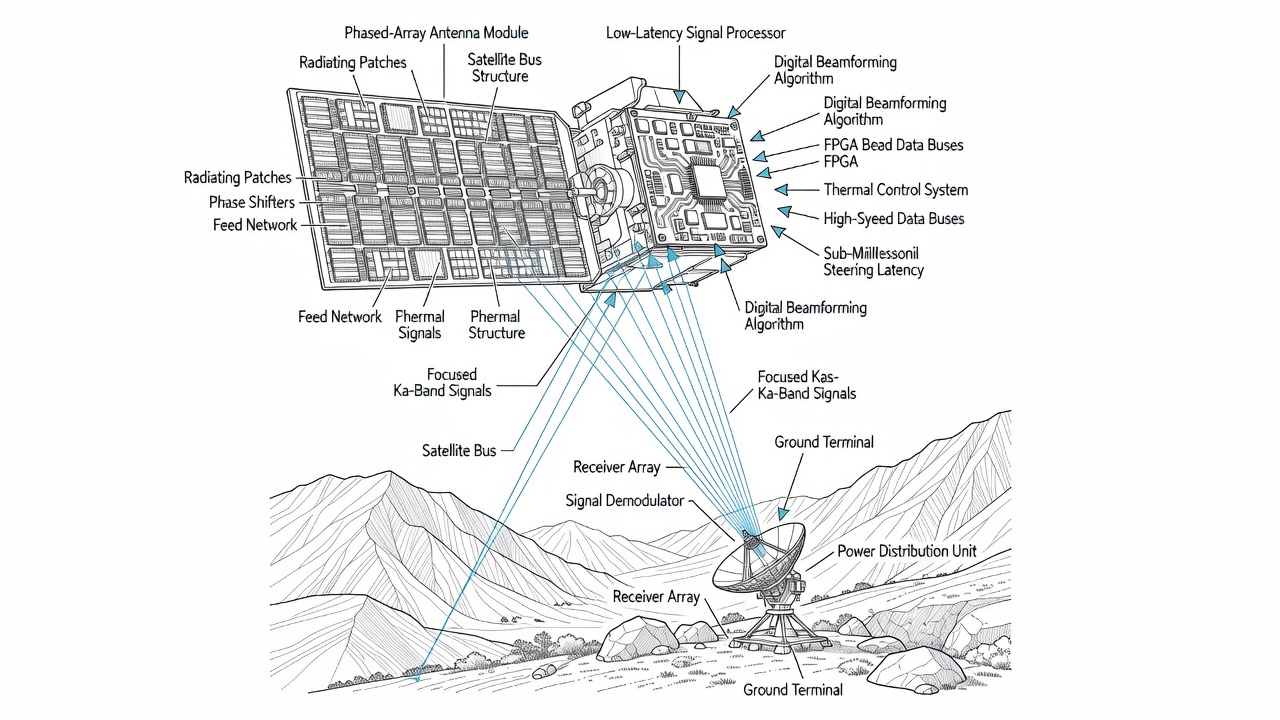
Speed Benchmarks in Real Deployments
Field tests conducted across multiple continents in 2026 report median download speeds ranging from 150 to 300 Mbps under optimal conditions, with upload speeds frequently reaching 20 to 50 Mbps. Latency measurements average between 25 and 40 milliseconds in most tested locations. These benchmarks vary according to local network load, weather patterns, and the number of active satellites overhead. In comparison to earlier generations, the 2026 configurations show consistent improvements in sustained throughput during evening hours when residential usage peaks. Operators continue to publish transparency reports that detail regional performance variations, helping users set realistic expectations for their specific environments.
Performance Comparison to Fiber and 5G
Fiber optic networks remain the preferred choice for fixed urban and suburban locations because they deliver symmetrical multi-gigabit speeds with minimal variability. However, satellite constellations now compete effectively with 5G in scenarios involving mobility or remote geography. Where 5G cell towers are sparse or nonexistent, satellite service provides reliable connectivity without requiring direct line-of-sight to terrestrial infrastructure. Fiber deployment becomes prohibitively expensive in rugged terrain or low-density areas, whereas satellite bypasses those physical and economic barriers entirely. Hybrid approaches that combine satellite backhaul with local 5G small cells are emerging in several pilot projects, demonstrating how the technologies can work together to extend coverage footprints.
Regulatory Hurdles and Spectrum Management
Operators must coordinate through international bodies such as the International Telecommunication Union to secure orbital slots and frequency allocations. National regulators, including the Federal Communications Commission, review interference mitigation plans and licensing applications. These processes can introduce delays, yet several countries have introduced streamlined approval pathways in 2026 that accelerate rollout timelines. Spectrum sharing agreements between competing constellations have also become more common, reducing the risk of signal conflicts while maximizing efficient use of available frequencies. Continued dialogue between governments and industry stakeholders remains essential for maintaining orderly growth of the orbital environment.
Consumer Cost Considerations
Service models in 2026 emphasize flexibility, with many providers offering both month-to-month subscriptions and discounted longer-term commitments. Hardware acquisition costs have become more approachable through financing programs and occasional promotional bundles. Consumers evaluating options should consider total ownership expenses, including terminal equipment, data allowances, and any potential overage charges. Regional availability and promotional incentives vary widely, so comparing coverage maps and trial offers helps households identify the most suitable plan. Competition among providers continues to drive improvements in overall value across different usage profiles, from light browsing to high-bandwidth streaming and remote work.
Case Studies from Underserved Regions
In rural Kenya, satellite-connected schools have gained reliable access to digital learning platforms, enabling students to participate in real-time virtual classrooms and access updated educational materials. Similar initiatives in the Andes mountains connect remote health clinics to specialists in larger cities, supporting telemedicine consultations that improve diagnostic accuracy and treatment outcomes. Pacific island communities rely on the technology for emergency communications during typhoon season and for small businesses engaging in cross-border e-commerce. Additional deployments in northern Canada have linked Indigenous communities to government services and online banking, reducing the need for costly travel. These examples illustrate measurable gains in education, healthcare access, and local economic development that extend well beyond basic connectivity metrics.
Installation Process and Reliability FAQ
Understanding the practical aspects of adopting satellite internet helps potential users make informed decisions. Below is a detailed list addressing common questions.
- How long does professional installation take? Certified technicians typically complete mounting and alignment within two hours when the terminal has an unobstructed view of the sky. Site surveys beforehand identify optimal placement to avoid trees or buildings that could block signals.
- What environmental factors affect reliability? Heavy precipitation can temporarily attenuate signals, though modern adaptive modulation techniques minimize disruptions. Multiple satellites visible at any given time provide automatic handoff that maintains sessions during brief outages.
- Is self-installation feasible for most users? Many kits include smartphone apps with step-by-step guidance and real-time alignment feedback. Professional installation remains advisable in locations with complex rooflines or extreme weather exposure.
- Can terminals support mobility applications? Yes, specialized flat-panel antennas designed for vehicles, boats, and aircraft maintain connections while in motion, opening new possibilities for maritime and aviation connectivity.
- How do users troubleshoot common issues? Providers supply diagnostic portals that display signal strength, satellite visibility, and firmware status. Firmware updates are delivered over the air to address performance improvements without user intervention.
Future Outlook and Practical Recommendations
Looking ahead, continued satellite launches and ground-segment upgrades are expected to push average speeds higher and further reduce latency. Users considering adoption should first verify local coverage using provider tools, then review contract terms for data policies and equipment warranties. Testing service through short-term trials can reveal whether performance meets specific household or business needs before committing long term. Avoiding common mistakes such as mounting terminals in partially obstructed locations or neglecting firmware maintenance helps maximize the benefits of the technology.
Conclusion
Satellite mega-constellations in 2026 represent a maturing solution that complements fiber and 5G networks while extending connectivity to previously isolated areas. Ongoing technical refinements, regulatory progress, and expanding real-world deployments position these systems as essential tools for narrowing the global digital divide. Readers seeking the latest connectivity options benefit from evaluating coverage, performance data, and trial opportunities to determine the best fit for their location and requirements.
Readers interested in similar developments may also enjoy our coverage of emerging technologies.


No comments yet. Be the first!