 NeoBit Daily

Introduction to Generative AI in Robotic Automation
As 2026 unfolds, the fusion of generative AI with robotic process automation (RPA) stands out as a pivotal development in tech news. This integration allows systems to not only execute repetitive tasks but also generate creative solutions, adapt dynamically, and optimize processes in real time. Professionals in finance and logistics are particularly interested in these breakthroughs for their potential to drive substantial efficiency gains and workflow transformations. Generative AI models, such as advanced large language models and diffusion-based systems, enhance traditional RPA bots by enabling them to handle unstructured data, predict outcomes, and create new automation scripts on the fly. This shift marks a departure from rigid, rule-based automation toward intelligent, self-improving systems that continuously learn from operational data streams.
Organizations worldwide are recognizing that combining generative capabilities with RPA creates a powerful synergy. Instead of bots that simply follow scripts, the new generation can synthesize information from diverse sources, propose innovative process improvements, and even simulate potential outcomes before implementation. This evolution is especially relevant for industries facing high volumes of variable data, where legacy tools often fall short.
Comparing Generative AI-Enhanced RPA to Legacy Systems
Legacy RPA systems relied on scripted rules and struggled with exceptions or variations in data. In contrast, generative AI-powered automation offers flexibility and intelligence. Here are key differences:
- Adaptability: Legacy tools require manual updates for changes; AI versions learn and adjust autonomously based on patterns observed over time.
- Data Handling: Traditional RPA processes structured data only, while generative models interpret documents, emails, images, and even voice inputs with contextual understanding.
- Decision Making: Old systems follow fixed paths; new ones generate multiple scenarios, evaluate risks, and recommend optimal paths with supporting rationale.
- Scalability: Legacy setups scale linearly with added rules, whereas AI-driven ones improve with more data exposure, often reducing maintenance overhead by half or more in mature deployments.
- Error Reduction: Generative systems can self-correct by generating alternative workflows when anomalies arise, unlike legacy bots that halt or escalate issues.
These advancements lead to fewer errors and faster deployment times across industries, making the transition attractive for companies seeking competitive edges in dynamic markets.
Efficiency Gains and Workflow Changes in Key Sectors
In finance, generative AI automates invoice processing by generating reconciliation reports and flagging anomalies without predefined templates. Banks and accounting firms see reduced processing cycles, allowing staff to focus on strategic analysis rather than routine verification. Logistics firms use it to optimize supply chain routes by simulating countless variables and producing actionable plans that account for weather, fuel prices, and geopolitical factors. Overall, organizations report streamlined operations that reduce manual intervention by significant margins, often achieving 40-60% improvements in throughput.
Workflow changes include seamless integration with existing enterprise software, enabling end-to-end processes that span multiple departments. This results in quicker turnaround times and improved compliance tracking. Additional sectors like manufacturing and healthcare are beginning to experiment with similar integrations, using generative AI to create predictive maintenance schedules or patient scheduling optimizations that adapt to real-time conditions.
Real-World Case Studies from Early Adopters
Financial institutions have adopted these technologies to transform accounts payable. One major bank integrated generative AI with RPA to process thousands of transactions daily, creating adaptive fraud detection patterns that evolve with new threat vectors. 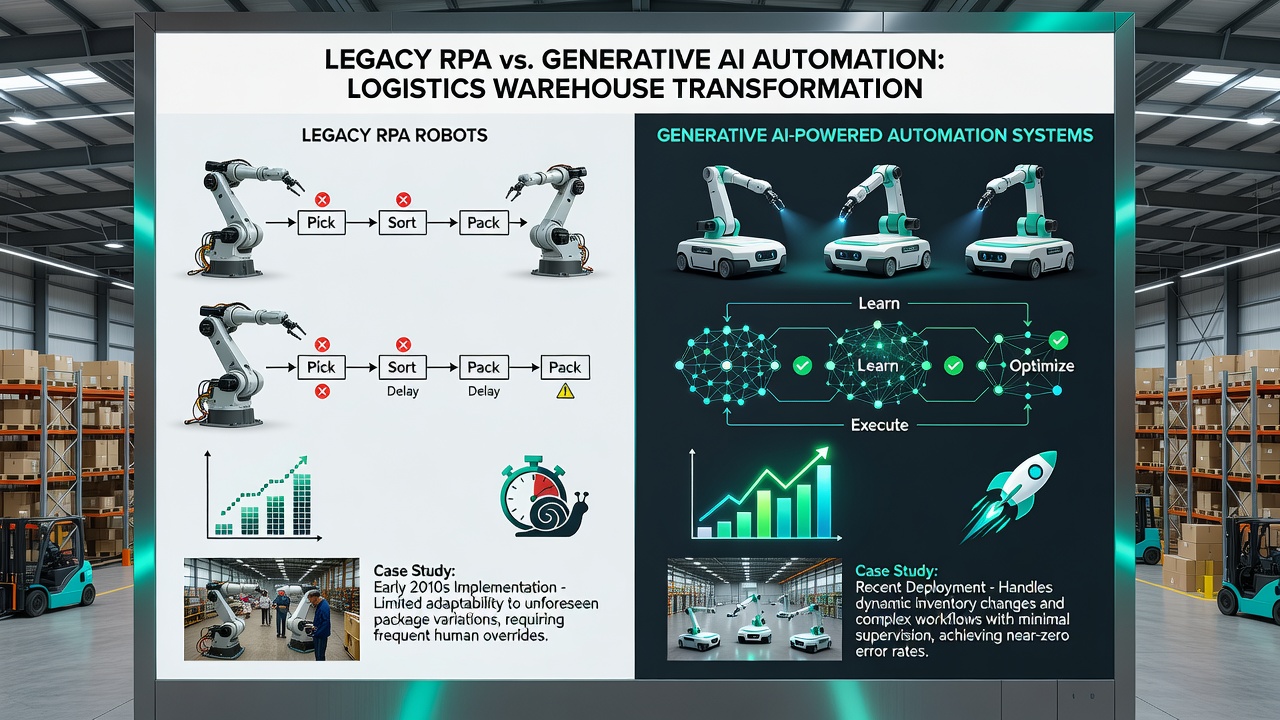
In logistics, a global shipping company leveraged the technology to redesign warehouse operations. The system generates predictive maintenance schedules and reroutes shipments dynamically, leading to smoother operations and reduced downtime. Another example comes from supply chain management where AI-generated simulations helped redesign inventory models, adapting to market fluctuations in ways legacy tools could not. A European retailer reported using generative RPA to handle seasonal demand spikes by automatically generating customized fulfillment strategies for each distribution center.
These case studies demonstrate measurable outcomes, including faster decision cycles and enhanced resilience during disruptions such as supply shortages or regulatory shifts.
Practical Steps for Implementation
Professionals seeking to adopt this technology should follow these actionable steps:
- Assess current RPA infrastructure to identify integration points for generative AI models, including auditing data sources and existing bot libraries for compatibility.
- Choose platforms that support both RPA and AI capabilities, such as those from leading vendors, while evaluating vendor support for custom model training.
- Pilot small-scale projects in low-risk areas like data entry before expanding to mission-critical processes, documenting baseline metrics for comparison.
- Train teams on prompt engineering and AI oversight to maximize benefits, incorporating workshops on ethical considerations and bias mitigation.
- Monitor performance metrics and iterate based on generated insights, establishing feedback loops that allow the AI to refine its outputs over successive cycles.
- Establish governance frameworks early to ensure compliance with data protection regulations throughout the rollout.
Partnering with experts ensures smooth transitions and minimizes disruption during the initial phases.
Overcoming Common Integration Challenges
Integrating generative AI with RPA is not without hurdles. Data quality issues can limit model effectiveness, so organizations must invest in cleaning and structuring datasets beforehand. Skill gaps among employees require targeted training programs focused on both technical and strategic aspects. Security concerns arise when AI systems access sensitive information, necessitating layered encryption and access controls aligned with standards from authoritative bodies.
Another frequent challenge is change management, where resistance from staff accustomed to legacy processes can slow adoption. Clear communication about benefits, combined with phased rollouts that demonstrate quick wins, helps build buy-in. Technical compatibility between older RPA platforms and newer AI modules may demand custom middleware, but many vendors now provide pre-built connectors to ease this transition.
Future Outlook for Technology News Readers
Experts anticipate continued evolution, with generative AI enabling fully autonomous operations by 2028. Emerging trends include multimodal AI that processes text, images, and sensor data simultaneously for even more sophisticated automation. Readers interested in staying ahead should follow developments from sources like the IBM research portal and reports from McKinsey. Broader perspectives are available through the World Economic Forum discussions on AI ethics and workforce transformation.
FAQ: Overcoming Integration Challenges
How do organizations address data privacy concerns during integration?
Implement robust encryption and comply with standards from bodies like the IBM security frameworks to safeguard sensitive information while conducting regular audits.
What skills are needed for successful deployment?
Teams benefit from knowledge in AI ethics, data science basics, and RPA configuration. Upskilling programs help bridge gaps quickly and foster internal champions who can guide peers.
Can small businesses afford this technology?
Many solutions offer scalable pricing models, making entry points accessible without large upfront investments and allowing gradual expansion as returns are realized.
What timeline should companies expect for full integration?
Most mid-sized implementations reach meaningful productivity gains within six to nine months, though complex environments may require twelve to eighteen months for complete optimization.
Conclusion
The integration of generative AI with robotic automation represents a transformative force in 2026 tech news. By understanding comparisons, studying case examples, and following structured implementation paths, professionals can harness these tools for lasting competitive advantages in finance, logistics, and beyond. Continuous learning and adaptation will be essential as the technology matures further.

No comments yet. Be the first!