 NeoBit Daily
Introduction to DNA Data Storage in 2026
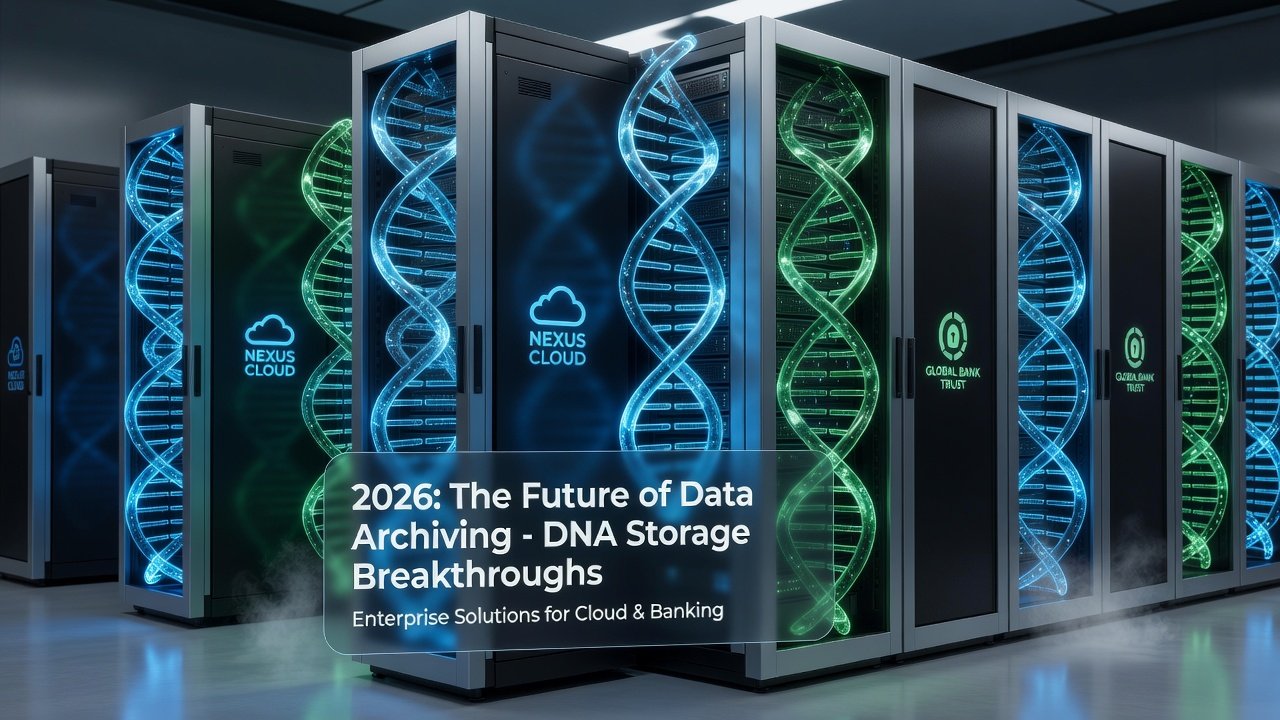
DNA data storage is moving from laboratory experiments to enterprise-scale pilots in 2026. Organizations are testing biological media for its unmatched density and durability compared to traditional silicon solutions. This shift addresses exploding data volumes in sectors like finance and cloud computing. Building on proven gains in density and durability, the technology now demonstrates measurable capacity improvements that allow enterprises to store exabytes of information in remarkably small physical spaces. Recent deployments show successful encoding of complex datasets with error rates low enough for regulatory compliance.
The core advantage lies in DNA's ability to represent digital information using four nucleotide bases, enabling storage densities far exceeding magnetic or optical media. As data growth accelerates across industries, these pilots provide critical real-world validation for long-term archiving strategies.
Enterprise Pilot Programs Driving Adoption
Cloud providers and major banks have launched pilots in 2026. These programs focus on archiving cold data with biological encoding. Early results show successful scaling beyond petabyte levels in controlled environments, with some systems achieving capacity improvements of several orders of magnitude over conventional tape libraries. One deployment involved encoding financial transaction logs into synthetic DNA strands, achieving reliable long-term retention without degradation. Another pilot at a global cloud service tested hybrid DNA-silicon workflows for disaster recovery archives, confirming that retrieval accuracy remained high even after simulated environmental stresses.
These initiatives often partner with specialized biotech firms to handle synthesis and sequencing at scale. The measurable capacity gains allow organizations to reduce their data center footprints while maintaining compliance with strict retention policies.
Integration Challenges with Existing Infrastructure
Adopting DNA storage requires bridging biological and digital systems. Key issues include developing reliable encoders and decoders that interface with current IT stacks. Latency in synthesis and sequencing processes remains a primary concern for real-time applications, often requiring dedicated hardware accelerators. Teams must also manage contamination risks and standardize protocols across hybrid environments. Solutions often involve middleware layers that translate binary data into nucleotide sequences while preserving checksum integrity.
Additional challenges encompass training IT staff on biological handling procedures and ensuring compatibility with legacy backup software. Pilot teams report that phased integration, starting with isolated cold-storage tiers, minimizes operational disruption. Error-correction algorithms tailored for DNA must be fine-tuned to handle sequencing noise, adding another layer of technical complexity.
Cost Comparisons to Silicon-Based Systems
Qualitative assessments in 2026 indicate DNA storage offers superior economics for archival use cases due to extreme density. However, upfront synthesis expenses exceed those of magnetic tape or HDD arrays in high-frequency access scenarios. Long-term savings emerge from reduced physical footprint and energy needs. Enterprises evaluate total cost of ownership by factoring in durability advantages that minimize refresh cycles. Compared with silicon systems that require frequent media replacement, DNA media maintains integrity across decades with minimal intervention.
Decision-makers weigh these factors against initial infrastructure investments in sequencing equipment. Overall, the technology appears most compelling for write-once, read-rarely workloads where density and stability deliver compounding benefits over time.
Security Protocols Unique to Biological Storage
Biological media introduces novel security considerations. Encryption must protect both digital and molecular layers, with physical access controls for DNA samples. Authentication protocols now incorporate sequence verification to prevent tampering. Research institutions emphasize compartmentalized encoding to enhance resilience against unauthorized retrieval. NIST guidelines on cryptographic standards provide foundational references for these emerging practices.
Additional measures include watermarking DNA strands with unique identifiers and using enzymatic degradation triggers as fail-safes. These protocols extend traditional cybersecurity frameworks into the physical-biological domain, requiring cross-disciplinary expertise from IT and molecular biology teams.
Real-World Examples from Recent Deployments
A European bank piloted DNA storage for regulatory compliance records, successfully migrating terabytes of historical data. Retrieval tests confirmed integrity after simulated multi-year storage periods. In parallel, a North American cloud provider deployed DNA modules for customer backup archives, reporting improved efficiency during recovery simulations. An Asian financial institution tested the technology for cross-border transaction ledgers, noting that the biological format resisted both cyber and physical degradation better than expected.
These examples illustrate practical pathways from proof-of-concept to production use. Each deployment emphasized rigorous benchmarking against existing silicon infrastructure before full commitment.
Step-by-Step Migration Considerations
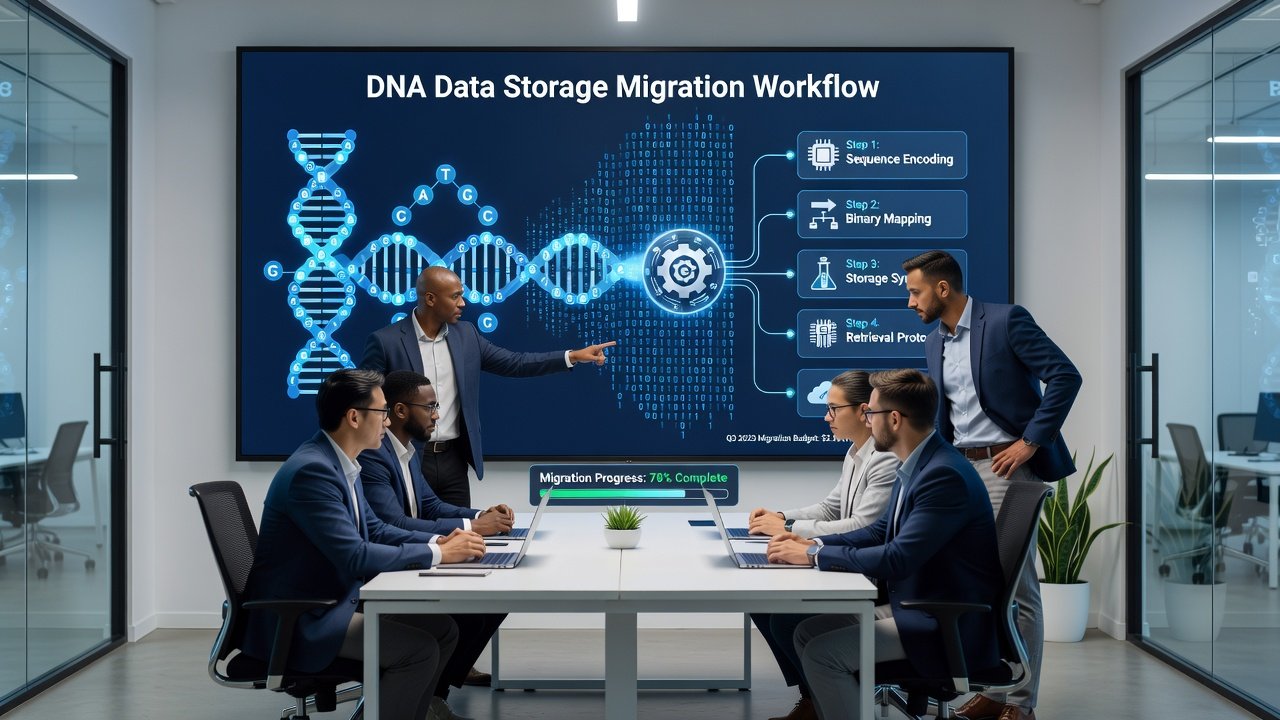
Successful migration demands careful planning. Begin by assessing data classification to identify suitable archival candidates. Next, evaluate synthesis and sequencing vendors for compatibility with your existing data pipelines. Develop hybrid workflows that allow seamless fallback to silicon systems during the transition. Implement pilot testing with small datasets to measure performance metrics such as encoding speed and retrieval accuracy. Establish monitoring for biological stability and error rates using automated sensors. Finally, plan a phased rollout accompanied by comprehensive staff training on new protocols and safety procedures.
Each step includes contingency planning for unexpected sequencing failures or supply-chain delays in nucleotide reagents. Organizations that follow this structured approach report smoother transitions and higher stakeholder confidence.
Addressing Common IT Concerns: Retrieval Speeds and Viability
Retrieval Speed FAQs
Many IT teams question whether DNA storage can support timely access. Current sequencing technologies deliver acceptable speeds for infrequent retrievals, though they lag behind solid-state drives for active workloads. Optimization through parallel processing continues to narrow this gap. Typical retrieval times in 2026 pilots range from minutes to hours depending on dataset size, making the medium ideal for compliance audits rather than operational queries.
Long-Term Viability FAQs
DNA's inherent stability supports viability spanning centuries under proper conditions. Unlike silicon media prone to bit rot, biological formats resist environmental decay when stored correctly. Ongoing pilots validate these claims through accelerated aging tests that simulate decades of storage in weeks. Key factors include controlled temperature, humidity, and protection from enzymatic contaminants. Enterprises also examine end-of-life disposal methods to ensure environmentally responsible handling of biological materials.
Further reading on foundational research appears at Nature and Science. Additional standards development resources are available through IEEE.
Conclusion
DNA data storage enterprise pilots in 2026 mark a pivotal transition toward sustainable, high-capacity archiving. By addressing integration, security, and migration thoughtfully, organizations position themselves for future data growth. Continued collaboration between tech firms and research bodies will refine these technologies further, unlocking even greater density and durability benefits in the years ahead.

No comments yet. Be the first!