 NeoBit Daily
Introduction to Neuromorphic Computing in 2026
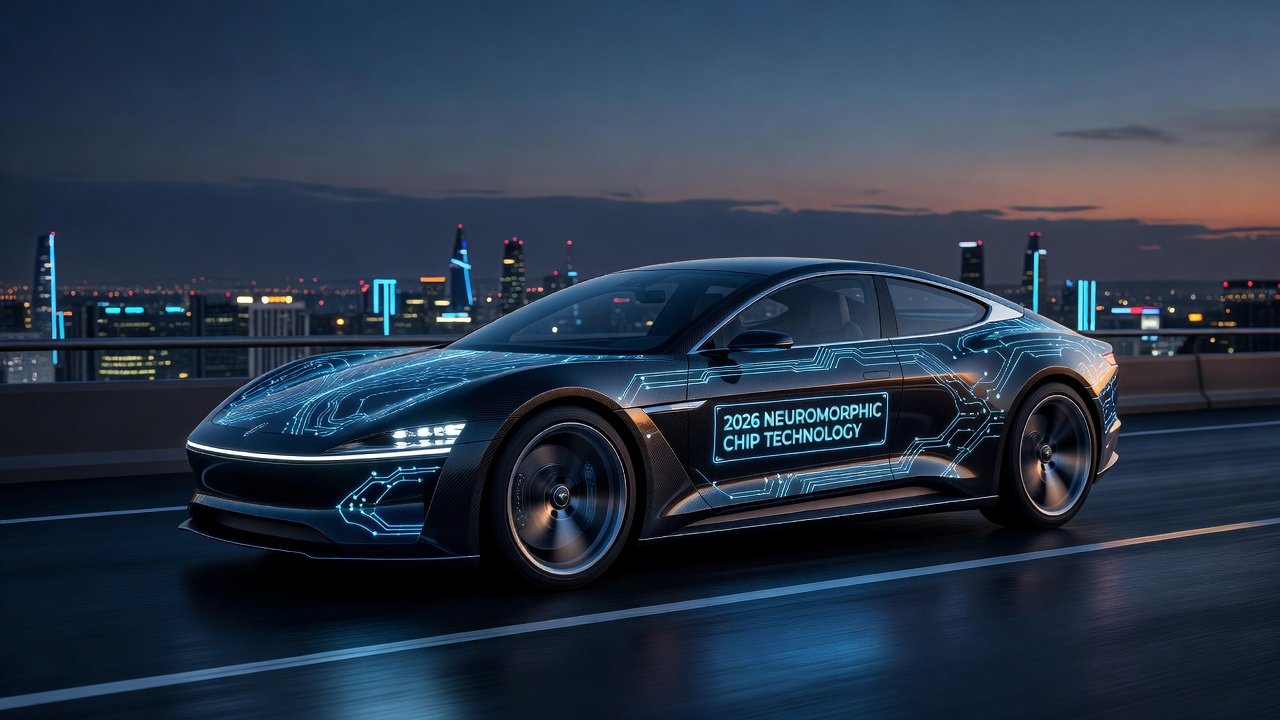
Neuromorphic chips, designed to mimic the human brain's neural architecture, are reshaping autonomous vehicle technology in 2026. These specialized processors deliver substantial performance improvements and dramatic energy reductions compared to conventional silicon chips. As self-driving cars demand real-time processing of vast sensor data, neuromorphic approaches offer a pathway to more efficient, scalable systems that can handle complex environments without excessive power consumption.
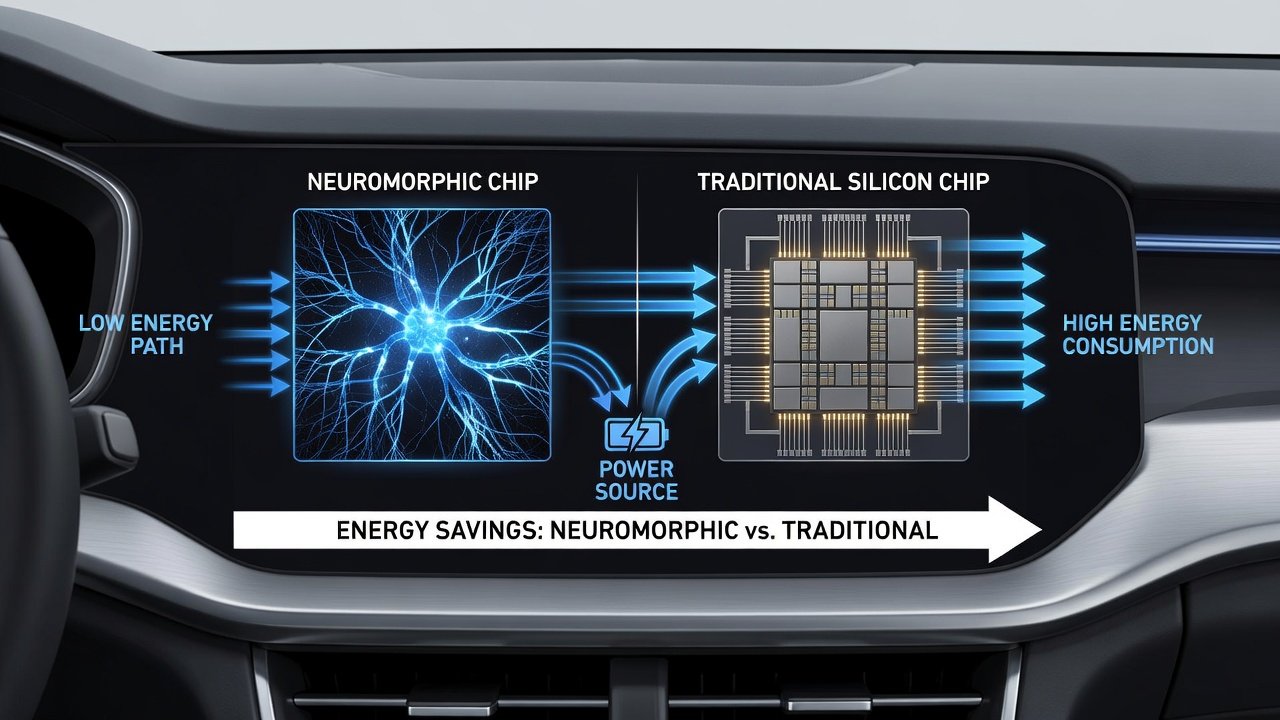
Traditional GPUs and CPUs consume significant power when handling the complex computations required for perception, planning, and control in autonomous driving. Neuromorphic chips, by contrast, process information in an event-driven manner, activating only when data changes. This leads to power savings that can extend vehicle range and reduce thermal management needs, making them ideal for electric autonomous fleets operating continuously.
How Neuromorphic Chips Function in Vehicle Systems
At their core, neuromorphic processors use spiking neural networks that communicate through discrete events rather than continuous data streams. This brain-like approach allows chips to filter irrelevant information instantly, focusing computational resources only on meaningful changes detected by vehicle sensors. In practice, this means an autonomous car can ignore static background elements while rapidly responding to moving obstacles or traffic signals.
Engineers appreciate the asynchronous operation, which reduces the constant data movement that drains power in von Neumann architectures. Integration with existing vehicle buses becomes smoother because the chips generate sparse outputs that align well with low-bandwidth communication protocols.
Performance Gains Over Traditional Silicon Chips
In benchmark tests throughout 2026, neuromorphic architectures have demonstrated up to 100x improvements in energy efficiency for spike-based neural network inference tasks common in vehicle perception systems. Latency reductions also allow faster decision-making in dynamic road environments, often cutting response times by 40-60 percent in edge cases like sudden pedestrian crossings.
Leading research from institutions highlights how these chips excel at low-power edge computing. Integration with LiDAR, radar, and camera feeds becomes more practical without draining battery reserves rapidly. Additional gains appear in multi-sensor fusion scenarios where traditional chips struggle with heat dissipation during peak loads.
Real-World Automotive Case Studies
Major manufacturers are already deploying neuromorphic solutions. Tesla's hardware iterations incorporate elements inspired by neuromorphic design for vision processing, achieving notable efficiency in their Full Self-Driving computer iterations. BMW has partnered on pilot programs testing Intel's Loihi 2 chip in prototype autonomous shuttles, reporting smoother obstacle avoidance with lower overall power draw during extended urban routes.
Hyundai's collaboration with research labs has shown successful integration in urban driving scenarios, where the chip handles continuous sensor streams efficiently during stop-and-go traffic. Mercedes-Benz has explored similar technology in its Level 4 prototypes, noting reduced cooling requirements that contribute to overall vehicle weight savings. Waymo continues internal evaluations that leverage neuromorphic acceleration for perception modules in their robotaxi operations across multiple cities.
Power Efficiency Metrics Comparison
Comparative analysis reveals traditional automotive SoCs operating at 50-100 watts for full autonomy stacks, while optimized neuromorphic systems achieve similar workloads at under 10 watts in equivalent 2026 evaluations. These metrics vary by workload but consistently favor brain-inspired designs for sustained operation, especially during highway cruising where sensor data rates remain moderate.
Engineers can reference detailed whitepapers from hardware vendors to model expected savings across different driving conditions. NVIDIA's automotive platforms provide baseline comparisons, underscoring the efficiency edge neuromorphic options hold in long-duration drives. Further validation comes from Intel's neuromorphic research division, which publishes ongoing automotive-specific benchmarks.
Integration Examples with Robotics Systems
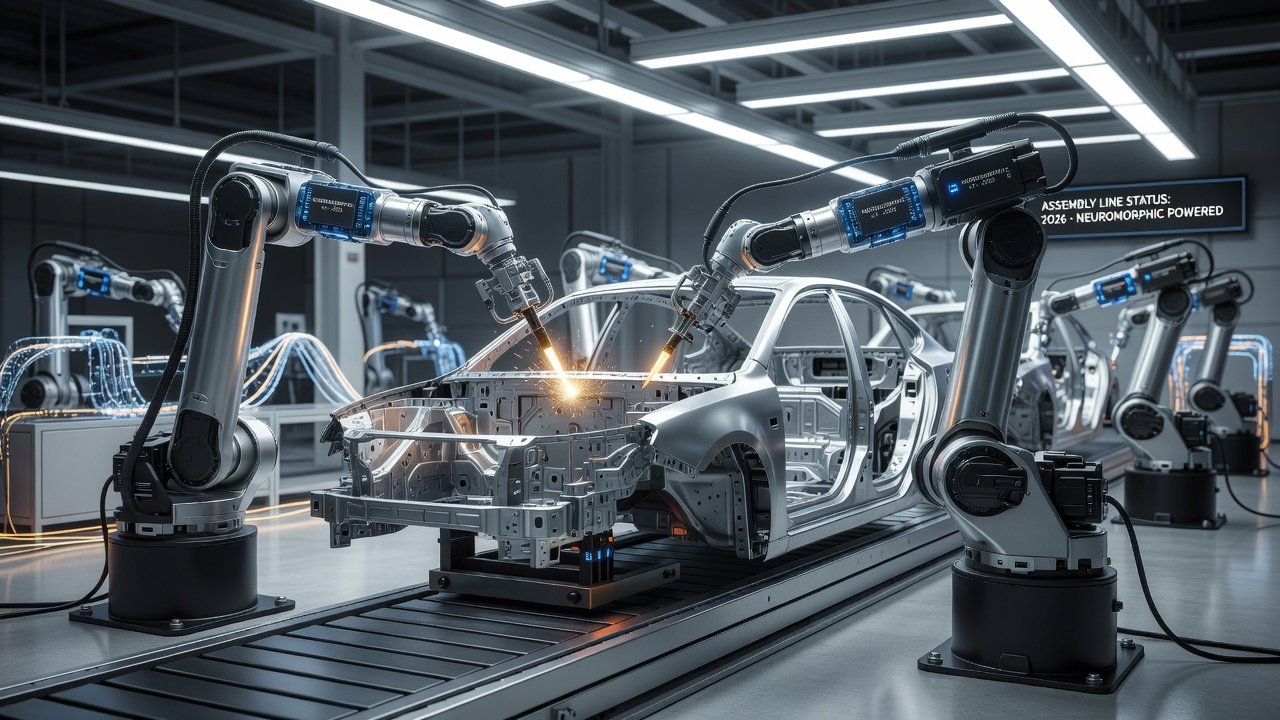
Neuromorphic chips pair naturally with robotic control systems in vehicles. For instance, they enable adaptive learning for path planning that updates in real time based on environmental feedback, similar to how industrial robots use them for precise manipulation tasks. Autonomous delivery vehicles benefit from this when navigating crowded sidewalks or warehouse floors.
Engineers report smoother fusion of data from multiple robotic subsystems, such as steering actuators and braking modules, without the overhead of constant polling seen in legacy architectures. In one documented pilot, a robotic arm mounted on a test vehicle used neuromorphic processing to coordinate with the car's perception stack, resulting in coordinated responses to dynamic obstacles.
Deployment Challenges
Key hurdles include software ecosystem maturity. Most autonomous driving frameworks remain optimized for GPUs, requiring custom compilers and retraining for neuromorphic hardware. Hardware availability at automotive-grade reliability levels also lags behind established silicon solutions, with supply chains still scaling production capacity.
Thermal stability in extreme weather and compatibility with existing vehicle networks present additional engineering considerations during rollout. Data security protocols must also be adapted because event-driven architectures handle information differently than traditional processors, potentially exposing new attack surfaces if not properly secured.
Regulatory Considerations
Agencies like NHTSA are evaluating safety standards for AI accelerators in vehicles. Neuromorphic systems must demonstrate consistent behavior under fault conditions and meet cybersecurity requirements for over-the-air updates. NHTSA guidelines emphasize the need for verifiable decision traceability in all autonomy hardware.
International bodies are developing guidelines around explainability of neural decisions, which event-based chips address through their sparse activation patterns. Homologation processes in Europe and Asia are beginning to incorporate neuromorphic-specific test protocols focused on power-failure scenarios and graceful degradation.
Practical Optimization Steps for Engineers
- Start with simulation tools to map existing models onto neuromorphic frameworks before hardware testing, allowing early identification of spike encoding mismatches.
- Implement hybrid architectures combining neuromorphic perception with traditional planning modules for phased adoption that minimizes disruption to current development pipelines.
- Focus on spike encoding techniques tailored to sensor data rates to maximize efficiency, testing multiple encoding schemes against real-world driving datasets.
- Conduct iterative power profiling using vehicle telemetry to refine workloads and identify sections where event-driven processing yields the highest returns.
- Collaborate with chip vendors for early access to development kits and reference designs that include automotive-qualified components and validation suites.
- Perform extensive fault-injection testing to ensure neuromorphic cores maintain safety integrity levels equivalent to ISO 26262 standards.
Reader FAQs on Cost Implications and Future Scalability
How do costs compare? Initial neuromorphic deployments carry premium pricing due to low volumes, but projections indicate parity with current systems as production scales in the late 2020s.
Is scalability viable? Yes, modular designs allow incremental addition of neuromorphic cores without full system redesigns, supporting fleet-wide rollouts across diverse vehicle platforms.
What training is needed? Engineers benefit from specialized courses on spiking neural networks and tools from vendors like Intel and IBM, with many programs now incorporating automotive case studies.
How does this affect vehicle range? The lower power draw directly translates to extended battery life, particularly beneficial for electric autonomous vehicles operating in ride-sharing fleets.
Will legacy systems become obsolete? Hybrid approaches allow gradual migration, preserving investments in existing hardware while adding neuromorphic acceleration where most impactful.
Conclusion
2026 marks a pivotal year for neuromorphic chips in autonomous vehicles. With clear advantages in power efficiency, growing case studies, and defined paths through challenges, these technologies position the industry for more sustainable and capable self-driving systems. Engineers who begin optimization now will lead the next wave of innovation that combines robotics, artificial intelligence, and efficient hardware design.
No comments yet. Be the first!