 NeoBit Daily
Introduction to Neuromorphic Chips in 2026 Robotics
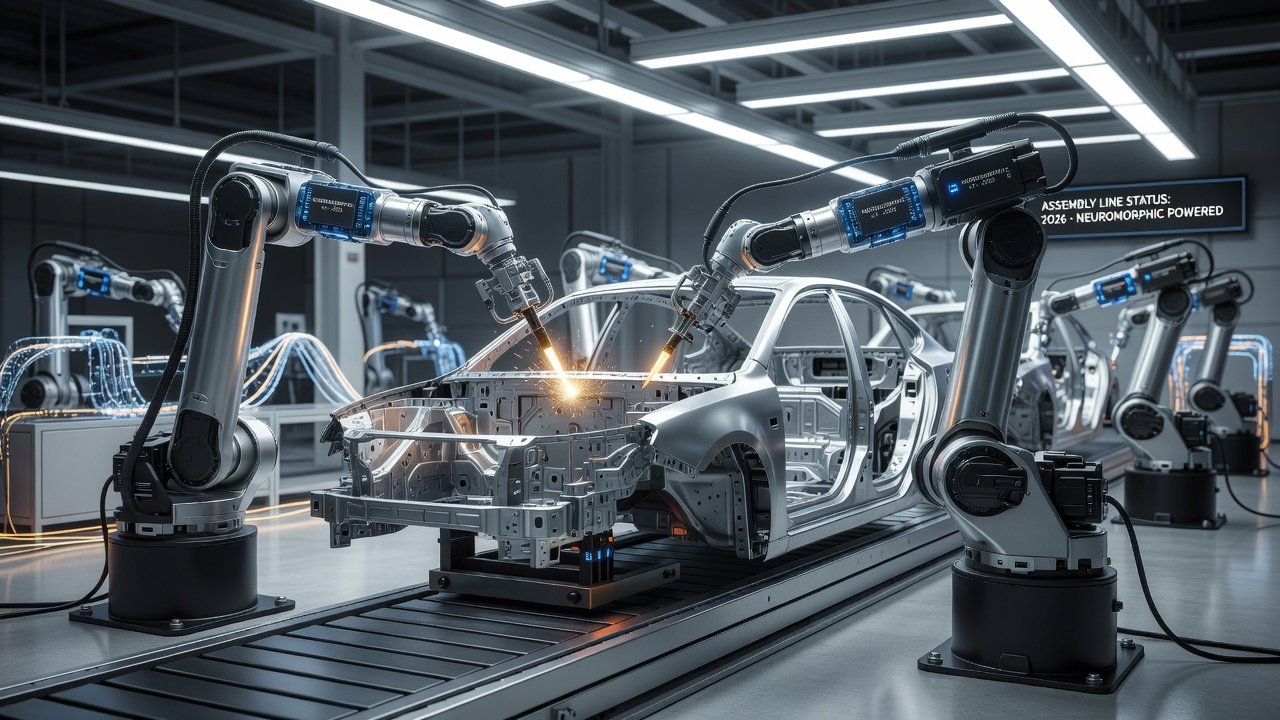
Neuromorphic computing is reshaping robotics by mimicking the human brain's neural architecture through event-driven, spike-based processing. In 2026, deployments focus on delivering superior efficiency for real-time decision-making in dynamic environments such as factories and distribution centers. This technology processes data only when changes occur, enabling robots to handle complex tasks with minimal energy while maintaining high accuracy in perception and control.
Engineers and tech teams are increasingly turning to these chips for applications where traditional processors fall short in power-hungry or latency-sensitive scenarios. The year 2026 marks a pivotal shift as automotive and logistics sectors adopt them at scale, driven by advances in hardware design and software ecosystems. Understanding these chips requires examining their core advantages over conventional silicon solutions like GPUs and CPUs that rely on constant data throughput.
Direct Comparisons: Neuromorphic Chips vs Traditional GPUs
When evaluating performance metrics, neuromorphic chips excel in power efficiency and latency reduction. They achieve dramatically lower power consumption than GPUs for edge inference tasks while maintaining comparable accuracy in pattern recognition and object detection. Speed advantages appear in event-driven processing, where neuromorphic systems react instantaneously to sensory inputs without waiting for full frame buffers.
Latency drops significantly, often below one millisecond in robotic vision systems, compared to GPU pipelines that can introduce delays of several milliseconds due to sequential processing. GPUs rely on continuous clock cycles that introduce overhead in intermittent data streams, making them less ideal for sparse sensor data common in robotics. Neuromorphic designs, by contrast, emulate biological neurons and only activate on relevant events, leading to superior performance in always-on scenarios.
Real benchmarks from 2026 deployments highlight these differences in sustained operations, making neuromorphic options ideal for battery-powered or always-on robots. Additional factors include thermal output, where neuromorphic chips generate far less heat, reducing cooling needs and extending hardware lifespan in industrial settings. Overall, the comparison favors neuromorphic technology for efficiency-critical robotics applications.
Real-World Case Studies in Automotive and Warehousing
Automotive assembly lines provide compelling evidence of efficiency gains. Robots equipped with neuromorphic processors at major plants now perform quality inspections faster than GPU-based predecessors, reducing downtime during high-volume production runs. These systems detect defects in real time using event-based vision sensors, allowing immediate adjustments without halting entire lines.
In warehouse automation, autonomous mobile robots use these chips for navigation and object manipulation. Deployments have shown notable increases in throughput while cutting energy use substantially, allowing longer operational shifts without recharging. One notable example involved integrating neuromorphic hardware into picking robots, resulting in smoother path planning and fewer collisions in crowded environments.
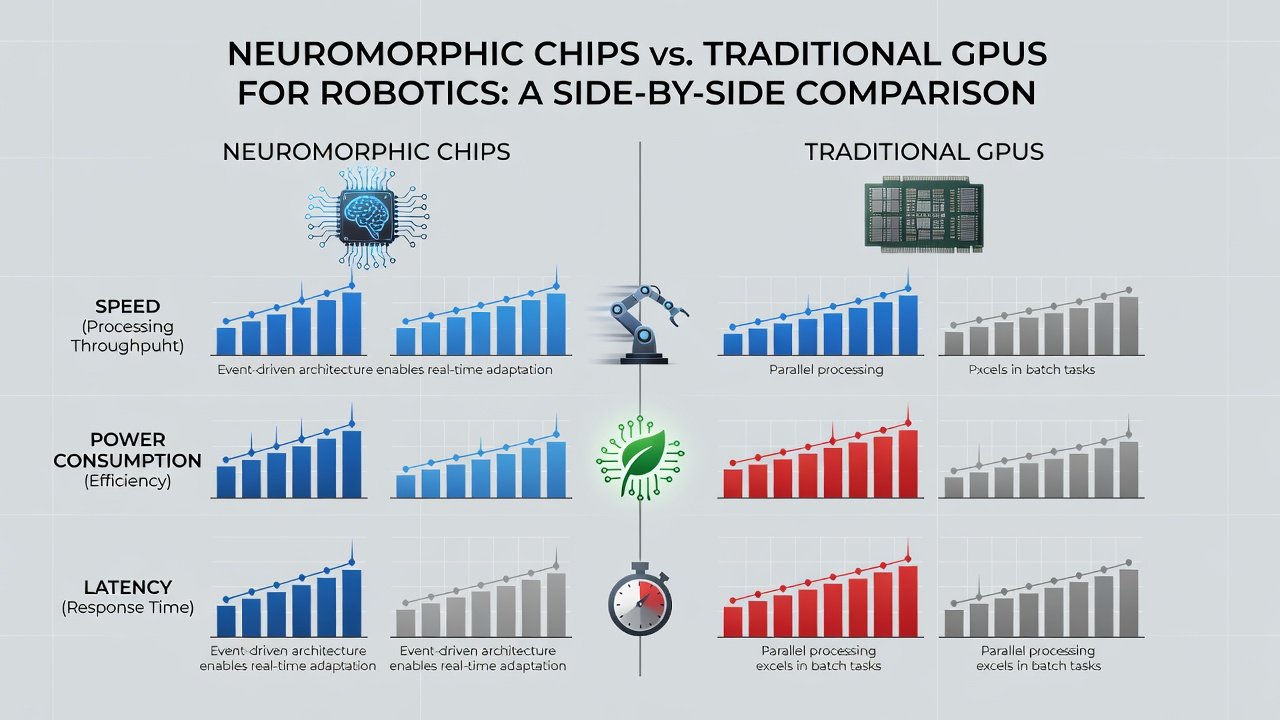
These measurable jumps stem from the chips' ability to process sparse data efficiently, avoiding the overhead of constant GPU computations. Additional case studies from electronics manufacturing reveal similar patterns, where precision assembly tasks benefit from the low-latency responses that prevent errors in fast-moving conveyor systems. Such examples demonstrate practical, scalable benefits across industries.
Integration Steps for Engineers
Engineers can follow a structured approach to adopt neuromorphic hardware successfully. Begin by assessing current robotic sensor arrays and identifying event-based data sources like cameras or LiDAR units that produce sparse outputs. Next, select compatible neuromorphic platforms from leading vendors and map them to existing control loops to ensure seamless data flow.
Develop spike-based algorithms using simulation tools before hardware deployment, allowing teams to prototype and refine models without risking physical equipment. Test thoroughly in controlled environments, iterating on latency and power metrics while monitoring for edge cases such as sensor noise. Finally, scale to production with ongoing monitoring for thermal and reliability factors, incorporating feedback loops for continuous improvement.
This methodical process minimizes disruption to legacy systems and supports phased rollouts. Teams should also document each stage for knowledge transfer and future maintenance.
Compatibility with Existing AI Frameworks
Modern neuromorphic solutions integrate smoothly with popular frameworks. Developers leverage extensions in TensorFlow and PyTorch to convert conventional models into spiking neural networks. Libraries such as Norse or Nengo provide bridges that preserve model accuracy while unlocking hardware-specific optimizations.
Compatibility testing in 2026 shows seamless operation with ROS2 for robotics middleware, allowing teams to reuse substantial portions of their codebases. Additional support comes from community-driven tools that handle conversion of standard convolutional networks into event-based equivalents. Engineers benefit from reduced retraining time and easier debugging through familiar interfaces.
Cost-Benefit Analysis Versus Silicon Alternatives
While initial hardware investments may be higher, the long-term benefits include dramatically reduced operational expenses from lower power draw and fewer cooling requirements. Maintenance cycles shorten because neuromorphic chips generate less heat and exhibit greater resilience in variable industrial conditions. Over multi-year horizons, total ownership costs favor neuromorphic deployments in high-duty-cycle robotics, particularly where energy and downtime represent major line items.
Qualitative advantages also include improved sustainability profiles, aligning with corporate goals for reduced environmental impact in manufacturing facilities.
Expert Quotes on Scalability Challenges and 2027 Roadmaps
Dr. Elena Vargas, a leading researcher at a prominent neuromorphic lab, notes: "Scalability remains the primary hurdle as we move beyond prototypes, but architectural advances promise broader adoption by 2027." Industry analysts highlight ongoing work on larger chip arrays and improved software tooling to address these issues. According to insights from IEEE discussions, hybrid architectures will play a key role in bridging current limitations.
Roadmaps for 2027 emphasize hybrid systems combining neuromorphic cores with conventional processors, targeting even greater efficiency in collaborative robot fleets and multi-robot coordination scenarios.
Common Challenges and How to Overcome Them
Implementing neuromorphic technology involves hurdles such as limited training datasets for spiking networks and the need for specialized debugging tools. Teams can overcome these by starting with pre-trained model conversions and participating in open-source communities for shared resources. Another challenge is ecosystem maturity, addressed through vendor partnerships and pilot programs that provide hands-on support.
Frequently Asked Questions
How do neuromorphic chips handle real-time robotic control?
They process asynchronous spikes from sensors, enabling sub-millisecond responses without buffering delays common in GPU pipelines.
What frameworks support spiking neural networks?
TensorFlow and PyTorch extensions, along with specialized tools like Nengo, facilitate development and deployment.
Are there notable limitations in current 2026 implementations?
Training complexity and ecosystem maturity are evolving, though inference performance already surpasses alternatives in targeted use cases.
What does the 2027 outlook look like?
Experts anticipate wider commercial availability and standardized integration paths for multi-vendor environments.
How should teams prepare for hardware migration?
Focus on sensor compatibility audits and incremental testing to build internal expertise gradually.
Conclusion
Neuromorphic chips represent a transformative step for robotics efficiency in 2026. With clear advantages in power, speed, and latency alongside proven case studies, they offer a compelling path forward. Tech teams that invest in integration now will position themselves ahead of the 2027 curve, unlocking new levels of performance in demanding industrial applications.

No comments yet. Be the first!