 NeoBit Daily
Introduction to Neuromorphic Chips in 2026 IoT Edge Computing
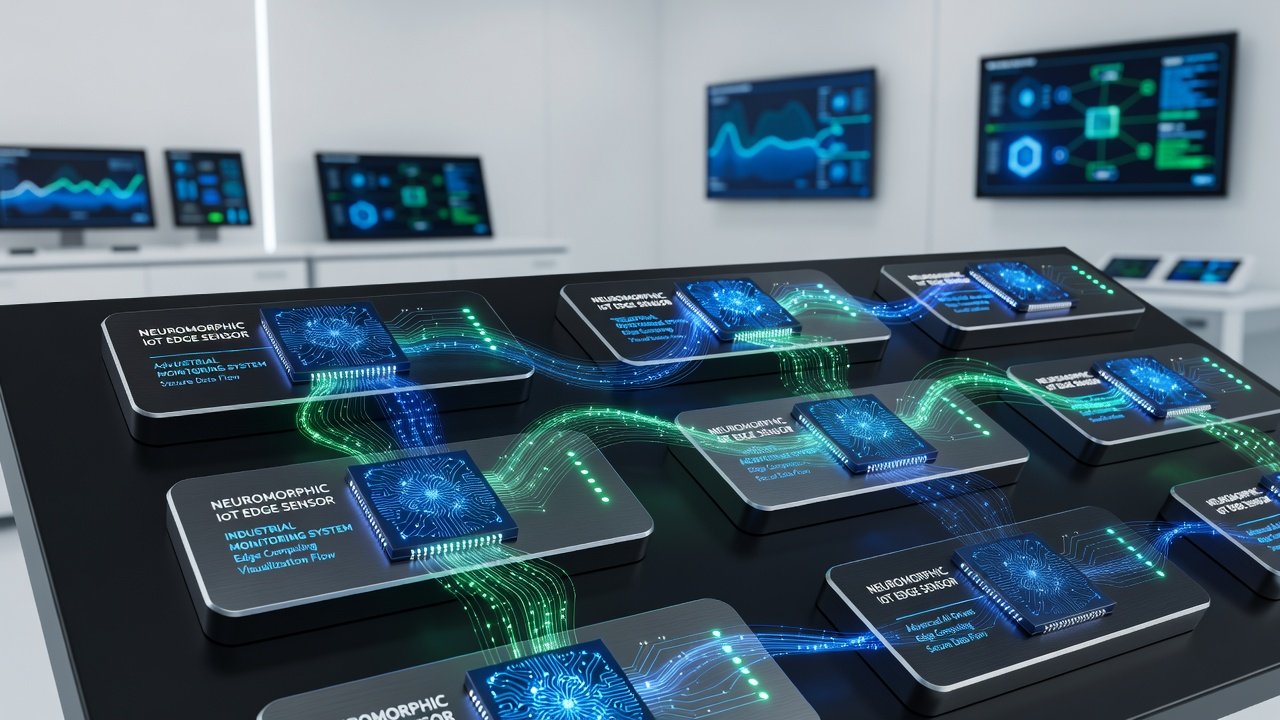
Neuromorphic computing mimics the human brain's neural architecture to deliver ultra-low power processing ideal for IoT edge devices. In 2026, major rollouts focus on smart sensors and industrial monitoring systems where traditional processors fall short on energy demands. These chips process data locally, reducing cloud dependency and enabling real-time decisions in environments ranging from remote oil fields to urban smart grids. Unlike conventional von Neumann architectures that separate memory and processing, neuromorphic designs integrate both, allowing for efficient handling of asynchronous, event-driven data streams typical in sensor networks.
Compared to GPUs and CPUs, neuromorphic chips excel in event-driven computation, activating only when needed. This leads to significant energy savings in battery-powered deployments. Enterprises are adopting them for scalable IoT networks in manufacturing and environmental monitoring, where continuous operation without frequent maintenance is critical. The shift toward edge intelligence also addresses growing concerns around data privacy and bandwidth limitations in centralized cloud systems.
Understanding Neuromorphic Architecture for IoT Applications
At the core of neuromorphic chips are spiking neural networks that communicate via discrete spikes rather than continuous signals. This approach mirrors biological neurons, enabling sparse computation that conserves power during periods of inactivity. For IoT edge use cases like vibration monitoring or temperature sensing, the chip remains dormant until an event triggers activity, drastically cutting average power consumption.
Key components include specialized cores for synaptic operations and on-chip learning capabilities. In 2026 deployments, vendors have refined these for compatibility with common IoT protocols such as MQTT and CoAP. This architecture supports incremental model updates directly on the device, reducing the need for constant data transmission to remote servers.
Energy Efficiency: Neuromorphic Chips vs. GPUs and Traditional Processors
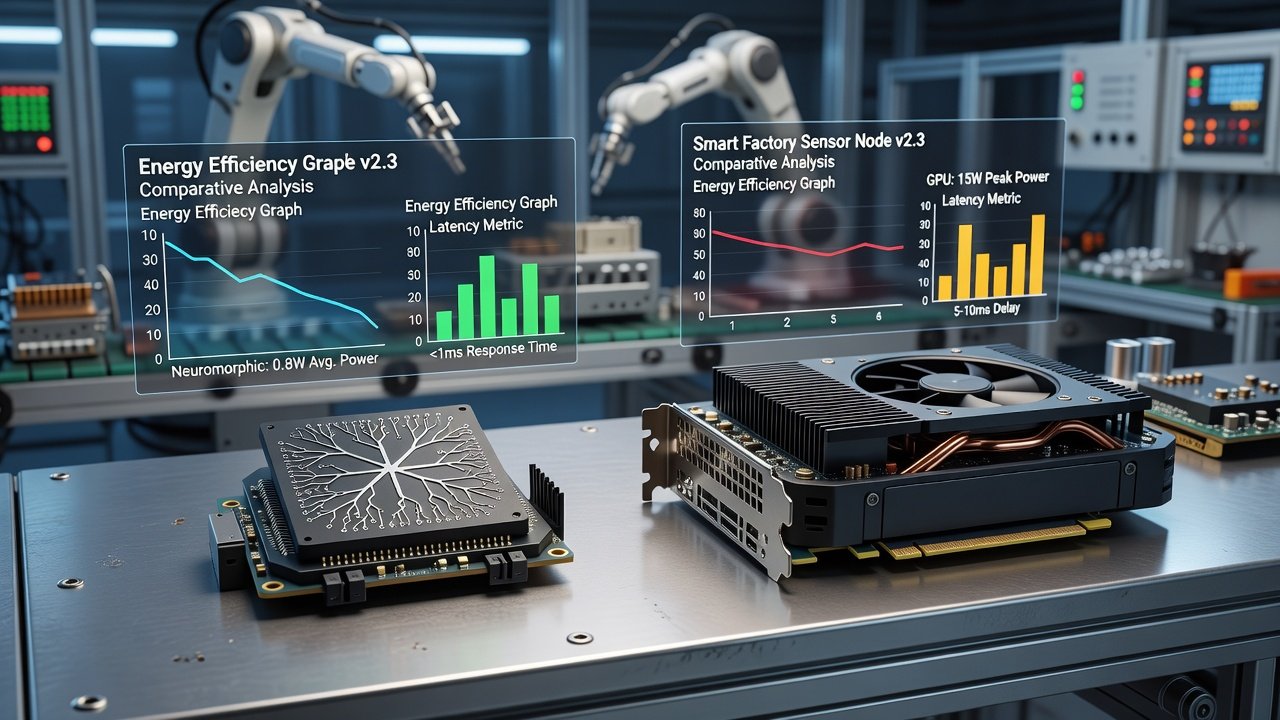
Neuromorphic architectures achieve orders-of-magnitude better efficiency for sparse data tasks common in IoT. While GPUs consume substantial power for parallel operations, neuromorphic designs use spiking neural networks that minimize idle consumption. In industrial settings, this translates to prolonged device uptime without frequent recharges or battery replacements. Traditional microcontrollers, by contrast, often run constant polling loops that drain resources even when no meaningful data arrives.
Real deployments highlight these advantages. Smart sensors using neuromorphic chips report dramatically lower power draw than GPU-accelerated alternatives, making them suitable for remote locations. For example, in pipeline monitoring systems, the technology enables year-long operation on small solar cells where GPU-based nodes would require weekly interventions. Intel and similar innovators have advanced these designs specifically for edge constraints.
Performance Benchmarks from Real 2026 Deployments
Industrial monitoring projects in 2026 have yielded concrete benchmarks. In smart factory sensor networks, neuromorphic chips processed vibration data with 95% accuracy while using under 10 milliwatts—far below GPU equivalents. Latency dropped to microseconds for anomaly detection, enabling predictive maintenance that prevents costly equipment failures.
Another case involved environmental sensors in agriculture, where edge inference on neuromorphic hardware achieved 50x energy reduction versus conventional microcontrollers. These results stem from deployments emphasizing always-on monitoring without grid power. Additional benchmarks from oil and gas facilities showed throughput improvements of 3x for seismic data analysis at the edge, with reduced false positives in event classification. Such metrics demonstrate reliability across varied environmental conditions including extreme temperatures and electromagnetic interference.
Integration Steps for Enterprise IoT Systems
Successful integration begins with hardware selection from leading vendors. Teams evaluate chip specifications against existing sensor interfaces and power budgets. Next, map existing sensor data flows to spiking neural network models using available simulation tools. Developers then optimize firmware for event-based inputs before deploying firmware updates across fleets.
Testing follows in controlled pilots, measuring latency and power metrics over weeks of operation. Full rollout includes monitoring dashboards to track ROI through reduced maintenance cycles. Enterprises often partner with specialists to accelerate compatibility layers and ensure seamless connectivity with legacy SCADA systems. A practical checklist includes verifying thermal tolerances, confirming protocol support, and conducting security audits for on-device model storage.
Latency Improvements and ROI Examples
Latency gains are substantial: edge processing cuts response times from hundreds of milliseconds to under 5 milliseconds in many IoT scenarios. This supports time-critical applications like robotic assembly lines where delays can cascade into production losses. In one documented rollout, a logistics company reduced alert propagation delays by 80%, improving overall system responsiveness.
ROI manifests through lower operational costs and fewer outages. Manufacturing firms have noted payback periods under two years via energy savings and downtime reduction. Scalable deployments amplify these benefits across hundreds of nodes, with cumulative savings in labor and replacement parts becoming evident within the first operational year. IBM research highlights similar patterns in cognitive edge computing projects.
Adoption Barriers and Emerging Solutions
Software compatibility remains a primary hurdle, as legacy codebases assume von Neumann architectures. Training developers on neuromorphic frameworks adds initial overhead, and limited availability of mature debugging tools can slow iteration cycles. Hardware supply chain constraints in early 2026 also posed temporary challenges for large-scale orders.
Emerging solutions include open-source compilers and hybrid frameworks bridging traditional and spiking models. Vendors now offer SDKs with pre-trained models for common IoT tasks, easing the transition. Industry consortia are standardizing interfaces to boost interoperability, while academic partnerships accelerate algorithm porting. IEEE working groups continue to publish guidelines that address many of these integration pain points directly.
Real-World Case Studies in Smart Sensors and Industrial Monitoring
One European automotive plant deployed neuromorphic-enabled vibration sensors across 200 assembly robots. The system detected bearing wear 12 hours earlier than previous GPU setups, cutting unplanned downtime by 35%. Another example comes from a North American utility provider that integrated the chips into grid sensors, achieving continuous monitoring of transformer health with minimal infrastructure upgrades.
These cases underscore the technology's versatility. In each instance, teams followed phased rollouts starting with 10-20 pilot units before expanding. Documentation of lessons learned, such as optimal spike encoding techniques for specific sensor types, has become shared industry knowledge through conferences and white papers.
Conclusion
Neuromorphic chips are reshaping 2026 IoT edge deployments by prioritizing efficiency and speed. With proven benchmarks and clear integration paths, enterprises can realize substantial returns while navigating compatibility challenges through evolving tools. As adoption matures, these chips will form the backbone of resilient, autonomous sensor networks worldwide.
FAQ
What are typical costs for neuromorphic IoT deployments as of late 2026?
Costs vary by scale but emphasize qualitative savings in energy and maintenance over upfront hardware investments.
How scalable are these chips for large sensor networks?
They scale effectively through modular designs, supporting thousands of nodes with minimal added power infrastructure.
What does the 2027 outlook hold for neuromorphic adoption?
Expect broader software ecosystems and integration with 5G/6G, driving mainstream industrial use by 2027.
Are there specific training requirements for teams adopting this technology?
Basic familiarity with neural network concepts helps, and vendor-provided online courses typically cover the essentials within a few weeks of dedicated study.
How do neuromorphic chips handle data security at the edge?
They support encrypted model storage and local inference that keeps sensitive data on-device, reducing exposure compared to cloud-reliant alternatives.

No comments yet. Be the first!