 NeoBit Daily

Introduction to Neuromorphic Chips in 2026 Industrial IoT
Neuromorphic computing is transforming industrial IoT deployments in 2026 by delivering brain-inspired processing that excels in edge environments. Unlike traditional GPUs optimized for parallel workloads in data centers, neuromorphic chips process data in an event-driven manner, enabling ultra-low power operation and real-time decision making directly on factory floors and logistics networks. This technology mimics the human brain's neural structure, using spiking neural networks to handle sparse, asynchronous data streams common in sensor-heavy industrial settings. As factories and supply chains digitize further, the demand for efficient on-device intelligence grows, making neuromorphic solutions particularly suited for environments where constant connectivity to cloud resources is impractical or costly.
This shift addresses critical pain points in industrial settings where latency under 10 milliseconds and continuous operation in harsh conditions are essential. Early adopters report significant efficiency gains, positioning neuromorphic technology as a key enabler for predictive maintenance and autonomous systems. The year 2026 marks a tipping point with multiple commercial rollouts demonstrating how these chips outperform conventional hardware in targeted use cases.
Performance Benchmarks: Neuromorphic Chips vs GPUs
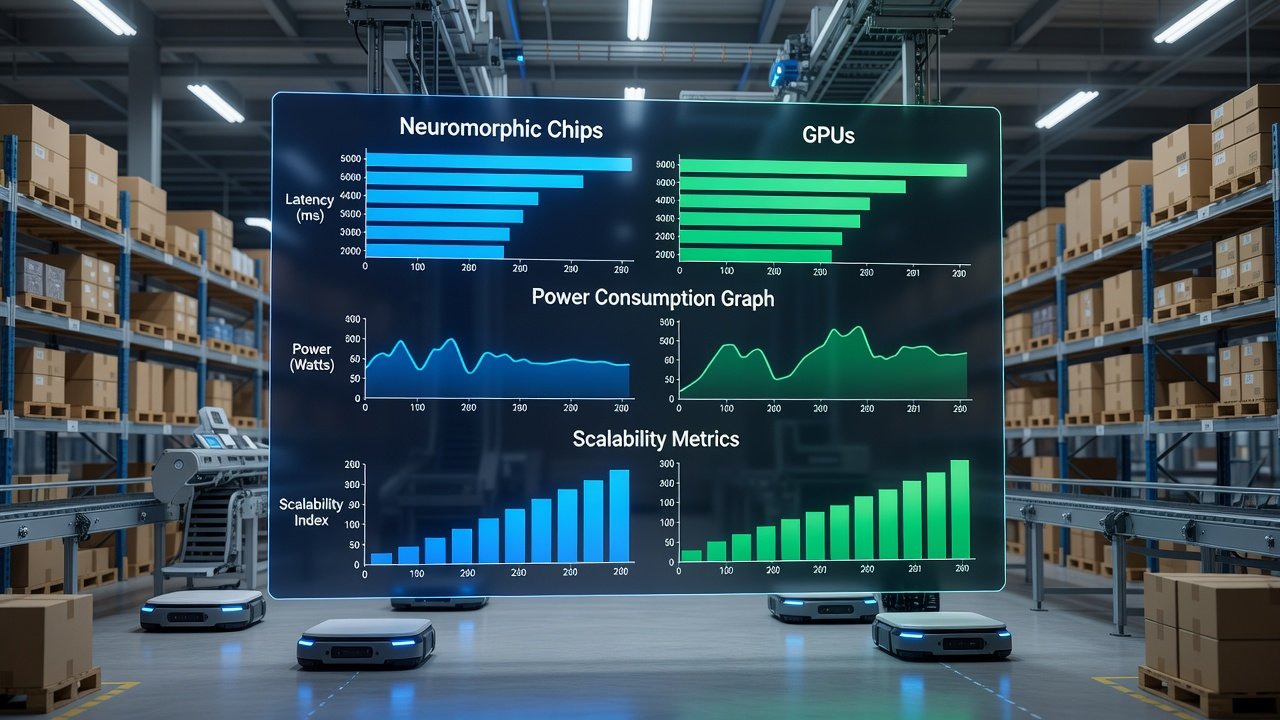
Independent evaluations in 2026 highlight clear advantages for neuromorphic architectures in IoT scenarios. Latency measurements show neuromorphic solutions achieving sub-millisecond inference on sensor data streams, compared to 5-15 milliseconds for GPU-accelerated edge devices under similar loads. This difference becomes critical in applications like robotic assembly lines where delays can cascade into production halts.
Power consumption stands out as another differentiator. Neuromorphic chips operate at milliwatt levels for always-on monitoring tasks, while equivalent GPU setups draw watts to tens of watts, leading to higher cooling requirements in industrial enclosures. Scalability tests demonstrate neuromorphic networks handling thousands of distributed sensors without proportional increases in energy draw or network congestion. In contrast, GPU clusters often require additional infrastructure investments as node counts rise.
Further benchmarks reveal superior handling of noisy or incomplete data typical in industrial environments. Neuromorphic hardware maintains accuracy rates above 95% even with intermittent sensor inputs, whereas GPUs may require extensive preprocessing that adds overhead. Intel and competing platforms provide detailed whitepapers on these metrics, confirming consistent results across multiple testbeds. Comparisons with NVIDIA GPU solutions underscore the trade-offs between raw throughput in controlled environments and adaptive efficiency at the edge.
Real-World Enterprise Case Studies
Factories in automotive manufacturing have integrated neuromorphic chips into vibration and temperature sensors for predictive maintenance. One deployment reduced unplanned downtime by 35% through instantaneous anomaly detection at the edge. The system processed data from hundreds of machines in real time, triggering alerts before failures occurred and allowing scheduled interventions that minimized production losses.
In logistics, warehouse operators use neuromorphic-enabled cameras and RFID readers to optimize inventory tracking. Scalability allows seamless expansion from 500 to over 10,000 nodes without GPU cluster upgrades. A major distribution center reported a 28% improvement in throughput after implementing event-driven processing that filtered irrelevant data locally. Another example comes from chemical processing plants where neuromorphic nodes monitor pressure and flow rates, achieving faster response to anomalies than GPU-based alternatives while operating reliably in explosive atmospheres due to lower heat generation.
Technical Deep Dive into Neuromorphic Architecture
At the core of these chips lies a network of artificial neurons and synapses that communicate via discrete spikes rather than continuous values. This design drastically reduces data movement, a primary energy consumer in traditional computing. In industrial IoT, this translates to efficient processing of time-series data from vibration sensors or acoustic monitors without constant data transmission to central servers.
Developers leverage frameworks that convert conventional neural networks into spiking equivalents, preserving accuracy while unlocking power savings. Hardware features such as on-chip learning allow models to adapt to new machine behaviors over time, a capability less common in static GPU deployments.
Integration Challenges and Solutions
Adopting neuromorphic hardware involves several hurdles. Legacy industrial protocols like Modbus require custom middleware for compatibility. Thermal management in dusty or high-vibration settings demands ruggedized packaging that protects delicate silicon while maintaining performance.
Software ecosystems are still maturing, with limited pre-trained models compared to GPU frameworks. Companies overcome these by partnering with chip vendors for reference designs and investing in hybrid training pipelines that combine cloud GPUs with edge neuromorphic inference. Security concerns around firmware updates and data isolation also require careful planning, often addressed through zero-trust architectures tailored for operational technology networks.
Adoption Roadmaps for Industrial Teams
A practical roadmap begins with pilot projects on non-critical lines to validate latency and power benefits. Teams should start by auditing existing sensor networks to identify high-value data streams suitable for spiking neural network conversion.
Next steps include mapping existing IoT sensor data to spiking neural network formats and conducting controlled benchmarks. Full rollout typically spans 12-18 months, incorporating staff training on neuromorphic programming tools and phased hardware installation. Organizations should prioritize vendors offering long-term support agreements to mitigate supply chain risks in specialized silicon. Regular reviews of performance data help refine the deployment strategy.
Measurable ROI Metrics from Early Adopters
Early 2026 deployments show strong returns through reduced energy bills and minimized equipment failures. Teams track metrics such as cost per inference and system uptime percentages to quantify impact. One logistics firm documented a 40% drop in energy usage for edge processing after switching from GPU nodes.
ROI calculators from industry consortia help forecast payback periods, often landing between 18 and 30 months depending on deployment scale. Additional benefits include extended hardware lifespan due to lower thermal stress and reduced maintenance needs. Continuous monitoring of these KPIs ensures sustained value as networks grow and new use cases emerge.
Common Mistakes to Avoid
- Overlooking the need for specialized training data conversion, leading to suboptimal model performance.
- Underestimating integration complexity with legacy PLC systems.
- Selecting hardware without verifying long-term vendor ecosystem support.
- Ignoring environmental factors like electromagnetic interference that can affect spike-based signaling.
- Skipping phased pilots and attempting full-scale deployment prematurely.
Practical Steps for Hardware Selection
- Assess workload characteristics: event-driven sensor data favors neuromorphic over GPU.
- Evaluate vendor ecosystems for development tools and community support, including resources from Arm.
- Conduct side-by-side benchmarks on representative industrial datasets focusing on latency and power.
- Plan for hybrid architectures combining neuromorphic edge nodes with centralized GPU analytics.
- Review security certifications for OT network integration and compliance requirements.
- Engage in proof-of-concept testing with actual factory data before committing to volume purchases.
FAQ on Neuromorphic Hardware Selection
What latency targets are realistic for industrial IoT?
Neuromorphic chips routinely deliver under 1 ms response times for anomaly detection, far surpassing GPU edge alternatives in always-on scenarios.
How do power profiles compare in continuous operation?
Neuromorphic designs consume orders of magnitude less energy for sparse event processing, making them ideal for battery or solar-powered remote sensors.
Are there open standards for neuromorphic software?
Emerging frameworks from academic and industry groups are improving portability, though full standardization remains in progress.
What training is required for engineering teams?
Most teams benefit from vendor-led workshops covering spiking neural network conversion and edge deployment best practices, typically lasting one to two weeks.
Can neuromorphic chips handle high-volume data bursts?
They excel at sparse data but may pair with GPUs for bursty workloads through hybrid configurations that route intensive tasks appropriately.
Conclusion
Neuromorphic chips are set to redefine industrial IoT efficiency in 2026 by outperforming GPUs on key metrics critical to factories and logistics. Organizations that invest in structured pilots, address integration thoughtfully, and monitor ROI metrics will capture substantial competitive advantages through lower operating costs and higher system reliability. As the ecosystem matures, these technologies will become foundational for next-generation smart manufacturing and supply chain operations.


No comments yet. Be the first!