 NeoBit Daily
Introduction to DNA Data Storage in 2026
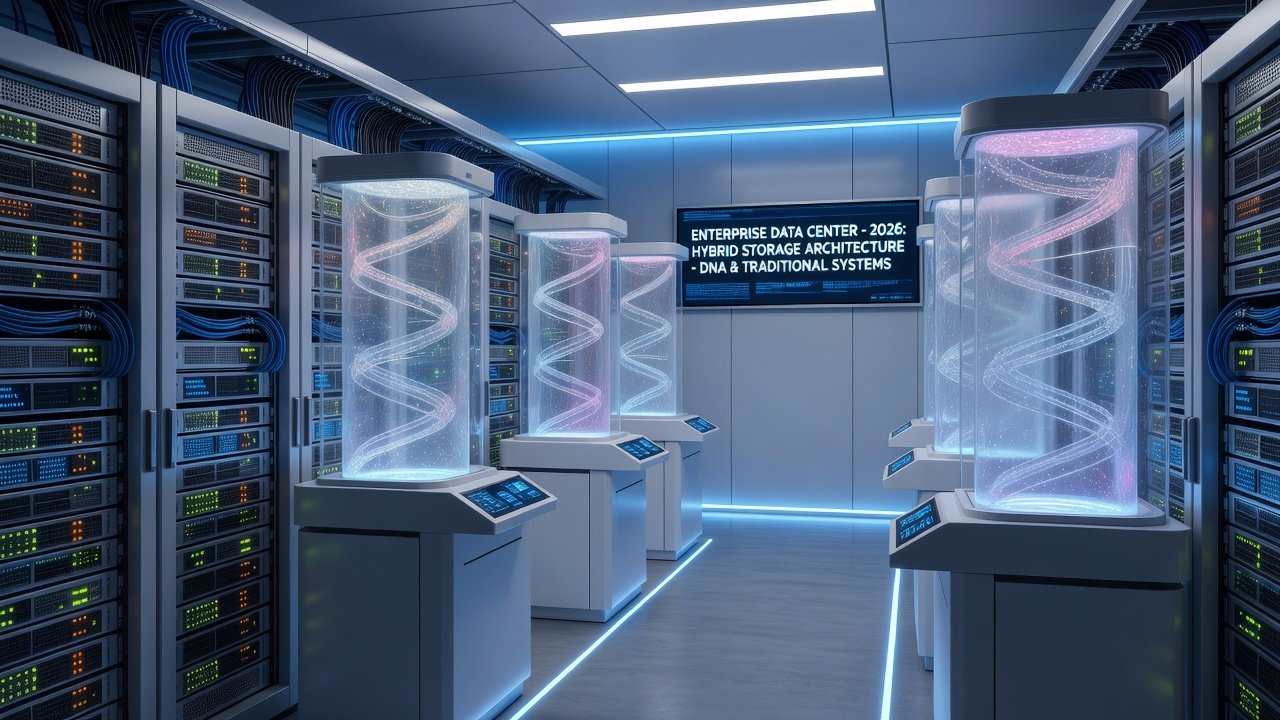
As data volumes continue to explode across industries, traditional storage media such as magnetic tape and solid-state drives face fundamental limits in physical density, energy consumption, and long-term durability. In 2026, enterprise organizations have begun shifting attention toward DNA-based data storage solutions for their unparalleled archival potential. Commercial pilots launched by major cloud providers and leading banks this year demonstrate how synthetic DNA can encode vast quantities of digital information into biological molecules that remain stable for centuries. This article provides IT decision-makers with an in-depth examination of these deployments, including density advantages, practical integration methods with existing infrastructure, performance benchmarks, real-world case studies, and guidance on compliance and migration strategies.
Commercial Pilots Launched in 2026
Early 2026 marked the transition of DNA storage from laboratory research to limited commercial pilots. Cloud hyperscalers initiated small-scale deployments targeting cold archival workloads where data is written once and accessed infrequently. Financial institutions followed closely, focusing on regulatory record retention that must remain intact for decades. These pilots emphasize DNA's core strengths: extreme information density measured in exabytes per gram and resistance to environmental degradation without constant power or climate control. Organizations involved report successful encoding and retrieval cycles that align with internal service-level agreements for deep-archive tiers.
Density Gains and Primary Archival Use Cases
DNA storage delivers density improvements several orders of magnitude beyond conventional tape cartridges, allowing enterprises to consolidate petabytes of data into physical spaces no larger than a few milliliters of synthetic material. This reduction in footprint directly lowers real-estate and cooling expenses within data centers. Typical archival use cases include regulatory compliance records, scientific research datasets, historical corporate documentation, and long-term media libraries. Because DNA molecules can theoretically preserve information for hundreds of years when stored in controlled conditions, the technology suits any workload where data must remain readable far beyond the lifespan of current magnetic or flash media.
Detailed Integration Steps with Existing Tape and SSD Systems
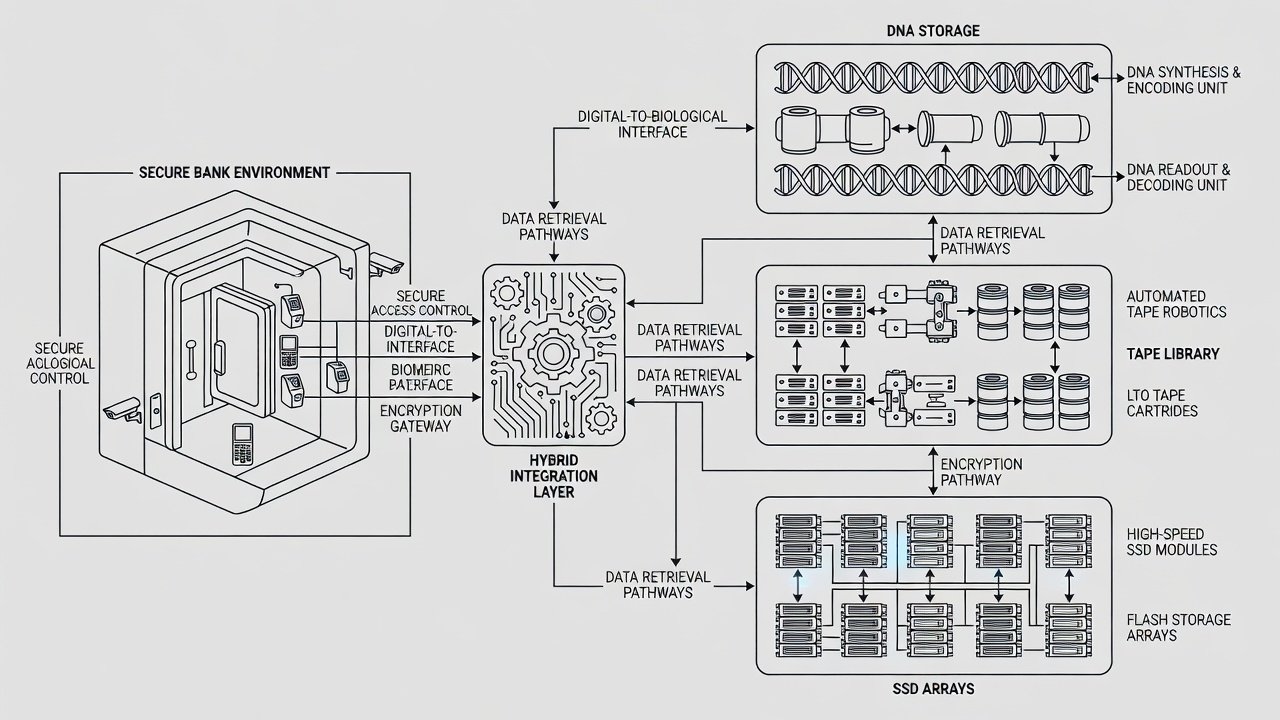
Integrating DNA storage into production environments requires a methodical, phased approach that preserves compatibility with current tape libraries and SSD arrays. First, IT teams should conduct a data classification audit to identify cold datasets suitable for migration. Second, deploy middleware layers that handle DNA encoding and decoding while presenting familiar object-storage APIs. Third, establish hybrid tiering policies that route hot data to SSDs, warm data to tape, and archival data to DNA. Fourth, implement automated orchestration scripts that trigger encoding jobs during off-peak hours. Fifth, validate end-to-end retrieval workflows through repeated test cycles before moving production workloads. Many vendors supply reference architectures that map directly onto existing backup and archive platforms.
Cost Comparisons and Latency Benchmarks
Although the initial encoding process for DNA storage carries higher operational overhead than writing to tape or SSD, the long-term total cost of ownership becomes favorable for data retained beyond ten years because physical media requires no ongoing power or frequent media migration. Latency characteristics remain the primary constraint: write operations involve chemical synthesis that can take several hours, while read operations require sequencing that currently completes in a similar timeframe. These benchmarks position DNA storage exclusively for deep-archive scenarios rather than any workload needing sub-second access. Organizations evaluating the technology should model scenarios based on access frequency rather than raw media cost alone.
Case Study: Global Cloud Provider Deployment
One leading cloud provider completed a 2026 pilot that migrated 50 petabytes of infrequently accessed customer backup data into DNA storage. The project utilized custom orchestration software to interface with legacy tape libraries, allowing seamless failover during retrieval tests. Results showed that the DNA tier maintained data integrity across multiple encoding and decoding cycles while reducing the physical storage footprint by more than 90 percent compared with equivalent tape cartridges. The pilot also validated encryption-at-rest capabilities that meet the provider's existing security certifications.
Case Study: International Bank Regulatory Archive
An international bank piloted DNA storage for 20-year regulatory archives spanning multiple jurisdictions. Integration occurred through secure gateways that connected the bank's SSD-based transaction systems to the DNA encoding pipeline. The project successfully demonstrated that audit trails remained immutable after encoding, satisfying internal compliance teams and external auditors. Space savings within the primary data center allowed reallocation of floor space to higher-value compute workloads.
Mistakes to Avoid During Early Adoption
- Underestimating encoding time when planning service windows.
- Selecting datasets with any possibility of near-term access requirements.
- Neglecting to maintain parallel copies on traditional media during the pilot phase.
- Ignoring vendor-specific encoding format lock-in risks.
- Failing to involve legal and compliance stakeholders before migration begins.
FAQ on Compliance and Data Migration
- How does DNA storage address data residency regulations? Encoded DNA can be physically located in facilities that satisfy geographic requirements while encryption keys remain under organizational control.
- What migration tools are available? Leading vendors provide open-source converters that translate common file formats into synthetic DNA sequences, along with verification utilities that confirm bit-for-bit fidelity after decoding.
- Are there standards for interoperability? Industry consortia continue developing formats aligned with existing archival protocols; early adopters should monitor updates from standards bodies.
- How should organizations plan for future technology refreshes? Maintain metadata indexes on conventional systems and schedule periodic decoding tests to validate long-term readability.
Conclusion and Vendor Roadmaps
DNA data storage is maturing rapidly, with broader commercial availability anticipated in late 2026 and 2027 according to current vendor timelines. IT leaders should begin evaluating integration requirements now so that pilot projects can inform production decisions. The technology complements rather than replaces tape and SSD ecosystems, delivering a practical route toward sustainable, ultra-high-density archival strategies. For the latest technical specifications and partnership opportunities, consult resources from Microsoft, IBM, and NIST.
Learn more about emerging technologies like DNA data storage.


No comments yet. Be the first!