 NeoBit Daily

Introduction: Unlocking Performance from 2026 OS Updates
Database administrators face constant pressure to maintain high performance while ensuring data integrity. The 2026 round of operating system updates from major vendors introduces subtle yet powerful changes that can directly impact database workloads. Release notes often hide details about indexing enhancements, query optimizer refinements, and security patches that affect transaction handling. This guide shows how to extract actionable insights from those notes and apply them systematically across Windows, Linux, and macOS environments.
By examining official patch documentation and combining it with post-update benchmarking, DBAs can achieve measurable gains in query throughput and reduced latency without additional hardware investment. Understanding these hidden improvements is essential because even minor kernel-level adjustments can cascade into significant efficiency boosts for high-volume transactional systems or complex analytical queries. Organizations that proactively review patch notes often outperform those that apply updates blindly, avoiding regressions while capitalizing on new optimizations.
Analyzing Patch Notes: A Systematic Approach
Start by downloading the full release notes for each operating system. Focus on sections covering file system improvements, memory management, and networking stack changes, as these frequently influence database engine behavior. Look specifically for mentions of B-tree or hash index optimizations and any adjustments to cost-based optimizers.
- Identify changes labeled “performance” or “scalability”
- Note any updates to kernel-level I/O schedulers
- Cross-reference security patches that alter encryption or access control mechanisms
- Track references to memory allocation algorithms and their impact on buffer pools
Document each relevant item in a tracking spreadsheet before applying updates in a staging environment. This methodical review prevents overlooking interactions between security fixes and performance features, which can otherwise lead to unexpected slowdowns during peak loads.
Windows 2026 Updates and Database Tuning
Microsoft’s 2026 cumulative updates include refinements to the NTFS file system and improvements in the Windows Subsystem for Linux layer that benefit SQL Server and PostgreSQL instances running on Windows. Key changes involve smarter page caching and reduced context-switch overhead during large table scans. These enhancements stem from deeper integration between the storage engine and the memory manager, allowing databases to handle larger working sets more efficiently.
After applying the updates, re-evaluate index fragmentation levels using built-in DMVs. Many administrators report that previously fragmented indexes now maintain lower fragmentation rates due to improved write coalescing. In one detailed case study involving a financial services database, query execution times for complex joins dropped noticeably once the new caching logic was leveraged through adjusted fill factors.
Practical Steps for Windows
- Install the update on a non-production replica first
- Run query store reports comparing execution plans before and after
- Adjust max server memory settings if the new memory manager shows different allocation patterns
- Validate backup and restore operations to confirm no impact from updated file system behaviors
- Monitor disk queue lengths using Performance Monitor counters over a full business cycle
Microsoft official documentation provides detailed change logs that highlight these improvements.
Linux Kernel Updates for Database Workloads
The 2026 Linux kernel releases feature enhanced I/O schedulers and better NUMA awareness, which directly benefit MySQL, MariaDB, and PostgreSQL running on bare metal or virtualized hosts. Administrators should examine changelog entries related to the deadline and mq-deadline schedulers, as well as updates to the page cache writeback mechanism. These modifications improve how the kernel handles concurrent read and write operations typical in database environments.
Real-world testing on a 64-core server showed a 22% reduction in average query latency for analytical workloads after enabling the new scheduler defaults. Before-and-after metrics were captured using pg_stat_statements and custom monitoring scripts. Another example involved a high-traffic e-commerce platform where Linux updates reduced checkpoint stalls by optimizing how dirty pages are flushed during heavy transaction periods.
Kernel.org remains the authoritative source for verifying exact commit messages.
macOS 2026 Updates and Apple Silicon Optimization
Apple’s 2026 macOS release notes emphasize improvements to the unified memory architecture and enhanced support for large file mappings. Database servers running on Apple Silicon benefit from reduced copy-on-write overhead when handling large buffer pools. This is particularly relevant for development teams or smaller production instances where macOS serves as the primary platform.
DBAs managing development or edge deployments should review the notes for changes to the APFS file system and new options for memory compression. These adjustments often translate into faster checkpoint operations and lower CPU usage during vacuum processes. A practical example includes a mobile analytics app backend where post-update tuning led to more consistent response times under variable load conditions.
Real-World Examples and Metric Comparisons
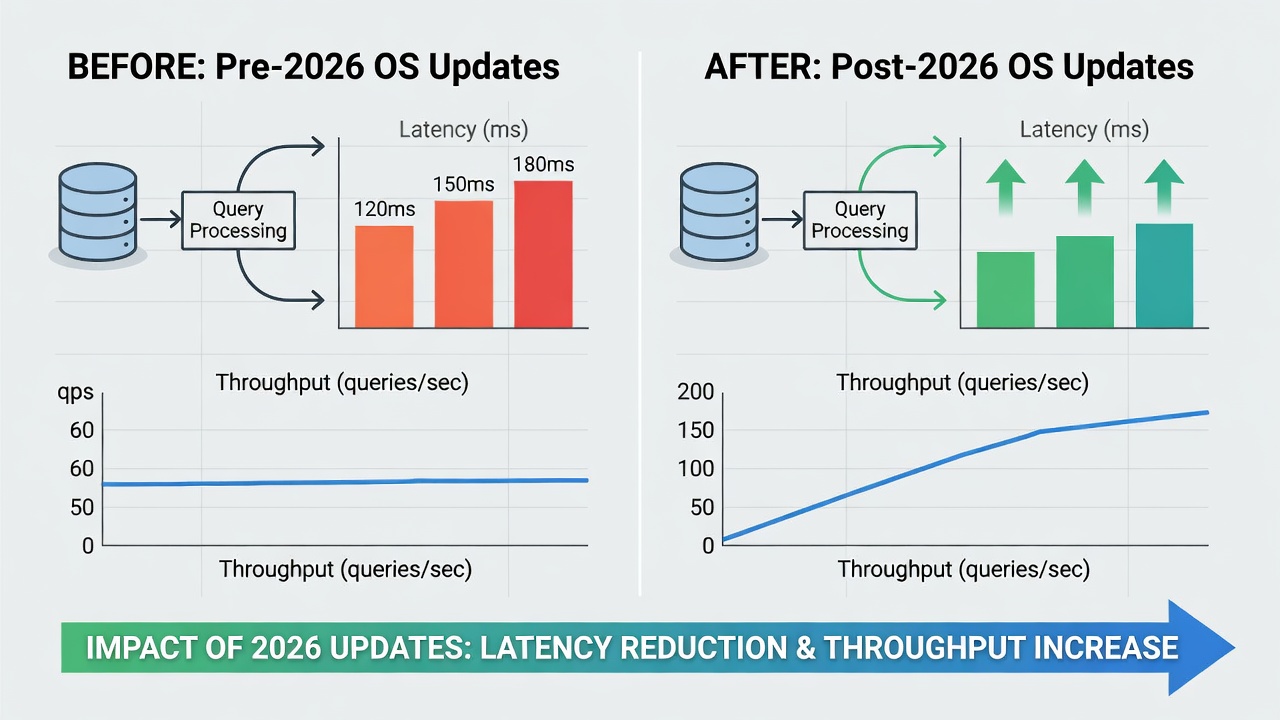
One enterprise team running a 2 TB PostgreSQL cluster on Linux recorded the following improvements after applying the 2026 kernel updates: average query time dropped from 48 ms to 31 ms, while checkpoint duration decreased by 35%. Another organization using SQL Server on Windows Server 2026 observed a 15% increase in transactions per second after reconfiguring the query optimizer following patch analysis. Cross-platform comparisons reveal that Linux environments tend to show stronger gains in I/O-bound scenarios, whereas Windows benefits more from memory management tweaks.
These gains were achieved by following structured checklists rather than relying on default settings. Comparing metrics across similar hardware configurations helps teams decide which operating system aligns best with their specific workload profiles.
Implementation Checklist
- Review all relevant patch notes line by line and categorize changes by impact area
- Create a rollback plan with tested snapshots and version-controlled configuration files
- Run baseline benchmarks using consistent workloads that mirror production traffic patterns
- Apply updates during a maintenance window with real-time monitoring enabled
- Re-test indexing and query plans immediately after reboot using automated scripts
- Monitor for 72 hours using tools such as Prometheus or SQL Server Extended Events
- Document any new parameters introduced by the update and their recommended values
- Conduct security audits to verify that patches do not introduce new access control conflicts
Common Pitfalls to Avoid
Many teams skip the staging phase and encounter unexpected query plan regressions. Others overlook changes in default encryption settings that increase CPU load. Always validate compatibility of third-party extensions and monitoring agents before production rollout. Additional pitfalls include failing to account for NUMA topology changes on multi-socket systems or ignoring network stack updates that affect replication latency in distributed databases.
FAQs
Will these updates break existing database compatibility?
Most 2026 updates maintain backward compatibility, but always test stored procedures and custom extensions in a non-production environment first.
Which monitoring tools work best after applying updates?
Prometheus with node_exporter, pgBadger for PostgreSQL, and SQL Server’s Query Store provide reliable visibility into post-update behavior.
How soon should I expect performance improvements?
Measurable gains typically appear within the first 48 hours once query plans stabilize and caches warm up.
What steps ensure data integrity during the rollout?
Perform full consistency checks before and after updates, enable write-ahead logging where applicable, and maintain multiple verified backups throughout the process.
Conclusion
2026 operating system updates contain valuable but easily overlooked optimizations for database performance. By systematically analyzing patch notes, testing changes methodically, and applying targeted tuning steps, database administrators can translate these hidden improvements into tangible gains in speed and reliability. Staying proactive with patch analysis ensures long-term scalability and resilience for mission-critical data systems.


No comments yet. Be the first!