 NeoBit Daily

Introduction
In 2026, software and operating system updates continue to roll out at an accelerated pace, making effective communication essential for IT leaders. Poorly communicated updates often lead to user confusion, reduced productivity, and outright resistance. This article explores how to translate complex patch notes into targeted internal communications that boost adoption rates and foster trust across organizations. With the increasing complexity of enterprise environments, where hybrid work models and multi-device ecosystems are standard, the stakes for clear update messaging have never been higher. IT leaders must move beyond generic announcements and instead develop nuanced plans that address diverse stakeholder needs, anticipate potential friction points, and leverage data-driven insights to refine their approaches over time.
By focusing on audience segmentation, concise messaging, and real-world examples from major platforms like Windows and Linux, IT teams can build announcement plans that deliver measurable results. We also provide a practical step-by-step framework, sample templates, and a comparison of successful versus failed approaches. Throughout this guide, we emphasize actionable tactics that can be implemented immediately, ensuring your organization stays ahead in an era of rapid technological evolution.
Why Effective Update Communication Matters in 2026
Software updates address critical security vulnerabilities, performance improvements, and new features. However, without clear communication, users may delay installations or ignore important changes. Research from leading tech organizations shows that structured communication plans can increase adoption by up to 40 percent. IT leaders must treat patch notes not as technical documents but as strategic tools for change management. In today’s landscape, where remote and hybrid teams rely heavily on consistent system performance, a single poorly handled rollout can disrupt workflows across entire departments for days or even weeks. Effective communication reduces helpdesk ticket volumes, accelerates feature utilization, and builds long-term user confidence in IT initiatives.
Moreover, regulatory compliance requirements in many industries now mandate transparent disclosure of update impacts, making robust communication plans not just beneficial but essential for avoiding potential legal or operational risks. Organizations that excel in this area often report higher employee satisfaction scores and lower turnover in technical support roles.
Audience Segmentation Strategies
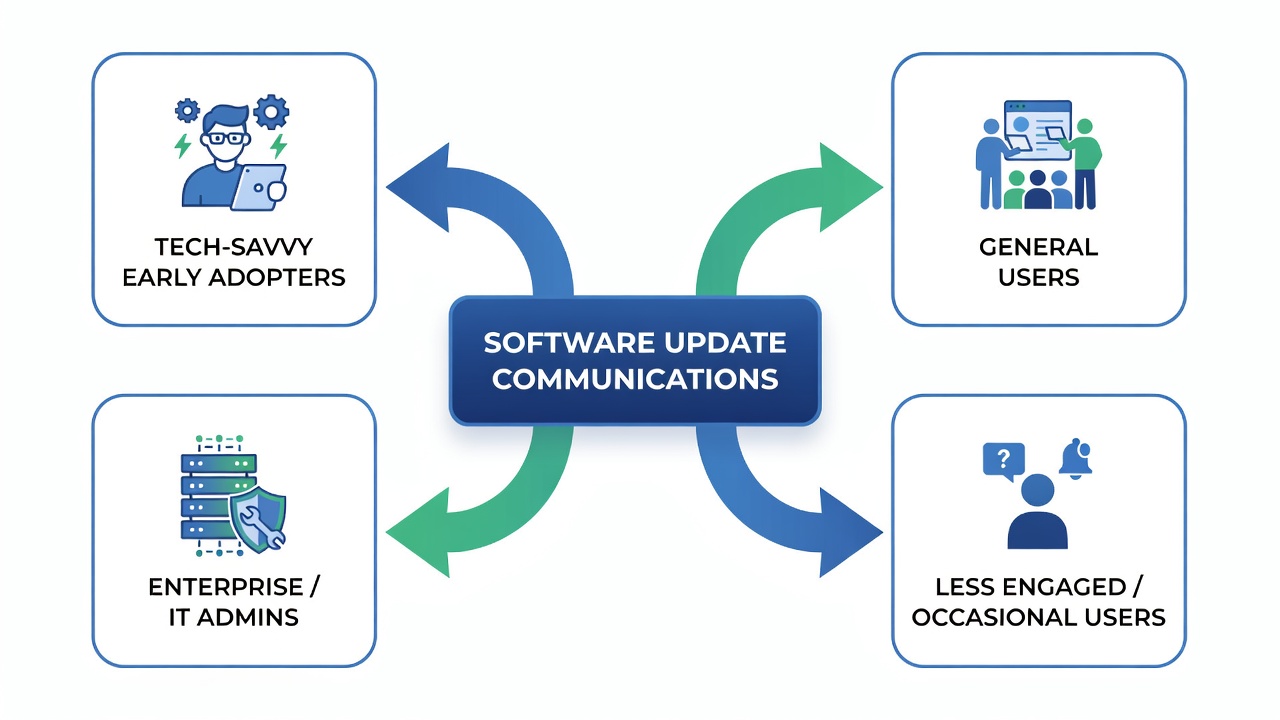
One-size-fits-all announcements rarely succeed. Effective plans begin with dividing stakeholders into distinct groups based on their roles, technical expertise, and potential impact from the update. Proper segmentation ensures that messaging feels relevant and actionable rather than overwhelming or irrelevant.
- Executive Leadership: Focus on business outcomes, risk reduction, and ROI of the update. Include high-level metrics such as projected downtime costs avoided and alignment with strategic goals.
- End Users: Emphasize usability improvements, minimal downtime, and quick-start guides. Provide simple before-and-after comparisons and short video walkthroughs when possible.
- IT Support Teams: Provide detailed technical breakdowns, rollback procedures, and troubleshooting steps. Share internal testing results and known edge cases.
- Departmental Managers: Highlight workflow changes and training requirements. Offer customizable communication templates they can forward to their teams.
Segmentation allows for tailored messaging that resonates with each group, reducing resistance and accelerating buy-in. For larger organizations, consider further subdividing by department or location to account for regional variations in system usage patterns.
Crafting Concise Summaries from Patch Notes
Raw patch notes are often lengthy and jargon-heavy. The key is distilling them into accessible summaries. Start by identifying the top three benefits and risks for each audience. Use plain language, bullet points, and visual aids to improve readability. Avoid overwhelming readers with every minor fix; instead, prioritize changes that affect daily operations. Incorporate real user scenarios to illustrate how the update will feel in practice, such as faster login times or improved collaboration tools.
When summarizing, maintain a consistent tone that balances professionalism with approachability. Test drafts with representatives from each segment to ensure clarity before wider distribution.
Step-by-Step Framework for Announcement Creation
- Review the Full Patch Notes: Gather all details from official sources and internal testing results. Cross-reference with previous updates to identify recurring themes or new patterns.
- Segment Your Audience: Map stakeholders and their specific concerns using surveys or past feedback data.
- Write Tiered Content: Create a high-level overview plus deeper technical appendices. Version the content for different channels such as email, intranet, and Slack.
- Incorporate Timing and Impact: Clearly state rollout schedules, expected downtime, and contingency plans. Include time-zone considerations for global teams.
- Include Support Resources: Link to FAQs, training videos, and helpdesk contacts. Pre-schedule live Q&A sessions where feasible.
- Test and Iterate: Pilot the communication with a small group before full distribution. Gather immediate feedback and refine wording.
- Measure and Follow Up: Track adoption metrics and gather feedback for future updates. Use analytics tools to monitor open rates, click-throughs, and installation completion percentages.
Real-World Examples from Windows and Linux Rollouts
Microsoft's approach to Windows updates demonstrates strong segmentation. Their communications separate consumer-friendly highlights from enterprise-focused security bulletins, resulting in higher compliance rates. In contrast, some Linux distributions have faced criticism for overly technical release notes that alienate non-developer users. Successful Windows campaigns often use email digests with clear calls to action, while effective Linux projects like those from the Linux Foundation provide layered documentation on their official sites. IT leaders can adapt these models by mirroring the clarity of Microsoft enterprise communications.
Additional lessons come from enterprise Linux environments such as those managed by Red Hat, where phased rollouts combined with detailed changelogs have proven effective at maintaining system stability across large infrastructures. These examples highlight the value of proactive, multi-format communication that meets users where they already work.
Successful vs. Failed Communication Approaches
Organizations that succeeded in 2025-2026 updates typically achieved 85 percent or higher adoption within the first week by using proactive, multi-channel messaging. Failed attempts often relied on generic all-staff emails without follow-up, leading to widespread confusion and delayed deployments. Key differentiators include personalization, timing, and the inclusion of actionable next steps. For instance, one healthcare provider reduced update-related incidents by 60 percent after implementing segmented newsletters and in-app notifications, whereas a retail chain experienced significant pushback after a last-minute, unsegmented announcement caused unexpected workflow interruptions during peak season.
Sample FAQs and Templates
Include a standardized FAQ covering common questions such as “When will the update occur?” and “What should I do if I encounter issues?” Provide downloadable templates for announcements that IT teams can customize quickly for each release. A strong template typically features an attention-grabbing subject line, a one-paragraph executive summary, a bullet list of user benefits, and a clear timeline section followed by support contacts.
Measuring Success and Continuous Improvement
Beyond initial rollout, establish key performance indicators such as adoption velocity, support ticket reduction, and user satisfaction surveys. Review these metrics after each major update to refine future communication strategies. Tools like internal analytics dashboards and feedback forms help identify which message formats resonate most effectively with different audiences.
Conclusion
Building effective update communication plans requires deliberate strategy around segmentation, clarity, and measurement. By applying the frameworks and examples outlined above, IT leaders can turn 2026 patch notes into powerful drivers of adoption and organizational resilience. Start implementing these practices with your next release to see immediate improvements in user engagement and overall system reliability.


No comments yet. Be the first!