 NeoBit Daily

Introduction to 2026 Software Updates Compliance
Regulated industries such as healthcare and finance face mounting pressure to maintain compliance when deploying software updates and operating system patches. In 2026, organizations must interpret patch notes and release notes not only for technical improvements but also for audit readiness. Failure to align updates with regulatory frameworks can result in penalties, operational disruptions, and compromised patient or customer data. As digital transformation accelerates across sectors, the volume of updates has increased, making proactive compliance strategies essential for long-term success.
This comprehensive guide provides practical strategies for risk assessment, documentation standards, and policy integration. It includes step-by-step validation processes, multiple real-world deployment examples, and detailed comparisons of compliance automation tools. Readers will also find guidance on avoiding common pitfalls and maintaining business continuity during update cycles.
Understanding the 2026 Regulatory Landscape
Healthcare organizations must align with HIPAA and FDA guidelines, while financial institutions follow SEC and PCI DSS rules. Both sectors benefit from the NIST Cybersecurity Framework, which emphasizes continuous monitoring and documented change management. In 2026, additional emphasis has been placed on supply chain security and third-party vendor assessments due to evolving global standards.
Release notes in 2026 often highlight security patches, API changes, and compliance-related fixes. Teams should map each change to specific regulatory clauses to demonstrate due diligence during audits. Understanding these nuances helps organizations stay ahead of inspectors who increasingly scrutinize update histories.
Interpreting Patch Notes and Release Notes for Audits
Effective interpretation begins with a compliance matrix that cross-references vendor notes against applicable regulations. Key elements to examine include vulnerability severity ratings, affected components, and any mentions of data handling changes. For example, a note about encryption updates should be evaluated against HIPAA security requirements for protected health information.
Organizations are advised to maintain a living document that translates technical language into regulatory impact statements. This practice not only supports audits but also educates cross-functional teams on why certain updates receive priority.
Building a Robust Risk Assessment Framework
Before applying any update, conduct a structured risk assessment that considers both technical and operational dimensions. Start by identifying affected systems and data flows, then evaluate potential impact on patient safety or financial transactions. Review vendor-supplied security advisories in detail and assess compatibility with existing controls such as access management and logging mechanisms.
Document findings in a standardized risk register that auditors can easily review. Include probability scores, potential consequences, and mitigation strategies. Regular reassessment after initial deployment ensures emerging issues are captured promptly.
Documentation Standards and Audit Readiness
Comprehensive documentation is essential for demonstrating compliance. Maintain records that include update version numbers, deployment dates, testing results, and rollback procedures. Integrate these records with existing policies through version-controlled repositories and automated change management systems.
Consistent formatting across all documentation helps demonstrate that updates were evaluated against regulatory requirements rather than applied ad hoc. Include timestamps, responsible personnel, and references to specific regulatory sections for maximum transparency.
Step-by-Step Guidance on Validating Updates
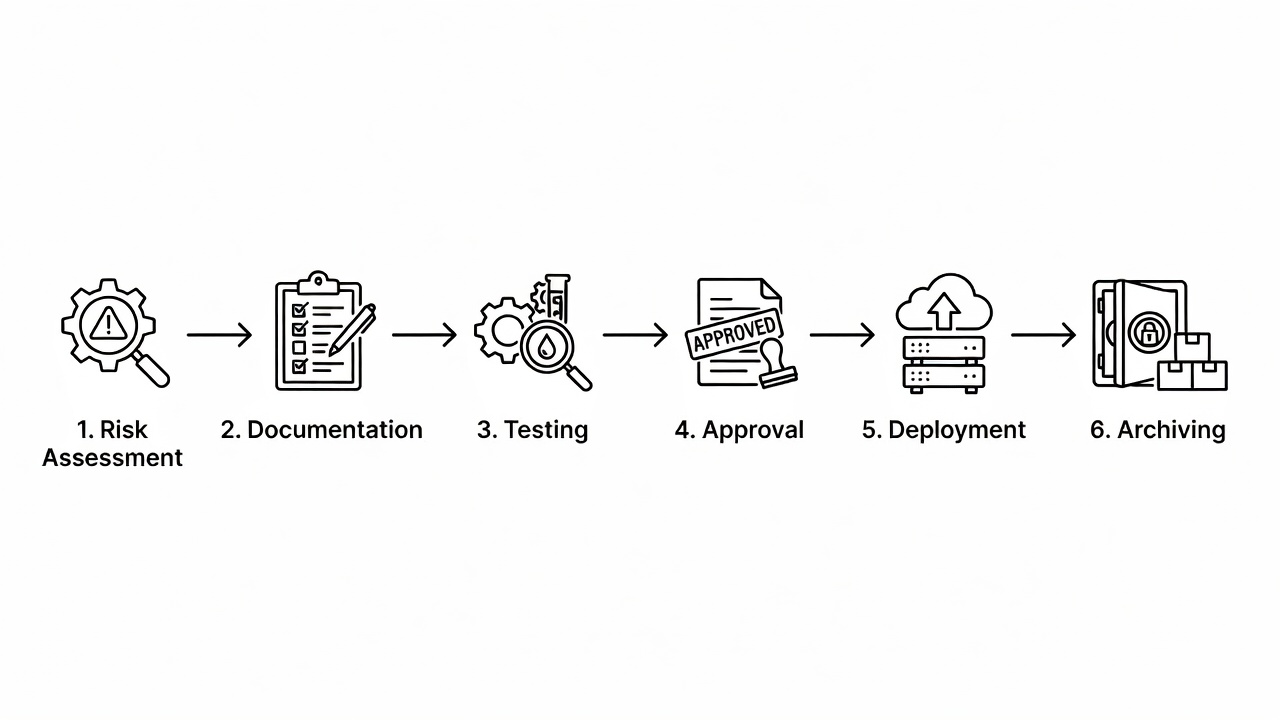
- Review release notes against your compliance matrix and flag any high-risk items.
- Perform sandbox testing with simulated regulated data to observe real-world behavior.
- Conduct peer review by compliance, IT security, and legal teams to gather diverse perspectives.
- Obtain formal sign-off from designated officers, documenting any exceptions or conditions.
- Deploy in a phased rollout with continuous monitoring checkpoints at each stage.
- Archive all artifacts including test logs and approval records for future audits.
This methodical process minimizes legal exposure while supporting uninterrupted business operations.
Real-World Examples of Successful Deployments
A major hospital network successfully validated a 2026 electronic health record update by mapping each patch to HIPAA security rules. The phased rollout reduced downtime to under two hours and passed a surprise audit with zero findings. Their success stemmed from early involvement of clinical staff in testing scenarios that mirrored daily workflows.
In the finance sector, a regional bank used automated compliance checks to confirm that an operating system patch addressed PCI DSS requirements before production deployment. This approach avoided potential fines and maintained customer trust during peak transaction periods. Another example involves a national insurer that integrated update validation into its existing governance framework, resulting in faster approval cycles and improved cross-department collaboration.
Comparing Tools That Automate Compliance Checks
Several platforms help streamline validation processes. Solutions such as ServiceNow Security Operations and Qualys VMDR offer automated mapping of updates to regulatory controls with strong reporting features. Open-source options like OpenVAS provide cost-effective scanning but require more manual configuration and ongoing maintenance.
When evaluating tools, consider integration capabilities with existing ticketing systems, ease of use for non-technical stakeholders, and support for custom regulatory frameworks. Many organizations run pilot programs to test accuracy before full-scale adoption. The right tool can significantly reduce manual effort while improving consistency across update cycles.
Integrating Updates with Existing Policies and Business Continuity
Successful compliance requires seamless integration with broader organizational policies. Update change management procedures to reference compliance validation steps explicitly. Align update schedules with business continuity plans so that critical operations remain protected during deployment windows.
Regular tabletop exercises that simulate update-related incidents help teams practice coordinated responses. This preparation ensures that regulatory obligations do not conflict with operational resilience goals.
Common Pitfalls and How to Avoid Them
Many teams overlook rollback planning or fail to update policies after deployment. Others rush validation to meet vendor timelines, leading to incomplete documentation. Regular training sessions and simulated audit exercises help surface these gaps early, fostering a culture of continuous improvement.
Frequently Asked Questions
How often should compliance checks occur?
Align checks with every critical patch cycle and conduct quarterly policy reviews to account for regulatory changes.
What if an update conflicts with regulations?
Delay deployment, document the conflict thoroughly, and work with the vendor to obtain a compliant alternative or formal waiver where permitted.
Can automation fully replace human oversight?
No. Automation accelerates validation and reduces errors, but final sign-off must remain with qualified compliance personnel who understand context-specific risks.
How should small organizations approach these requirements?
Start with foundational tools and standardized templates, then gradually incorporate automation as resources allow. Partnering with managed service providers can bridge expertise gaps effectively.
What role does staff training play?
Training ensures that all stakeholders recognize the importance of compliance steps and can contribute meaningfully to risk assessments and documentation efforts.
Conclusion
Proactive management of 2026 software updates enables regulated sectors to maintain compliance, reduce legal risks, and sustain operations. By combining structured risk assessment, rigorous documentation, validated automation tools, and ongoing training, organizations can turn update cycles into opportunities for stronger governance and improved resilience.

No comments yet. Be the first!