 NeoBit Daily

Understanding 2026 Patch Notes as Strategic Signals
Business leaders frequently treat patch notes as routine technical documents, yet in 2026 they function as vital indicators of evolving productivity tools, security protocols, and operational expenses. Major operating systems including Windows, macOS, and leading Linux distributions are integrating advanced AI capabilities alongside strengthened encryption standards that influence enterprise strategy at every level. This comprehensive guide analyzes these updates from an executive perspective, emphasizing decision-making implications instead of technical implementation details.
Patch notes released throughout 2026 highlight recurring themes such as automated threat detection, seamless cross-device synchronization, and refined resource allocation algorithms. Leaders who monitor these documents gain foresight into potential disruptions or advantages that could reshape quarterly planning and risk assessments. By viewing patch notes through a strategic lens, executives can align technology roadmaps with broader business objectives rather than reacting after changes are deployed.
Real-World Business Impacts from Recent Updates
Early 2026 Windows releases introduced mandatory enhancements to multi-factor authentication and endpoint detection systems. Organizations that examined the notes promptly were able to adjust internal policies before enforcement deadlines, avoiding expensive third-party compliance reviews. One mid-sized logistics firm integrated the new security layers within weeks, resulting in smoother audits and reduced incident response times.
macOS updates placed greater emphasis on granular privacy controls and data minimization features. Remote-first companies leveraged these changes to simplify handling of sensitive customer information, lowering exposure to regulatory fines. In parallel, Linux kernel patches focused on energy-efficient processing and improved container orchestration, enabling some data centers to achieve measurable reductions in power consumption without additional hardware investments.
Another example comes from the retail sector where a major point-of-sale update included enhanced encryption for transaction data. Companies that aligned their systems early reported fewer payment processing interruptions during peak seasons. In the education sector, a macOS privacy-focused release allowed universities to streamline student data workflows while meeting new regional compliance standards. These cases demonstrate how patch notes act as predictive tools, allowing proactive organizations to maintain competitive edges while reactive ones encounter avoidable setbacks.
Step-by-Step Framework for Reviewing Patch Notes
Executives benefit from a structured approach that transforms lengthy release documents into actionable intelligence. The following framework can be applied consistently across platforms:
- Begin with a targeted scan for security, compliance, and data-protection keywords, flagging any items requiring response within defined timeframes such as 30 days.
- Map identified productivity enhancements against current team workflows, noting opportunities for automation or collaboration improvements.
- Evaluate potential cost implications by linking changes to existing licensing agreements, cloud usage patterns, or hardware refresh cycles.
- Engage department heads from IT, legal, finance, and operations to assess feasibility and resource requirements.
- Consolidate findings into a centralized tracking system that supports quarterly reviews and cross-team visibility.
- Schedule follow-up evaluations after implementation to measure realized benefits against initial projections.
Applying this process regularly helps leadership teams stay ahead of shifts that affect both daily operations and long-term strategy.
Industry-Specific Update Priorities
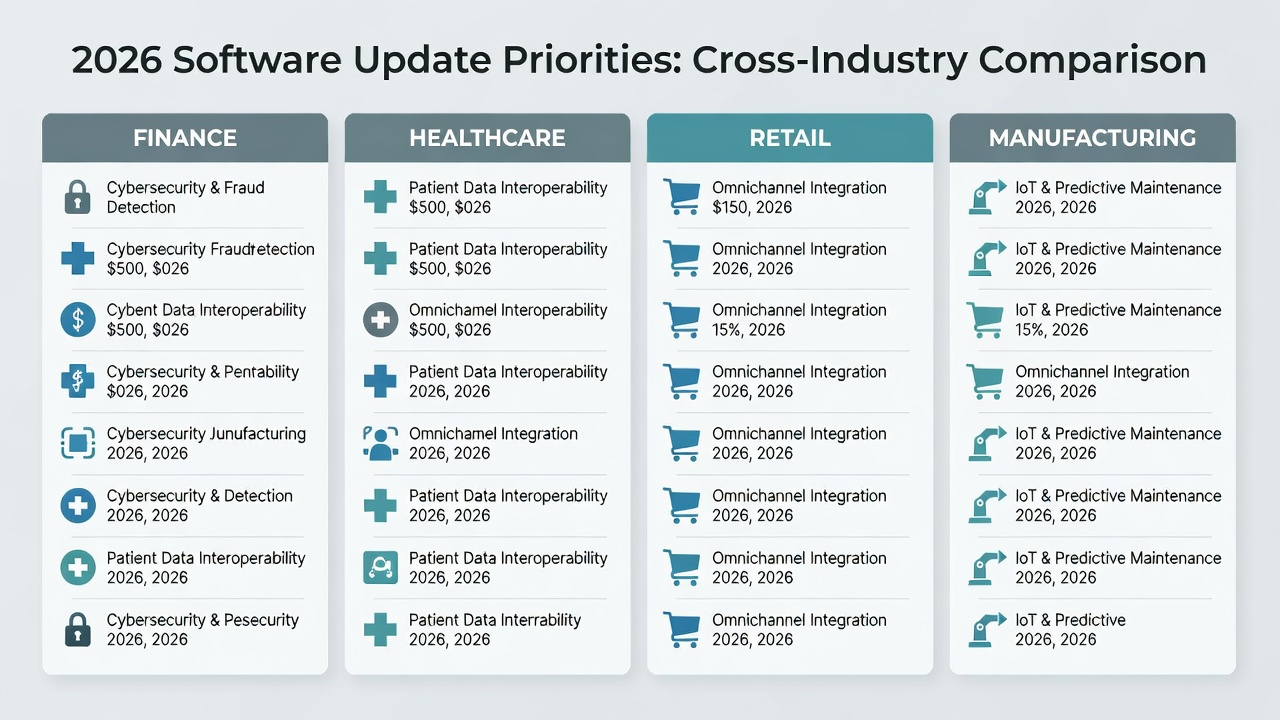
Different sectors assign varying levels of importance to the same operating system changes. Financial services firms concentrate on audit-trail enhancements and encryption upgrades to satisfy strict regulatory requirements. Healthcare providers prioritize features that support HIPAA compliance, patient data interoperability, and secure telehealth integrations.
Retail organizations focus on platform stability for e-commerce platforms and tools that protect customer payment information. Manufacturing and supply-chain businesses examine industrial IoT security patches and real-time monitoring capabilities to protect connected equipment and logistics networks. Technology and professional services companies often value developer tooling improvements and AI-assisted analytics that accelerate internal projects.
These divergent priorities underscore the need for customized review processes rather than one-size-fits-all strategies. Leaders who tailor their analysis to industry benchmarks reduce the risk of overlooking mission-critical updates.
Comparing Update Approaches Across Major OS Platforms
Windows updates in 2026 tend to bundle broad enterprise security mandates with productivity suite enhancements, requiring careful coordination between IT and business units. macOS releases frequently introduce user-facing privacy toggles and ecosystem-wide continuity features that benefit organizations with mixed device environments. Linux distributions emphasize modular security fixes and performance optimizations suited to cloud-native and containerized workloads.
Understanding these platform-specific patterns enables leaders to allocate review resources efficiently. For global teams, a hybrid approach that weighs the dominant OS in each region proves most effective.
Mistakes to Avoid When Interpreting Patch Notes
- Overlooking cumulative effects of smaller updates that together create significant operational shifts.
- Failing to involve non-technical stakeholders early in the review process.
- Assuming all changes apply uniformly across departments or regions.
- Delaying analysis until after deployment deadlines have passed.
- Neglecting to track historical patterns that reveal recurring vendor priorities.
FAQ: Common Leadership Concerns
How frequently should executives review patch notes?
Monthly high-level scans are adequate for most organizations, supplemented by deeper examinations during major version transitions or security-focused releases.
Do operating system updates inevitably raise costs?
While some changes require initial investment in training or configuration, many deliver efficiency gains and risk reduction that offset those expenses over time.
Which platforms should global enterprises monitor most closely?
Windows and macOS remain central to most office environments, yet Linux continues to underpin critical cloud and server infrastructure that warrants equal attention.
How can leaders ensure cross-team alignment on update decisions?
Establishing a shared review dashboard and quarterly briefing sessions helps maintain consistent understanding and coordinated action across departments.
What role do third-party tools play in patch note analysis?
Specialized dashboards and automated alerts can surface relevant changes faster, though they should complement rather than replace direct review of official notes.
Conclusion
Treating 2026 patch notes as strategic intelligence equips business leaders to anticipate changes in productivity, security posture, and cost structures. By following the expanded framework and industry-specific guidance provided here, organizations can navigate OS platform evolution with greater confidence and fewer surprises. Additional authoritative references are available from Microsoft, Apple, The Linux Foundation, and NIST.

No comments yet. Be the first!