 NeoBit Daily

Introduction
In 2026, software updates have evolved from routine maintenance tasks into strategic assets that can define an organization's agility and security posture. For IT leaders, dissecting patch notes and release notes goes far beyond scanning for security alerts—it involves extracting actionable insights that inform proactive planning and resource allocation. This article provides a comprehensive guide to advanced techniques for analyzing 2026 patch notes, helping you make data-driven decisions that minimize downtime and maximize operational efficiency across complex enterprise environments.
Effective patch note analysis enables teams to anticipate compatibility issues, prioritize based on business impact, and align updates with broader IT roadmaps. By mastering these skills, organizations can transform what was once a reactive process into a source of competitive advantage. The volume of updates continues to grow with AI-driven features and cloud-native architectures, making systematic review essential for maintaining resilience.
Why Patch Notes Matter More Than Ever in 2026
Patch notes serve as the primary communication channel between software vendors and enterprise users. In an era of rapid AI integration and hybrid cloud environments, understanding the nuances of these documents helps IT professionals forecast risks and opportunities. Ignoring deeper analysis can lead to missed optimizations or unexpected disruptions across critical systems. Organizations that treat patch notes as strategic intelligence gain early visibility into emerging threats and feature enhancements that competitors may overlook.
Regulatory pressures in sectors like finance and healthcare further amplify the importance of thorough review. A single missed deprecation notice can cascade into compliance violations or extended outages. Forward-thinking IT teams integrate patch analysis into their continuous improvement cycles rather than handling it as an afterthought.
Step-by-Step Analysis Framework
Follow this structured approach to break down complex release documentation systematically. The framework emphasizes repeatability and documentation so teams can refine their process over multiple update cycles.
- Initial Scan for Categories: Categorize changes into security, performance, features, and deprecations. Look for keywords such as “critical,” “deprecated,” or “experimental” to quickly triage items.
- Impact Assessment: Evaluate each item against your current infrastructure using dependency mapping tools. Create a matrix that scores potential effects on uptime, user experience, and integration points.
- Cross-Reference with Known Issues: Check vendor forums and community reports for real-world feedback. This step often reveals edge cases not documented in official notes.
- Quantify Risks and Benefits: Assign scores based on severity, affected user base, and implementation effort. Weight security fixes higher when they address actively exploited vulnerabilities.
- Document Recommendations: Create an internal report with timelines and rollback plans. Include testing environments, success criteria, and communication templates for stakeholders.
This framework ensures thorough coverage without overlooking subtle but significant changes. Teams that apply it consistently report fewer post-deployment incidents and faster decision cycles.
Real-World OS Examples
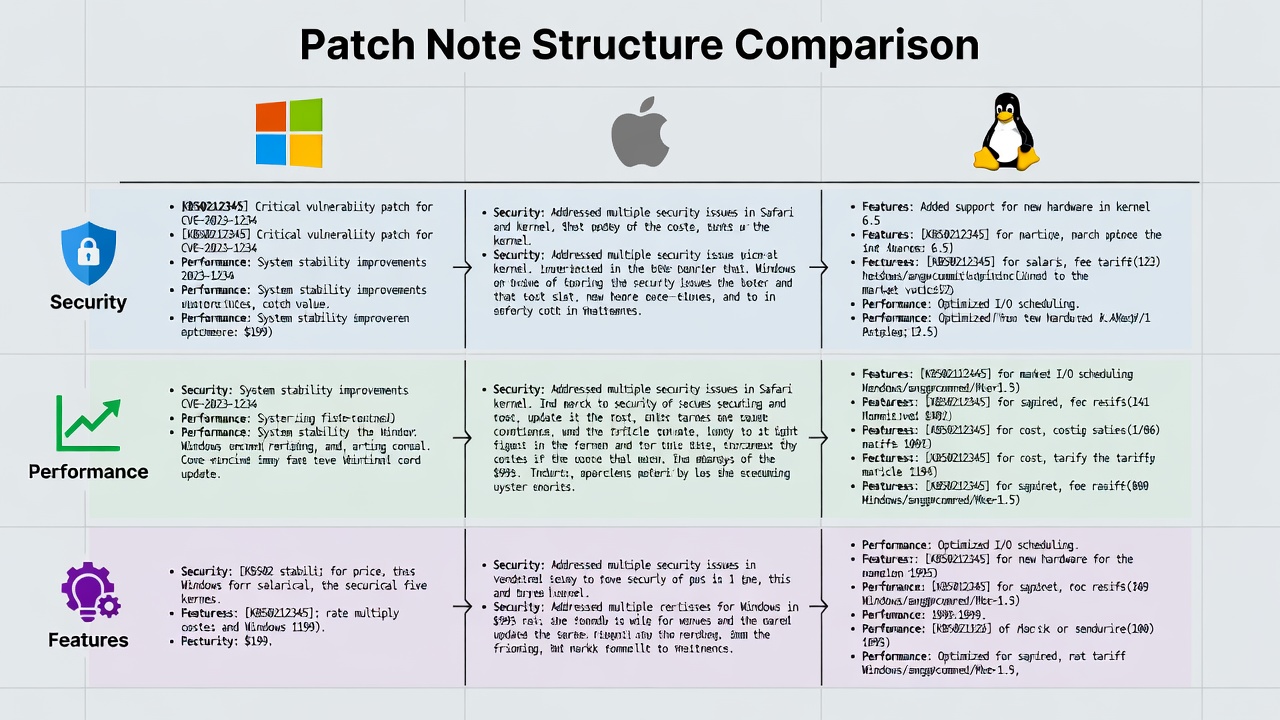
Applying the framework to major operating systems reveals distinct patterns that inform tailored strategies. For Windows updates from Microsoft, focus on cumulative update structures and their emphasis on enterprise features like enhanced virtualization and improved Group Policy controls. Recent 2026 releases have highlighted tighter integration with Azure Arc for hybrid management, requiring IT teams to verify connectivity before rollout.
macOS releases from Apple often highlight privacy enhancements and hardware-specific optimizations. The 2026 cycle introduced refined App Sandbox rules and new notarization requirements that affect custom enterprise applications. Administrators should test these changes in isolated macOS fleets before broad deployment.
Linux distributions, such as those tracked via kernel.org, provide granular changelog entries detailing kernel improvements and driver updates. Distributions like Ubuntu and Red Hat Enterprise Linux frequently bundle security backports with performance patches, making it necessary to review both the upstream kernel notes and distribution-specific advisories. Comparing these helps tailor your analysis to the environments you manage and identify cross-platform dependencies early.
Metrics for Prioritizing Updates
Key metrics include vulnerability severity scores, deployment time estimates, and compatibility indices. Track the ratio of critical to non-critical changes and correlate with historical incident data from your environment. Use these to build a prioritization matrix that balances urgency with resource constraints. Additional useful metrics encompass mean time to deploy, user impact percentage, and rollback frequency from previous similar updates. By quantifying these factors, teams can create objective scoring systems that reduce subjective debate during planning meetings.
Industry Comparisons of Update Impacts
Healthcare organizations prioritize compliance-related patches due to regulatory demands such as HIPAA and emerging AI governance rules. Finance sectors emphasize zero-trust security enhancements and transaction integrity features to protect against sophisticated threats. Manufacturing benefits from performance tweaks that support IoT integrations and predictive maintenance algorithms, while retail focuses on feature additions that improve customer-facing applications and omnichannel experiences. Education institutions often weigh accessibility improvements and remote learning stability higher than other verticals. These variations underscore the need for industry-specific lenses during analysis to avoid one-size-fits-all approaches that waste resources or introduce unnecessary risk.
Common Mistakes to Avoid
Many teams rush through patch notes without cross-referencing internal systems, leading to overlooked breaking changes. Another frequent error is failing to maintain rollback procedures, which can extend outages when unexpected issues arise. Overlooking third-party dependencies or custom scripts that interact with updated APIs also causes problems. Finally, neglecting to communicate timelines to business stakeholders creates friction and resistance during implementation windows.
Tools and Automation for Efficient Analysis
Modern patch management platforms now incorporate AI summarization that highlights high-impact items automatically. Integration with configuration management databases allows real-time impact scoring. Open-source utilities and vendor portals from sources such as Microsoft and Apple provide APIs that feed directly into internal dashboards. Combining these tools with the manual framework described earlier yields the best balance of speed and accuracy.
Turning Routine Updates into Competitive Advantages
Proactive planning based on patch insights allows faster adoption of beneficial features ahead of competitors. Integrate analysis into quarterly IT strategy sessions and leverage automation for testing. Organizations that treat updates as opportunities rather than chores can pilot new capabilities in controlled environments and gather performance data before full rollout. This approach accelerates innovation cycles while maintaining stability.
FAQ
How do I handle ambiguous language in patch notes?
Cross-reference with technical documentation and test in isolated environments to clarify intent. When ambiguity persists, open support tickets with the vendor and document assumptions for internal stakeholders.
What tools assist with automated patch analysis?
Enterprise patch management platforms with AI-driven summarization features streamline the process effectively. Supplement these with custom scripts that parse structured data feeds when available.
Can patch notes predict future vulnerabilities?
Patterns in deprecations and security emphases often signal upcoming focus areas from vendors. Monitoring these trends helps teams prepare defensive measures in advance.
How should small teams with limited resources approach analysis?
Focus first on security and stability categories, then schedule deeper feature reviews during slower business periods. Leverage vendor-provided risk ratings to triage efficiently.
What is the best way to share findings across departments?
Create concise executive summaries that highlight business impact alongside technical details. Use visual dashboards updated in real time to keep non-technical leaders informed.
Conclusion
Mastering 2026 patch notes analysis equips IT leaders with the foresight needed for resilient and innovative technology strategies. Implement these techniques to elevate your update processes from necessary chores to strategic differentiators that protect operations and enable growth.

No comments yet. Be the first!