 NeoBit Daily
Introduction to 2026 OS Energy Efficiency Updates
Software updates released in 2026 for Windows, macOS, and Linux place strong emphasis on energy efficiency, enabling IT teams to reduce power consumption and associated emissions across enterprise environments. These enhancements arise from refined power management algorithms, improved idle-state handling, and hardware-aware optimizations that dynamically adjust resource usage based on real-time demands. Organizations that prioritize these patches often see immediate benefits in lower electricity bills and progress toward sustainability targets without compromising system performance or user experience.
The broader context involves increasing regulatory pressure on data centers and corporate IT infrastructure to minimize environmental impact. By integrating efficiency-focused features, operating systems now support greener computing practices at scale. This article provides an in-depth examination of specific patch notes, detailed auditing procedures, enterprise deployment examples, cross-platform comparisons, return-on-investment measurement strategies, and integration advice for existing sustainability frameworks.
Key Patch Notes Driving Power Savings Across Platforms
Windows 11 2026 Update introduced adaptive CPU throttling mechanisms that continuously monitor thermal conditions and workload intensity to scale processor frequency more intelligently than previous versions. This reduces unnecessary power draw during background tasks and light productivity sessions. Additional changes include optimized memory management that consolidates active processes into fewer power domains, minimizing leakage current on modern silicon.
macOS Sequoia 2026 added intelligent display power gating for both built-in and external monitors, allowing the system to selectively disable portions of the display pipeline when content is static. The update also enhanced battery health algorithms on portable devices by learning usage patterns and preemptively adjusting charging thresholds to extend hardware lifespan while conserving energy.
Linux kernel 6.13 delivered scheduler improvements that increase residency time in deep idle states for both ARM-based edge devices and x86 servers. New cpuidle governors better predict workload gaps, enabling faster transitions into low-power modes. Distributions such as Ubuntu and Fedora incorporated these kernel changes with user-space tools that expose fine-grained controls for system administrators.
Collectively, these patches lower baseline energy consumption during periods of low activity while preserving full performance under demanding workloads. IT teams can review full patch documentation on vendor sites such as Microsoft, Apple, and kernel.org to identify relevant changes for their fleets.
Step-by-Step Guide to Auditing Updates for Efficiency Wins
Conducting a thorough audit ensures that efficiency gains are realized and documented. Begin by creating a complete inventory of all endpoints, servers, and virtual machines, noting current operating system versions and hardware specifications. Next, systematically review official patch notes from each vendor, highlighting sections that mention power management, idle states, or thermal controls.
Deploy candidate updates first in an isolated test environment that mirrors production workloads. Use hardware-level monitoring tools such as Intel Power Gadget for Windows systems, powertop and turbostat for Linux, or built-in energy reporting in macOS to capture baseline and post-update wattage data. Run standardized test suites including office productivity simulations, video conferencing, and idle periods over a minimum 14-day window to account for variability.
Compare metrics across multiple dimensions including average power draw, peak consumption during bursts, and total energy used per task. Document any regressions in performance or compatibility alongside efficiency improvements. Once validated, develop a phased rollout plan with clear rollback procedures and communicate changes to end users through internal knowledge bases. Repeat audits quarterly to capture cumulative benefits from successive updates.
Real-World Enterprise Case Studies
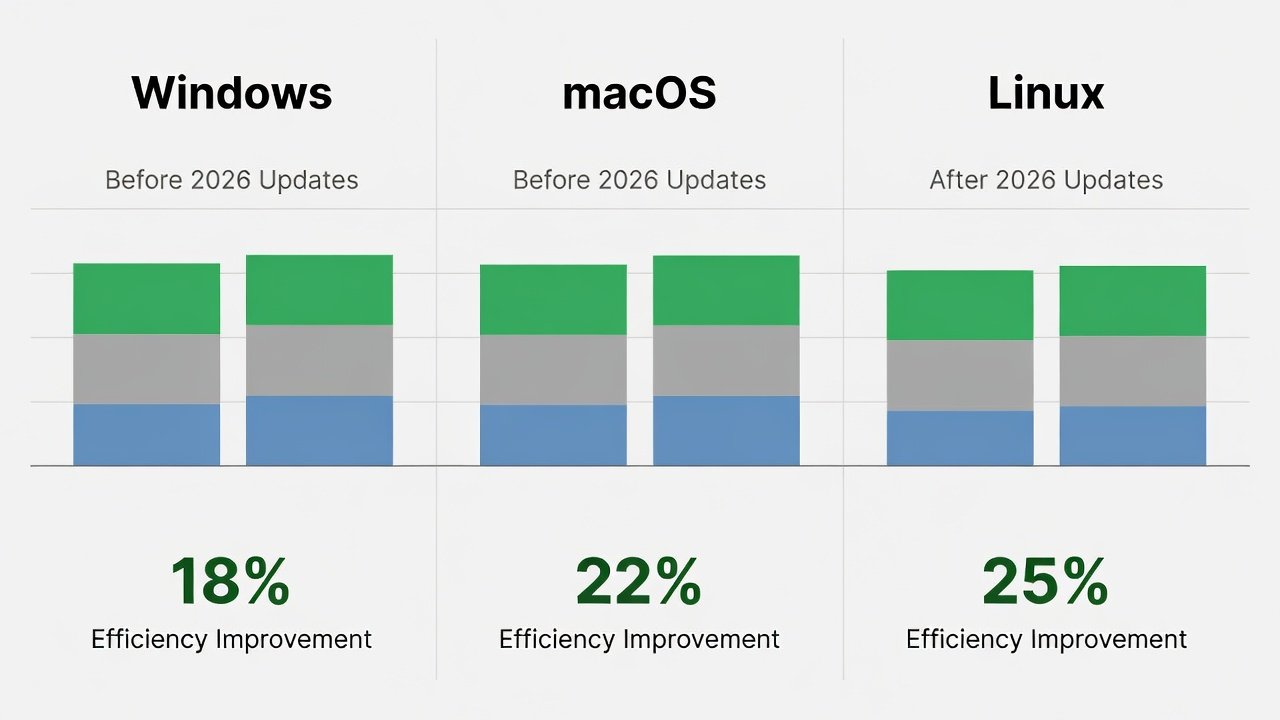
A multinational financial services company applied the 2026 Windows and Linux patches across more than 5,000 endpoints and 200 servers. Post-deployment monitoring revealed an 18 percent reduction in average idle power consumption and a corresponding drop in data center cooling requirements. The IT sustainability team integrated results into quarterly ESG reports, demonstrating tangible progress on emission reduction goals.
In another example, a mid-sized creative agency standardized on macOS Sequoia 2026 for its 800 workstations. After six weeks, facility-level metering showed a 22 percent decrease in overall electricity usage attributed to the new display and battery optimizations. The agency further leveraged the updates to negotiate lower utility rates based on verified load reductions.
These deployments succeeded because teams combined patch application with complementary measures such as updated power policies and user education on new energy-saving features.
Platform Comparisons: Windows, macOS, and Linux in 2026
Windows provides extensive Group Policy and Intune controls that allow centralized configuration of power profiles across large domains, making it suitable for highly regulated industries. macOS delivers tight integration with Apple Silicon hardware, yielding particularly strong results on portable devices where battery life directly impacts productivity. Linux offers unmatched kernel-level visibility and customization options, although achieving consistent outcomes across heterogeneous distributions requires deeper technical expertise.
Organizations running mixed environments often designate a primary operating system for core workloads while maintaining secondary platforms for specialized applications. Cross-platform management tools from vendors like Microsoft help unify reporting and policy enforcement.
Practical Tips for Measuring ROI on Green OS Updates
Begin ROI calculations by establishing precise baseline energy consumption data before any updates. After deployment, track kilowatt-hour reductions over successive billing cycles and convert savings using current utility rates. Include secondary benefits such as extended hardware replacement cycles due to lower thermal stress and potential eligibility for energy efficiency incentives or carbon credits.
Advanced teams employ automated scripts that aggregate data from multiple monitoring sources into centralized dashboards. Review results monthly and adjust power policies iteratively. When communicating value to leadership, present both financial metrics and environmental impact figures aligned with corporate sustainability policies.
Common Pitfalls to Avoid During Implementation
- Neglecting compatibility testing with mission-critical legacy applications before wide rollout.
- Overlooking accompanying firmware or BIOS updates that unlock full efficiency potential of OS patches.
- Failing to provide adequate training for helpdesk staff on interpreting new power management interfaces.
- Applying uniform settings across diverse hardware generations where optimization effectiveness varies significantly.
- Ignoring network-related power features such as Wake-on-LAN refinements that can compound savings.
FAQs on Integrating These Features into Sustainability Policies
How do 2026 OS efficiency updates support ESG and carbon reporting requirements? They generate auditable data on reduced electricity consumption that directly contributes to Scope 2 emission calculations and can be referenced in annual sustainability disclosures.
Will older hardware still receive meaningful improvements? Many patches include backward-compatible optimizations; however, the largest gains typically appear on systems with modern processors that support deeper idle states and finer frequency scaling.
What third-party tools complement native OS monitoring? Solutions such as Open Hardware Monitor, custom Prometheus exporters, and vendor-specific energy dashboards provide additional granularity when aggregated with built-in utilities.
Can these updates be combined with existing device management frameworks? Yes, most organizations integrate them into Microsoft Endpoint Manager, Jamf, or Ansible playbooks to enforce power policies consistently across fleets.
Conclusion
2026 operating system updates deliver practical, measurable energy efficiency improvements for Windows, macOS, and Linux environments. Through careful auditing, phased deployment, ongoing measurement, and alignment with corporate sustainability objectives, IT teams can achieve both operational cost reductions and meaningful environmental progress. Staying informed about subsequent patches ensures continued optimization as hardware and workloads evolve.

No comments yet. Be the first!