 NeoBit Daily

Introduction to Blockchain in Enterprise OS Patch Management
In 2026, enterprise IT teams face mounting pressure to deliver secure, reliable operating system updates without introducing vulnerabilities or downtime. Traditional patch delivery methods often rely on centralized servers that can be targeted by attackers, leading to risks of tampering or delayed rollouts. Blockchain technology offers a decentralized, immutable ledger that creates tamper-proof audit trails for every stage of the software update process. This approach strengthens security while supporting scalable patch management across distributed environments. As organizations increasingly adopt hybrid work models, the need for verifiable update integrity becomes critical to maintaining operational continuity and protecting sensitive data across thousands of endpoints.
By leveraging blockchain, organizations can verify the integrity of patches from the moment they are signed by vendors through to deployment on endpoints. This is particularly valuable for remote workforces where devices connect from various networks. The technology ensures that release notes and update packages cannot be altered post-publication without detection, reducing the attack surface significantly compared to conventional methods. Enterprises report that blockchain-enhanced systems help meet evolving regulatory demands while minimizing the manual oversight traditionally required for patch validation.
How Blockchain Strengthens Software Update Security
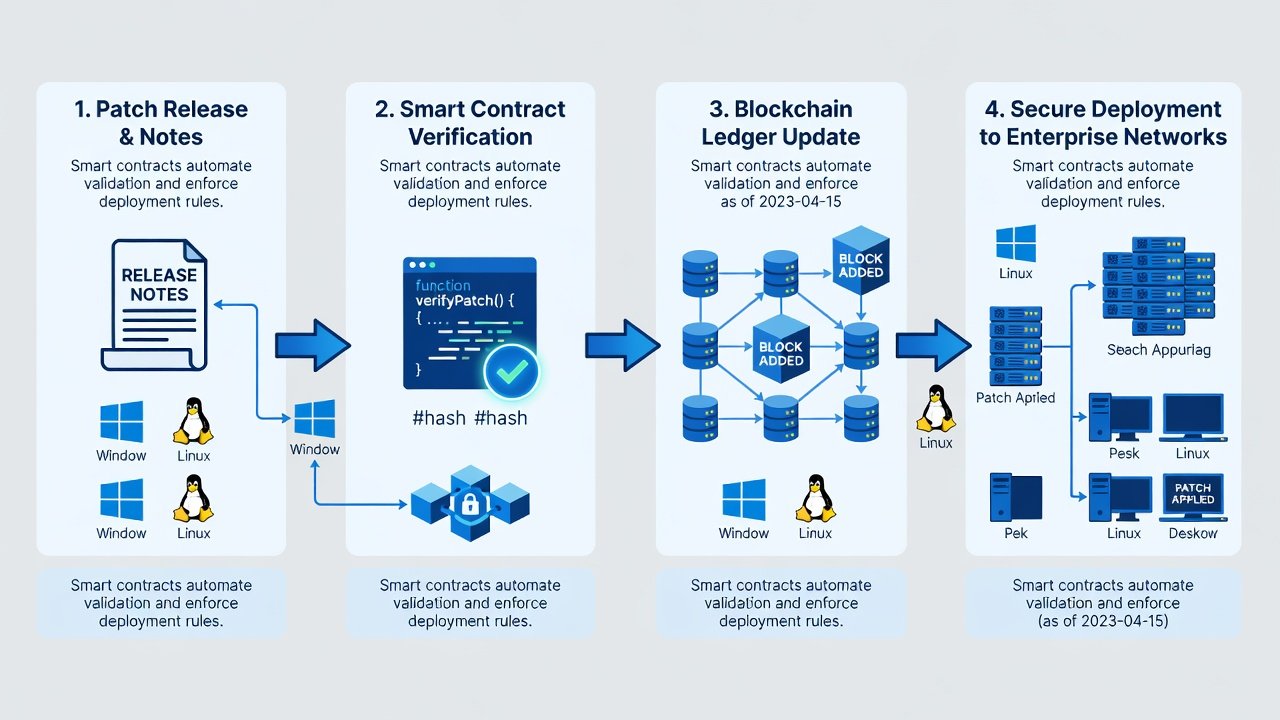
Blockchain creates a distributed chain of blocks, each containing cryptographic hashes of previous entries. When applied to OS updates, every patch release, approval, and deployment event is recorded as a transaction. This produces an auditable history that IT teams can query in real time. Smart contracts can automate validation steps, ensuring only verified updates proceed to distribution. The decentralized nature means no single administrator holds ultimate control, which dramatically lowers the risk of insider threats or external breaches targeting a central repository.
Key benefits include resistance to single points of failure and enhanced transparency. Unlike centralized repositories, blockchain networks require consensus among multiple nodes before changes are accepted. This makes it far more difficult for malicious actors to inject compromised code into the supply chain. In addition, the timestamped and immutable records support forensic analysis after any security incident, providing clear evidence of when and how an update was applied.
Integration Steps with Existing Release Notes Workflows
Integrating blockchain into current patch processes requires careful planning. Start by mapping your existing release notes pipeline to identify points where blockchain records can be appended. Most enterprises use tools like Microsoft Endpoint Configuration Manager or Ansible for Linux environments; these can be extended with blockchain APIs. The process should begin with a thorough audit of current workflows to ensure compatibility and identify any potential bottlenecks.
- Establish a permissioned blockchain network using frameworks compatible with enterprise standards.
- Connect release management systems to record hash values of each patch and its associated documentation.
- Implement smart contracts that trigger notifications when a new block confirms successful validation.
- Train IT staff on querying the ledger for compliance reporting.
- Test the integration in a staging environment before full production rollout.
- Monitor initial transactions for performance impacts and adjust node distribution accordingly.
This phased approach minimizes disruption while building confidence in the new system. Regular reviews after each phase help refine configurations and address any integration friction early.
Real-World Examples from Windows and Linux Environments
Microsoft has explored blockchain-inspired verification for Windows Update components, allowing enterprises to maintain independent verification nodes alongside official channels. In practice, a large financial services firm implemented a hybrid setup where Windows patch metadata is hashed and stored on a private ledger, enabling rapid detection of any discrepancies during rollout across 12,000 devices. The system flagged an attempted modification within minutes, preventing potential widespread exposure.
On the Linux side, organizations using distributions like Ubuntu or Red Hat Enterprise Linux have integrated blockchain with package managers such as apt and yum. One manufacturing company recorded every kernel update transaction on a shared ledger, creating an immutable history that simplified audits across global sites. Another example involves a healthcare provider that combined blockchain logging with SELinux policies, resulting in faster regulatory reporting and reduced audit preparation time by nearly half. These examples demonstrate how blockchain complements rather than replaces existing distribution mechanisms.
Comparisons to Traditional Patch Delivery Methods
Traditional methods rely on centralized servers and digital signatures that, while effective, remain vulnerable to server compromise or signature forgery. Blockchain adds an extra layer of distributed consensus. Where legacy systems might experience delays during peak update periods, blockchain networks can handle concurrent verifications across nodes, often resulting in faster trust establishment. Traditional approaches also require more manual intervention for verification, increasing the chance of human error.
However, blockchain introduces additional computational overhead during consensus. For environments prioritizing speed above all, hybrid models that combine traditional signing with selective blockchain logging prove most practical. Organizations transitioning from legacy systems often find that the added security layer justifies the modest increase in initial setup complexity.
Implementation Challenges and Mitigation Strategies
Common challenges include network latency in global deployments, the need for specialized developer expertise, and ensuring interoperability with legacy hardware. To mitigate these, begin with pilot programs on non-critical systems and gradually expand scope. Organizations should also evaluate energy-efficient consensus mechanisms to address sustainability concerns associated with some blockchain implementations. Another frequent hurdle is aligning blockchain records with existing change-management databases, which can be resolved through custom middleware connectors.
Security Metrics and Compliance Benefits
Key metrics to track include time-to-verification for each patch, number of detected anomalies per quarter, and reduction in unauthorized change incidents. Compliance frameworks such as NIST and ISO 27001 benefit from the immutable records blockchain provides, as auditors can independently verify the entire patch history without relying solely on vendor-supplied logs. For further guidance, consult resources from NIST.
Tips for Measuring Productivity Gains in Remote Setups
In remote environments, track metrics such as average time from patch availability to successful deployment and reduction in support tickets related to update failures. Automated reporting dashboards connected to the blockchain ledger can highlight productivity improvements, often showing decreased manual verification efforts by IT teams. Regular benchmarking against pre-blockchain baselines helps quantify gains and justify continued investment.
Mistakes to Avoid During Deployment
Common pitfalls include rushing the pilot phase without sufficient testing, neglecting staff training on ledger queries, and failing to establish clear rollback procedures. Teams should also avoid over-customizing smart contracts early on, as this can complicate future updates. Documenting every configuration decision creates a valuable reference for scaling the solution later.
FAQ on Common Deployment Questions
- How does blockchain prevent patch tampering? Through cryptographic hashing and distributed consensus that flags any unauthorized modifications immediately.
- Is blockchain suitable for air-gapped systems? Permissioned networks with offline transaction signing can accommodate high-security environments.
- What skills are required for implementation? Familiarity with blockchain platforms and existing DevOps tooling is essential; many teams partner with specialists for initial setup.
- Does it increase update latency? Initial validation may add minor overhead, but overall deployment reliability typically improves.
- How does it impact compliance audits? The immutable ledger provides verifiable evidence that satisfies most regulatory requirements without additional documentation.
Conclusion
Blockchain technology provides enterprise IT teams with a robust foundation for secure OS patch management in 2026. By focusing on practical integration, real-world testing, and measurable outcomes, organizations can achieve stronger security postures while maintaining operational efficiency. As adoption grows, staying informed about evolving best practices will be key to long-term success. For further reading, explore resources from Microsoft on enterprise update management and The Linux Foundation for open-source security guidelines.


No comments yet. Be the first!