 NeoBit Daily

Introduction to Emerging Technologies in Logistics
The logistics industry faces increasing pressure to optimize operations amid global disruptions and rising consumer expectations. In 2026, technologies like virtual reality (VR), augmented reality (AR), blockchain, and quantum computing are delivering actionable results in supply chain management. This article examines real-world applications, implementation strategies, and measurable benefits for decision-makers seeking competitive advantages. Organizations that integrate these tools report improved efficiency, reduced waste, and enhanced resilience against disruptions such as weather events or geopolitical issues. The focus remains on practical, step-by-step approaches rather than theoretical concepts, helping logistics professionals identify where to start and how to measure success.
Immersive Training and Simulations with VR and AR
VR and AR create immersive environments for warehouse operations and training. Companies use these tools to simulate complex scenarios without physical risks. For instance, VR enables staff to practice high-stakes forklift maneuvers in virtual replicas of facilities, reducing onboarding time significantly compared to traditional methods. AR overlays digital instructions onto physical spaces via smart glasses, guiding workers through picking and packing processes with real-time accuracy. This minimizes errors in high-volume fulfillment centers where speed and precision directly impact customer satisfaction. Beyond training, AR supports maintenance tasks by highlighting equipment parts needing inspection, while VR allows remote collaboration between global teams to review facility layouts before physical changes occur.
Step-by-Step Implementation Guide for VR/AR
- Assess current pain points in training and operations through data audits that review error logs and time studies from the past six months.
- Select hardware partners offering enterprise-grade headsets compatible with existing systems, ensuring they support integration with warehouse management software.
- Develop custom simulations tailored to specific warehouse layouts and workflows, incorporating real equipment models and safety protocols.
- Pilot programs with small teams, tracking metrics like error rates and completion times over a four-to-six-week period.
- Scale deployment with ongoing content updates based on performance feedback, including refresher modules for seasonal staff.
- Establish continuous monitoring dashboards that alert managers to adoption gaps or hardware maintenance needs.
These steps ensure a structured rollout that minimizes downtime while maximizing return on investment through targeted skill development.
Blockchain for Transparent and Secure Tracking
Blockchain technology creates immutable ledgers for end-to-end visibility across supply chains. Shipments can be tracked from origin to destination with tamper-proof records, enhancing trust among partners and reducing fraud risks. Major players integrate blockchain with IoT sensors to log temperature, location, and handling data automatically. This supports compliance in regulated sectors like pharmaceuticals and food distribution where recalls must happen swiftly. The decentralized nature prevents single points of failure that plague centralized databases during cyberattacks. In practice, each transaction receives a timestamp and cryptographic signature, allowing auditors to verify authenticity without relying on paper documentation that can be lost or altered.
Learn more from authoritative sources such as IBM on enterprise blockchain solutions and GS1 for global supply chain standards that complement blockchain implementations.
Quantum Computing for Advanced Route Optimization
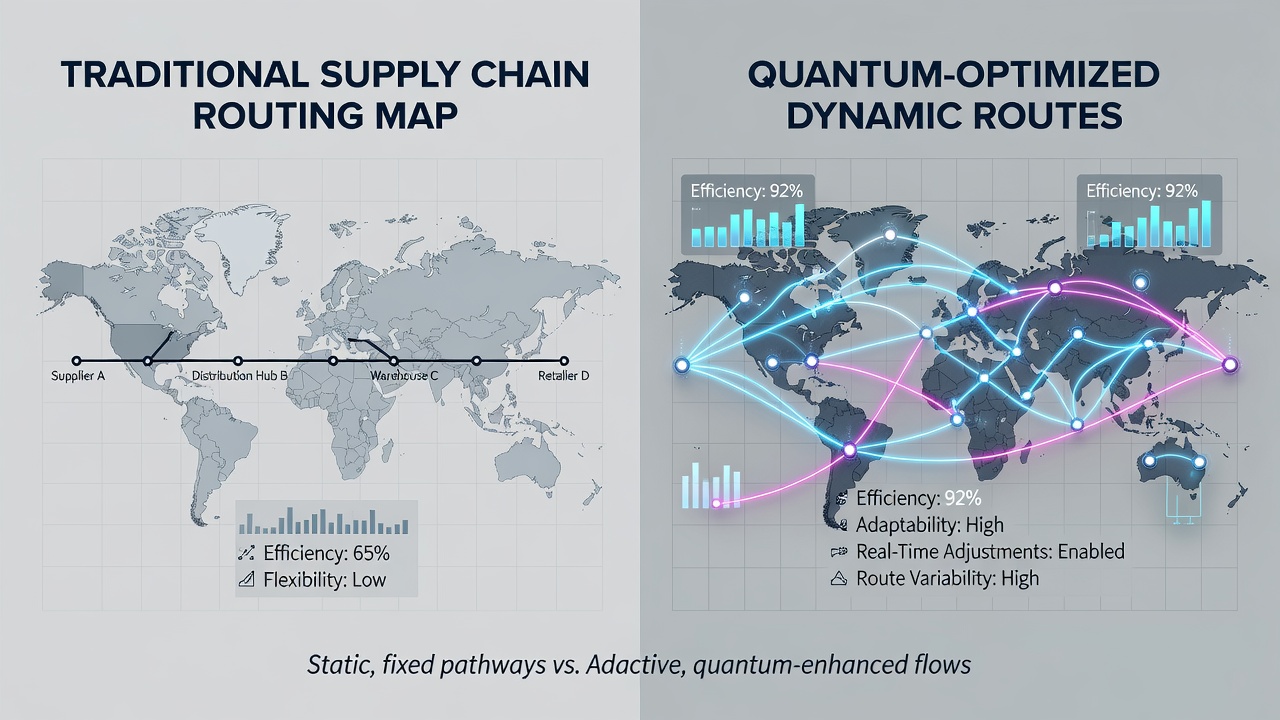
Quantum algorithms solve complex optimization problems far faster than classical computers. In logistics, this means processing vast datasets for dynamic routing that accounts for traffic, weather, fuel costs, and vehicle constraints simultaneously. Traditional systems often rely on heuristics that deliver good but suboptimal results. Quantum-enhanced platforms can evaluate millions of variables in seconds, yielding routes that cut fuel consumption and delivery times. Hybrid approaches combine quantum processors with classical systems to handle real-time adjustments when new data arrives mid-transit. Early adopters in freight management have seen notable gains in on-time performance during peak seasons.
Microsoft provides resources on quantum development for industry applications.
Real-World Case Studies from Major Companies
- A leading e-commerce firm deployed AR-guided picking across multiple distribution centers, achieving faster order fulfillment in pilot warehouses by overlaying item locations directly onto workers' views and reducing search time by up to 30 percent in initial tests.
- A global shipping company used blockchain to streamline documentation for cross-border shipments, cutting processing delays in international trade lanes by replacing manual verification with automated smart contracts that trigger payments upon confirmed delivery.
- Logistics providers partnered with quantum specialists to optimize multi-modal transport networks involving trucks, trains, and ships, demonstrating superior performance over legacy planning tools by solving routing puzzles involving thousands of variables in minutes instead of hours.
- A major retailer integrated VR for safety training in cold-storage facilities, resulting in fewer workplace incidents and faster qualification of new hires who could rehearse procedures in realistic virtual settings before entering actual environments.
Traditional vs Quantum-Enhanced Systems Comparison
Traditional route planning tools process data sequentially and struggle with exponential complexity as the number of stops or variables increases. Quantum systems leverage superposition for parallel evaluation, enabling superior solutions in dynamic environments. Key differences include speed for large-scale problems, accuracy under uncertainty, and scalability as data volumes grow. Organizations report improved on-time delivery rates when transitioning to hybrid quantum-classical workflows. In side-by-side evaluations, quantum approaches consistently identify lower-cost combinations of carriers and routes that classical solvers overlook due to time constraints. This advantage becomes especially pronounced during disruptions when rapid re-optimization is required.
Addressing Integration Challenges and ROI Metrics in FAQ
How challenging is integrating these technologies with legacy systems?
Integration often starts with APIs and middleware to bridge old and new platforms. Phased rollouts minimize disruption, with many firms completing core connections within months. Data migration requires careful mapping of fields between systems to avoid loss of historical records essential for trend analysis. Staff training on new interfaces forms another critical layer that determines long-term adoption success.
What ROI metrics should companies track?
Focus on reduced operational costs, improved accuracy rates, faster cycle times, and enhanced customer satisfaction scores. Pilot projects typically show positive returns within the first year through efficiency gains such as lower fuel spend and fewer lost shipments. Additional indicators include reduced training hours per employee and decreased compliance audit preparation time when blockchain records replace paper trails.
Are there common mistakes to avoid?
Overlooking employee training and data quality leads to suboptimal results. Prioritize change management and clean datasets from the outset. Another frequent error involves attempting full-scale deployment without thorough pilots, which can amplify small technical issues into major operational setbacks.
Future Outlook and Strategic Recommendations
Looking ahead, convergence of these technologies will accelerate. Companies should begin with pilot projects in one facility or route network before expanding. Partnerships with technology providers that offer managed services can reduce internal resource demands. Regular reviews of emerging standards ensure solutions remain interoperable as the ecosystem matures. By 2026, early movers will likely hold measurable edges in cost control and service reliability.
Conclusion
Adopting VR, AR, blockchain, and quantum computing positions logistics operations for 2026 success. By following structured implementation paths and learning from industry leaders, organizations can achieve substantial improvements in efficiency and resilience while preparing for future technological shifts.


No comments yet. Be the first!