 NeoBit Daily
Introduction: Why Quantum-Secured VR/AR Startups Matter in 2026
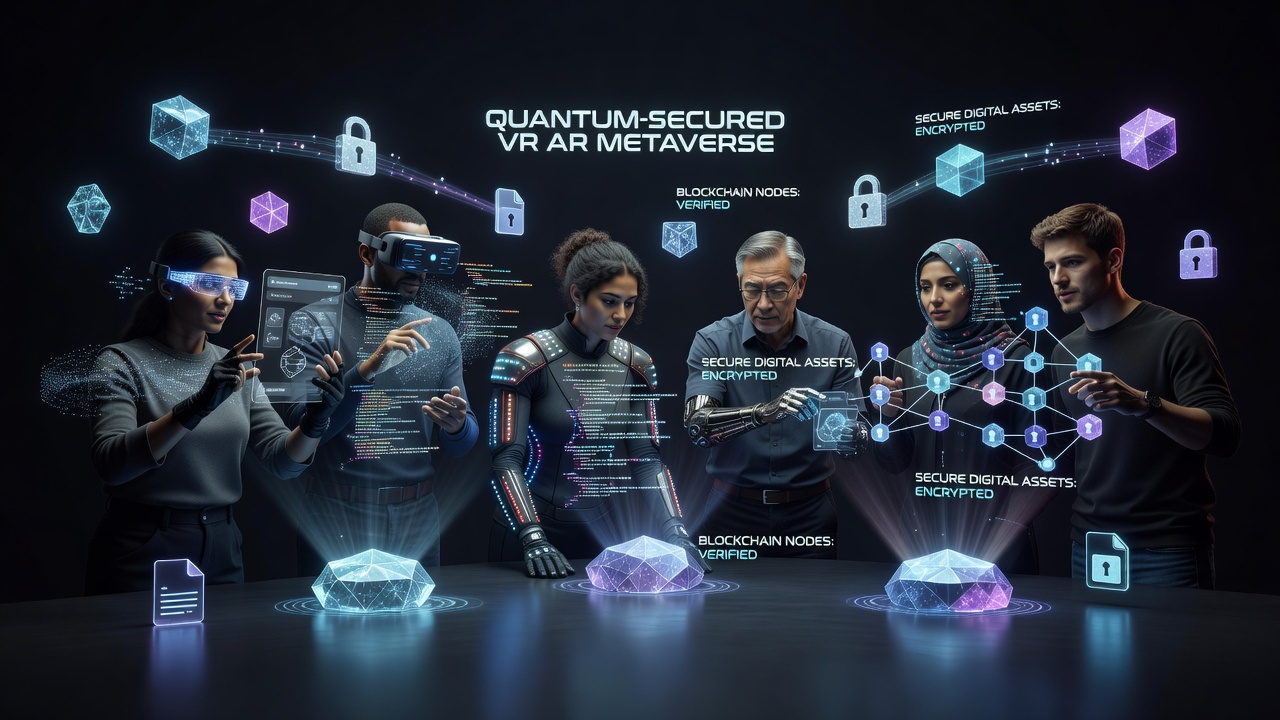
The convergence of virtual and augmented reality, blockchain, and quantum computing is creating unprecedented opportunities for founders. In 2026, launching a quantum-secured VR/AR startup means building platforms where users own digital assets securely in immersive environments resistant to future quantum threats. This guide provides actionable steps for validating ideas, choosing protocols, prototyping, and scaling while avoiding common mistakes. Founders targeting this space must address security from day one because quantum computers threaten traditional encryption. Integrating blockchain ensures verifiable ownership of virtual goods, from NFTs to metaverse land. As quantum advancements accelerate, early movers who embed post-quantum security into immersive experiences gain a decisive edge in user trust and regulatory readiness.
Market signals show growing interest in hybrid technologies that protect against both current cyber risks and tomorrow’s quantum attacks. This article expands on each phase with practical checklists, technology comparisons, and real-world lessons to help you execute effectively.
Validating Your Startup Idea
Begin by researching market demand. Analyze trends in immersive tech adoption and blockchain utility through reports from industry analysts and academic papers. Interview potential users in gaming, education, and enterprise training to uncover specific needs such as secure multi-user VR sessions or tamper-proof AR overlays for industrial maintenance. Use surveys, focus groups, and competitor analysis to confirm pain points like data breaches in VR platforms or insecure asset trading that plague existing metaverse projects.
Define your unique value proposition clearly: quantum-resistant encryption combined with seamless VR/AR experiences and blockchain provenance. Create a minimum viable product concept that solves one core problem, such as secure virtual real estate transactions or protected digital collectibles in AR games. Validate further by building a simple landing page to gauge interest and running A/B tests on messaging that emphasizes quantum security benefits. Document assumptions and run experiments to measure willingness to pay or engage before committing significant resources.
Selecting Quantum-Resistant Protocols
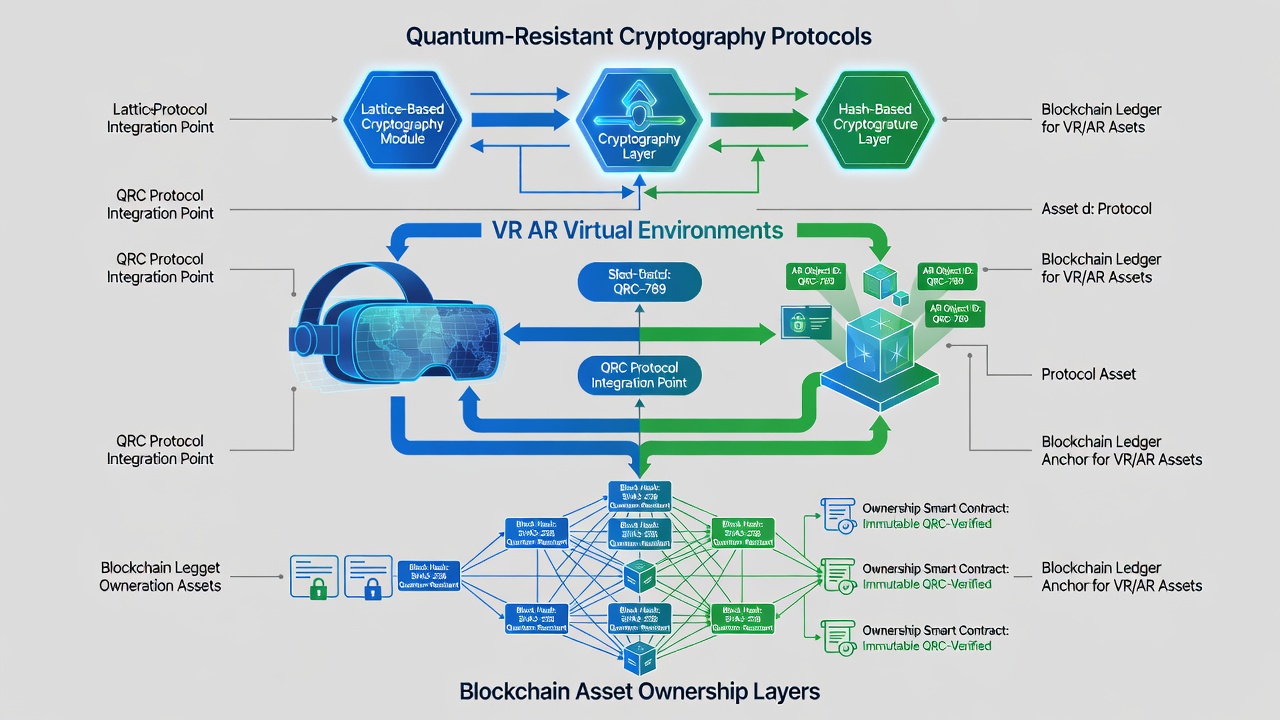
Choose post-quantum cryptography standards that have undergone rigorous peer review. The National Institute of Standards and Technology has standardized algorithms like CRYSTALS-Kyber for key encapsulation and CRYSTALS-Dilithium for digital signatures. Integrate these into your stack for key exchange and authentication processes that protect user sessions and asset transfers.
Compare options across categories: lattice-based schemes offer strong security with reasonable performance, while hash-based alternatives provide simplicity but larger signature sizes. Test compatibility with VR engines like Unity or Unreal Engine by running benchmark simulations that measure latency under quantum-secure encryption. Ensure protocols support low-latency performance critical for AR overlays where even slight delays break immersion. Consider hybrid approaches that combine classical and post-quantum methods during transition periods. Evaluate open-source libraries and vendor support for long-term maintainability.
Prototyping Secure Virtual Environments
Start with detailed wireframes and storyboards of immersive spaces that incorporate security checkpoints without disrupting flow. Use quantum-secure libraries to encrypt user sessions, spatial data, and asset metadata at rest and in transit. Build prototypes that allow real-time collaboration in VR while recording ownership changes on a blockchain ledger using smart contracts triggered by in-world actions.
Iterate with structured user testing focused equally on security perception and usability. Incorporate zero-knowledge proofs for privacy-preserving asset verification that lets users prove ownership without revealing sensitive details. Choose development frameworks that allow modular upgrades as new quantum standards emerge. Include logging and monitoring tools that detect anomalies without compromising performance in high-fidelity environments.
Integrating Blockchain for Asset Ownership
Leverage decentralized ledgers for minting and transferring virtual items with cryptographic guarantees. Connect your VR/AR app to smart contracts that enforce ownership rules, royalties, and access permissions automatically. Explore layer-2 solutions and sidechains for scalability in high-traffic metaverses where thousands of users interact simultaneously.
The Ethereum Foundation resources provide guidance on secure contract development and auditing practices. Ensure your integration supports quantum-resistant signatures to future-proof ownership records against evolving threats. Design token standards that map physical-world scarcity to digital assets while maintaining interoperability across multiple VR platforms.
Building Your Core Team and Tech Stack
Assemble specialists in quantum cryptography, 3D engine development, and blockchain architecture early. Supplement with legal experts familiar with data sovereignty and emerging tech regulations. Select a tech stack that balances rapid prototyping with long-term security: combine Unity for VR/AR rendering, established post-quantum libraries, and a permissioned or public blockchain depending on decentralization goals. Conduct regular architecture reviews to identify integration friction points before they impact user experience.
Step-by-Step Setup Checklists
- Week 1-2: Conduct market validation interviews, assemble founding team, and draft initial security requirements document.
- Week 3-4: Select and benchmark quantum-resistant protocols, map them to chosen VR engine, and begin threat modeling.
- Month 2: Develop core prototype features, implement encrypted session management, and perform internal penetration testing.
- Month 3: Integrate blockchain smart contracts for asset minting, onboard closed beta users, and collect feedback on both security and immersion.
- Month 4-6: Refine based on testing, prepare compliance documentation, and plan public launch with marketing focused on trust and ownership guarantees.
Cost Comparisons of Emerging Tech Stacks
Evaluate cloud providers offering quantum simulation tools alongside traditional VR hosting by comparing factors such as integration effort, community support, and upgrade pathways. Weigh open-source blockchain frameworks against managed enterprise solutions for development velocity versus built-in compliance features. Focus on qualitative trade-offs including ease of integrating new post-quantum updates and resilience against future hardware requirements rather than quoting transient figures.
Real-World Startup Examples
Study early movers that blend metaverse platforms with secure tokenization, such as projects extending established VR social spaces with blockchain provenance layers. Observe how they handle regulatory navigation, user acquisition through targeted enterprise pilots, and iterative security enhancements based on simulated quantum attack scenarios. Apply these lessons to your roadmap by prioritizing modular architecture that allows incremental adoption of stronger cryptographic primitives.
Common Pitfalls to Avoid
- Ignoring quantum threats until after initial launch, leaving early users exposed to retroactive decryption risks.
- Overcomplicating user interfaces with excessive security prompts that reduce immersion and retention.
- Choosing incompatible tech stacks that create performance bottlenecks or prevent seamless future upgrades.
- Neglecting regulatory compliance from the outset, resulting in costly pivots or market access delays.
- Underestimating the learning curve for cross-disciplinary teams, leading to misaligned priorities between security and experience teams.
Navigating Regulatory Landscapes and Scaling
Work with counsel to map data residency requirements across target markets and embed privacy-by-design principles from the first prototype. Prepare for scaling by stress-testing infrastructure under simulated loads that include both classical and quantum attack vectors. Build partnerships with hardware vendors developing quantum-resistant accelerators to maintain competitive performance as user bases grow.
FAQ on Regulatory Compliance and Scaling Challenges
How do I ensure compliance with data protection laws?
Consult legal experts familiar with global standards such as GDPR and emerging AI and quantum regulations. Implement privacy-by-design principles, conduct regular third-party audits, and maintain transparent user consent flows within virtual environments.
What scaling challenges arise with quantum-secured systems?
Performance overhead from advanced cryptography requires optimized hardware acceleration and efficient algorithm implementations. Plan for hybrid classical-quantum infrastructure as it matures and monitor developments from standards bodies to stay ahead of migration timelines.
Are there grants or programs supporting this tech?
Explore initiatives from government agencies focused on emerging technologies and cybersecurity innovation, including research funding and accelerator programs aimed at post-quantum security and immersive computing.
Conclusion
Launching a quantum-secured VR/AR blockchain startup in 2026 demands foresight in security architecture, thoughtful integration across disciplines, and persistent iteration based on user feedback. Follow these expanded steps to build resilient platforms that stand the test of advancing technology while delivering compelling immersive experiences and trustworthy asset ownership.

No comments yet. Be the first!