 NeoBit Daily

Introduction to Secure Metaverse Development
The metaverse continues to evolve rapidly in 2026, merging immersive VR and AR experiences with decentralized blockchain systems and emerging quantum computing capabilities. Developers and tech leaders must prioritize security to protect virtual assets, user identities, and platform integrity against sophisticated threats. This comprehensive guide delivers actionable strategies for building secure metaverses that withstand both classical cyberattacks and future quantum risks. Traditional security models frequently prove inadequate when facing quantum-enabled adversaries, underscoring the need for quantum-resistant approaches from the outset. Teams that integrate these technologies methodically can achieve scalable, trustworthy environments that support millions of concurrent users while preserving data sovereignty and asset ownership.
Throughout this article, we explore core components including encryption selection, blockchain deployment for ownership verification, rendering optimizations, and comparative analyses. Real-world case studies illustrate successful implementations, helping readers avoid common implementation errors.
Selecting Quantum-Resistant Encryption Methods
Quantum computers pose an existential threat to widely used encryption standards such as RSA and elliptic curve cryptography through algorithms like Shor's. Developers should therefore migrate to post-quantum cryptography standards established by NIST. Primary candidates include lattice-based algorithms such as Kyber for key encapsulation and Dilithium for digital signatures, alongside hash-based signatures like SPHINCS+. These options deliver strong security margins while supporting the low-latency requirements of VR and AR sessions.
Begin implementation by conducting a full audit of current cryptographic libraries. Replace vulnerable primitives with hybrid constructions that layer classical and post-quantum algorithms during the transition phase. Performance testing on target hardware is critical because some lattice schemes introduce modest overhead in key generation and verification. Emerging metaverse platforms have shown that early adoption of these methods dramatically reduces exposure to harvest-now-decrypt-later attacks. Additional resources for implementation guidance are available at NIST.
Step-by-Step Blockchain Implementation for Virtual Asset Ownership
Blockchain technology provides immutable records of ownership for virtual land parcels, NFTs, and in-world currencies. Start by selecting a scalable layer-2 protocol that can later incorporate quantum-resistant signature schemes. The following structured process ensures robust deployment:
- Define asset token standards such as ERC-721 or ERC-1155 to represent unique and fungible items.
- Develop smart contracts that embed post-quantum digital signatures for transaction authorization.
- Configure privacy features using zero-knowledge proofs to shield user activity while maintaining auditability.
- Conduct extensive load testing that simulates peak concurrent users and asset transfers across distributed nodes.
- Establish cross-chain bridges with quantum-safe verification to enable asset portability between metaverse instances.
This methodology eliminates risks of double-spending and supports seamless interoperability during VR experiences. Foundational documentation is accessible via Ethereum.
VR and AR Rendering Optimizations with Quantum Algorithms
Quantum-inspired algorithms accelerate complex rendering tasks, particularly for real-time lighting, path tracing, and physics simulations in dense AR overlays. Cloud-based quantum optimization services can allocate rendering resources more efficiently than classical schedulers alone. Practical integration involves wrapping existing GPU pipelines with hybrid solvers that approximate quantum annealing for load balancing. This yields measurable reductions in motion-to-photon latency, improving user comfort during extended sessions. 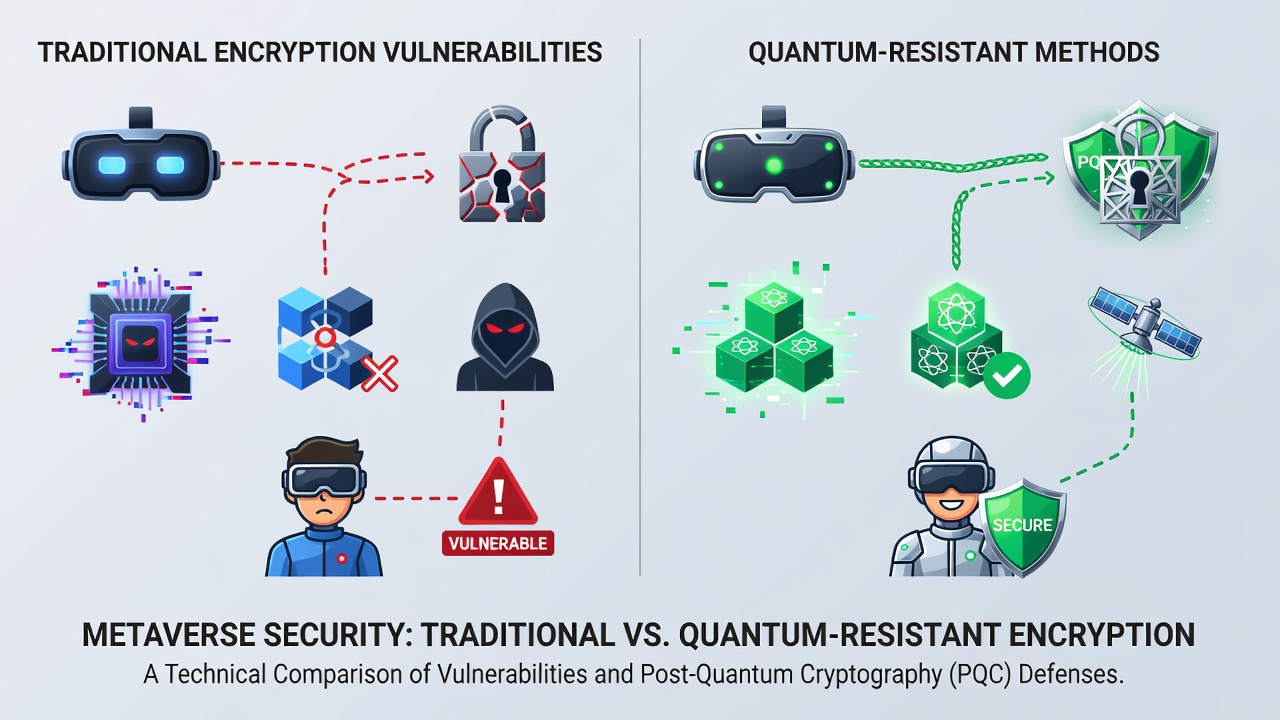
Teams report smoother frame delivery in high-fidelity environments when these techniques are applied, although access to specialized simulators remains a consideration for smaller studios.
Traditional vs Quantum-Enhanced Security Approaches
Conventional security relies on assumptions of computational hardness that quantum computers can break efficiently. Quantum-enhanced strategies combine post-quantum cryptography with quantum key distribution where fiber infrastructure permits. Key differences include:
- Traditional approaches offer simpler initial deployment but carry escalating long-term risk as quantum hardware advances.
- Quantum-enhanced systems incur moderate computational cost today yet deliver information-theoretic security guarantees that remain valid even against future machines.
- Hybrid models provide the best balance for organizations transitioning over the next three to five years.
Organizations that have piloted quantum-enhanced stacks consistently record higher user retention and trust scores.
Real-World Examples from Emerging Platforms
Several pioneering projects in 2026 combine VR hardware, blockchain ledgers, and quantum-resistant layers. One initiative partners with major quantum research labs to verify asset provenance using lattice-based signatures on a permissioned chain. Another deploys AR navigation tools secured by NIST-approved algorithms, resulting in fewer reported security incidents during live events. These examples demonstrate that modular architecture allows incremental upgrades without disrupting user experience.
Best Practices for Full Technology Integration
Successful metaverse projects follow these integration principles: maintain modular codebases that isolate cryptographic and consensus layers; prioritize open standards to prevent vendor lock-in; schedule regular red-team exercises that simulate both classical and quantum attack vectors; and monitor emerging hardware developments through channels such as IBM Quantum. Documentation, automated testing pipelines, and phased rollouts further reduce operational risk.
Common Pitfalls and Scalability Challenges
FAQ
What are the primary scalability challenges when combining these technologies? High-frequency asset transactions can overload base-layer blockchains. Mitigation involves implementing sharding, state channels, and optimized layer-2 rollups that maintain quantum resistance.
How can teams avoid integration pitfalls during migration? Adopt a modular architecture that permits phased replacement of cryptographic primitives rather than attempting complete system rewrites. Thorough benchmarking at each stage prevents performance regressions.
Is immediate access to quantum hardware necessary? No. Quantum-resistant algorithms execute efficiently on classical processors today, allowing preparation for future hardware without current capital expenditure.
What common mistakes lead to security gaps? Neglecting hybrid encryption during transition periods and failing to test signature verification under realistic network latency conditions are frequent oversights.
How do rendering optimizations interact with blockchain latency? Quantum-inspired schedulers can prioritize asset validation tasks, ensuring that ownership proofs complete within frame budgets for immersive sessions.
Conclusion
Constructing secure metaverses in 2026 requires thoughtful fusion of VR, AR, blockchain, and quantum technologies. By selecting appropriate post-quantum encryption, following structured blockchain implementation, optimizing rendering pipelines, and comparing security paradigms, development teams can deliver platforms that remain resilient against evolving threats. Ongoing evaluation, adherence to best practices, and attention to scalability ensure these environments continue to serve users reliably for years ahead.

No comments yet. Be the first!