 NeoBit Daily
Introduction to Quantum AR in Automotive Prototyping
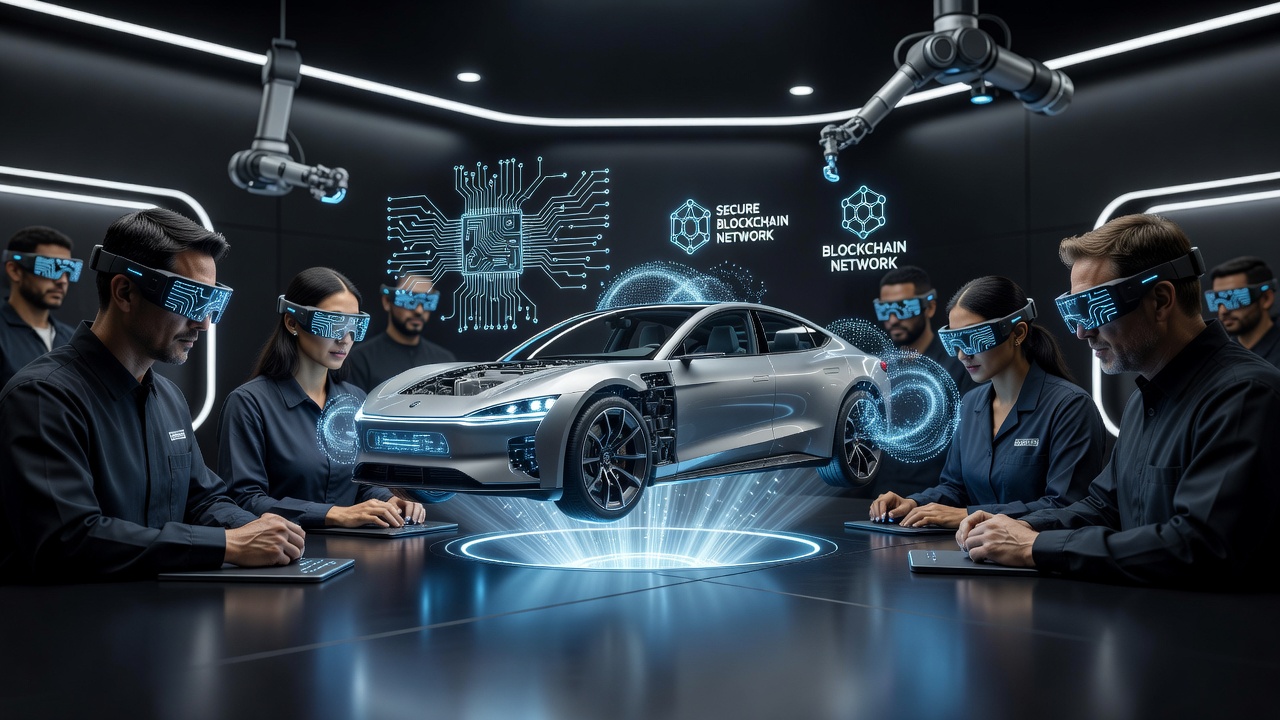
Engineers and tech leaders in manufacturing face constant pressure to accelerate vehicle design cycles while maintaining precision and security. In 2026, quantum AR tools emerge as a transformative force by merging quantum computing's unparalleled processing capabilities with augmented reality simulations. This combination allows for unprecedented visualization and testing of automotive prototypes. Blockchain technology further strengthens these workflows by enabling secure, transparent data sharing among distributed teams and suppliers. The result is a cohesive ecosystem where VR, AR, blockchain, and quantum computing converge to redefine emerging tech applications in automotive manufacturing.
Traditional prototyping methods often involve lengthy physical builds and iterative testing that consume significant resources. Quantum-enhanced AR changes this paradigm by enabling virtual environments where complex simulations run at speeds previously unattainable. This guide provides engineers with in-depth explanations, practical implementation steps, real-world case studies, and forward-looking analysis to help organizations adopt these technologies effectively.
Understanding Quantum Computing's Role in AR Simulations
Quantum computing utilizes qubits that exist in superposition, allowing simultaneous evaluation of multiple states. When applied to AR simulations, this enables real-time modeling of intricate vehicle dynamics such as fluid flow over body panels, thermal management in electric powertrains, and structural integrity under extreme conditions. Classical computers process these calculations sequentially, leading to bottlenecks in high-fidelity rendering. Quantum AR overcomes these limitations by delivering near-instantaneous results for multi-variable optimizations.
Engineers can overlay quantum-generated data directly onto physical mockups using AR headsets, revealing stress points or aerodynamic inefficiencies that would require days of traditional computation. Additional advantages include accelerated molecular dynamics for next-generation battery materials and predictive modeling for autonomous driving sensor placements. These capabilities support sustainable design goals by minimizing material waste during early development phases.
Key Technical Synergies with VR and AR
Integrating virtual reality extends the immersive experience, allowing full-scale walkthroughs of vehicle interiors while quantum algorithms refine underlying physics simulations. This synergy reduces the gap between conceptual design and production-ready prototypes, fostering innovation in connected vehicle architectures.
Blockchain Integration for Secure Data Sharing
Blockchain provides a decentralized framework that complements quantum AR by securing every stage of the design process. Design files, simulation outputs, and supplier specifications are recorded on immutable ledgers, ensuring traceability and preventing tampering. Smart contracts streamline approval workflows, automatically enforcing compliance rules across international partners.
In practice, this means an engineer in one location can share a quantum-optimized AR model with a supplier in another region without risking data breaches. Version histories remain transparent, supporting regulatory audits common in the automotive sector. The technology also facilitates collaborative innovation while protecting intellectual property through encrypted access controls.
IBM continues to advance quantum-blockchain frameworks that enhance manufacturing data security. Similarly, standards bodies like NIST develop guidelines for quantum-resistant cryptography essential to these integrations.
Case Studies from Leading Automakers
Leading automotive companies have already demonstrated the value of quantum AR tools in 2026. A premium German manufacturer applied quantum simulations to refine electric vehicle chassis designs, using AR overlays to test weight distribution scenarios. Blockchain secured data exchanges with battery suppliers, resulting in faster validation cycles and reduced physical prototype iterations.
In Asia, a major Japanese automaker leveraged the technology for crashworthiness testing. Quantum algorithms processed thousands of impact variables simultaneously, while AR allowed designers to visualize deformation patterns in real time. The secure blockchain layer enabled seamless collaboration with global safety research partners. A North American electric vehicle startup used these tools to optimize aerodynamics for range extension, achieving prototype refinements that would have taken months using conventional methods.
These examples illustrate how the combined technologies deliver competitive advantages in both established and emerging automotive markets.
Quantum vs Traditional AR: Speed Comparisons
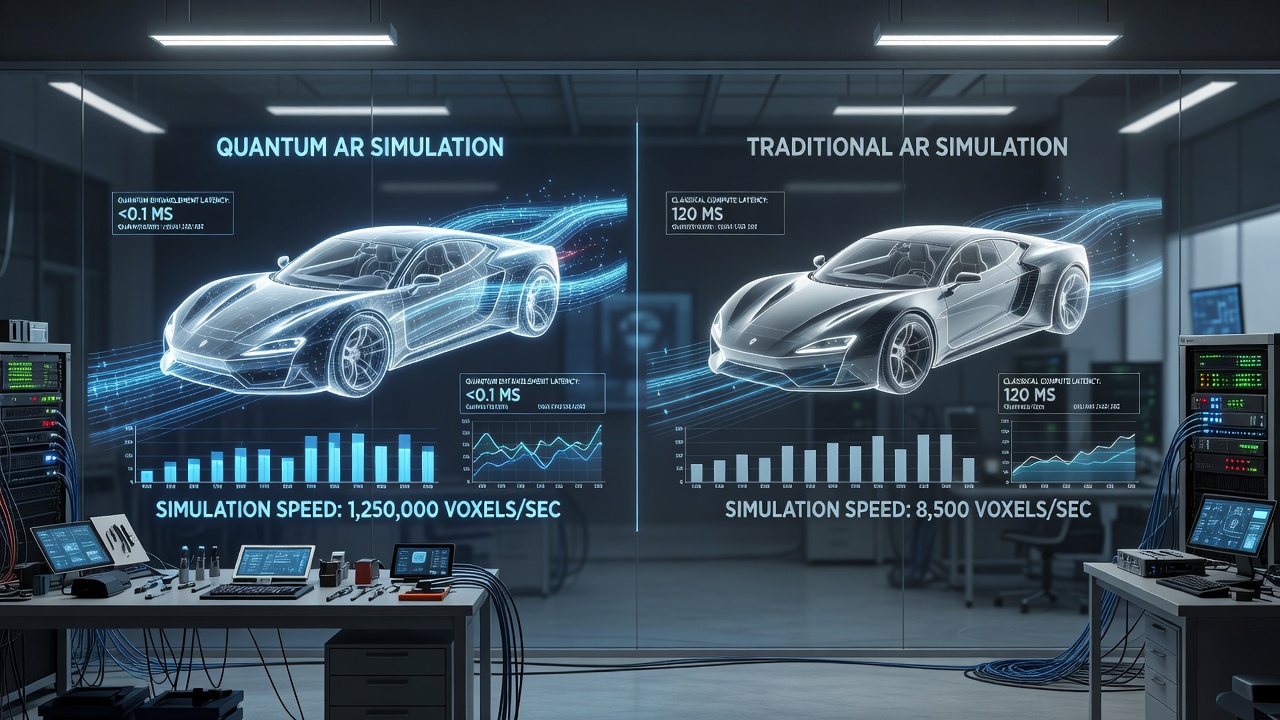
Benchmark evaluations reveal substantial performance differences between quantum and traditional AR approaches. Complex aerodynamic simulations that require four to six hours on classical systems complete in under three minutes with quantum acceleration. Material stress analyses involving nonlinear equations show similar gains, with quantum methods handling datasets exceeding one million variables without performance degradation.
Engineers benefit from immediate feedback during interactive AR sessions, enabling rapid design pivots. Traditional systems often force compromises in simulation fidelity to maintain usable speeds, whereas quantum AR preserves full accuracy. This disparity becomes more pronounced in full-vehicle models incorporating thousands of interdependent components.
5-Step Implementation Process
Organizations can follow this structured checklist to integrate quantum AR tools successfully:
- Evaluate existing hardware and software ecosystems, identifying gaps in quantum processing access and AR-compatible displays. Conduct internal audits of data pipelines to prepare for blockchain integration.
- Select technology partners specializing in hybrid quantum-classical systems and provide targeted training programs covering AR interface navigation and quantum algorithm basics.
- Design blockchain governance frameworks, including permissioned networks and smart contract templates tailored to automotive compliance requirements.
- Launch controlled pilot projects focused on single vehicle subsystems, such as suspension geometry or thermal systems, to measure performance metrics and refine workflows.
- Expand deployment organization-wide with continuous monitoring dashboards, incorporating feedback loops for ongoing optimization and scalability assessments.
Include milestone reviews after each step to address integration challenges proactively.
Practical FAQs on Cost and Scalability
How scalable are these tools for mid-sized firms? Cloud-based quantum services allow phased adoption, starting with limited simulation credits before expanding to full enterprise access. This approach supports gradual infrastructure growth without disruptive capital outlays.
What are the main cost considerations? Emphasis should remain on workforce upskilling and secure network architecture rather than fixed expenditures, given the rapidly evolving vendor landscape.
Are there risks with blockchain integration? Adopting post-quantum encryption standards mitigates potential vulnerabilities, aligning with recommendations from recognized technical authorities.
Forward-Looking Predictions for 2027 Adoption
Industry analysts anticipate broader deployment of quantum AR platforms by 2027 as hardware accessibility improves and standardized interfaces mature. Deeper convergence with VR environments will enable end-to-end immersive development cycles. Automotive firms that establish foundational capabilities in 2026 will likely achieve leadership positions in electric and autonomous vehicle innovation. Continued collaboration between technology providers and manufacturers will drive further refinements in simulation accuracy and data security protocols.
SAE International provides ongoing resources tracking these advancements in automotive technology standards.
Conclusion
Quantum AR tools, enhanced by blockchain security, offer a clear pathway to faster, more reliable automotive prototyping. Engineers equipped with the implementation framework and insights presented here can confidently navigate adoption challenges. The synergies among quantum computing, AR, VR, and blockchain position forward-thinking organizations for sustained competitive advantage in the evolving manufacturing landscape.


No comments yet. Be the first!