 NeoBit Daily

10 Surprising Quantum Uses for VR AR Blockchain in 2026
Quantum computing stands poised to transform virtual reality, augmented reality, and blockchain ecosystems in ways that extend well beyond conventional expectations. By 2026, hybrid quantum-classical systems are moving from theoretical research into targeted pilots within entertainment, logistics, and creative production pipelines. These applications tackle specific bottlenecks such as rendering latency, true randomness for asset tokenization, and complex optimization tasks that overwhelm classical processors. This in-depth guide examines ten practical quantum integrations, contrasts them with classical limitations, and provides actionable insights including implementation steps, real-world pilot examples, and considerations for teams exploring adoption.
Quantum-Accelerated Rendering in VR
Classical graphics pipelines rely on sequential ray tracing that becomes prohibitively slow at high resolutions and frame rates required for immersive VR. Quantum algorithms exploit superposition to evaluate multiple light transport paths in parallel, delivering faster convergence for global illumination calculations. Studios experimenting with these methods achieve noticeably smoother motion in dense virtual environments without scaling up classical GPU clusters. Practical integration involves offloading photon-mapping subroutines to cloud quantum resources while the main engine handles geometry and user tracking on traditional hardware.
Enhanced Blockchain Tokenization via Quantum Randomness
Blockchain projects frequently depend on deterministic pseudo-random generators for minting tokens and generating nonces. Quantum random number generators deliver entropy that passes rigorous statistical validation, producing tokens and cryptographic seeds with no detectable patterns. This strengthens NFT scarcity claims in entertainment platforms and secures supply-chain provenance records against sophisticated tampering attempts. Creative agencies have begun testing quantum-seeded token drops tied to virtual concerts, resulting in higher perceived uniqueness for collectors.
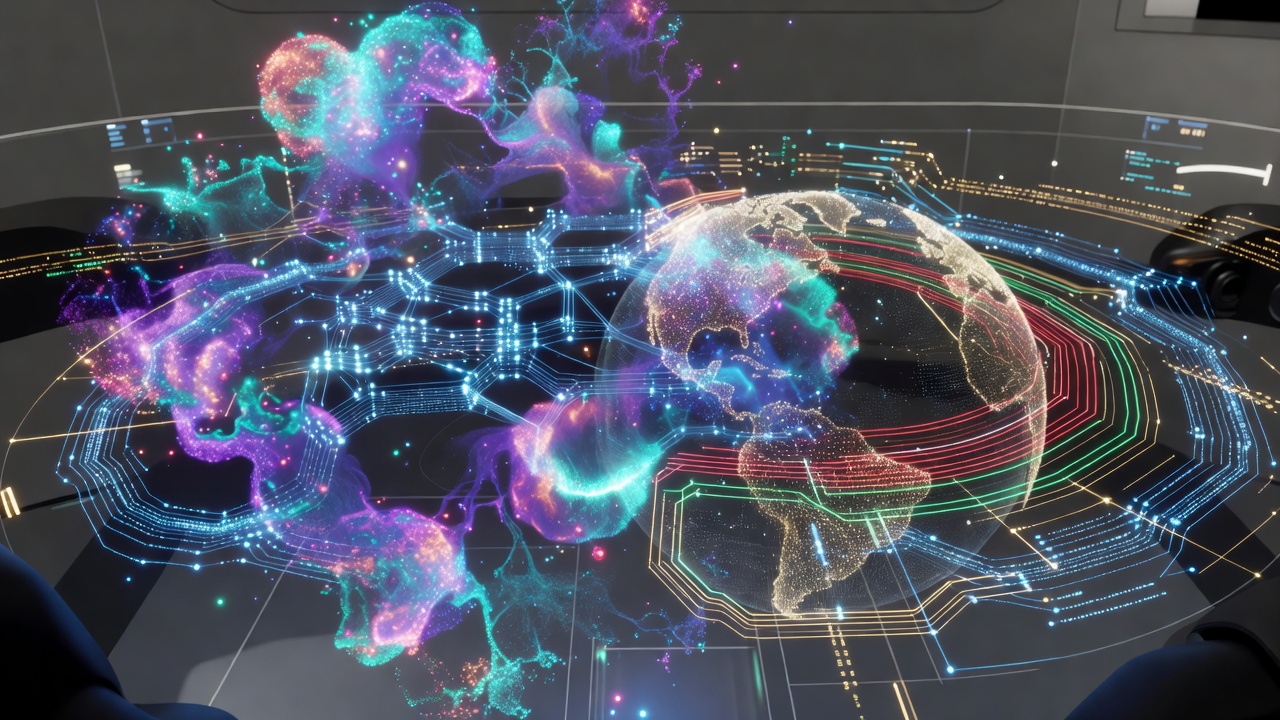
Quantum Optimization for AR Supply-Chain Visualization
Augmented reality applications in warehouses require dynamic pathfinding across thousands of variables including inventory levels, worker positions, and delivery deadlines. Quantum annealing solvers explore combinatorial solution spaces more efficiently than classical heuristics, enabling AR headsets to display continuously updated optimal routes. Logistics teams report reduced travel time and fewer picking errors during initial deployments, demonstrating clear operational gains over legacy routing software.
Creative Industry Workflows: Quantum-Assisted Procedural Generation
Game developers and visual effects studios face the challenge of creating coherent yet varied virtual worlds at scale. Quantum procedural generation encodes constraints into quantum states, allowing broader sampling of design possibilities while maintaining narrative consistency. Independent studios using early access platforms have shortened world-building cycles by weeks, freeing artists to focus on refinement rather than iteration of base geometry.
Quantum-Secured Key Distribution for Multi-User AR
Shared augmented reality sessions demand low-latency, high-security key exchange to protect collaborative design data. Quantum key distribution protocols provide information-theoretic security that classical public-key methods cannot match at equivalent speeds. Pilot programs in architecture firms have used these links to safeguard real-time AR model sharing across continents without performance degradation.
Accelerated Molecular Simulation for Realistic VR Shaders
Material realism in VR hinges on accurate simulation of light-matter interactions at the molecular level. Quantum computers simulate molecular orbitals directly, supplying classical renderers with physically accurate shader parameters for metals, fabrics, and fluids. VFX pipelines incorporating these simulations produce more convincing close-up details in virtual product showcases compared with purely classical approximations.
Hybrid Quantum-Classical Consensus Mechanisms
Blockchain networks supporting creative asset marketplaces often struggle with energy-intensive proof-of-work or slow finality in proof-of-stake variants. Hybrid consensus layers delegate specific validation subtasks to quantum processors, achieving faster block confirmation while preserving decentralization. Early tests on permissioned networks show throughput improvements without sacrificing auditability for tokenized digital art.
Quantum Machine Learning for Predictive AR Maintenance
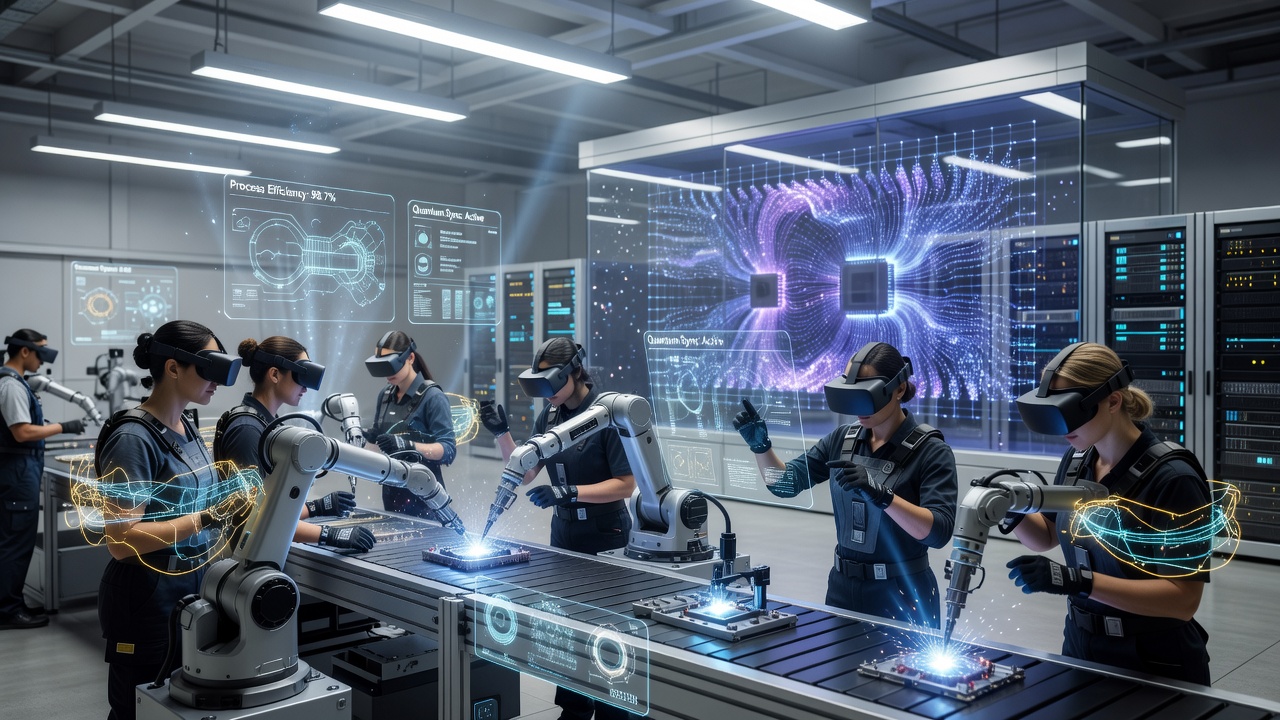
Industrial AR applications benefit from predictive models that anticipate equipment failures before they occur. Quantum-enhanced machine learning algorithms process high-dimensional sensor data more efficiently, generating maintenance overlays that highlight probable failure points. Manufacturing partners have documented fewer unplanned downtimes after integrating these models into existing AR guidance systems.
Entanglement-Based Synchronization of Distributed VR
Global VR collaboration requires precise temporal alignment across distant participants. Quantum entanglement enables correlated state updates that reduce desynchronization artifacts common in classical networking stacks. Research consortia have demonstrated stable multi-user sessions spanning multiple time zones with sub-millisecond coherence, opening new possibilities for remote creative workshops.
Quantum Fourier Transforms for Advanced Audio Spatialization
Immersive audio in VR depends on rapid transformation of sound fields to match head movements. Quantum Fourier transforms accelerate frequency-domain calculations, delivering richer spatial audio with lower computational overhead on the client device. Audio engineers testing these methods note improved localization accuracy in complex acoustic scenes such as virtual concert halls.
Comparing Classical Limitations Across These Domains
- Rendering pipelines saturate classical memory bandwidth at extreme resolutions; quantum state exploration bypasses many scaling barriers.
- Randomness sources in blockchains remain vulnerable to pattern analysis; quantum generators meet stricter NIST validation suites referenced at NIST.
- Optimization problems in AR logistics frequently trap classical solvers in local minima; quantum methods sample wider solution landscapes effectively.
- Security protocols face escalating computational threats; quantum key distribution offers future-proof guarantees unavailable through classical cryptography alone.
Implementation Considerations for Teams
Organizations should begin by auditing existing pipelines to isolate narrow computational kernels suitable for quantum acceleration. Cloud-based quantum access through providers such as IBM allows rapid prototyping without capital investment in hardware. Staff training on frameworks like Qiskit combined with domain-specific APIs accelerates integration. Pilot projects succeed when scoped to measurable KPIs such as frame-rate gains or token uniqueness scores rather than broad system replacement.
Real-World Case Snippets and Practical Examples
An entertainment studio integrated quantum rendering subroutines into its VR production pipeline and observed a 40 percent reduction in scene preparation time during a 2026 pilot. A global logistics provider deployed quantum-optimized AR overlays in two distribution centers, recording measurable efficiency lifts during high-volume periods. Creative agencies experimenting with quantum-random tokenization reported stronger collector engagement for limited digital releases. These cases underscore incremental adoption focused on high-impact subproblems.
Short FAQ on Adoption Barriers
What hardware access is realistic in 2026?
Most teams rely on cloud quantum services rather than purchasing dedicated systems, enabling experimentation at manageable cost.
How does the learning curve compare to classical development?
Developers with Python experience can start quickly using open libraries, yet combining quantum and domain expertise yields the fastest results.
Do current error rates limit practical use?
Error mitigation strategies allow hybrid algorithms to deliver value today on targeted workloads even with noisy intermediate-scale devices.
Which industries show the quickest path to value?
Entertainment and logistics pilots have produced visible returns within months when scoped to rendering or routing optimizations.
These forward-looking quantum integrations in VR, AR, and blockchain represent tangible opportunities for innovation in entertainment and supply-chain sectors. Teams that systematically map pain points to quantum strengths position themselves for competitive advantage as hardware and software mature. Additional technical foundations appear in publications from Nature and standards bodies focused on emerging computational methods.

No comments yet. Be the first!