 NeoBit Daily
Introduction to Converging Technologies in Space Exploration
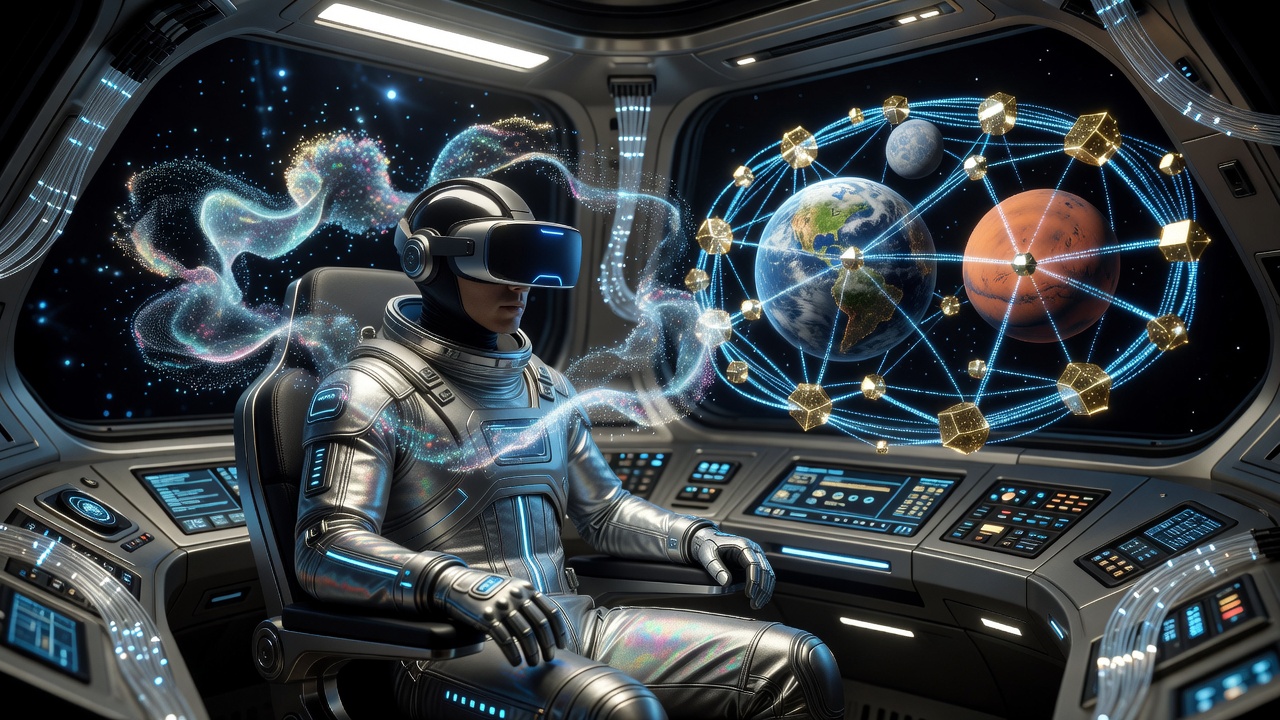
Space exploration in 2026 stands at the intersection of immersive technologies, secure distributed systems, and advanced computation. VR and AR enhance training and operations, blockchain secures interplanetary data exchanges, and quantum computing accelerates complex simulations that legacy systems cannot handle efficiently. This convergence addresses critical challenges in long-duration missions, from Mars simulations to real-time trajectory optimization. Agencies and private firms are integrating these tools to reduce risks and costs while expanding research capabilities. The focus remains on practical applications that deliver measurable improvements in safety, data integrity, and computational speed. As missions extend further into the solar system, the demand for reliable, high-fidelity tools grows exponentially, making these technologies essential rather than optional enhancements.
Search trends indicate strong interest in how these innovations will shape aerospace strategies, with professionals seeking concrete examples of integration rather than high-level overviews. This article provides in-depth analysis, including step-by-step implementation guidance and comparisons that highlight why emerging solutions outperform older approaches in specific scenarios.
VR and AR for Immersive Astronaut Training and Mission Simulation
Virtual and augmented reality systems create realistic environments for astronauts to practice procedures without physical hardware. In 2026, VR headsets simulate microgravity conditions and equipment handling for extended missions, while AR overlays provide step-by-step guidance during extravehicular activities. These tools allow repeated rehearsals of complex tasks such as habitat assembly or emergency repairs. Advanced VR platforms now incorporate full-body tracking and environmental feedback, enabling crews to experience the physical sensations of tool use in simulated vacuum conditions. AR glasses, worn inside spacecraft or habitats, project interactive diagrams onto real components, reducing cognitive load during high-stress operations.
Compared to traditional methods, VR/AR reduces training time and physical resource demands. For instance, teams can rehearse docking maneuvers in virtual replicas of spacecraft, identifying potential issues before launch. Integration with haptic feedback further improves muscle memory development for precise movements in zero gravity. Additional benefits include the ability to train multiple crew members simultaneously across different locations, fostering better team coordination without the expense of centralized facilities. Limitations such as motion sickness are mitigated through calibrated session lengths and gradual exposure protocols.
Blockchain for Secure Interplanetary Data Ledgers
Blockchain technology establishes tamper-proof ledgers for transmitting scientific data across vast distances. In space networks where latency and interference are common, decentralized verification ensures data authenticity from rovers, satellites, and crewed vehicles. Smart contracts automate access controls and logging, minimizing human error in data management. Each block records timestamps, source identifiers, and cryptographic hashes, creating an immutable chain that survives communication blackouts or node failures.
Real-world pilots demonstrate blockchain's value in maintaining chain-of-custody records for samples returned from lunar or asteroid missions. This approach prevents unauthorized alterations and supports collaborative research among international partners. NASA has explored similar distributed ledger concepts for mission data integrity. The technology also enables autonomous resource allocation in future habitats, where smart contracts could manage power distribution or inventory tracking without constant Earth oversight.
Quantum Computing Applications in Trajectory Modeling and Research
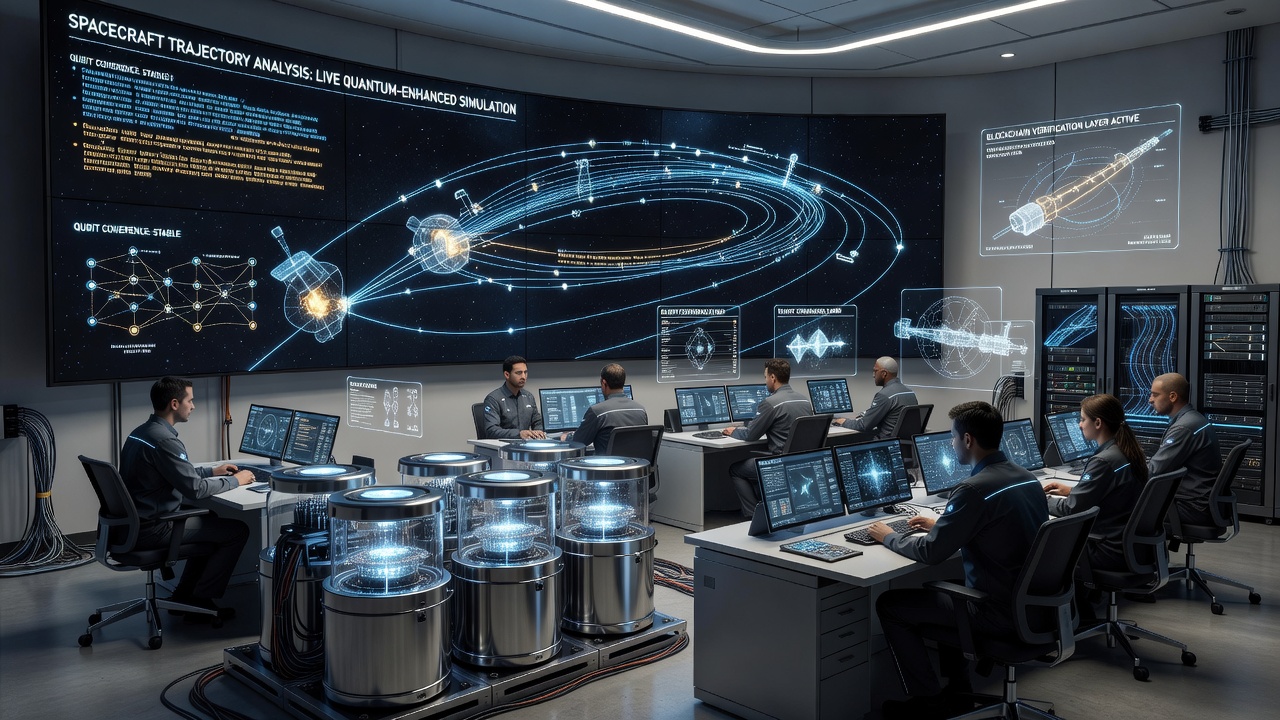
Quantum systems excel at solving optimization problems that overwhelm classical computers, such as multi-body gravitational calculations or quantum chemistry simulations for propulsion fuels. In 2026, hybrid quantum-classical algorithms model spacecraft paths with higher precision, accounting for variables like solar wind and planetary perturbations more effectively than legacy software. These models process vast datasets from sensors in real time, predicting orbital adjustments that minimize fuel consumption and maximize mission duration.
Quantum-accelerated modeling shortens planning cycles for deep-space probes and enables rapid iteration on mission parameters. Research institutions leverage these capabilities to explore material behaviors under extreme conditions encountered in space. For example, simulating molecular interactions in new alloys for heat shields becomes feasible at scales impossible with conventional supercomputers. Early adopters report improved accuracy in predicting radiation effects on electronics, directly informing hardware shielding designs.
Case Studies from NASA and International Partners
NASA has incorporated VR environments into its training protocols for Artemis program participants, allowing crews to navigate lunar surface scenarios with unprecedented realism. Blockchain experiments on the International Space Station have tested secure data transmission protocols that withstand intermittent connectivity. Quantum research collaborations with academic labs focus on error-corrected simulations for future Mars trajectories, yielding insights into efficient transfer orbits. ESA has piloted AR systems for satellite maintenance, projecting repair instructions directly onto hardware during robotic operations.
These initiatives highlight measurable gains in operational readiness and data reliability. Similar efforts by private companies demonstrate how startups can adapt these technologies for commercial satellite constellations, achieving faster data validation cycles and reduced training overheads for ground crews.
Legacy Systems Versus Emerging Tech Solutions
Traditional aerospace systems rely on centralized databases and classical computing clusters, which face scalability limits during high-volume data events. Emerging solutions offer distributed resilience and exponential speedups in specific computations. Trade-offs include higher initial integration complexity for quantum and blockchain components, yet long-term reliability improvements justify adoption in critical paths. Legacy trajectory software, for instance, may require hours for complex calculations that quantum hybrids complete in minutes, freeing engineers for higher-level decision making. The shift also introduces new skill requirements, prompting organizations to invest in cross-training programs that blend aerospace expertise with data science fundamentals.
Implementation Steps for Startups Entering Aerospace Tech
- Assess mission requirements and identify pain points addressable by VR/AR, blockchain, or quantum tools through detailed stakeholder interviews and simulation audits.
- Partner with established research centers for hardware access and validation testing, ensuring compliance with space-grade environmental standards from the outset.
- Develop modular prototypes that interface with existing spacecraft communication standards, prioritizing interoperability to avoid costly retrofits later.
- Conduct iterative simulations and ground tests before orbital deployment, incorporating feedback loops that refine algorithms based on real sensor data.
- Secure regulatory approvals through transparent documentation of security and performance metrics, including third-party audits of blockchain consensus mechanisms.
- Monitor post-deployment performance with continuous telemetry analysis to identify optimization opportunities and scale successful modules across additional missions.
Cost Savings and Operational Benefits
Integrations deliver savings through reduced physical mockup construction, fewer failed mission rehearsals, and optimized fuel usage via precise modeling. Organizations report streamlined data workflows that lower storage and verification overheads while enhancing collaboration across distributed teams. VR/AR training cuts the need for expensive analog facilities by up to half in some documented cases, while quantum modeling reduces the number of trajectory correction maneuvers required during transit. Blockchain ledgers decrease the labor hours spent reconciling conflicting data sources from multiple instruments.
Frequently Asked Questions on Technical Barriers
What are the main hurdles in deploying quantum systems in space?
Environmental stability and error rates remain primary concerns, addressed through specialized shielding and hybrid algorithms that run partially on classical hardware. Radiation hardening and cryogenic cooling adaptations are under active development to extend operational windows.
How does blockchain handle extreme latency in deep space?
Consensus mechanisms are adapted with delayed validation windows and local caching to maintain ledger integrity despite communication delays. Lightweight protocols prioritize critical transactions while batching less urgent updates for later synchronization.
Are VR/AR systems reliable in radiation-heavy environments?
Hardened hardware variants and redundant software layers ensure continued operation, with fallback to conventional interfaces when needed. Regular firmware updates address emerging radiation-induced glitches identified during ground testing.
What training is required for teams adopting these technologies?
Cross-disciplinary programs combining aerospace engineering with software development and quantum information basics prepare personnel for effective implementation and troubleshooting.
Forward-Looking Predictions for 2027 Adoption
By 2027, wider integration is expected as quantum processors mature and blockchain standards mature for space use. Startups that master hybrid implementations will gain competitive edges in mission support contracts. Continued collaboration between public agencies and private innovators will accelerate safe, data-driven exploration of new frontiers. Analysts anticipate standardized interfaces emerging that allow seamless switching between VR training modules and quantum simulation outputs, further lowering barriers for smaller organizations.
Conclusion
The convergence of VR, AR, blockchain, and quantum computing is redefining what is possible in space exploration by 2026. Through detailed case studies, practical implementation frameworks, and forward planning, organizations can position themselves to leverage these tools effectively. The result is safer missions, more reliable data, and accelerated discovery across the solar system.
No comments yet. Be the first!