 NeoBit Daily

Introduction to Zero-Day Exploit Defense in 2026
Zero-day exploits remain one of the most critical threats in cybersecurity, targeting unknown vulnerabilities before patches exist. As organizations face increasingly sophisticated attacks, 2026 strategies emphasize proactive defense, data privacy integration, and rapid response mechanisms. This guide provides security professionals with actionable tactics beyond basic antivirus tools, focusing on identifying indicators, deploying analytics, and conducting simulations. The evolving threat landscape includes nation-state actors and ransomware groups leveraging artificial intelligence to discover and weaponize flaws faster than ever before. Effective defense requires a shift from reactive patching to continuous monitoring and adaptive controls that protect sensitive data throughout the incident lifecycle.
According to reports from CISA, these threats can lead to severe breaches if not addressed with layered approaches. Organizations must also consider regulatory requirements around data privacy, ensuring that detection methods do not inadvertently expose personal information during investigations.
Identifying Zero-Day Indicators
Recognizing potential zero-day activity requires monitoring for anomalous behaviors rather than known signatures. Key indicators include unusual network traffic spikes, unexpected process executions, and deviations from baseline user activities. In 2026, advanced persistent threats often manifest through subtle changes such as irregular memory allocations or encrypted command-and-control communications that bypass traditional firewalls.
Step-by-Step Detection Process
- Establish baseline network and system behaviors using historical data over 30 days, incorporating machine learning to account for seasonal variations in usage patterns.
- Deploy monitoring tools to flag outliers, such as sudden increases in outbound connections or atypical API call frequencies that may indicate data exfiltration attempts.
- Correlate events across endpoints and servers to identify patterns indicative of exploitation attempts, using time-series analysis to distinguish between benign anomalies and malicious activity.
- Investigate flagged incidents with forensic analysis to confirm zero-day involvement, preserving evidence chains while maintaining data privacy through anonymization techniques.
- Document findings and feed them back into detection models to improve future accuracy and reduce alert fatigue among security teams.
Industry case studies, like those from financial sectors, show that early indicator detection reduced breach impacts by isolating affected systems within hours. For example, a major bank detected anomalous database queries and contained the threat before significant data loss occurred.
Deploying Behavioral Analytics
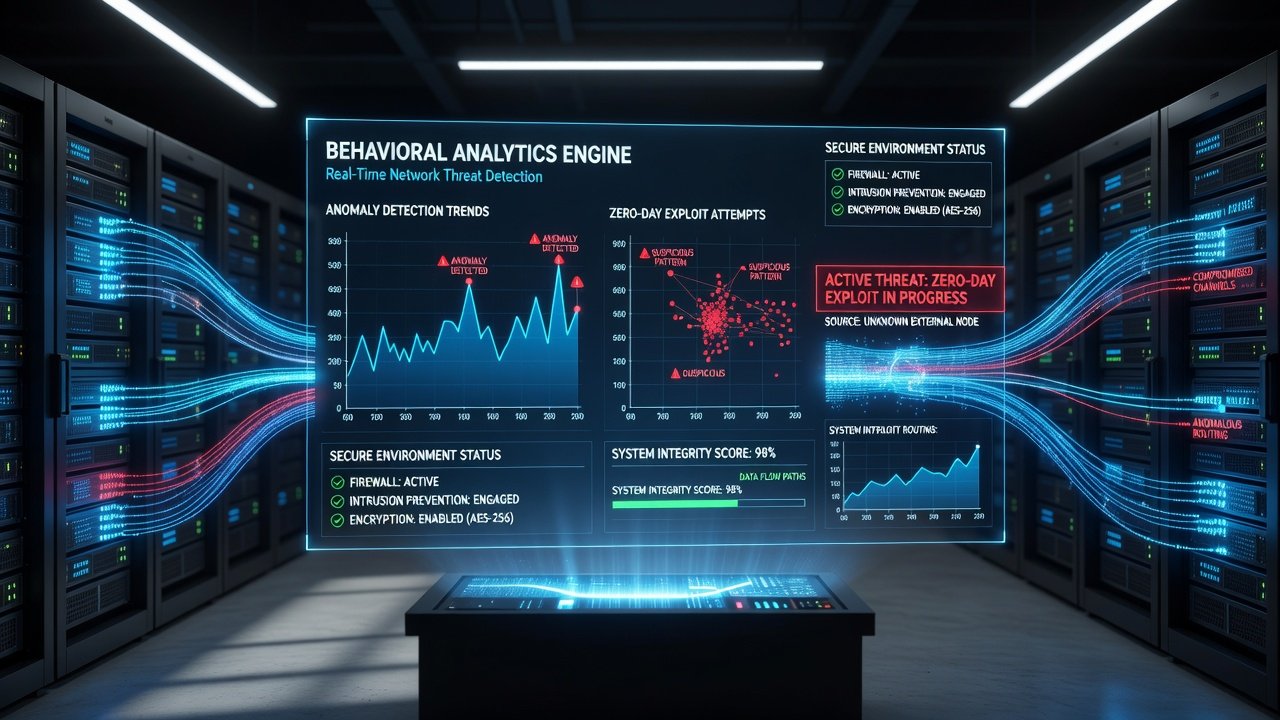
Behavioral analytics form the core of modern zero-day defense by analyzing patterns instead of relying solely on signatures. Machine learning models detect deviations that signal potential exploits, allowing organizations to respond in real time while upholding strict data privacy standards. These systems learn normal operational baselines and alert on subtle shifts that traditional tools miss.
Implementation involves integrating analytics platforms with existing security infrastructure. Start by selecting tools that support real-time processing and privacy-preserving data handling to comply with regulations like GDPR. Focus on solutions that offer differential privacy features to minimize risks when analyzing user activity logs.
Practical Implementation Example
Consider a mid-sized enterprise: Configure the analytics engine to monitor API calls and file modifications. Set thresholds for alerts when deviations exceed 20% from norms. Test with simulated attacks to refine accuracy and minimize false positives. In one deployment, the system flagged a previously unknown exploit targeting a web application server, enabling the team to isolate the instance and analyze the payload without disrupting business operations. Expand this by training models on organization-specific data sets and regularly retraining them to adapt to new usage patterns.
Integrating Threat Intelligence Feeds
Threat intelligence provides context on emerging vulnerabilities and attacker tactics. In 2026, feeds from trusted sources enable organizations to anticipate zero-days through shared indicators of compromise. Effective integration involves automating the ingestion of structured data into security information and event management platforms for immediate action.
Connect feeds to security orchestration platforms for automated responses. Prioritize feeds that include privacy-focused data sharing protocols. Resources from NIST offer frameworks for effective integration, including guidelines on validating feed reliability and filtering out noise. Combine commercial feeds with open-source intelligence to create a comprehensive view while avoiding over-reliance on any single provider.
Conducting Tabletop Exercises
Tabletop exercises simulate zero-day scenarios to test response plans without real-world risks. These sessions improve team coordination and identify gaps in procedures, fostering a culture of preparedness across technical and executive levels.
Exercise Outline
- Define scenario parameters, such as a ransomware variant exploiting an unknown flaw in a critical application.
- Assign roles to participants including incident responders, legal teams, and executives to mirror real decision-making hierarchies.
- Walk through detection, containment, and recovery steps, emphasizing communication protocols and data privacy considerations during evidence handling.
- Debrief to document lessons and update policies, incorporating metrics on response times and decision quality.
- Follow up with after-action reports that include recommendations for tool enhancements or training needs.
Regular exercises, held quarterly, help maintain readiness as demonstrated in case studies from healthcare providers where simulations prevented potential HIPAA violations during simulated incidents.
Comparing EDR Tools for Zero-Day Protection
Endpoint Detection and Response (EDR) solutions vary in their zero-day capabilities. Key comparison factors include behavioral detection strength, integration ease, and privacy controls. When evaluating options, consider scalability for growing environments and support for cloud-native workloads.
- Tool A: Excels in real-time analytics but requires more configuration for privacy features; best suited for organizations with dedicated security operations centers.
- Tool B: Offers strong threat intel integration and automated responses suitable for larger teams, with robust reporting dashboards.
- Tool C: Focuses on lightweight deployment ideal for resource-constrained environments, though it may lack advanced correlation capabilities.
Evaluate based on organizational needs, testing in controlled pilots before full rollout. Look for tools that provide transparent data handling practices to align with privacy goals.
Industry Case Studies
Real-world applications highlight the effectiveness of these strategies. A global retailer used behavioral analytics to thwart a zero-day attack on its supply chain platform, limiting exposure to customer data. Another example from the energy sector involved tabletop exercises that prepared teams for a coordinated exploit, resulting in faster recovery and minimal downtime.
Common Challenges and FAQ
How can organizations balance zero-day defense with data privacy?
Use anonymized data in analytics and ensure compliance with privacy laws through encryption and access controls. Implement data minimization principles during collection phases.
What are the first steps for implementing these strategies?
Begin with a risk assessment, followed by tool selection and team training. Prioritize high-value assets and establish clear escalation paths.
How often should tabletop exercises occur?
Conduct them at least quarterly, adjusting frequency based on threat landscape changes and organizational growth.
What common pitfalls should teams avoid?
Avoid over-reliance on automated tools without human oversight and ensure regular updates to detection models to prevent obsolescence.
How does real-time threat response integrate with these tactics?
Combine automated containment with manual verification to balance speed and accuracy while preserving forensic integrity.
Conclusion
Defending against zero-day exploits in 2026 demands a multifaceted approach combining detection, analytics, intelligence, and preparedness. By applying these tactics, security teams can enhance resilience while safeguarding privacy. Stay informed through authoritative sources like OWASP and SANS Institute for ongoing updates and evolving best practices.


No comments yet. Be the first!