 NeoBit Daily

Introduction to Shadow IT in 2026
Shadow IT refers to the use of unauthorized applications, devices, and services within an organization without IT department approval. In 2026, this phenomenon continues to grow as remote work and cloud-based tools proliferate, creating significant cybersecurity and data privacy challenges. Employees often turn to convenient solutions for productivity, but these choices frequently bypass official security protocols. This guide helps beginners identify hidden risks, prevent data leaks, and stay informed amid evolving hacking threats that dominate cybersecurity news cycles.
Organizations must address shadow IT proactively to protect sensitive information and maintain regulatory compliance. Unauthorized tools often bypass security protocols, leading to vulnerabilities that hackers exploit through sophisticated methods. The rise of hybrid work environments has accelerated the adoption of personal devices and apps, making visibility more difficult than ever. Understanding these dynamics is the first step toward building a resilient defense strategy that balances innovation with protection.
Common Examples of Shadow IT
Shadow IT manifests in various forms across workplaces. Employees frequently adopt cloud storage like personal Google Drive accounts for file sharing, bypassing corporate servers and exposing files to uncontrolled access. Messaging apps such as Slack or WhatsApp used without oversight can expose confidential communications to interception. Other instances include unapproved project management software like Trello or Asana for team collaboration, personal VPNs that route traffic through unsecured channels, and IoT devices such as smart speakers connected to company networks for convenience.
These examples highlight how everyday convenience tools become risks when adopted independently. In 2026, AI-powered productivity apps add another layer, as they may process data on unsecured servers located in jurisdictions with weak privacy protections. Spreadsheet tools, note-taking applications, and even browser extensions for task automation often fly under the radar, accumulating sensitive information without encryption or audit trails. Recognizing these patterns allows teams to anticipate where shadow IT is likely to emerge within specific departments.
Key Risks and Data Privacy Concerns
The primary dangers include data breaches, compliance violations, and increased attack surfaces that expand the potential for ransomware and phishing campaigns. Unauthorized apps can leak customer information or intellectual property through unmonitored APIs and integrations. Privacy laws like GDPR and CCPA impose hefty penalties for mishandled data, making shadow IT a legal liability that can result in multimillion-dollar fines and reputational damage.
Hackers often target these weak points, as seen in recent incidents where unvetted SaaS tools served as entry points for ransomware attacks that encrypted entire networks. Without visibility, companies struggle to respond effectively to incidents or conduct proper forensic analysis. Additionally, shadow IT can undermine data privacy by storing personal information in regions without adequate safeguards, violating cross-border data transfer rules. The interconnected nature of modern business means one overlooked app can cascade into widespread exposure affecting partners and clients alike.
Step-by-Step Detection Methods
Detecting shadow IT requires systematic approaches that combine technology and human insight. First, conduct network traffic analysis using monitoring software to identify unusual data flows to unknown domains or high-volume transfers during off-hours. Second, survey employees anonymously about tools they use daily to encourage honest reporting without fear of repercussions. Third, review access logs for unknown domains, IP addresses, or authentication attempts from personal accounts.
Fourth, implement endpoint detection to scan devices for unapproved installations and flag any software not on the approved list. Fifth, analyze cloud service provider logs for shadow accounts created with corporate email addresses. Sixth, leverage user behavior analytics to spot deviations from normal patterns, such as sudden spikes in file uploads to consumer services. Regular audits combining these steps reveal hidden applications before they cause harm and provide actionable intelligence for remediation planning.
Comparing Monitoring Tools for Shadow IT
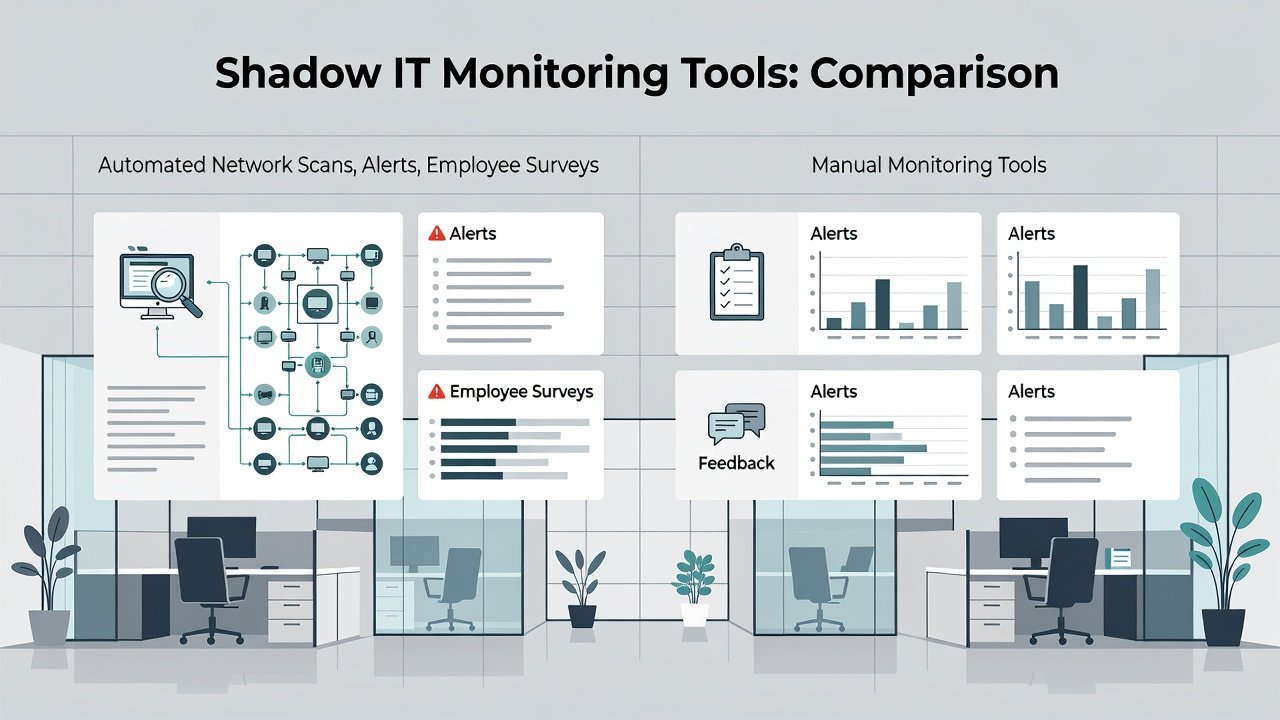
Several tools help organizations manage shadow IT effectively. CASB solutions provide visibility into cloud usage by discovering shadow accounts and enforcing policies automatically. Network monitoring platforms offer real-time alerts on anomalies and integrate with existing firewalls for immediate blocking. Endpoint management software tracks device activity comprehensively while allowing remote wipes if necessary.
When comparing options, consider integration with existing systems, ease of use for non-technical staff, scalability for growing teams, and detailed reporting features that support compliance audits. Open-source alternatives suit smaller teams with limited budgets, while enterprise solutions scale for larger operations with advanced AI-driven threat detection. Evaluating trial periods and reviewing user feedback helps select tools that align with organizational size and risk tolerance.
Real-World Case Studies
A major retail company in 2025 faced a breach after employees used an unapproved file-sharing app to collaborate on inventory data, exposing millions of customer records including payment details. The incident led to regulatory fines, mandatory security overhauls, and prompted a full shadow IT audit that uncovered dozens of additional tools. Another case involved a healthcare provider where staff adopted personal health tracking apps that violated HIPAA, resulting in patient data leaks and multiple lawsuits that damaged trust for years.
A financial services firm discovered that developers were using unauthorized code repositories, leading to source code theft by external actors. These examples underscore the need for proactive measures. Lessons include implementing training programs and clear policies that reduced incidents by significant margins in similar organizations. Post-incident reviews often reveal that early detection through simple log analysis could have prevented escalation entirely.
Practical Security Tips for Employees
- Always seek IT approval before installing new apps or connecting devices to the corporate network to avoid creating entry points for threats.
- Use only company-approved cloud services for work files and ensure all uploads are encrypted at rest and in transit.
- Report suspicious tools or unusual network behavior immediately through established channels to enable quick investigation.
- Enable multi-factor authentication on all accounts, including personal ones that may sync with work data.
- Regularly review and delete unused personal accounts linked to work emails or documents to minimize lingering access risks.
- Participate in cybersecurity awareness training sessions to recognize social engineering tactics that often accompany shadow IT introductions.
Following these tips empowers employees to contribute to security while maintaining productivity and fosters a culture of shared responsibility.
Audit Checklist for Shadow IT
- Map all current IT assets and approved tools with version numbers and access permissions.
- Analyze network logs for the past 90 days to identify anomalous traffic patterns and unknown endpoints.
- Interview department heads about unofficial workflows and gather feedback on pain points driving shadow adoption.
- Test for data encryption standards and privacy policy compliance on all discovered apps and services.
- Document findings with risk ratings and prioritize remediation based on data sensitivity levels.
- Establish ongoing monitoring protocols with automated alerts and quarterly review cycles.
- Update acceptable use policies to reflect new tools and communicate changes across the organization.
Mistakes to Avoid When Managing Shadow IT
Common pitfalls include overly restrictive policies that drive employees underground rather than encouraging transparency. Another mistake is relying solely on technology without addressing the root causes, such as slow IT approval processes. Failing to involve legal and compliance teams early can lead to overlooked regulatory gaps. Organizations should avoid one-time audits and instead build continuous monitoring into daily operations for sustained effectiveness.
FAQ: Compliance, Privacy Laws, and More
How does shadow IT affect GDPR compliance?
Unauthorized tools can process personal data outside approved boundaries, violating GDPR requirements for lawful processing and data minimization. Organizations should map data flows and restrict unapproved services to avoid fines that can reach significant percentages of global revenue.
What privacy laws are most relevant in 2026?
Key regulations include GDPR in Europe, CCPA in California, and emerging global standards focused on AI data handling. Regular legal reviews help align shadow IT policies with these frameworks and prepare for new legislation.
Can small businesses manage shadow IT effectively?
Yes, by starting with basic network monitoring and employee education, small teams can mitigate risks without large budgets while scaling solutions as they grow.
What role does employee training play in prevention?
Comprehensive training reduces accidental adoption of risky tools by building awareness of consequences and providing safe alternatives for common needs.
Conclusion
Addressing shadow IT is essential for robust cybersecurity and data privacy in 2026. By implementing detection strategies, leveraging monitoring tools, and fostering a culture of awareness, organizations can minimize risks while supporting innovation. Stay vigilant and integrate these practices into daily operations for long-term protection against evolving threats.
For further reading, consult resources from CISA, NIST, and FTC on cybersecurity best practices and data privacy guidelines.


No comments yet. Be the first!