 NeoBit Daily

Introduction to Fintech Cybersecurity in 2026
The fintech sector faces unprecedented data privacy pressures in 2026 as digital transactions surge and threat actors evolve. Financial technology companies process enormous volumes of sensitive personal and transactional information daily, making them attractive targets for sophisticated cybercriminals. This comprehensive guide examines unique challenges, regulatory nuances, real-time fraud detection, advanced encryption methods, real-world breach case studies, PCI-DSS framework comparisons, and detailed step-by-step API integration guides. Fintech professionals will discover practical strategies, decision-useful examples, and ready-to-apply checklists to strengthen defenses and maintain customer trust in an increasingly complex threat landscape.
Unique Cybersecurity Challenges in Fintech for 2026
Fintech companies handle vast volumes of sensitive financial data, making them prime targets. Key challenges include AI-driven attacks that automate phishing and credential stuffing at scale, quantum computing threats that could render current encryption obsolete, and the rise of decentralized finance platforms that complicate oversight due to their borderless nature. Real-time monitoring is essential as attacks now occur in milliseconds across global networks. Integration of legacy systems with modern cloud infrastructure creates additional vulnerabilities, often leaving gaps that attackers exploit through supply-chain compromises. For example, a mid-sized lending platform might face risks from third-party credit scoring APIs that lack robust authentication, allowing lateral movement once initial access is gained. Emerging risks also stem from open banking mandates that require seamless data sharing, increasing the attack surface exponentially.
Regulatory Compliance Nuances
Compliance with evolving regulations remains critical for avoiding fines and reputational damage. Organizations must navigate GDPR, CCPA, and emerging global standards while adapting to region-specific requirements in markets like the EU and Asia-Pacific. NIST provides foundational cybersecurity frameworks that align well with fintech needs, emphasizing risk assessments and continuous monitoring. Regular audits and privacy-by-design principles help avoid penalties while building customer trust. Additional considerations include aligning with sector-specific rules such as those from financial regulators that mandate breach notification within tight timeframes, often as short as 72 hours. Companies that integrate compliance into daily operations rather than treating it as a checkbox exercise see better long-term outcomes.
Real-Time Fraud Detection Methods
Advanced machine learning models enable real-time fraud detection by analyzing transaction patterns instantly across millions of data points. Techniques include behavioral biometrics that track mouse movements and typing rhythms, anomaly detection algorithms trained on historical data, and multi-factor authentication layered with device fingerprinting. These methods reduce false positives while catching sophisticated schemes early. In practice, a payment processor might deploy unsupervised learning models that flag unusual cross-border transfers exceeding typical user thresholds, triggering immediate reviews. Combining these with graph analytics helps uncover coordinated fraud rings operating across multiple accounts. Continuous model retraining on fresh data ensures adaptation to new attack vectors that emerge monthly.
Advanced Encryption Techniques
Post-quantum cryptography is gaining traction to future-proof data against quantum threats expected to mature within the decade. Homomorphic encryption allows computations on encrypted data without decryption, preserving privacy during processing for analytics and machine learning workloads. Tokenization further protects card details in payment flows by replacing sensitive values with non-sensitive equivalents. 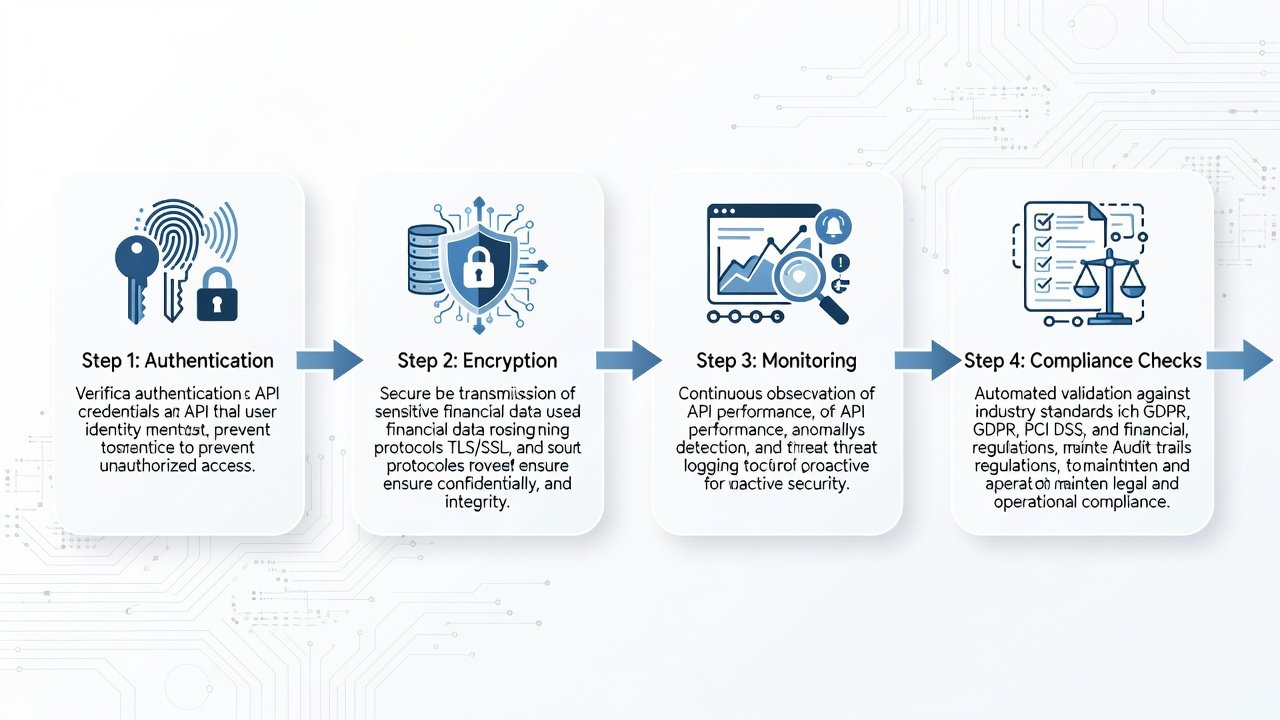
Case Studies of Recent Breaches
Analysis of 2025 incidents reveals common failures like inadequate API security and delayed patch management. One major breach exposed millions of records due to unencrypted data flows between a neobank and its cloud storage provider, highlighting the need for zero-trust architectures in fintech environments. Another case involved a cryptocurrency exchange where weak key management allowed attackers to drain hot wallets over several days before detection. Lessons from these events underscore the importance of encrypting data both in transit and at rest, enforcing least-privilege access, and conducting regular third-party risk assessments. Organizations that performed tabletop exercises simulating similar scenarios recovered faster and limited damage more effectively.
Comparisons of Security Frameworks like PCI-DSS Updates
PCI-DSS version 4.0 emphasizes continuous monitoring over annual assessments, requiring organizations to demonstrate ongoing validation of controls. Compared to ISO 27001, it offers fintech-specific controls for payment data while ISO provides broader information security management. PCI Security Standards Council resources detail tailored requirements that balance security with operational efficiency. ISO frameworks excel in risk-based approaches suitable for global operations. Selecting the right combination depends on business model, with many fintechs adopting both for comprehensive coverage.
Step-by-Step Implementation Guide for Secure API Integrations
- Conduct threat modeling to identify endpoints and data flows, documenting potential attack vectors such as injection or broken authentication.
- Implement OAuth 2.0 with short-lived tokens and refresh mechanisms to limit exposure windows.
- Enforce rate limiting, input validation, and output encoding to prevent common web vulnerabilities.
- Deploy API gateways with encryption in transit using TLS 1.3 and at rest via AES-256 standards.
- Monitor with SIEM tools integrated with anomaly detection and conduct regular penetration tests by certified third parties.
- Document all changes and maintain version-controlled code repositories with mandatory security reviews before deployment.
Following these steps reduces common integration risks significantly when executed consistently across development teams.
Actionable Checklists for Immediate Application
- Update encryption protocols quarterly and verify compatibility with current standards.
- Train staff on phishing and social engineering through simulated campaigns every quarter.
- Perform data mapping for all financial datasets to understand storage locations and access patterns.
- Test incident response plans monthly with cross-functional teams including legal and communications.
- Review third-party vendor security posture annually using standardized questionnaires.
- Enable comprehensive logging and retain records for at least one year for forensic purposes.
FAQs on Common Pitfalls
What are the biggest mistakes in fintech security?
Neglecting third-party vendor risks and skipping regular compliance updates often lead to breaches that could have been prevented with basic due diligence.
How can small fintechs afford advanced tools?
Focus on open-source solutions combined with managed security services for cost-effective protection without building everything in-house.
Why does API security matter so much in fintech?
APIs serve as primary gateways for data exchange and become high-value targets when left unmonitored or poorly authenticated.
What role does employee training play?
Human error remains a leading cause of incidents, making ongoing awareness programs essential for reducing phishing success rates.
Conclusion
Implementing robust fintech cybersecurity strategies in 2026 demands proactive measures across detection, encryption, compliance, and API management. By following the outlined guides, comparisons, and checklists, professionals can safeguard data privacy effectively against evolving threats while supporting business growth and regulatory adherence.


No comments yet. Be the first!