 NeoBit Daily
Introduction to Behavioral Analytics in Cybersecurity
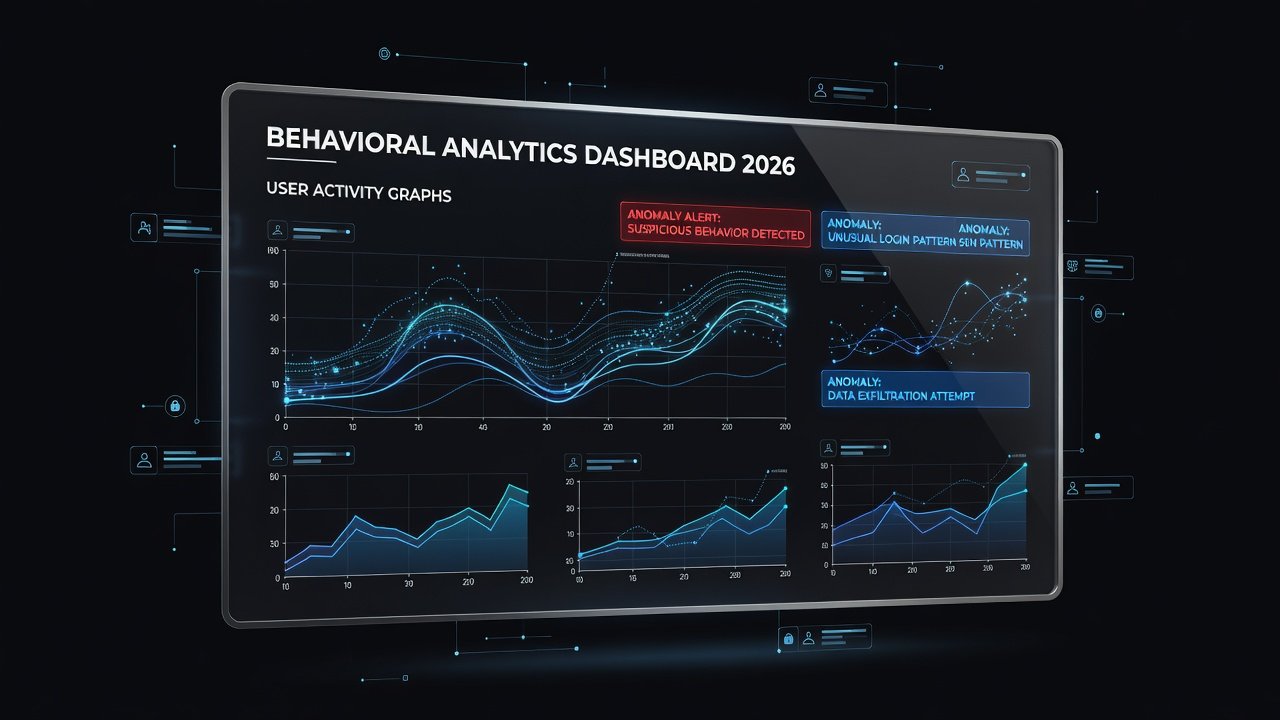
In 2026, organizations face increasingly sophisticated cyber threats that traditional security measures struggle to counter. Behavioral analytics for anomaly detection has emerged as a critical technology, leveraging machine learning to identify unusual user and entity behaviors in real time. This approach moves beyond static rules to create dynamic baselines of normal activity, enabling faster responses to potential breaches while supporting data privacy compliance. As remote work, cloud adoption, and IoT devices expand attack surfaces, organizations require tools that adapt to shifting patterns rather than relying solely on known signatures.
Behavioral analytics examines patterns in user logins, access requests, file interactions, and network traffic. When deviations occur, such as an employee accessing sensitive data at odd hours or from an unfamiliar location, the system flags these as anomalies. This guide covers core concepts, practical implementation, comparisons with legacy systems, real-world case studies, emerging trends, and strategies for maximizing ROI in modern cybersecurity frameworks. By the end, readers will understand how to deploy these solutions effectively while avoiding common implementation errors.
Core Concepts: Machine Learning Baselines and Anomaly Detection
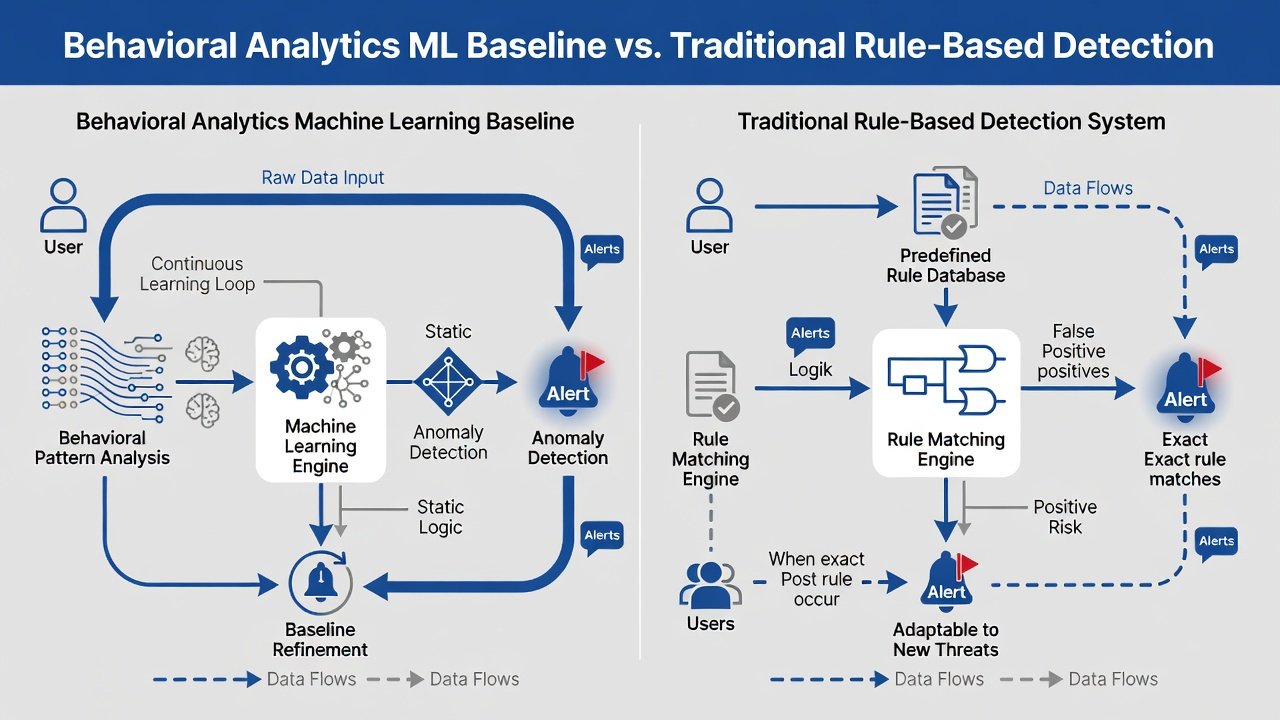
At the heart of behavioral analytics lies the establishment of machine learning baselines. These models analyze historical data over weeks or months to define what constitutes "normal" behavior for individual users, devices, and applications. Supervised and unsupervised learning techniques, including clustering algorithms, decision trees, and neural networks, continuously refine these baselines as new data arrives. For instance, a baseline might learn that a finance team member typically accesses reports between 9 AM and 5 PM on weekdays from corporate networks.
Anomaly detection operates by scoring activities against the baseline. Low scores indicate normal behavior, while high scores trigger alerts. In 2026 environments, this includes contextual factors like device posture, geolocation, and peer group comparisons to reduce false positives. The result is proactive threat identification that adapts to evolving attack vectors without constant manual tuning. Advanced implementations also incorporate user and entity behavior analytics (UEBA) to monitor not just people but also machines and service accounts, catching lateral movement by attackers who have compromised credentials.
Integration with SIEM Platforms and Real-Time Alerting
Effective deployment requires seamless integration with Security Information and Event Management (SIEM) platforms. Behavioral analytics feeds enriched data into SIEM dashboards, correlating user behavior insights with logs from firewalls, endpoints, and cloud services. This unified view accelerates incident response by providing context that raw logs lack.
Real-time alerting mechanisms use thresholds and risk scores to notify security teams via email, SMS, or automated playbooks. For example, an anomalous privilege escalation might automatically isolate the affected account while notifying analysts. Integration ensures alerts include behavioral context, helping teams prioritize genuine threats over noise. Organizations often connect these systems to orchestration tools for automated responses, such as revoking sessions or enforcing multi-factor authentication challenges.
NIST provides foundational guidance on integrating advanced analytics into cybersecurity programs for improved resilience, while SANS Institute offers practical training resources on UEBA deployment.
Practical Implementation Steps
Adopting behavioral analytics involves a structured rollout. Follow these detailed steps for success:
- Assess current infrastructure and identify high-value assets requiring behavioral monitoring, including mapping data flows across on-premises and cloud environments.
- Select tools compatible with existing SIEM and identity providers, ensuring support for hybrid cloud environments and API integrations with major vendors.
- Collect and label initial datasets to train baseline models, focusing on at least 30-60 days of activity data while addressing gaps in logging coverage.
- Configure risk scoring and alerting policies, starting conservative to minimize disruptions and gradually tuning based on feedback from security analysts.
- Train security teams on interpreting behavioral insights and conducting investigations, including hands-on workshops with simulated anomalies.
- Establish continuous monitoring and model retraining schedules to account for seasonal or organizational changes, such as new hires or policy updates.
- Measure key metrics such as detection accuracy, mean time to respond, and alert volume before scaling across the enterprise, iterating as needed.
- Conduct privacy impact assessments early to ensure compliance with regulations like GDPR and CCPA during data collection and analysis phases.
Comparisons with Traditional Rule-Based Systems
Traditional rule-based systems rely on predefined signatures and thresholds, excelling at known threats but failing against zero-day attacks or insider threats. Behavioral analytics complements these by detecting novel anomalies through statistical deviations rather than exact matches.
- Flexibility: Rule-based systems require manual updates for new threats; behavioral models adapt automatically via machine learning as patterns evolve.
- False Positive Rates: Rules often generate alert fatigue, while behavioral scoring incorporates context for higher precision and fewer unnecessary notifications.
- Scalability: Behavioral approaches handle large data volumes better in dynamic 2026 networks with remote work and IoT devices, processing millions of events efficiently.
- Threat Coverage: Rules target known malware and exploits effectively, but behavioral tools excel at spotting subtle insider risks and advanced persistent threats.
Many organizations now layer both approaches, using rules for compliance checks and behavioral analytics for advanced detection layers.
Case Studies of Prevented Breaches
Consider a financial services firm that deployed behavioral analytics in early 2026. The system flagged an account compromise when a user logged in from two continents within minutes, preventing unauthorized wire transfers worth millions. Another example involves a healthcare provider where analytics detected unusual access to patient records by a compromised credential, enabling rapid containment before data exfiltration occurred. A third case from the manufacturing sector showed detection of an insider attempting to exfiltrate intellectual property by monitoring deviations from normal file access patterns over several weeks.
These cases highlight how behavioral tools reduce dwell time and protect privacy by limiting exposure of sensitive information across industries.
Emerging Trends and Future Outlook for 2026
In 2026, behavioral analytics is incorporating more AI-driven explainability features, allowing analysts to understand exactly why an alert was triggered. Integration with zero-trust architectures is also rising, using behavioral signals to enforce continuous verification. Privacy-preserving techniques like federated learning are gaining traction to analyze patterns without centralizing raw user data.
Common Pitfalls to Avoid
Implementation challenges include poor data quality leading to inaccurate baselines and overlooking privacy regulations during monitoring. Overly aggressive alerting can overwhelm teams, while insufficient training results in missed insights. Organizations should prioritize ethical data use, conduct regular audits, and avoid over-reliance on automation without human oversight to maintain trust and compliance.
Measuring Success and Key Performance Indicators
Success metrics extend beyond detection rates to include reduced mean time to detect (MTTD) and mean time to respond (MTTR). Organizations should track ROI through avoided breach costs and operational efficiencies. Regular reviews of baseline accuracy and alert quality ensure the system remains effective as the environment changes.
Frequently Asked Questions
What accuracy rates can organizations expect?
Well-tuned behavioral analytics systems achieve detection rates above 90% with false positive rates below 5% when properly baselined and integrated with quality data sources.
How does this address privacy compliance concerns?
Modern solutions anonymize data where possible and align with frameworks like GDPR by focusing on behavioral patterns rather than personal identifiers, with built-in consent management features.
How is ROI measured for these solutions?
ROI is typically calculated through reduced breach costs, lower incident response times, and decreased manual review efforts, with many firms reporting positive returns within the first year of deployment as operational overhead declines.
Can small organizations benefit from behavioral analytics?
Yes, cloud-based offerings make these tools accessible to smaller teams, often with simplified deployment that still provides strong protection against common threats.
Conclusion
Behavioral analytics for anomaly detection represents a transformative shift in 2026 cybersecurity strategies. By understanding its foundations, mastering integration, following practical steps, and avoiding common pitfalls, organizations can significantly strengthen their defenses. As threats evolve, investing in adaptive technologies like these ensures robust protection for data and systems alike, delivering both security and compliance benefits.

No comments yet. Be the first!