 NeoBit Daily
Introduction to SBOMs in Modern Open Source Security
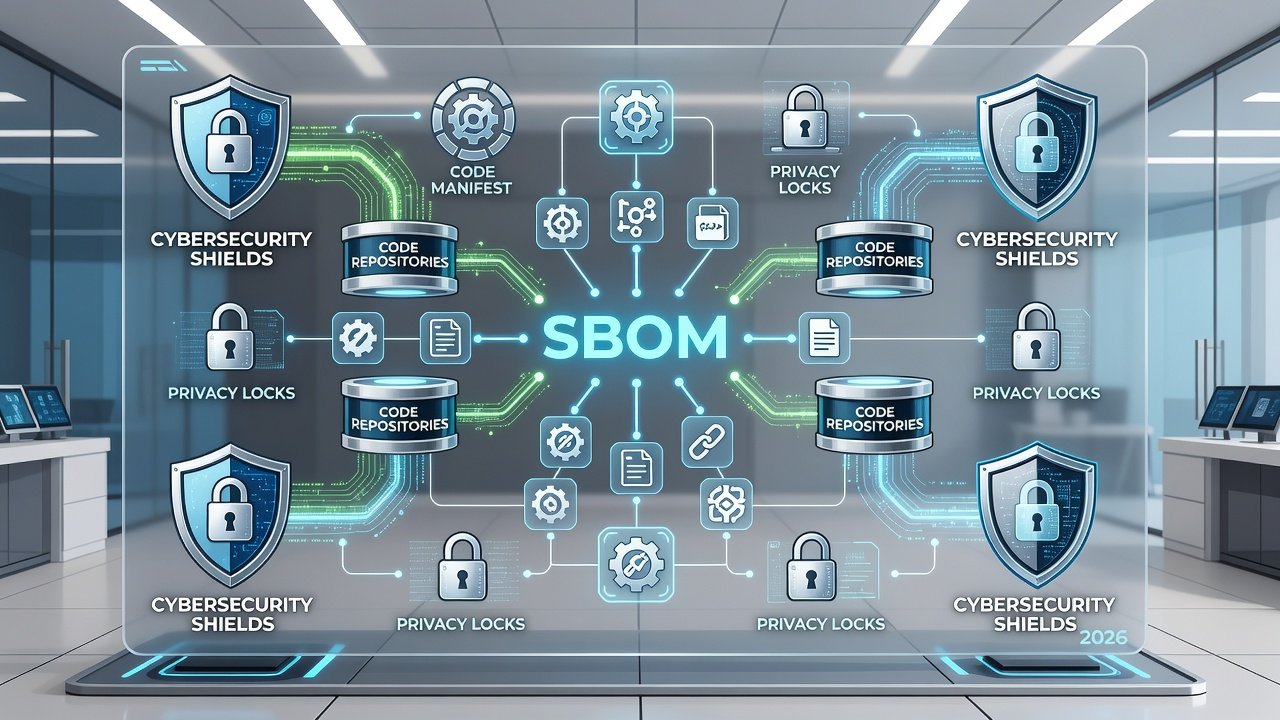
Software Bill of Materials (SBOMs) have become essential for managing supply chain risks in open source projects by 2026. As organizations rely heavily on open source components, SBOMs provide a detailed inventory that helps identify vulnerabilities early, protect developer data privacy, and ensure regulatory compliance. This comprehensive guide explores best practices for generating, maintaining, and integrating SBOMs into workflows, offering practical steps that security teams can implement immediately to strengthen their defenses against evolving threats.
In today's interconnected development landscape, open source software forms the backbone of most applications. Without visibility into these components, teams face hidden risks that can lead to data breaches or compliance failures. SBOMs address this by creating a machine-readable list of ingredients, similar to a nutrition label but for code. This transparency not only mitigates risks but also supports privacy by allowing selective sharing of component information without exposing sensitive internal details.
Understanding 2026 Supply Chain Risks in Open Source
Open source supply chain attacks continue to evolve, targeting dependencies and build processes. SBOMs mitigate these risks by offering transparency into every component, allowing teams to trace origins and detect anomalies quickly. Privacy benefits arise because SBOMs enable granular control over data exposure without revealing proprietary code details. Common threats include compromised dependencies injected during builds, outdated libraries harboring known exploits, and insider modifications that go undetected without proper tracking mechanisms.
By 2026, the complexity of dependency trees has increased dramatically, with many projects pulling in hundreds of transitive components. An SBOM helps map these relationships, highlighting potential weak points. For instance, a single vulnerable library deep in the chain can expose an entire application. Implementing SBOM practices early reduces the attack surface and fosters a culture of proactive security rather than reactive patching.
Practical Steps for Generating SBOMs
Start by selecting a standard format like SPDX or CycloneDX. Use automated tools to scan repositories and generate initial SBOMs. Maintain them through version control integration and regular updates triggered by dependency changes. Always validate SBOM accuracy against source code. Begin with a baseline scan of your primary repositories, documenting all direct and indirect dependencies. Next, establish a schedule for regeneration, ideally after every major commit or at least weekly. Incorporate checks for license compliance and vulnerability associations during this process. Teams should also create policies for handling proprietary components that may need redaction to preserve privacy while still providing necessary security insights.
Training developers on interpreting SBOM outputs is crucial. Provide workshops that cover how to read the structured data and act on findings. This step ensures that the generated documents are not just stored but actively used in decision-making processes throughout the development lifecycle.
Comparing SPDX and CycloneDX Formats
SPDX excels in legal and licensing metadata, making it ideal for compliance-heavy environments. CycloneDX offers strong support for vulnerability data and is lightweight for CI/CD integration. Teams often choose based on ecosystem needs, with SPDX favored in enterprise settings and CycloneDX in agile DevOps pipelines. SPDX provides extensive fields for copyright notices and relationships between packages, which proves valuable during legal audits. In contrast, CycloneDX emphasizes security aspects like known vulnerabilities and component hashes, enabling faster integration with scanning tools. Many organizations adopt both formats for hybrid environments, converting between them as needed using open conversion utilities. The choice ultimately depends on whether the priority is licensing transparency or rapid vulnerability response.
Integrating SBOMs into CI/CD Pipelines
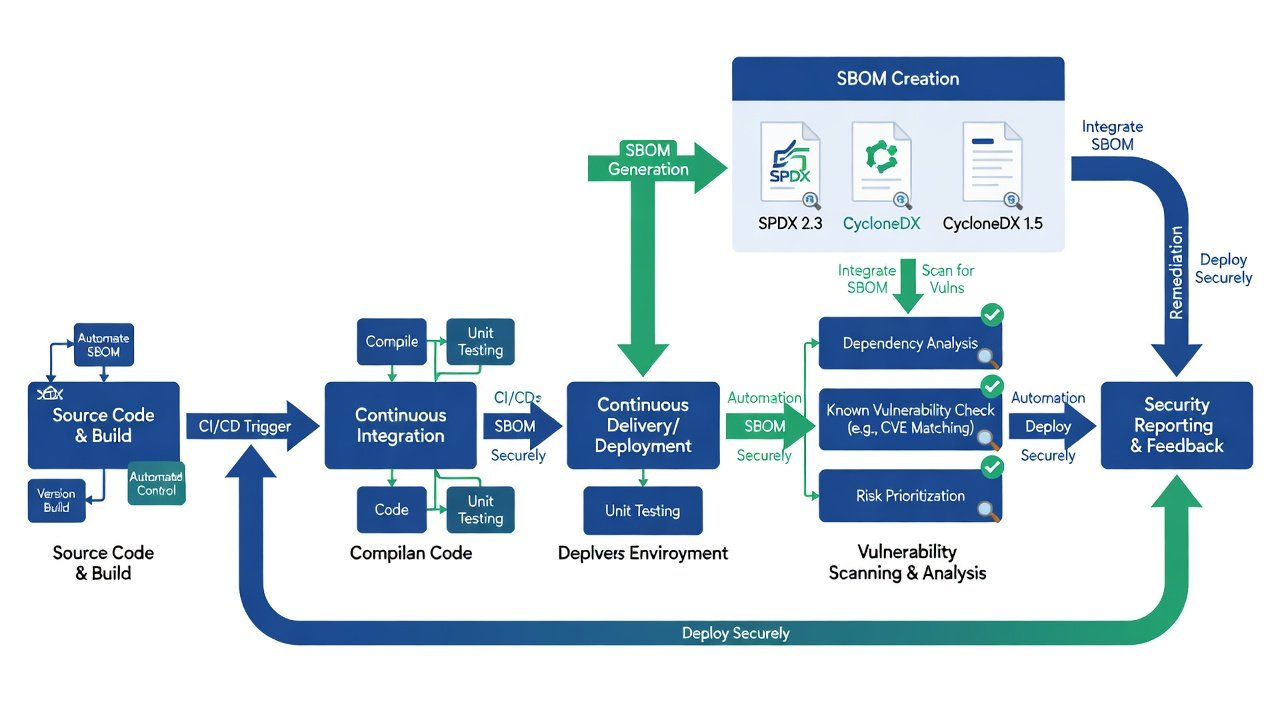
Embed SBOM generation in build stages using plugins for popular tools. Automate validation and storage in secure repositories. This ensures every release includes an up-to-date SBOM, reducing manual overhead and enhancing security posture. Configure pipelines to fail builds if critical vulnerabilities are detected in the generated SBOM, creating a gate that prevents risky deployments. Store SBOMs in immutable artifact repositories with access controls to maintain integrity. Integrate notification systems that alert security teams when new components are added or when updates reveal potential issues. This automation transforms SBOM creation from a one-off task into a continuous security practice embedded in daily operations.
Real-World Examples of Vulnerabilities Caught via SBOMs
In one case, an SBOM revealed a transitive dependency with a known exploit, preventing a major breach in a financial application. The team traced the issue to a rarely updated logging library and patched it before attackers could exploit it. Another example involved identifying outdated cryptographic libraries in an open source project, prompting timely updates before exploitation occurred in production environments. A third scenario saw an SBOM highlight a component from a high-risk jurisdiction, allowing the organization to replace it proactively to meet data sovereignty requirements. These cases demonstrate how SBOMs turn abstract risks into actionable intelligence, saving significant remediation costs and protecting user trust.
Compliance Tips for Emerging Regulations
Align SBOM practices with standards from bodies like CISA and NIST. Maintain detailed records for audits and use formats that support required fields for traceability. Regular training helps teams stay ahead of 2026 regulatory shifts. Focus on documenting the entire provenance chain, including build environments and signing keys used. Ensure SBOMs include sufficient metadata to satisfy sector-specific rules, such as those in healthcare or finance. Conduct internal mock audits using the SBOM data to identify gaps early. This preparation not only avoids penalties but also builds a robust security foundation that scales with business growth.
Automation Strategies for SBOM Management
Leverage orchestration tools to trigger SBOM creation on code commits. Integrate with vulnerability databases for real-time alerts. Metrics such as SBOM freshness rate and vulnerability remediation time help measure effectiveness. Set up scheduled jobs that regenerate SBOMs nightly and compare them against previous versions to detect drift. Use machine learning-assisted tools where available to predict high-risk components based on historical data. Automate the distribution of SBOMs to partners and customers through secure APIs, ensuring controlled access that respects privacy boundaries. These strategies minimize human error and allow teams to focus on higher-value analysis rather than repetitive documentation tasks.
Common Pitfalls to Avoid
- Ignoring transitive dependencies in SBOM generation, which leaves hidden risks unaddressed
- Failing to update SBOMs after patches, resulting in outdated inventories that mislead security assessments
- Overlooking format interoperability issues when sharing across teams or organizations
- Neglecting privacy considerations in data sharing, potentially exposing unnecessary internal information
- Storing SBOMs without encryption or access controls, increasing the chance of tampering
- Skipping validation steps that confirm the SBOM accurately reflects the actual build artifacts
Metrics for Measuring SBOM Effectiveness
Track adoption rates, time-to-detect vulnerabilities, and compliance audit pass rates. These indicators guide continuous improvement in open source security programs. Additional useful metrics include the percentage of components with complete provenance data and the average age of dependencies listed in SBOMs. Review these figures monthly in security dashboards to spot trends and allocate resources effectively. High-performing teams often see measurable reductions in incident response times after consistent SBOM adoption.
Implementation Checklist for Security Teams
- Assess current open source inventory across all projects and environments
- Select and test SBOM tools that fit existing workflows and team expertise
- Integrate into CI/CD with automation rules for generation and validation
- Establish update and validation processes with clear ownership and escalation paths
- Train teams on privacy and compliance requirements specific to your industry
- Monitor metrics and refine practices based on quarterly reviews
- Document procedures for sharing SBOMs with external stakeholders securely
FAQ on SBOM Implementation
What is the primary benefit of using SBOMs in 2026?
SBOMs primarily enhance visibility into supply chain risks while supporting data privacy through controlled transparency and selective information sharing.
How do SPDX and CycloneDX differ for CI/CD use?
SPDX provides robust licensing details suitable for legal reviews; CycloneDX prioritizes vulnerability tracking and ease of automation within fast-paced development cycles.
Can SBOMs help with regulatory compliance?
Yes, they align with emerging standards by providing traceable component data for audits and demonstrating due diligence in supply chain management.
What tools are recommended for beginners?
Start with open source scanners that support both major formats and integrate easily with popular version control systems for quick wins.
How often should SBOMs be regenerated?
Regenerate after every significant dependency update or at minimum on a weekly schedule to maintain accuracy and relevance.
For authoritative guidance, refer to resources from SPDX and CycloneDX. Additional insights are available at CISA and NIST.


No comments yet. Be the first!