 NeoBit Daily

Introduction to Deception Technology in 2026
Deception technology has evolved into a core component of modern cybersecurity strategies. By deploying realistic decoys that mimic legitimate assets, organizations can detect, delay, and analyze attacks from both external hackers and insider threats. In 2026, integrating honeypots, honeytokens, and decoy networks with privacy-focused defenses offers proactive protection while supporting compliance requirements. This approach not only diverts attackers but also gathers valuable intelligence on their tactics, techniques, and procedures without exposing actual production data.
Security leaders recognize that traditional perimeter defenses alone are insufficient against advanced persistent threats. Deception adds an active layer that turns the network into a trap for adversaries. This playbook explores practical implementations, real-world deployments, and measurable outcomes that help security teams stay ahead of sophisticated adversaries while maintaining strong data privacy postures.
Core Components: Honeypots, Honeytokens, and Decoy Networks
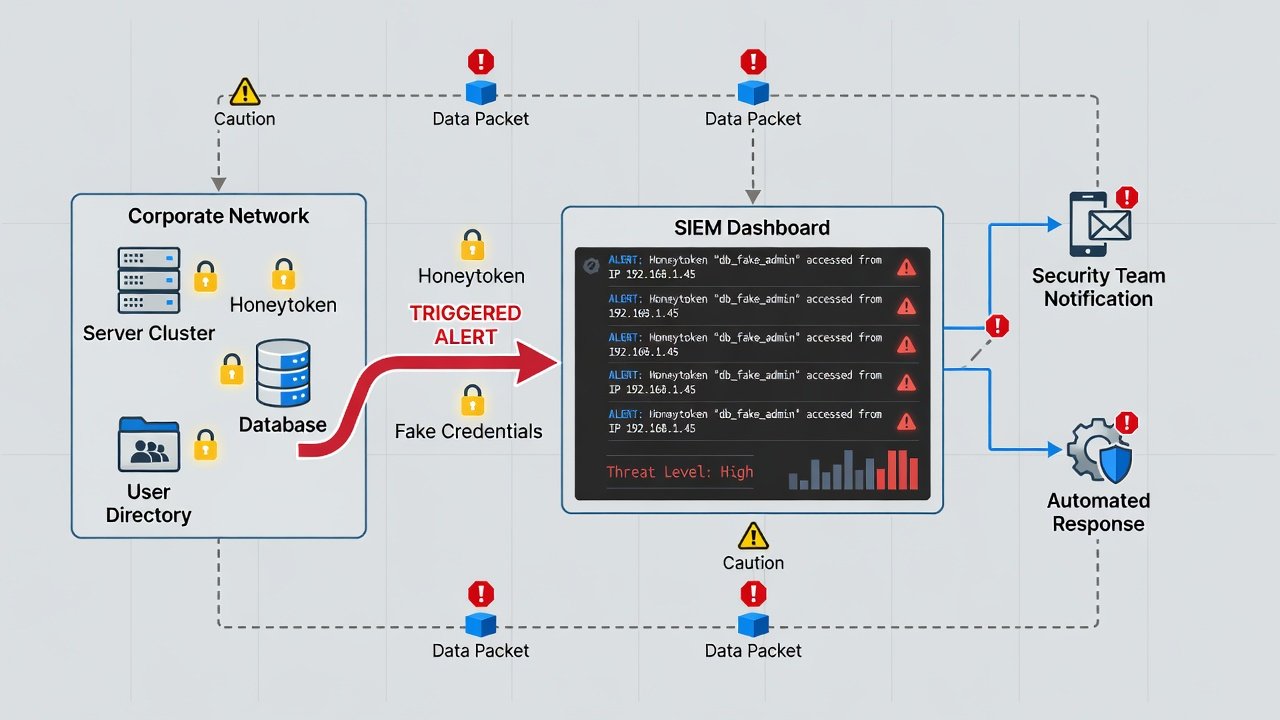
Honeypots act as isolated systems designed to attract attackers by emulating vulnerable services or applications. They range from low-interaction versions that simulate basic responses to high-interaction setups that allow deeper engagement for intelligence gathering. Honeytokens are digital breadcrumbs such as fake credentials, database records, or API keys that trigger alerts when accessed or exfiltrated. Decoy networks extend this concept across entire segments, creating layered illusions that waste attacker resources and reveal movement patterns.
These tools enhance data privacy by diverting threats away from real sensitive information. When properly configured, they provide early warning signals without impacting production environments. For instance, embedding honeytokens in customer databases can immediately flag unauthorized queries, supporting privacy regulations that demand strict access controls. Organizations should align these components with zero-trust architectures to ensure deception assets do not inadvertently create new attack surfaces.
Real-World Case Studies in Enterprise Environments
A global financial services firm deployed decoy networks across its cloud infrastructure in late 2025. Within three months, the system identified two insider attempts to exfiltrate customer data by flagging unauthorized access to planted honeytokens. The organization integrated alerts directly into its existing security operations, reducing mean time to detect by 47 percent. Analysts used the captured attacker commands to refine detection rules for similar future attempts.
Another example comes from a healthcare provider that used honeypots to trap ransomware actors. The decoys revealed the attackers' lateral movement patterns, enabling the team to isolate affected segments before encryption spread. This deployment also supported HIPAA compliance by demonstrating active monitoring of access attempts to protected health information. The intelligence gathered helped the provider update its incident response playbooks with specific deception-derived indicators.
A manufacturing company facing supply-chain attacks implemented honeytokens in its vendor management portals. When an external threat actor used compromised credentials, the fake tokens alerted the team within minutes. This allowed rapid revocation of access and forensic analysis that identified the initial breach vector. The case demonstrated how deception complements existing endpoint detection tools by focusing on behavioral anomalies rather than signatures alone.
NIST guidelines emphasize the value of such deceptive techniques for continuous monitoring and threat intelligence collection in enterprise settings.
Step-by-Step Setup Guide for Honeypots and Honeytokens
- Map your environment to identify high-value assets such as databases, authentication servers, and file shares, then create realistic replicas without exposing real data.
- Deploy low-interaction honeypots first using containerized solutions to minimize risk and resource consumption, then progress to high-interaction versions only after validating isolation controls.
- Generate honeytokens such as fake database entries, API keys, or document files and embed them naturally within production systems so they appear as legitimate artifacts.
- Configure detailed logging to capture every interaction, including source IP addresses, timestamps, commands executed, and any data accessed by the adversary.
- Test the entire setup in a staging environment with simulated attacks to verify alert accuracy and response workflows before full production rollout.
- Establish rotation schedules for decoy assets to prevent attackers from learning patterns and bypassing them over time.
Integrating Deception Tools with SIEM Platforms
Effective deception requires seamless SIEM integration. Most modern platforms support custom parsers that ingest honeypot logs and correlate them with other security events. Map deception alerts to existing use cases so analysts receive enriched context rather than isolated notifications. For example, link honeytoken triggers to user behavior analytics rules. This approach surfaces potential insider threats faster while reducing false positives through contextual scoring and risk-based prioritization.
Teams should also forward deception data to threat intelligence platforms for broader correlation across the industry. Automated playbooks can then trigger containment actions such as isolating compromised accounts or blocking suspicious IPs when decoys are touched. Regular tuning sessions ensure the integration remains effective as new attack techniques emerge.
SANS Institute resources provide detailed playbooks for SIEM tuning that complement deception deployments in complex enterprise networks.
Measuring Effectiveness with Key Metrics
Track these indicators to evaluate success: number of attacker engagements per month, time from deployment to first detection, and the ratio of deception alerts versus total security events. Organizations should also measure dwell time reduction and the quality of threat intelligence generated, including the number of new tactics discovered through honeypot interactions. Dashboard visualizations that compare pre- and post-deployment metrics help demonstrate ROI to executive stakeholders.
Regular reviews ensure deception assets remain credible and relevant as attacker tactics evolve. Quarterly assessments should include red-team exercises that specifically test whether decoys are still effective or require refreshing.
Common Pitfalls and Compliance Best Practices
Avoid over-deployment that creates noise or under-deployment that leaves gaps in coverage. Ensure all deceptive elements comply with data minimization principles under regulations such as GDPR and CCPA. Document configurations thoroughly and conduct periodic audits to confirm no real data leakage occurs. Legal teams should review deception policies to address potential entrapment concerns in certain jurisdictions.
Best practices include maintaining clear separation between deception environments and production data, using encryption for any logs containing attacker details, and training analysts on the ethical use of deception intelligence. Aligning with frameworks from Microsoft Security can further strengthen governance around these technologies.
Conclusion
Deception technology offers a high-return investment for enterprises seeking robust defenses in 2026. By combining practical setups, SIEM integration, and compliance-aware practices, organizations can significantly improve their ability to detect and respond to threats while protecting sensitive information.
FAQ
How scalable is deception technology for mid-sized organizations?
Mid-sized companies can start with open-source honeypot solutions and cloud-based decoy services. Focus on 3-5 high-value targets initially, then expand based on alert volume and available analyst resources. Many vendors now offer managed deception platforms that reduce the operational burden, allowing teams with limited staff to achieve enterprise-grade coverage without building everything in-house.
What AI enhancements are expected in future deception platforms?
AI-driven systems will automatically generate dynamic decoys that adapt to observed attacker behavior in real time. Machine learning models will also prioritize alerts and suggest response actions, further reducing manual oversight requirements. Future platforms may incorporate generative AI to create highly convincing decoy content that mirrors actual business documents and communications.


No comments yet. Be the first!