 NeoBit Daily

Introduction to Ethical Hacking in 2026
As cyber threats evolve rapidly with AI-driven attacks and sophisticated ransomware, ethical hacking has become a cornerstone of data privacy protection. In 2026, professionals must master advanced skills to counter sophisticated attacks targeting personal and organizational data across cloud environments, IoT devices, and mobile platforms. This comprehensive guide explores core techniques, real-world applications, and practical workflows tailored to current challenges, helping beginners and aspiring professionals build robust defenses while navigating legal and ethical boundaries.
Understanding the Role of Ethical Hacking in Data Privacy
Ethical hackers, or white-hat hackers, simulate attacks to identify vulnerabilities before malicious actors exploit them. With increasing regulations like GDPR and CCPA, organizations rely on these experts to ensure compliance and safeguard sensitive information. Recent incidents, including large-scale data leaks in healthcare and finance sectors, highlight the need for proactive measures in safeguarding digital assets. Ethical hacking not only prevents breaches but also educates teams on secure coding practices and incident response strategies, fostering a culture of continuous improvement in cybersecurity posture.
Core Skill 1: Vulnerability Assessment
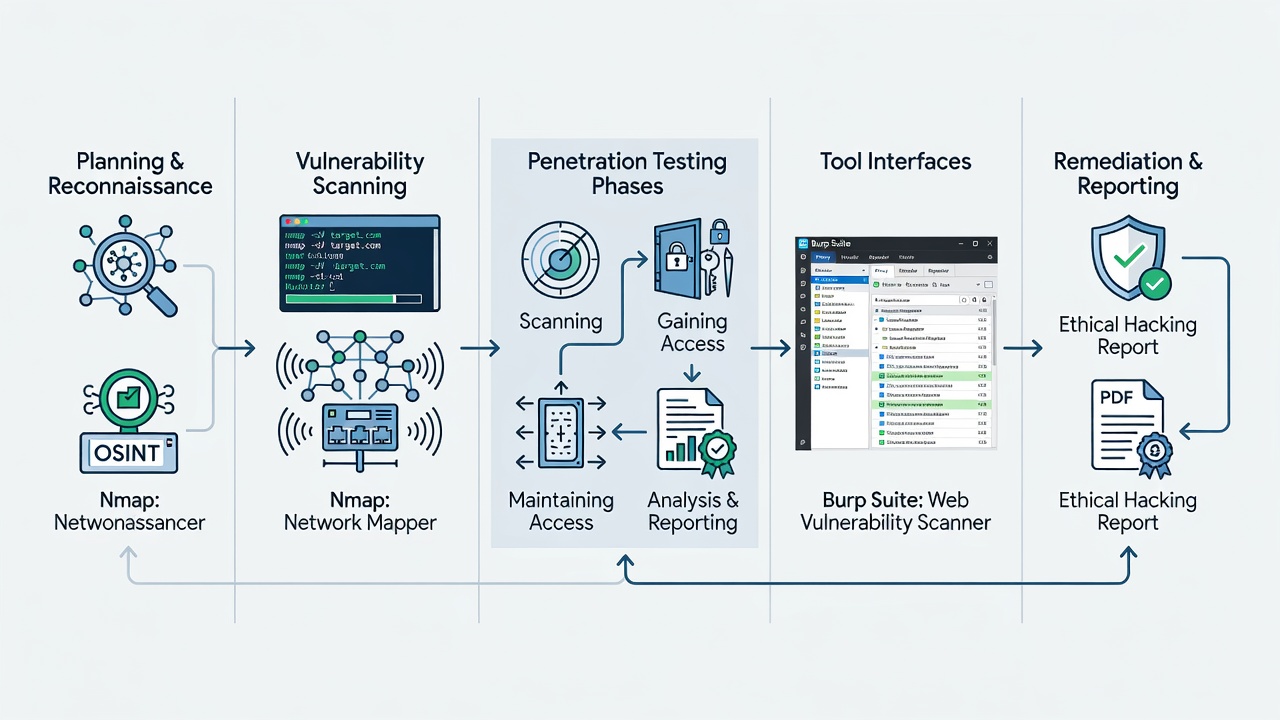
Vulnerability assessment involves systematically scanning systems for weaknesses using a combination of automated and manual methods. Beginners should start with asset discovery to map all network devices, followed by scanning with industry-standard tools, detailed analysis of findings, and comprehensive reporting. For example, identifying unpatched software or misconfigured servers in a corporate network can prevent data breaches that might expose millions of records. Practical steps include prioritizing vulnerabilities by severity using CVSS scores, conducting regular scans quarterly or after major updates, and integrating results into risk management frameworks. This skill forms the foundation for more advanced testing and ensures organizations stay ahead of emerging threats in 2026.
Core Skill 2: Penetration Testing
Penetration testing goes beyond scanning by actively exploiting vulnerabilities in a controlled environment to demonstrate real impact. Key phases include reconnaissance using open-source intelligence, scanning for open ports and services, gaining access through exploits, maintaining access via backdoors for further analysis, and final reporting with remediation recommendations. A step-by-step workflow might begin with passive information gathering from public sources like social media and DNS records, then proceed to active network mapping and controlled exploitation attempts only within authorized scopes. Professionals often use virtual labs to practice these phases safely, simulating real 2026 scenarios such as zero-day vulnerabilities in web applications or cloud misconfigurations.
Bug Bounty Programs and Real-World Applications
Bug bounty programs allow organizations to crowdsource security testing from global ethical hackers. Platforms enable participants to report flaws for rewards while following strict disclosure rules. Recent high-profile cases demonstrate how these programs have uncovered critical issues in major platforms, enhancing overall data privacy and saving companies from potential multimillion-dollar losses. For instance, successful reports on authentication bypasses in popular apps have led to rapid patches and improved user trust. Beginners can start by joining reputable programs, focusing on well-defined scopes, and documenting findings thoroughly to maximize impact and learning opportunities.
Comparing Essential Tools for Security Gap Identification
- Nmap: Ideal for network discovery and port scanning; excels in large-scale environments with customizable scripts for deeper analysis.
- Metasploit: Powerful for exploitation and payload development; best for advanced testers simulating complex attack chains.
- Burp Suite: Focuses on web application security; user-friendly for beginners analyzing HTTP traffic and testing for injection flaws.
- Wireshark: Network protocol analyzer useful for traffic inspection and anomaly detection in real-time packet captures.
- OWASP ZAP: Open-source alternative for web vulnerability scanning, particularly effective for API testing and automated crawls.
Choose tools based on the target environment and your expertise level. Open-source options provide cost-effective starting points, while commercial suites offer advanced reporting features. Regular updates and community forums help users stay current with 2026 tool enhancements.
Compliance with Data Privacy Standards
Ethical hacking must align with standards such as those from NIST and OWASP. Integrating privacy-by-design principles ensures assessments respect user data while identifying risks. Regular audits help maintain compliance amid evolving threats, including mapping findings to controls like encryption requirements and access management. Professionals should also reference guidelines from bodies like CISA for sector-specific advice, ensuring reports include actionable compliance recommendations that reduce legal exposure.
Case Studies of Successful Ethical Interventions
One notable case involved ethical hackers identifying a flaw in a financial app's encryption, preventing potential exposure of user credentials and leading to immediate patches. Another intervention in healthcare systems stopped unauthorized access attempts through simulated ransomware attacks, resulting in improved protocols and staff training programs. A third example from retail demonstrated how penetration testing revealed supply chain vulnerabilities, prompting enhanced vendor assessments and stronger data encryption across partner networks. These cases underscore the value of ethical hacking in real-world scenarios.
Common Pitfalls for Beginners and How to Avoid Them
New ethical hackers often overlook scope boundaries, leading to legal issues. Always obtain explicit written permission before testing. Another mistake is neglecting documentation, which reduces the value of findings for clients. Practice in lab environments like Hack The Box or TryHackMe to build skills safely. Additional pitfalls include failing to update tools regularly or ignoring non-technical risks such as social engineering vectors. Developing a personal checklist for each engagement helps mitigate these issues and builds professional credibility.
Practical Steps for Building Expertise in 2026
Start by mastering networking fundamentals and basic scripting in Python or Bash. Progress to setting up home labs with virtual machines to simulate environments. Join online communities for mentorship, participate in capture-the-flag events, and contribute to open-source security projects. Track progress by maintaining a portfolio of simulated assessments and gradually moving to authorized bug bounties. This structured approach ensures steady skill development aligned with 2026 industry demands.
Career Paths, Certifications, and Legal Considerations
Certifications such as CEH, OSCP, and CompTIA PenTest+ validate expertise and open doors to roles in security consulting or corporate defense teams. Legal considerations include understanding laws like the Computer Fraud and Abuse Act to avoid unintended violations. Career paths range from in-house security roles to freelance consulting, offering opportunities in a growing field with strong demand for privacy-focused specialists. Always consult legal experts when establishing independent practices.
Conclusion
Ethical hacking remains essential for data privacy protection in 2026. By mastering vulnerability assessment, penetration testing, and tool usage while adhering to compliance and legal standards, professionals can make meaningful contributions. Continuous learning and ethical practice will define success in this dynamic field.
FAQ
What certifications are recommended for beginners?
Start with entry-level options like CompTIA Security+ before advancing to specialized ethical hacking credentials such as OSCP.
Are bug bounty programs legal?
Yes, when participating within program rules and obtaining explicit authorization from the target organization.
How can I start a career in ethical hacking?
Build foundational knowledge in networking and programming, practice ethically in labs, contribute to open-source security projects, and pursue relevant certifications.
What are the most common tools used in 2026?
Popular choices include Nmap for scanning, Metasploit for exploitation, and Burp Suite for web testing, with ongoing community updates enhancing their capabilities.


No comments yet. Be the first!