 NeoBit Daily

Introduction to Cloud Security in 2026
As organizations increasingly rely on cloud infrastructure, securing these environments while safeguarding data privacy has become critical. This comprehensive guide explores actionable strategies to protect against evolving threats in 2026, focusing on major providers like AWS and Azure. Readers will learn how to implement cost-effective measures that balance robust protection with regulatory compliance. Cloud adoption continues to accelerate, with businesses handling sensitive data across distributed systems, making privacy a top priority alongside security. Understanding the nuances of modern threats allows teams to build resilient architectures that withstand sophisticated attacks while meeting global standards.
Comparing Traditional Perimeter Security and Cloud-Native Approaches
Traditional perimeter security relies on firewalls and network boundaries to keep threats out. In contrast, modern cloud-native approaches emphasize zero-trust models, continuous monitoring, and identity-centric controls. Cloud environments demand this shift because data moves across distributed systems, making static perimeters ineffective. Organizations adopting cloud-native methods report faster threat detection and reduced breach impacts. The evolution from castle-and-moat defenses to dynamic, software-defined security reflects the realities of hybrid and multi-cloud deployments. Perimeter-focused strategies often fail when workloads span public clouds, on-premises data centers, and edge locations, whereas cloud-native tools integrate directly with provider APIs for granular visibility and automated responses.
Key Threats to Cloud Environments in 2026
Threats include sophisticated ransomware targeting misconfigured storage, insider risks, and supply-chain attacks on third-party services. Data privacy concerns arise from unauthorized access to sensitive information in hybrid setups. Staying ahead requires proactive strategies rather than reactive fixes. Attackers increasingly exploit API vulnerabilities and use AI to automate reconnaissance, while regulatory fines for privacy violations add financial pressure. Common vectors involve exposed credentials, overly permissive storage buckets, and unpatched container images that allow lateral movement within environments.
Implementing Strong Access Controls
Start with least-privilege principles using role-based access control (RBAC). For AWS, leverage IAM policies and multi-factor authentication. Azure users should enable Conditional Access and Privileged Identity Management. Regularly audit permissions to revoke unnecessary access. This foundational step prevents most unauthorized entries. Expand this by implementing just-in-time access for elevated operations and integrating identity providers such as Okta or Microsoft Entra ID for centralized management. Conduct quarterly access reviews that involve business owners signing off on permissions for their teams. In practice, organizations that enforce session timeouts and device posture checks see a dramatic reduction in credential-stuffing incidents. Document every service account and rotate keys automatically through secrets management solutions to eliminate long-lived credentials that often become attack targets.
Encryption Standards for Data Privacy
Encrypt data at rest and in transit using AES-256 and TLS 1.3. Both AWS Key Management Service and Azure Key Vault provide managed encryption keys with rotation capabilities. For additional privacy, implement client-side encryption before uploading data. These measures ensure confidentiality even if storage is compromised. Organizations should also consider envelope encryption patterns where data keys are protected by master keys stored in hardware security modules. This layered approach supports customer-managed keys for greater control in highly regulated industries. When migrating legacy workloads, prioritize encrypting high-value datasets first and validate that encryption does not degrade application performance beyond acceptable thresholds.
Compliance Monitoring for AWS and Azure
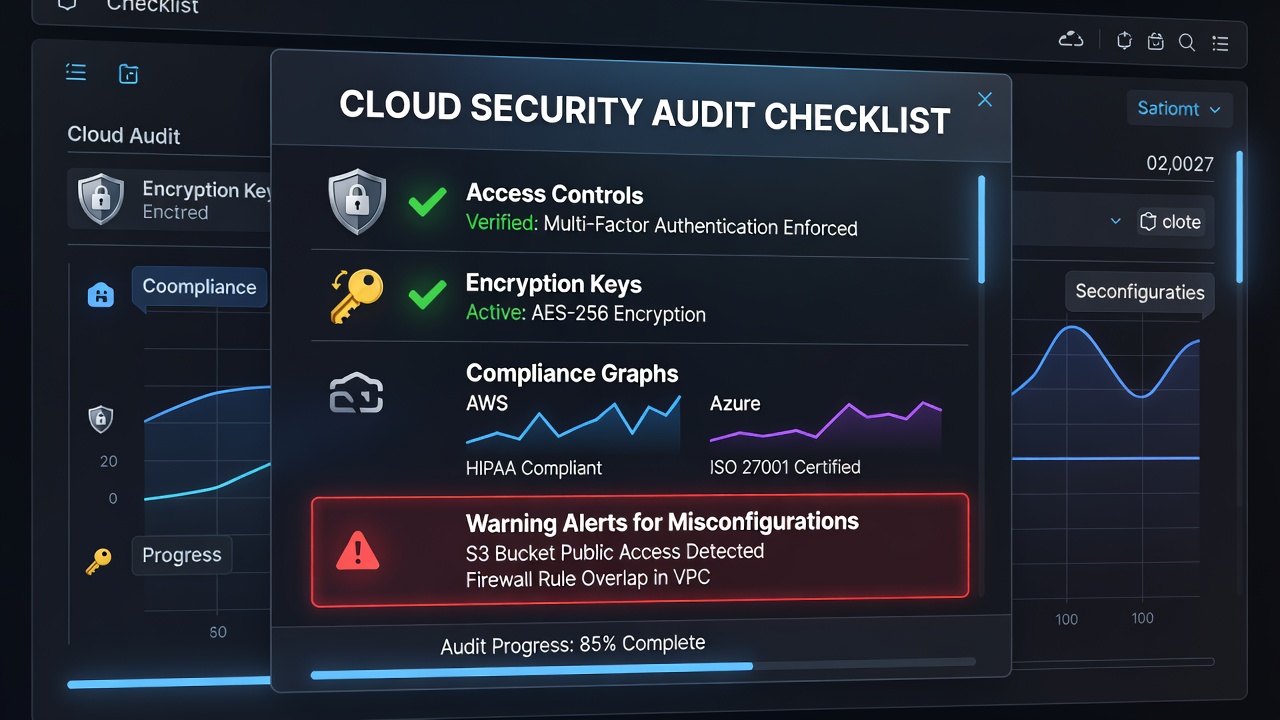
Monitor adherence to standards like GDPR, HIPAA, and CCPA using built-in tools. AWS Config and Azure Policy allow real-time compliance checks and automated remediation. Integrate with centralized logging for comprehensive oversight across hybrid clouds. Set up continuous compliance dashboards that flag deviations within minutes rather than days. Leverage provider-specific services such as AWS Security Hub or Azure Security Center to aggregate findings from multiple accounts and subscriptions. Regular mapping of controls to frameworks helps demonstrate due diligence during audits and reduces the time required to produce evidence for external reviewers.
Real-World Examples of Misconfigurations Leading to Breaches
In 2024, a major retailer exposed customer data through publicly accessible S3 buckets on AWS due to default settings. Similarly, an Azure storage account left without network restrictions led to a ransomware incident affecting healthcare records. These cases highlight the need for automated configuration scanning and immediate alerts on deviations. Another example involved a financial services firm whose Kubernetes cluster on AWS EKS had overly broad service account permissions, allowing a compromised pod to access production databases. A separate incident at a media company occurred when an Azure Function app retained excessive blob storage read permissions after a developer test, resulting in the exfiltration of proprietary content. Learning from these events underscores the importance of infrastructure-as-code scanning and policy-as-code enforcement before resources reach production.
Step-by-Step Audit Checklist for Cloud Security
- Inventory all cloud resources and data flows across every region and account.
- Review and tighten IAM roles and permissions, removing unused entries.
- Verify encryption settings on storage, databases, and backups with key rotation schedules.
- Enable logging and set up anomaly detection alerts with defined escalation paths.
- Test incident response procedures quarterly through tabletop exercises and simulated attacks.
- Conduct third-party penetration testing annually and remediate findings within SLA timelines.
- Validate network segmentation and private connectivity options for sensitive workloads.
- Review third-party integrations and vendor security attestations on a recurring basis.
Cost-Effective Implementation Tips
Prioritize native provider tools over third-party solutions initially. Use serverless architectures to reduce attack surfaces and operational overhead. Automate compliance reporting to minimize manual audits. These approaches deliver strong security without excessive spending. Start with free-tier monitoring features and scale to paid plans only when data volume justifies the expense. Tag resources consistently to allocate security costs accurately across teams and avoid surprise bills from over-provisioned logging or unnecessary snapshots.
Hybrid Cloud Setups and Emerging Risks
Hybrid environments require consistent policy enforcement between on-premises systems and cloud platforms. Tools such as AWS Outposts and Azure Arc extend governance to edge locations while maintaining unified identity and encryption controls. Emerging risks in 2026 include AI-generated phishing campaigns and potential quantum threats to current cryptographic standards. Preparing now involves piloting post-quantum algorithms in non-production environments and investing in behavioral analytics that detect anomalies beyond signature-based detection.
FAQ on Hybrid Cloud Setups and Emerging Risks
How do I secure hybrid cloud environments?
Use consistent identity management across on-premises and cloud platforms with tools like Azure Arc or AWS Outposts. Apply uniform encryption and monitoring policies throughout the entire infrastructure stack.
What emerging risks should organizations watch in 2026?
AI-driven attacks and quantum computing threats to current encryption are rising. Plan for post-quantum cryptography migration and enhanced behavioral analytics to stay ahead of automated threats.
Is multi-cloud more secure than single-cloud?
It depends on implementation; diversity can reduce vendor lock-in risks but increases complexity. Focus on unified governance regardless of strategy to maintain visibility and control.
How often should encryption keys be rotated?
Rotate keys at least annually or after any suspected exposure. Automated services in AWS and Azure simplify this process without disrupting workloads.
What role does zero-trust play in cloud privacy?
Zero-trust assumes no implicit trust, requiring continuous verification of every request. This model directly supports data privacy by limiting lateral movement and enforcing least-privilege access at every layer.
Conclusion
Adopting these cloud security strategies ensures resilience against 2026 threats while upholding data privacy. Begin with access controls and encryption, then layer in monitoring and regular audits. For further guidance, consult official resources from AWS and Azure. Additional frameworks are available at NIST and Cloudflare.


No comments yet. Be the first!