 NeoBit Daily
Introduction to Endpoint and Extended Detection in 2026
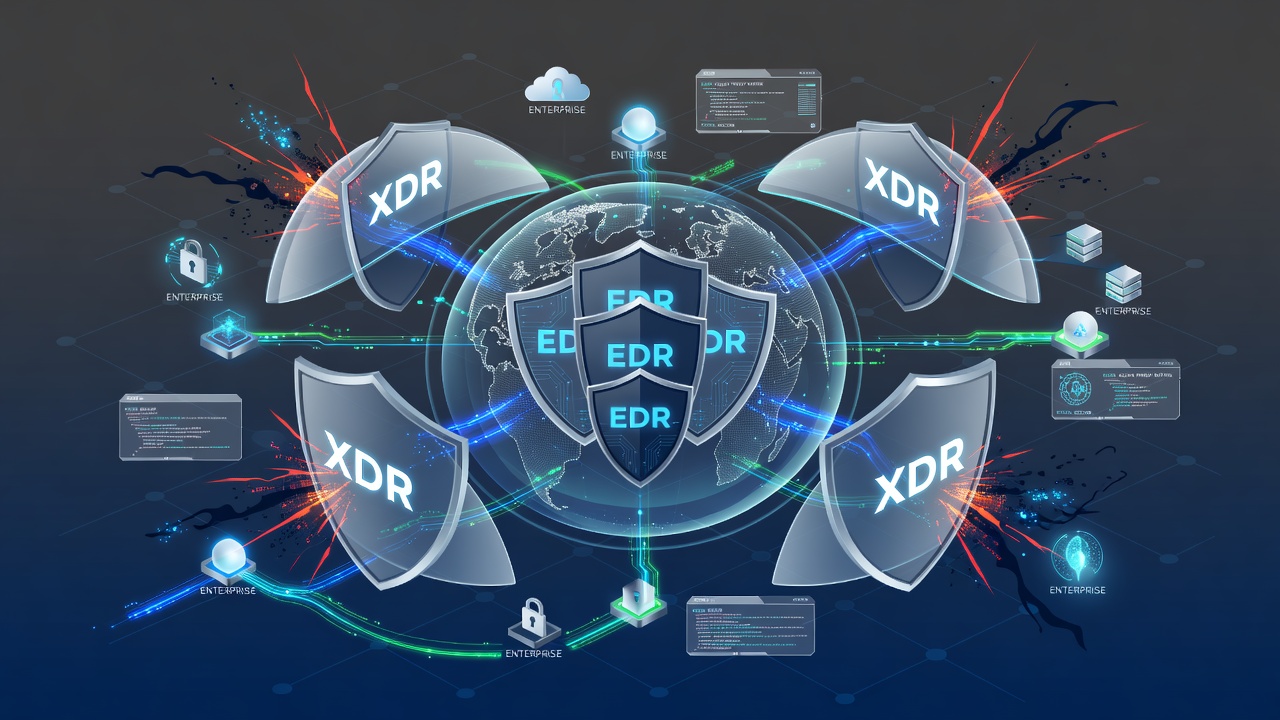
Enterprise IT teams face evolving threats in 2026, from sophisticated ransomware to supply-chain attacks that target interconnected cloud and on-premises systems. Choosing between Endpoint Detection and Response (EDR) and Extended Detection and Response (XDR) requires understanding their capabilities, limitations, and fit for hybrid environments. This guide helps decision-makers evaluate options based on scope, automation, privacy, and real-world performance. As organizations scale their digital footprints, the right security approach can mean the difference between containing a breach quickly and suffering prolonged downtime with significant data loss.
What Is EDR?
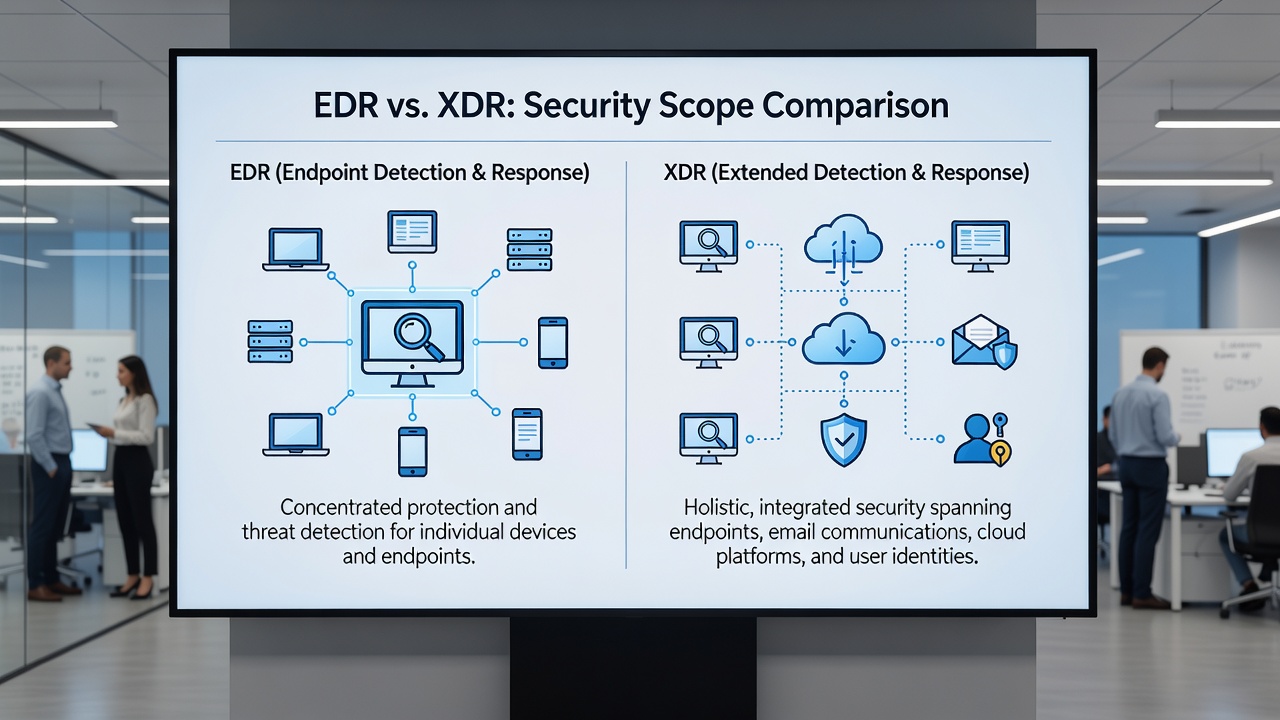
EDR focuses on monitoring, detecting, and responding to threats at the endpoint level, including laptops, servers, and mobile devices. It collects telemetry on processes, file changes, and network connections to identify anomalies in real time. Modern EDR solutions leverage behavioral analysis and machine learning to reduce reliance on signature-based detection. For example, an EDR tool might flag unusual PowerShell activity on a workstation and automatically quarantine the device while alerting analysts. In practice, EDR serves as the foundational layer for many security operations centers because it provides granular visibility into the devices most frequently targeted by attackers.
What Is XDR?
XDR extends detection and response across multiple vectors, including endpoints, email, cloud workloads, identity systems, and network traffic. By correlating data from these sources, XDR provides broader visibility and automated responses that span an organization's entire attack surface. Unlike standalone tools, XDR platforms stitch together signals from disparate systems to reveal attack chains that would otherwise remain hidden. This holistic view proves especially valuable when threats move laterally across environments, such as an initial phishing email leading to cloud credential theft and then endpoint compromise.
Core Differences in Detection Scope and Response Automation
EDR excels at deep endpoint forensics but operates within a narrower lens. It delivers high-fidelity alerts on device-level activity yet may miss context from email gateways or identity providers. XDR aggregates signals across domains for faster threat hunting and can orchestrate responses that involve multiple systems simultaneously. Automation in EDR often involves isolating infected devices, while XDR can block malicious emails, revoke user sessions, and update firewall rules in a coordinated sequence. These differences become critical during 2026 threat scenarios involving multi-stage attacks that cross traditional security boundaries.
Impact on Data Privacy
Both technologies process sensitive telemetry, raising privacy considerations under regulations like GDPR and emerging data protection laws. EDR solutions typically limit data collection to device activity, reducing the volume of personal information processed. XDR may require broader access to email logs and cloud APIs, increasing the need for strict access controls and anonymization techniques. Organizations should review data retention policies, encryption standards, and vendor compliance certifications when evaluating solutions. Failing to address these aspects can lead to regulatory fines or loss of customer trust following a security incident.
Integration Challenges with Existing Tools
Many enterprises struggle to integrate new security layers with legacy SIEM or SOAR platforms. EDR often integrates via lightweight agents that push data to existing consoles, yet XDR demands API connections across multiple vendors and careful mapping of data schemas. Common challenges include duplicate alerts, inconsistent log formats, and performance overhead on shared networks. Successful deployments require mapping data flows, conducting compatibility tests in staging environments, and establishing clear escalation paths between security and IT operations teams before full rollout.
Cost-Benefit Breakdowns
EDR deployments generally involve lower upfront complexity and licensing fees compared to comprehensive XDR platforms. However, XDR can reduce overall incident response time and staffing needs through centralized automation, potentially lowering long-term operational expenses. Decision-makers should weigh total cost of ownership against risk reduction in their specific threat landscape, factoring in training requirements and potential productivity gains from fewer manual investigations.
Real-World Examples from Enterprise Deployments
A global financial services firm replaced siloed EDR tools with an XDR platform, cutting mean time to respond by 40 percent across cloud and on-premises assets while improving visibility into email-based threats. Conversely, a manufacturing company retained EDR for factory endpoints to maintain operational technology isolation while layering targeted XDR capabilities on corporate networks. In another case, a healthcare provider used EDR to meet strict device compliance needs and supplemented it with XDR for cross-system correlation during regulatory audits. These examples illustrate that hybrid approaches often deliver the best outcomes when tailored to industry-specific constraints.
Decision Framework and Evaluation Criteria
- Threat landscape complexity: Choose XDR for multi-vector attacks that span email, cloud, and endpoints.
- Existing tool ecosystem: Assess integration ease with current SIEM and SOAR investments.
- Team expertise: EDR may suit teams focused on endpoint forensics and incident response.
- Scalability needs: XDR supports hybrid cloud growth more seamlessly through native connectors.
- Privacy and compliance requirements: Review data handling practices and regional regulations.
- Resource constraints: Consider staffing levels and automation maturity before expanding scope.
Steps for Implementation
- Conduct a current-state assessment of security tools, data flows, and identified gaps.
- Define success metrics such as detection rates, mean time to respond, and false-positive reduction.
- Pilot solutions in a limited environment for 30-60 days while measuring performance against baselines.
- Train staff on new workflows, automation playbooks, and escalation procedures.
- Establish ongoing monitoring, tuning processes, and regular reviews with vendors.
- Document lessons learned and refine policies to align with evolving business needs.
Common Concerns: FAQ
How do EDR and XDR handle false positives?
Both use behavioral analytics and machine learning to minimize unnecessary alerts. XDR often achieves lower false-positive rates through cross-domain correlation, though initial tuning and continuous feedback loops remain essential for optimal results in any environment.
Are these solutions scalable in hybrid environments?
Yes. Leading platforms support containerized deployments, cloud-native agents, and flexible licensing that scale with workload demands across on-premises, multi-cloud, and remote workforce setups without major architectural changes.
Which offers better long-term ROI?
Organizations with diverse attack surfaces typically realize stronger ROI from XDR due to reduced dwell time and consolidated tooling. Endpoint-centric operations may find EDR sufficient and more cost-effective when budget or complexity constraints are primary concerns.
What training is required for security teams?
Teams transitioning to XDR benefit from vendor-led workshops on correlation rules and automated playbooks. EDR-focused training emphasizes forensic analysis and endpoint-specific threat hunting techniques that remain valuable regardless of platform choice.
Conclusion
Selecting between EDR and XDR depends on organizational maturity, threat exposure, and integration readiness. By applying the decision framework outlined above, IT leaders can implement a defense strategy aligned with 2026 cybersecurity realities. For authoritative guidance, consult resources from CISA, the NIST Cybersecurity Framework, and ENISA.


No comments yet. Be the first!