 NeoBit Daily

Introduction to API Security in 2026
APIs serve as the backbone of modern digital ecosystems, enabling seamless integration between applications, services, and devices. However, their exposed nature makes them prime targets for cybercriminals aiming to exploit data leaks and gain unauthorized access. In 2026, the cybersecurity landscape has evolved with more sophisticated attack vectors, including AI-driven threats and supply chain compromises. Organizations handling sensitive user data must prioritize comprehensive API protection strategies to maintain data privacy compliance and build user trust. This in-depth guide explores advanced techniques, drawing from real-world incidents and providing actionable implementation steps for security professionals.
Authentication Protocols for Robust API Access Control
Effective authentication begins with adopting OAuth 2.1 alongside OpenID Connect for secure, token-based authorization that supports granular scopes and consent flows. JSON Web Tokens require careful handling: implement short-lived access tokens paired with refresh tokens, validate signatures and claims on every request, and enforce audience restrictions to prevent token misuse across services. For enhanced security, integrate passkeys or hardware security keys as part of multi-factor authentication workflows. Certificate pinning on client applications further mitigates man-in-the-middle risks. Practical examples include configuring identity providers like Auth0 or Okta to enforce these standards, reducing credential stuffing incidents by over 70 percent in recent deployments. Regular secret rotation and least-privilege principles ensure long-term resilience against evolving threats.
Implementing Effective Rate Limiting Strategies
Rate limiting acts as a critical safeguard against abuse, brute-force attacks, and resource exhaustion. Algorithms such as the token bucket model accommodate legitimate traffic bursts while capping sustained usage, whereas sliding window counters deliver precise per-minute or per-hour tracking suitable for high-volume endpoints. Implementation should layer limits at multiple levels: per authenticated user, per IP address, and per specific API resource. Responses must include standard 429 status codes with Retry-After headers to guide clients appropriately. Advanced setups combine these controls with machine learning-based anomaly detection to identify coordinated bot networks. In practice, teams using Kong or similar gateways report successful mitigation of scraping attempts that previously drained backend resources.
Encryption Standards and Data Protection
Transport layer security demands TLS 1.3 exclusively, with forward secrecy enabled to protect against future key compromises. Payload encryption at rest using AES-256-GCM, combined with field-level techniques for personally identifiable information, ensures data remains protected even during database breaches. Key management via hardware security modules or services such as AWS KMS prevents exposure in application code. Developers should conduct periodic cipher suite audits to retire outdated algorithms. These measures align with emerging 2026 standards for zero-trust architectures and help organizations demonstrate compliance during audits.
Real-Time Monitoring and Threat Detection Tools
Proactive monitoring enables rapid response to anomalies before they escalate into breaches. Integrating API gateways with SIEM solutions allows correlation of logs across distributed systems, while behavioral analytics flag deviations such as unusual request volumes or geographic origins. Web application firewalls tailored for APIs detect injection patterns and malformed payloads in real time. Dashboards tracking metrics like error rates, latency spikes, and authentication failures provide visibility. Automated alerting tied to these signals facilitates 24/7 defense, with many teams achieving sub-five-minute response times to emerging threats through well-tuned configurations.
Comparing Popular API Gateways
Selecting the right gateway depends on infrastructure, compliance needs, and team expertise. Kong excels with its extensible plugin system supporting custom authentication and rate-limiting logic. AWS API Gateway offers seamless integration with Cognito for identity management and native WAF rules for threat blocking. Apigee delivers robust analytics and developer portals ideal for enterprises managing partner ecosystems. 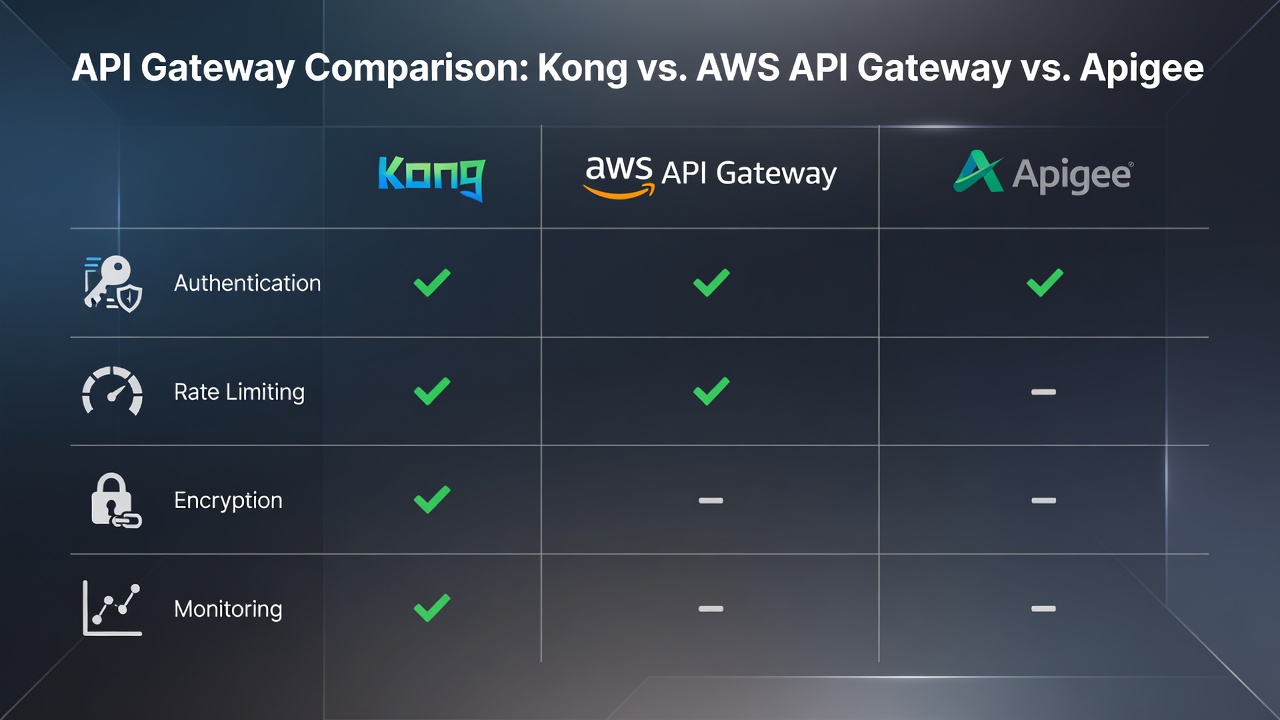
Case Studies from Recent Hacking Incidents
A notable 2025 incident involved forged JWTs due to missing issuer validation, exposing millions of records. Remediation included strict claim enforcement and token rotation policies that prevented recurrence. Another case featured an unprotected public endpoint exploited for mass data scraping; resolution came through per-IP rate limits and behavioral analysis that halted activity within hours. These examples underscore the value of defense-in-depth. Additional incidents highlight risks from unversioned legacy endpoints left exposed after updates, reinforcing the need for comprehensive inventory and deprecation schedules.
Common Pitfalls to Avoid
- Hardcoding secrets or API keys directly in source code repositories
- Deploying long-lived tokens without refresh or revocation mechanisms
- Neglecting thorough input sanitization on all query parameters and headers
- Omitting centralized logging that hinders forensic analysis after incidents
- Leaving deprecated API versions active, creating persistent attack surfaces
- Underestimating the importance of regular penetration testing and red-team exercises
Regulatory Compliance and Data Privacy Integration
API security directly supports regulations such as GDPR and emerging data protection frameworks. Implementing consent tracking within authentication flows and maintaining audit logs of data access events helps demonstrate accountability. Organizations can reference guidance from authoritative bodies like OWASP for API-specific controls and NIST cybersecurity frameworks to align technical measures with legal requirements. Proactive encryption and access controls reduce breach notification obligations and build competitive advantage through demonstrated privacy leadership.
Step-by-Step Implementation Roadmap
Begin with a complete API inventory and data classification exercise. Enforce TLS 1.3 across all endpoints and enable mutual TLS for service-to-service communication. Deploy a gateway with authentication plugins, followed by granular rate-limiting policies. Instrument comprehensive monitoring and establish quarterly security assessments including simulated attacks. Document every configuration change and conduct team training on emerging threats to sustain maturity over time.
FAQ
How do zero-day vulnerabilities affect APIs?
Zero-day exploits target undisclosed weaknesses. Layered defenses including strict input validation, least-privilege access controls, and rapid patch deployment minimize impact while patches are developed and applied.
What is the best way to handle API versioning for security?
Maintain isolated routes or gateways per version and retire outdated releases on a defined schedule. This practice eliminates lingering vulnerabilities in legacy code paths.
Should small teams adopt enterprise-grade API security tools?
Many managed services and open-source gateways scale effectively for smaller organizations, delivering advanced protection without excessive operational burden.
How can teams prepare for AI-enhanced attacks on APIs?
Incorporate behavioral analytics and adversarial testing into monitoring stacks to detect automated, adaptive threats that traditional rules might miss.
What metrics indicate healthy API security posture?
Track authentication failure rates, average response times under load, and time-to-detect anomalies. Consistent downward trends in these areas signal improving defenses.
Conclusion
Securing APIs in 2026 requires a holistic approach combining strong authentication, encryption, rate limiting, real-time monitoring, and continuous improvement. By learning from past incidents and following structured implementation roadmaps, security teams can effectively prevent data leaks and unauthorized access while supporting regulatory compliance and business growth.

No comments yet. Be the first!