 NeoBit Daily

Introduction to Cybersecurity Culture in 2026
In 2026, organizations face evolving threats that blend sophisticated technical attacks with human vulnerabilities. Building a cybersecurity culture that prioritizes data privacy is essential for mid-sized companies seeking sustainable protection. This guide provides beginner-friendly yet comprehensive strategies, drawing from real-world examples to help leaders integrate human factors with technical controls. As digital transformation accelerates, data privacy has become a competitive differentiator rather than merely a regulatory requirement. Mid-sized organizations often struggle because they lack the dedicated security teams of larger enterprises yet handle substantial volumes of sensitive customer and employee information. A strong culture addresses this gap by embedding privacy awareness into everyday decisions, reducing the likelihood of breaches caused by human error, which remains one of the leading causes of incidents according to industry reports.
Securing Leadership Buy-In for Lasting Change
Effective cybersecurity culture starts at the top. Executives must view data privacy not as a compliance checkbox but as a strategic asset. Leaders can demonstrate commitment by allocating resources for training and participating in awareness sessions themselves. Without visible support, employee engagement drops significantly. Practical steps include scheduling quarterly briefings where C-suite members review recent threat landscapes and share personal commitments to privacy practices. For instance, a mid-sized manufacturing firm appointed its CFO as the executive sponsor for data privacy initiatives, resulting in faster budget approvals for new tools and higher attendance at training events. Leaders should also model behavior by using approved secure communication channels and openly discussing lessons from minor incidents without assigning blame.
Designing Effective Employee Training Programs
Training should go beyond annual modules to include interactive simulations and role-specific scenarios. Programs that incorporate phishing drills and privacy policy workshops foster ongoing vigilance. Mid-sized firms report higher retention of best practices when training is gamified and repeated quarterly. To maximize impact, organizations should segment training by job function: sales teams focus on handling customer data during negotiations, while IT staff receive deeper technical modules on encryption and access management. Common mistakes to avoid include one-size-fits-all content that feels irrelevant and lack of follow-up reinforcement. Successful programs use short video scenarios followed by immediate quizzes and discussion forums where employees can ask questions anonymously.
Key Elements of Successful Training
- Regular micro-learning sessions tailored to departments lasting no more than 15 minutes
- Real-world case studies highlighting data breach consequences and recovery costs
- Feedback loops to measure knowledge retention through pre- and post-assessments
- Incorporation of emerging 2026 threats such as AI-generated phishing attempts
Integrating Policies with Daily Operations
Policies must be practical and embedded into workflows rather than stored in inaccessible documents. For example, access controls and data handling procedures should align with existing tools like collaboration platforms. CISA resources offer templates adaptable for 2026 privacy regulations. Integration also involves updating onboarding processes so new hires receive privacy expectations on day one and linking policy compliance to performance reviews. Organizations that successfully embed policies create quick-reference guides accessible within their intranet and mobile apps, ensuring employees can check procedures without disrupting productivity.
Measuring Cultural Impact Through Metrics
Quantifying success involves tracking indicators such as incident reporting rates, training completion percentages, and policy adherence scores. Dashboards that visualize these metrics help identify gaps early. 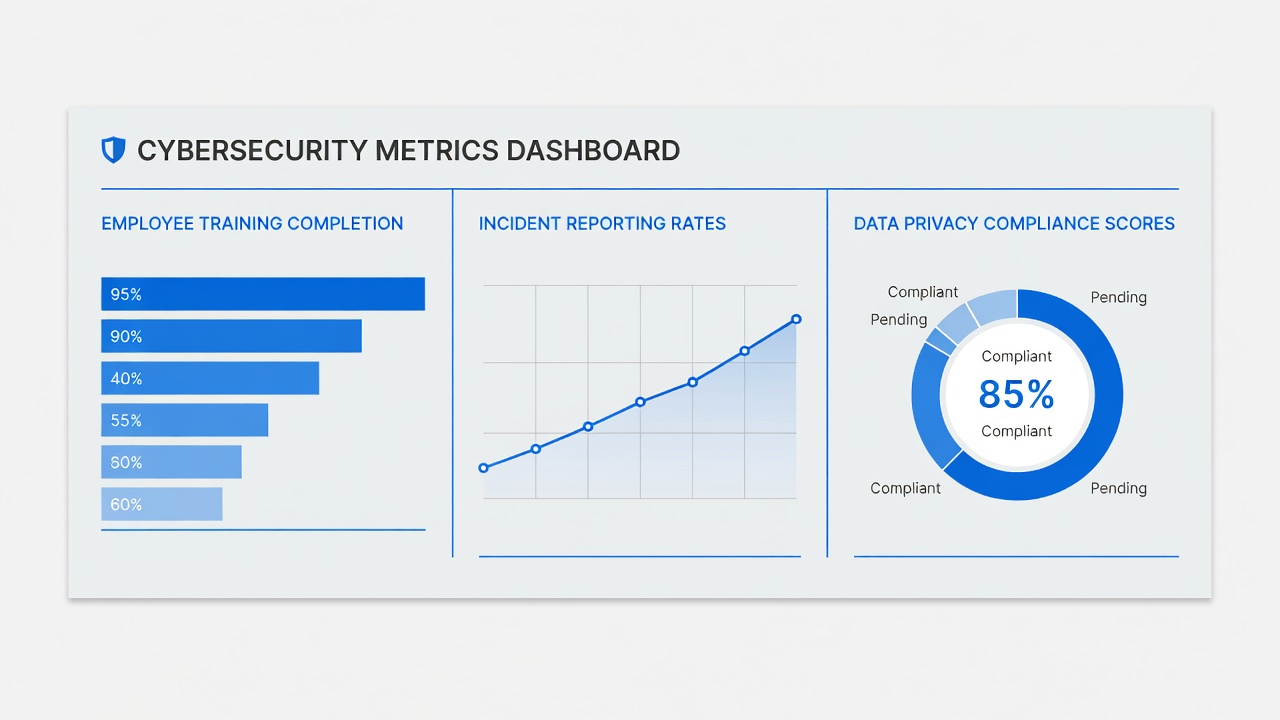
Overcoming Common Resistance Barriers
Resistance often stems from perceived inconvenience or fear of blame. Addressing this requires transparent communication, incentives for positive behaviors, and a no-blame culture for honest reporting. Grassroots initiatives paired with top-down mandates prove most effective in shifting mindsets. Specific tactics include creating recognition programs that reward employees who identify vulnerabilities and hosting open forums where staff can voice frustrations about security processes. Mid-sized companies have found success by piloting changes in one department first, gathering testimonials, and then rolling out organization-wide with peer advocates leading sessions.
Comparing Top-Down vs Grassroots Approaches
Top-down strategies ensure consistency and resource allocation, while grassroots efforts build organic buy-in through peer champions. The optimal path combines both: executive sponsorship with employee-led innovation teams. Case studies from mid-sized tech firms show this hybrid model reduces breach incidents by fostering accountability at all levels. Top-down approaches excel at enforcing uniform standards across locations, whereas grassroots methods uncover practical workflow improvements that executives might overlook. A balanced comparison reveals that organizations using only top-down methods experience higher initial compliance but lower long-term engagement, while pure grassroots efforts can lack necessary funding and authority.
Actionable Checklists for Implementation
- Audit current policies against 2026 privacy standards and document gaps within the first 30 days
- Launch leadership workshops within the first month and secure written commitments from executives
- Deploy initial training modules and track participation with automated reminders
- Establish quarterly metric reviews involving cross-functional teams
- Review and refine based on employee feedback collected through surveys and focus groups
- Conduct annual tabletop exercises simulating data privacy incidents
- Update technical controls such as multi-factor authentication to support cultural goals
Case Study Highlights from Mid-Sized Companies
A logistics company with 500 employees integrated privacy training into onboarding, resulting in a 40% increase in proactive threat reporting within six months. Another firm in healthcare used cross-departmental champions to embed data handling protocols, achieving full compliance ahead of audits. A third example comes from a financial services provider that combined leadership visibility with gamified training; after 12 months they observed a 60% reduction in policy violations and improved scores on external privacy assessments. These examples illustrate that sustained effort across multiple levers produces measurable cultural shifts rather than temporary compliance spikes.
Blending Human Factors with Technical Controls
Sustainable results require combining behavioral approaches with technology. Technical controls such as data loss prevention tools become more effective when employees understand their purpose and receive training on proper use. Human factors include designing intuitive interfaces that make secure choices the default option and providing immediate feedback when risky actions are attempted. Mid-sized organizations benefit from this blend because it prevents over-reliance on either people or technology alone, creating layered defense that adapts to new threats.
FAQ Section
How long does implementation typically take?
Most organizations see foundational elements in place within 3-6 months, with full cultural integration requiring 12-18 months of sustained effort. Progress can be accelerated by leveraging existing communication channels and aligning initiatives with other business priorities.
How can ROI be tracked effectively?
Track reductions in security incidents alongside qualitative improvements like employee confidence surveys. Compare pre- and post-implementation data to demonstrate value to stakeholders and justify continued investment in culture-building activities.
Conclusion
Cultivating a cybersecurity culture centered on data privacy demands consistent effort blending leadership, training, and measurement. By applying these strategies, organizations can build resilience against 2026 threats while empowering their teams to protect sensitive information proactively.

No comments yet. Be the first!