 NeoBit Daily
Introduction to Cyber-Physical Systems Security in 2026
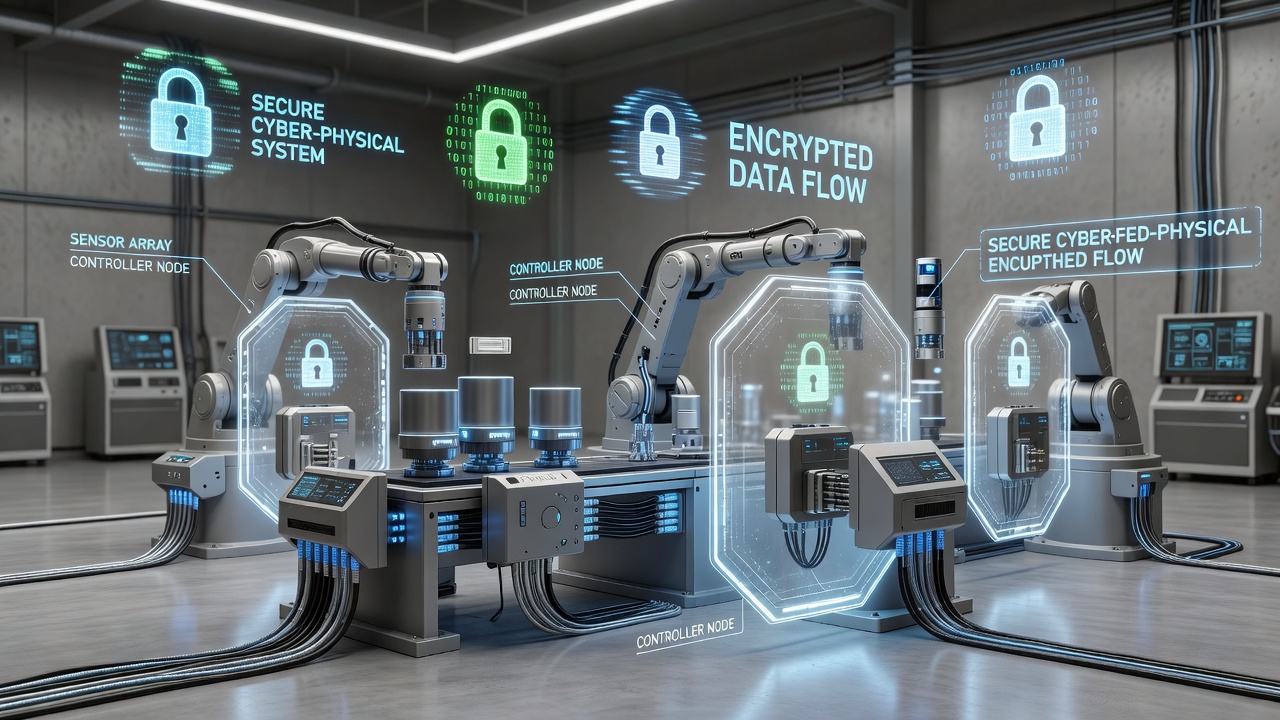
Cyber-physical systems (CPS) integrate computational algorithms with physical processes, powering critical infrastructure such as smart grids, transportation networks, and manufacturing facilities. As we move into 2026, these systems face escalating threats that directly impact data privacy. Attackers increasingly target the convergence of digital controls and physical operations, leading to potential breaches that expose sensitive operational data. The rise of interconnected devices has created new attack surfaces where a single compromised sensor can cascade into widespread privacy violations affecting entire organizations.
This article examines emerging risks in depth, provides beginner-friendly explanations alongside advanced techniques, and delivers actionable security strategies. Readers will learn to identify vulnerabilities in detail, implement layered defenses with precise steps, and apply real-world lessons from recent incidents. Emphasis is placed on practical implementation that aligns with 2026 threat landscapes while protecting privacy at every layer of the system.
Key Vulnerabilities in Interconnected CPS Devices
Modern CPS environments contain numerous entry points for attackers. Legacy protocols often lack encryption, while sensor networks transmit unverified data streams. A common issue involves weak authentication mechanisms that allow unauthorized access to control loops. In 2026, the proliferation of low-power wide-area networks has amplified risks because many devices prioritize connectivity over security features.
Advanced threats include AI-driven attacks that adapt in real time to bypass traditional perimeters. Organizations must map all device interactions to uncover hidden dependencies that could leak privacy-sensitive information, such as operational patterns or location data. For example, a compromised actuator in a smart factory could reveal proprietary production schedules through side-channel analysis. Additional vulnerabilities arise from unpatched firmware on edge devices and insufficient segmentation between operational technology and information technology networks. These gaps enable lateral movement that ultimately exposes personal and operational datasets.
Implementing Layered Security Controls
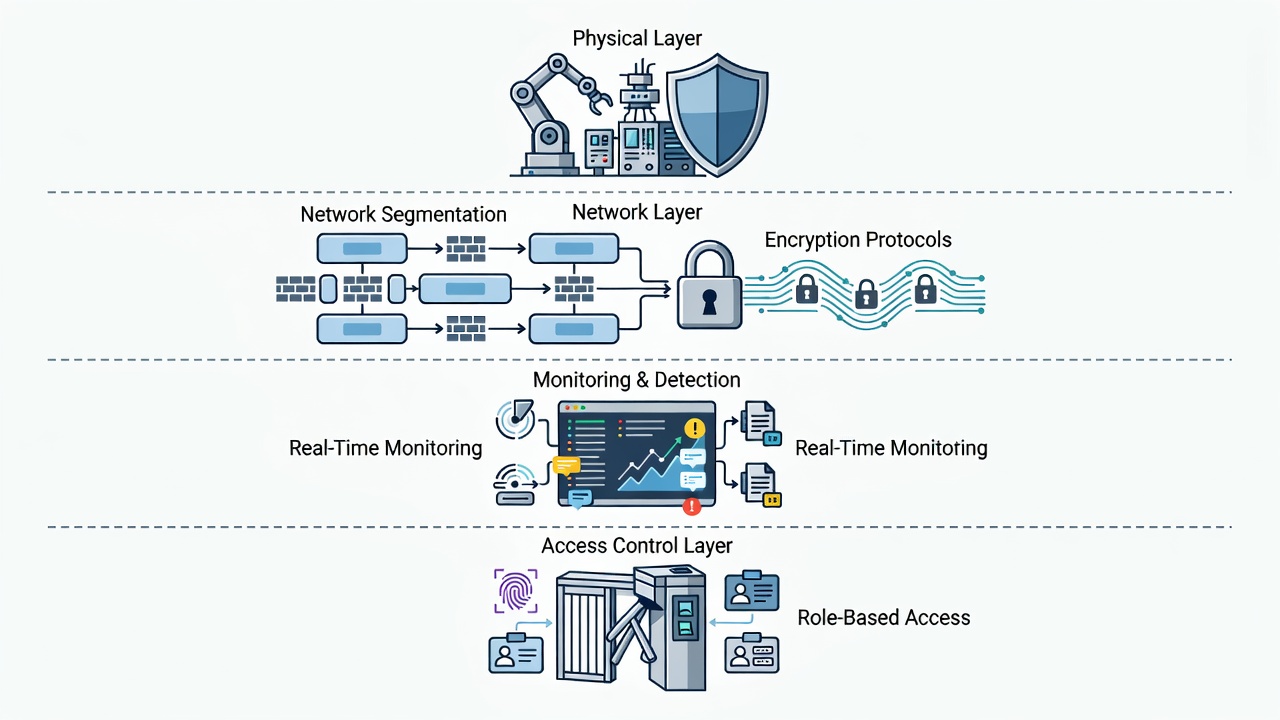
Effective defense requires a defense-in-depth approach. Begin with network segmentation to isolate critical control zones from general IT networks. Next, deploy encryption for all data in transit and at rest using standards like AES-256. Advanced techniques include runtime attestation to verify software integrity on embedded controllers and behavioral analytics that detect anomalies in physical process variables.
Follow this detailed step-by-step guide for implementation:
- Conduct a full asset inventory and risk assessment covering every sensor, controller, and gateway.
- Apply zero-trust principles to every access request, verifying identity and context continuously.
- Integrate continuous monitoring with automated response capabilities that correlate digital and physical signals.
- Regularly test controls through simulated attack scenarios including red-team exercises focused on privacy data flows.
- Establish secure boot processes and over-the-air update mechanisms with cryptographic signing.
- Deploy micro-segmentation at the protocol level to prevent unauthorized command injection.
Each layer reinforces the next, creating multiple barriers that slow attackers and preserve data integrity. Organizations that follow this structure report significantly reduced incident response times.
Real-World Case Studies of Recent Incidents
Analysis of 2025-2026 incidents reveals patterns in CPS attacks. One utility provider suffered a breach when compromised sensors altered pressure readings, exposing grid performance data and customer usage profiles. Another manufacturing facility lost operational logs after ransomware encrypted historian databases, halting production for days and revealing intellectual property details. A third case involved a transportation authority where manipulated traffic signals led to privacy leaks of vehicle tracking information.
These examples underscore the need for proactive privacy controls that extend beyond traditional IT boundaries. Lessons learned highlight the importance of early anomaly detection and rapid isolation of affected segments to limit data exposure.
Comparing Detection Tools for CPS Environments
Several specialized tools help organizations monitor CPS threats effectively. Industrial intrusion detection systems excel at protocol-aware analysis but may require custom rule tuning for legacy equipment. SIEM platforms with CPS modules offer broad visibility yet can generate high false-positive rates without proper baselining of normal process behavior.
Endpoint detection solutions adapted for embedded devices provide granular process monitoring at the cost of higher resource usage on constrained hardware. When choosing between options, evaluate factors such as integration ease, alert accuracy, and support for industry-specific protocols. Comparative testing in controlled environments often reveals that hybrid approaches combining multiple tool types deliver the best coverage for privacy-sensitive operations.
Advanced Techniques for Data Privacy Protection
Beyond basic controls, advanced methods include differential privacy techniques applied to aggregated sensor data and homomorphic encryption that allows computation on encrypted values. These approaches enable analytics without exposing raw privacy information. Machine learning models trained on historical attack data can predict potential breach vectors specific to CPS architectures, allowing preemptive mitigation.
Implementation begins with pilot programs on non-critical subsystems before scaling. Regular audits ensure these techniques remain effective against evolving 2026 threats.
Practical Actionable Security Tips
Start by enforcing strict access controls and conducting regular firmware updates across all devices. Train staff on recognizing social engineering attempts targeting operational technology teams. Implement data minimization practices to reduce the volume of privacy-sensitive information collected by CPS components. Additional tips include maintaining offline backups of configuration files, establishing incident response playbooks tailored to physical consequences, and participating in information-sharing forums with peer organizations.
Regulatory Compliance and Best Practices
Aligning CPS security with data privacy regulations requires documented policies and regular assessments. Controls such as encryption and access logging support compliance with major frameworks by protecting both personal and operational data. Organizations should reference guidance from authoritative bodies including NIST and CISA to stay current with evolving requirements.
FAQ: Common Compliance Concerns
How do CPS security measures align with data privacy regulations?
Controls such as encryption and access logging support compliance with frameworks like GDPR and emerging U.S. state privacy laws by protecting personal and operational data from unauthorized exposure.
What steps address incident reporting requirements?
Establish clear escalation paths and maintain audit trails that satisfy regulatory timelines for breach notifications, ensuring both digital and physical impacts are documented.
Are there specific standards recommended for 2026?
Reference guidance from authoritative bodies including NIST and CISA for updated CPS security frameworks and privacy controls.
How often should vulnerability assessments occur?
Conduct comprehensive assessments at least quarterly, with continuous monitoring supplementing periodic deep scans to address rapidly changing threat vectors.
Conclusion
Securing cyber-physical systems against 2026 threats demands a balanced combination of foundational and advanced practices. By focusing on vulnerability identification, layered controls, and continuous improvement, organizations can protect both physical operations and associated data privacy. Implementing these strategies today builds resilience for the evolving threat landscape and ensures long-term operational integrity.

No comments yet. Be the first!