 NeoBit Daily
Why a Cybersecurity Audit Focused on Data Privacy Matters in 2026
In an era of escalating data breaches and tightening regulations, organizations must prioritize comprehensive cybersecurity audits centered on data privacy. This guide provides a practical, step-by-step approach to conducting such an audit in 2026, helping you safeguard sensitive information while aligning with evolving standards. Data privacy has become a cornerstone of business operations because consumers and regulators alike demand greater transparency and protection over personal information. Failing to conduct regular audits can lead to severe penalties, loss of customer trust, and operational disruptions. Recent incidents, such as large-scale exposures in healthcare and finance sectors, underscore the need for proactive measures. By following this checklist, you can reduce exposure and build resilience against evolving threats.
Organizations of all sizes benefit from structured audits. Small businesses often overlook privacy controls until an incident occurs, while enterprises face complex multi-jurisdictional requirements. A focused audit helps bridge these gaps by systematically evaluating every layer of data handling.
Step 1: Identify High-Risk Assets
Begin by cataloging all data assets. Classify them based on sensitivity levels, including personal identifiable information (PII), financial records, and intellectual property. Use asset management tools to scan networks for overlooked endpoints like IoT devices and cloud storage. High-risk assets often include customer databases and employee records. Document ownership and access controls for each. Start with an inventory workshop involving IT, legal, and department heads to ensure nothing is missed. Consider both on-premises servers and hybrid cloud environments where data may reside in multiple jurisdictions. Examples of high-risk items include health records under HIPAA, payment card data, and biometric identifiers. Assign risk scores using a simple matrix of likelihood versus impact. This step forms the foundation for all subsequent audit activities because unidentified assets cannot be protected effectively.
Practical tip: Leverage automated discovery software combined with manual verification to catch shadow IT systems that employees may have deployed without approval. Review mobile devices and remote access points, as these have become prime targets in recent attacks.
Step 2: Map Data Flows
Understanding how data moves through your systems is critical. Create visual diagrams showing collection points, storage locations, processing stages, and transmission paths. This reveals potential leak points and supports compliance efforts. Tools like open-source flow mappers can assist in this visualization process. Involve cross-functional teams to trace data from initial capture through deletion or archiving. Pay special attention to third-party processors and API integrations that may introduce hidden flows.
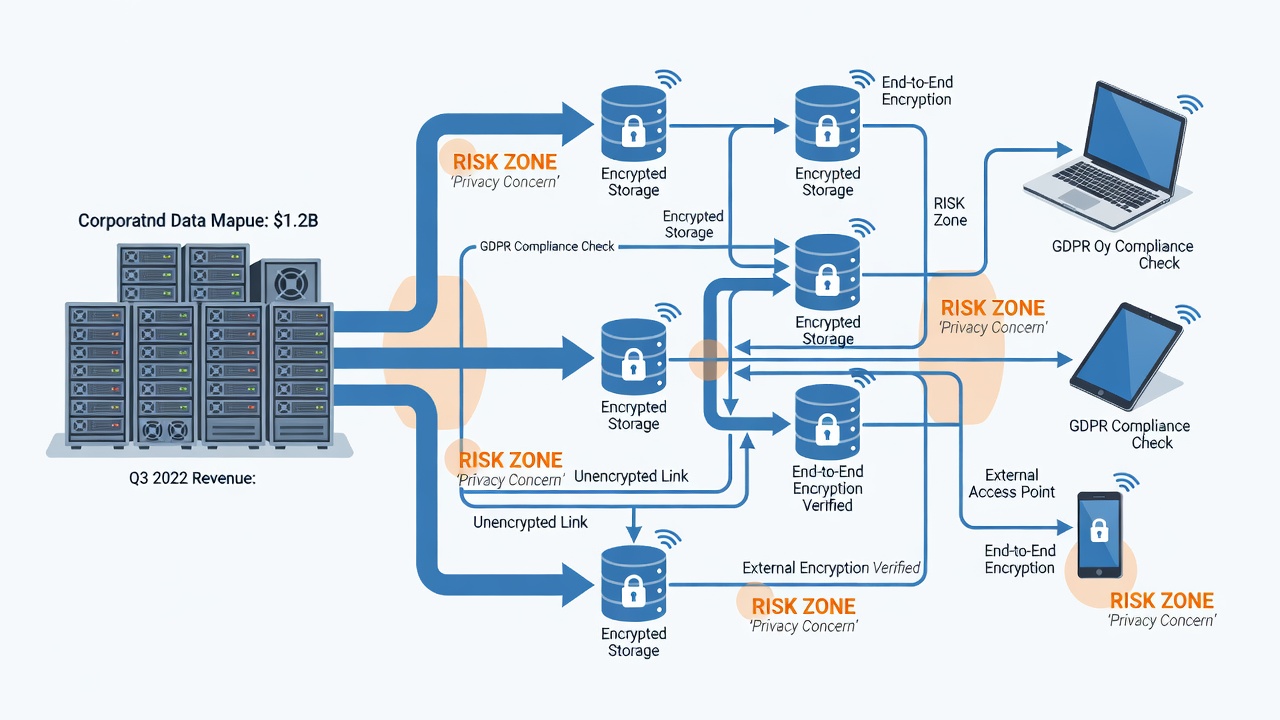
Document every transformation data undergoes, including encryption at rest and in transit. Accurate mapping also aids incident response by allowing teams to quickly identify affected records during a breach.
Step 3: Test for Common Vulnerabilities
Conduct penetration testing and vulnerability scans focused on data privacy controls. Check for issues like weak encryption, improper access permissions, and unpatched software. Reference established frameworks from NIST to guide testing protocols. Run both automated scans and manual ethical hacking exercises that simulate real attacker behavior. Test authentication mechanisms thoroughly, including multi-factor implementations and session management. Assess third-party integrations for excessive data sharing permissions.
- Review authentication mechanisms and password policies
- Assess third-party integrations and API security
- Simulate phishing attacks targeting data handlers
- Evaluate encryption standards for data at rest and in transit
- Check logging and monitoring capabilities for anomaly detection
Include mobile application testing and cloud configuration reviews. Document every finding with evidence and severity ratings to facilitate prioritized remediation.
Regulatory Alignment
Ensure your audit incorporates requirements from major regulations such as GDPR and CCPA. Map each control to specific legal obligations and identify gaps. Stay updated on emerging rules like new state privacy laws that took effect in 2025 and 2026. Conduct gap analyses against official guidance documents and maintain evidence of compliance activities. This alignment reduces legal exposure and demonstrates due diligence to regulators and customers alike.
Third-Party Risk Evaluation
Third-party vendors represent a significant attack vector. Evaluate vendors by reviewing their security certifications and conducting detailed questionnaires. Request SOC 2 reports or equivalent attestations and perform on-site assessments for critical suppliers when feasible. Include contractual requirements for breach notification timelines and data processing limitations. Monitor vendor performance continuously rather than relying solely on annual reviews. Real-world examples show that many breaches originate from compromised suppliers rather than direct organizational systems.
Resources from OWASP provide excellent guidance on secure development practices that support privacy goals. Combine this with guidance from CISA for supply chain security recommendations.
Using Free or Low-Cost Audit Tools
Leverage accessible solutions including Wireshark for traffic analysis, OpenVAS for scanning, and built-in features in operating systems for logging. Combine these with manual reviews for thorough coverage. Other useful free options include OSSEC for host-based intrusion detection and Metasploit for controlled penetration testing. Establish a centralized dashboard to aggregate findings from multiple tools. Train internal teams on proper configuration to avoid false positives that waste time. When budgets allow, supplement with commercial platforms but maintain core capabilities using no-cost utilities.
Real-World Examples and Remediation Prioritization
Case studies from recent breaches demonstrate how poor data flow mapping led to prolonged exposures. A major retailer suffered a breach because an unmonitored API endpoint exposed customer records for months. After testing, rank fixes by severity: address critical encryption gaps first, followed by access reviews and policy updates. Create a remediation roadmap with assigned owners, deadlines, and verification steps. Track progress in a shared repository accessible to leadership.
A downloadable checklist template is available to streamline your process and track progress across multiple audit cycles.
Measuring Success and Avoiding Common Pitfalls
Track metrics such as time to remediate findings and reduction in identified vulnerabilities. Measure success through decreased incident rates and improved audit scores over successive cycles. Common pitfalls include overlooking shadow IT and failing to update documentation after changes. Another frequent mistake is treating the audit as a one-time event instead of an ongoing program. Build continuous monitoring into daily operations to catch issues early.
FAQ
How often should audits occur?
Annual audits are standard, with more frequent reviews after major incidents or system changes. High-risk environments may benefit from quarterly assessments.
What if resources are limited?
Start with high-impact areas and use free tools to build momentum toward fuller assessments. Prioritize customer-facing systems and regulated data types.
How do I handle third-party findings?
Collaborate with vendors on joint remediation plans and include contractual security clauses going forward. Escalate non-responsive vendors through procurement channels.
What metrics indicate a successful audit?
Look for reduced vulnerability counts, faster remediation times, and positive feedback from compliance reviews. Employee awareness training completion rates also serve as useful indicators.
Conclusion
Performing a thorough cybersecurity audit focused on data privacy in 2026 requires methodical execution across asset identification, flow mapping, vulnerability testing, and risk mitigation. By integrating regulatory requirements and leveraging accessible tools, organizations can strengthen their defenses and maintain stakeholder trust. Regular audits not only prevent breaches but also position companies competitively in a privacy-conscious market. Begin implementing this checklist today to achieve measurable improvements in your security posture.

No comments yet. Be the first!