 NeoBit Daily
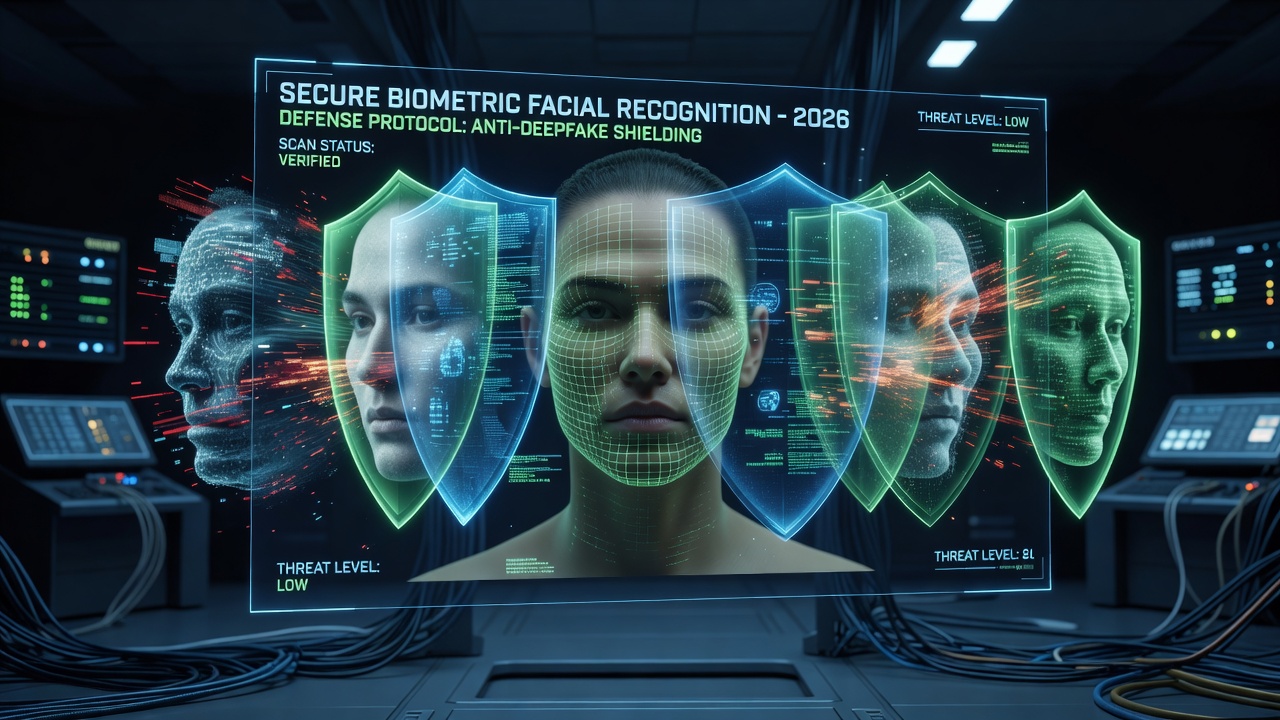
Introduction to Biometric Security in 2026
Biometric authentication has become a cornerstone of modern cybersecurity, offering organizations a way to move beyond vulnerable password systems. In 2026, methods like facial recognition and fingerprint scanning provide enhanced protection for sensitive data while addressing growing privacy concerns. This guide examines how to defend against spoofing attacks such as deepfakes and sensor bypasses. As cyber threats evolve rapidly, businesses must adopt future-proof strategies that combine physiological identifiers with advanced verification techniques to safeguard user information effectively.
Organizations seeking future-proof defenses must understand both the strengths and risks of biometrics. By integrating these technologies with multi-factor authentication (MFA) and following regulatory guidelines, businesses can significantly reduce breach risks. The shift toward biometrics reflects broader trends in digital transformation, where convenience meets security in enterprise environments worldwide.
Biometrics Versus Traditional Password Systems
Passwords remain prone to phishing, reuse, and brute-force attacks. Biometrics offer unique physiological or behavioral traits that are harder to replicate. Facial recognition analyzes facial geometry, while fingerprint scanning maps ridge patterns. Studies from the National Institute of Standards and Technology highlight biometrics' superior resistance to credential stuffing compared to passwords. Unlike passwords that can be shared or stolen, biometric data is inherently tied to the individual, reducing risks associated with credential reuse across multiple platforms.
However, biometrics are not infallible. They require careful implementation to avoid false positives or negatives that could compromise user experience or security. Password systems allow easy resets, whereas compromised biometric templates pose long-term challenges since traits cannot be changed. Organizations should weigh these trade-offs when transitioning from legacy authentication methods to biometric solutions in 2026.
Common Hacking Techniques Targeting Biometrics
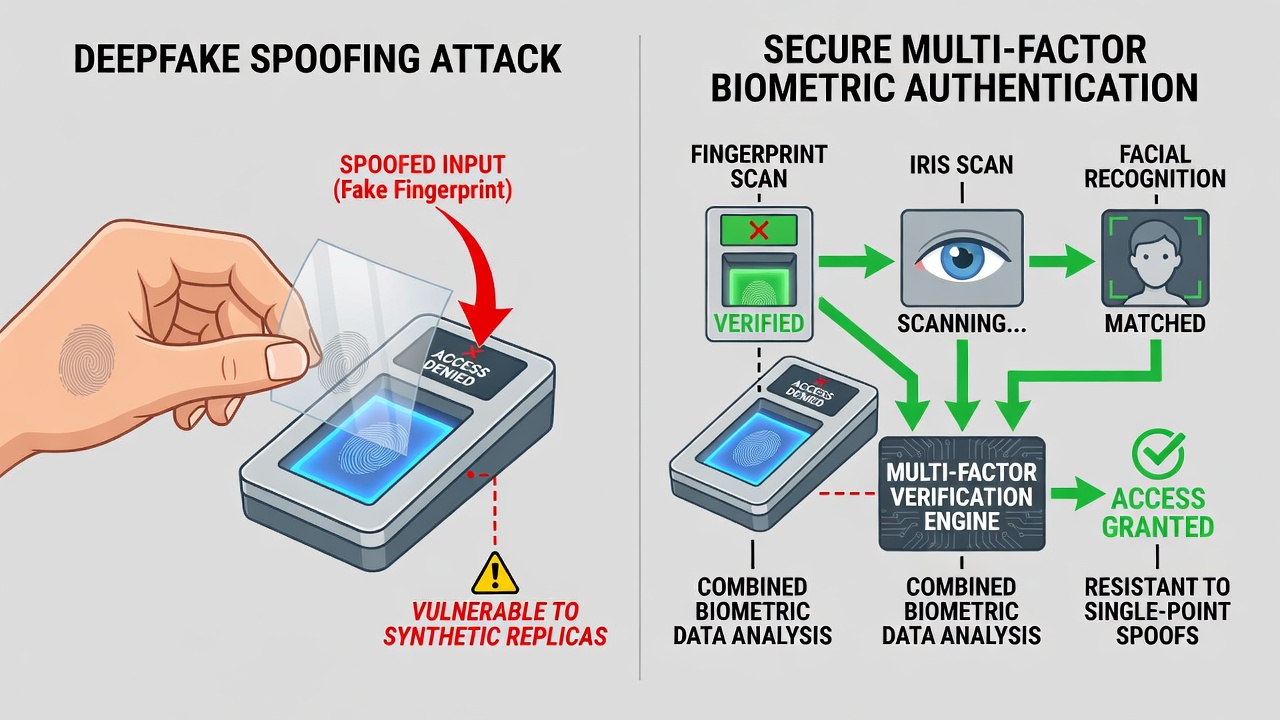
Spoofing remains the primary threat. Deepfake technology creates realistic video or audio replicas to bypass facial recognition. Sensor bypasses involve physical replicas like silicone fingerprints or printed iris images. Attackers increasingly leverage machine learning to generate high-fidelity spoofs that mimic live traits under varying conditions such as lighting or angles.
Advanced attacks in 2026 include AI-generated spoofs that exploit lighting variations or 3D modeling. Defenses involve liveness detection, which verifies traits like blood flow or micro-movements. Real-world examples show how synthetic media can deceive basic systems, prompting vendors to incorporate infrared sensors and behavioral analysis. Understanding these techniques helps security teams anticipate and mitigate emerging vectors before they impact operations.
Real-World Enterprise Case Studies
Financial institutions have successfully deployed biometric systems. One major bank reduced account takeover incidents by 85% after implementing facial recognition with liveness checks. Healthcare providers use fingerprint scanning for patient records, ensuring HIPAA compliance while streamlining access. These deployments demonstrate measurable improvements in both security posture and operational efficiency.
In the retail sector, a global chain integrated iris scanning at point-of-sale terminals to prevent fraud, resulting in faster transactions and fewer disputes. Government agencies have adopted multimodal biometrics combining fingerprints and facial data for secure access to classified systems. These case studies illustrate that success depends on thorough testing, user training, and continuous monitoring rather than technology alone.
Integrating Biometrics with Multi-Factor Authentication
Best practice recommends layering biometrics with other factors such as hardware tokens or one-time passwords. This approach mitigates single-point failures if one biometric modality is spoofed. For example, combining facial recognition with a mobile push notification creates a robust barrier against unauthorized entry.
Practical steps include assessing existing infrastructure for compatibility, choosing vendors supporting standards like FIDO2, conducting regular penetration testing focused on spoofing vectors, and training staff on recognizing potential deepfake attempts. Enterprises should also establish incident response plans that address biometric data breaches specifically, ensuring rapid containment and notification procedures.
Regulatory Considerations and Privacy Risks
Compliance with GDPR, CCPA, and emerging biometric-specific laws is essential. Organizations must obtain explicit consent and provide opt-out mechanisms. The Electronic Frontier Foundation emphasizes transparent data handling to maintain user trust. Failure to comply can result in significant penalties and reputational damage.
Accuracy concerns, such as higher error rates for certain demographics, require ongoing algorithm auditing. Privacy risks extend to data storage practices, where templates must be encrypted and segmented to prevent reconstruction of original biometric samples. Regular privacy impact assessments help organizations stay ahead of evolving legal landscapes in 2026.
Practical Checklists and Tool Recommendations
Use this implementation checklist:
- Evaluate threat models specific to your industry and identify high-value assets requiring protection.
- Pilot liveness detection technologies across multiple user scenarios to measure real-world performance.
- Monitor for emerging deepfake tools through threat intelligence feeds and industry reports.
- Update policies quarterly based on new regulations and incorporate feedback from security audits.
- Establish user education programs to explain biometric processes and address common misconceptions about data usage.
Recommended tools include solutions from established providers focusing on anti-spoofing features and seamless integration with existing identity management platforms. Organizations should prioritize open standards to avoid vendor lock-in and ensure long-term flexibility.
Mistakes to Avoid During Implementation
Common pitfalls include overlooking environmental factors like poor lighting that degrade facial recognition accuracy. Another frequent error is storing raw biometric images instead of irreversible templates, increasing breach consequences. Rushing deployment without adequate user testing can lead to high false rejection rates and user frustration. Security teams should also avoid relying solely on biometrics without secondary verification layers, as this creates exploitable single points of failure.
Frequently Asked Questions
How accurate are biometric systems in 2026?
Modern systems achieve over 99% accuracy with proper calibration, though environmental factors can influence results. Continuous algorithm updates help maintain performance across diverse populations and conditions.
What privacy risks exist with biometric data storage?
Storing templates instead of raw images reduces risks, but breaches can still expose sensitive traits if encryption fails. Organizations must implement strong access controls and regular audits to protect stored data.
Can deepfakes fully compromise facial recognition?
Advanced liveness detection makes successful deepfake spoofs significantly more difficult, though vigilance remains necessary. Combining multiple biometric modalities further strengthens resilience against synthetic media attacks.
How should organizations handle biometric data retention policies?
Best practices involve minimizing retention periods and deleting data once it is no longer needed for authentication purposes, in line with privacy regulations.
Conclusion
Biometric security in 2026 offers powerful tools for data privacy when implemented thoughtfully. By addressing spoofing threats through layered defenses and regulatory adherence, organizations can build resilient systems that protect users effectively. Continuous evaluation and adaptation will remain key to staying ahead of sophisticated attackers in the years ahead.


No comments yet. Be the first!