 NeoBit Daily
Introduction to Hybrid Work Security in 2026
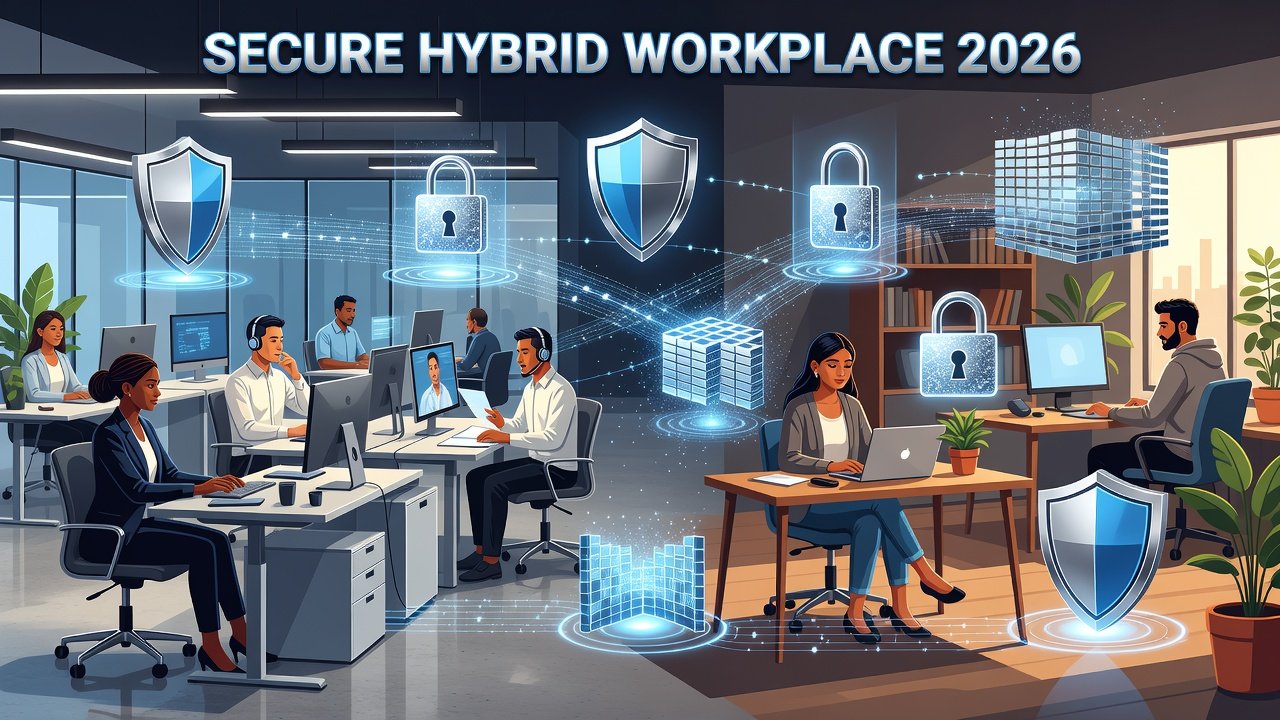
Hybrid work models continue to evolve in 2026, blending office and remote environments in ways that demand sophisticated cybersecurity approaches. This setup introduces unique challenges around data privacy risks that arise when employees move between corporate networks and home or co-working spaces. Organizations must prioritize strategies that protect sensitive information without disrupting productivity. IT teams face the ongoing task of balancing accessibility with robust defenses against increasingly sophisticated threats.
Employees frequently switch between secure office infrastructures and less controlled remote connections, creating gaps that attackers exploit. Data privacy concerns intensify when personal devices access company resources or when shared family computers handle work files. The goal of this guide is to provide IT professionals and employees with actionable steps to mitigate these risks effectively.
Key Cybersecurity Challenges in Hybrid Environments
Hybrid setups amplify several core risks, including unsecured Wi-Fi connections at home or public locations and the practice of device sharing among household members. Data leakage often occurs through personal smartphones or tablets that lack enterprise-grade encryption or monitoring. Phishing campaigns have grown more targeted, using AI to craft emails that appear legitimate and exploit the reduced oversight typical in remote settings.
Regulatory compliance adds another layer of complexity. Standards such as GDPR and CCPA require uniform data handling practices regardless of work location. Failure to maintain consistency can lead to fines and reputational damage. Mid-sized companies particularly struggle with resource allocation, often lacking dedicated security staff to monitor every endpoint.
Common Hacking Threats and Mitigation
Unsecured public or home Wi-Fi remains a primary vector for man-in-the-middle attacks where hackers intercept sensitive transmissions. Device sharing introduces malware from unvetted users who may download risky applications or visit compromised sites. Additional emerging threats include AI-generated deepfake phishing calls and supply chain attacks targeting widely used collaboration platforms.
Mitigation begins with mandatory VPN usage for all remote sessions and full-disk encryption on every device. Organizations should enforce regular security awareness training that includes simulated phishing exercises. Implementing network segmentation helps isolate critical systems from general access points. Employees can reduce personal risk by avoiding public Wi-Fi for work tasks and enabling automatic updates on all hardware.
Endpoint Protection Strategies
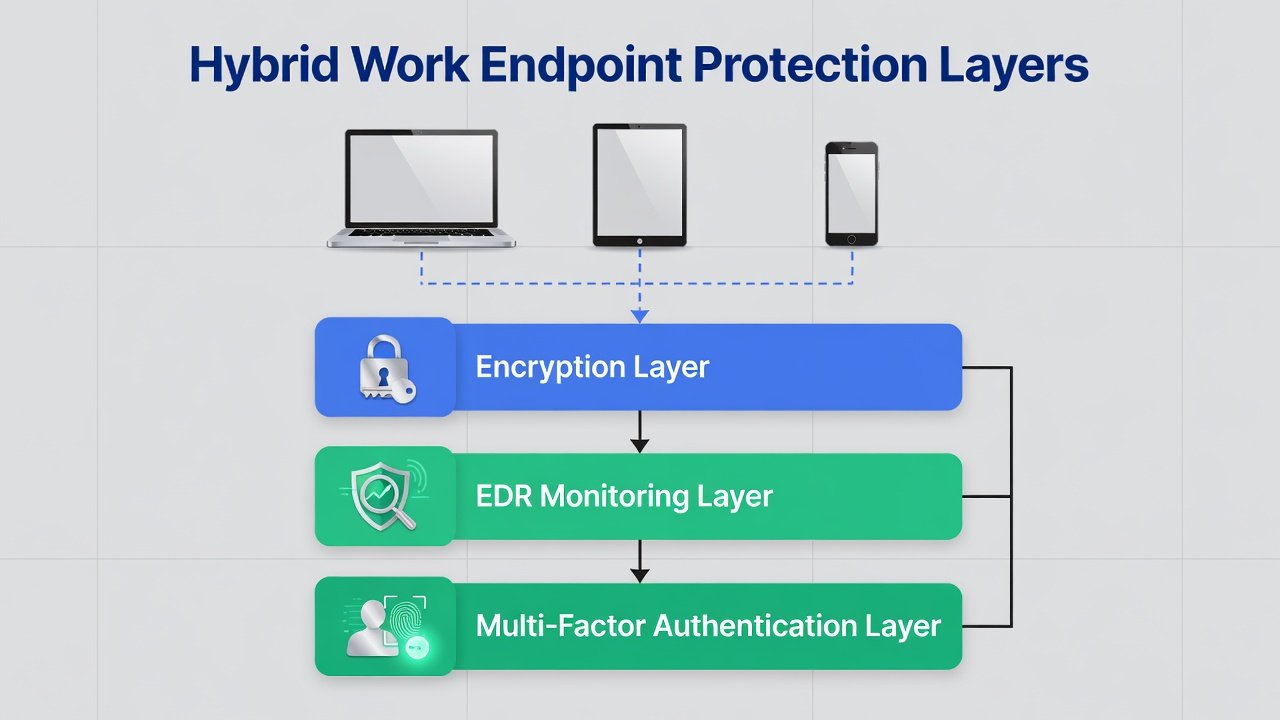
Endpoints such as laptops, tablets, and mobile phones represent the most exposed layer in hybrid environments. Advanced endpoint detection and response (EDR) tools provide real-time behavioral monitoring that identifies anomalies before they escalate. These solutions integrate with cloud dashboards for centralized oversight across distributed teams.
Step-by-step implementation guide:
- Conduct a complete inventory of every device that connects to company systems, including personally owned hardware.
- Deploy EDR agents with automatic signature updates and configure alerts for suspicious activity.
- Enable remote wipe and lock features through mobile device management platforms.
- Schedule monthly vulnerability assessments and patch management cycles.
- Train users on recognizing signs of compromise such as unusual battery drain or pop-up warnings.
Real-world application shows that companies adopting these steps see measurable reductions in breach incidents within the first quarter.
Access Control Best Practices
Zero-trust architecture has become the standard for 2026 hybrid operations. This model requires continuous verification of every access request, regardless of whether the user is inside or outside the corporate network. Multi-factor authentication combined with conditional access policies based on location, device health, and user behavior adds essential layers.
Role-based permissions limit exposure by ensuring employees only access data necessary for their roles. Regular access reviews prevent privilege creep over time. Organizations should integrate identity providers that support both on-premises and cloud environments for seamless hybrid management.
Emerging Tools for Threat Detection
AI-powered monitoring platforms analyze network traffic patterns and user behavior across hybrid setups with greater speed and accuracy than legacy systems. When combined with security information and event management (SIEM) solutions, these tools deliver unified visibility and faster incident response. Behavioral analytics can flag deviations such as unusual login times or data transfers that signal potential insider threats or compromised accounts.
Case study from a mid-sized software firm: After deploying AI-driven detection, the company identified and contained an unauthorized access attempt within minutes rather than hours, preventing potential data exfiltration of client records.
Real-World Case Studies
A healthcare provider with approximately 500 employees implemented segmented networks and mandatory encryption policies for all remote devices. Staff received quarterly training on secure data handling, resulting in zero reportable breaches over a 12-month period. The organization also introduced a bring-your-own-device policy with strict compliance checks that balanced flexibility with security.
Another example involves a manufacturing company that equipped shared tablets with containerized work environments. This prevented cross-contamination of personal and professional data during remote quality audits, reducing the risk of intellectual property leaks.
Implementing Secure Hybrid Policies: Step-by-Step
Effective policy creation follows a structured process. Begin with a thorough risk assessment that maps data flows between office and remote locations. Next, draft acceptable use guidelines that clearly define expectations for device usage and data handling. Roll out mandatory training programs at least quarterly and supplement them with quick-reference guides.
Testing policies through tabletop exercises and simulated attacks reveals gaps before real incidents occur. Finally, schedule biannual reviews to incorporate new threats and feedback from employees. Documentation of all steps ensures audit readiness and continuous improvement.
Comparison of Security Platforms
Leading platforms vary in their approach to hybrid environments. Some emphasize seamless integration with productivity suites, while others prioritize advanced analytics and threat intelligence feeds. Decision criteria should include ease of deployment across mixed device fleets, quality of reporting dashboards, and support for regulatory reporting features. IT teams benefit from piloting two or three options before full rollout to assess compatibility with existing workflows.
Mistakes to Avoid in Hybrid Security
Common pitfalls include underestimating the need for ongoing training and relying solely on perimeter defenses that no longer apply in distributed models. Overly restrictive policies can drive shadow IT practices, so balance is critical. Neglecting regular audits of third-party tools used by remote workers also creates blind spots.
Conclusion
Hybrid work security in 2026 requires layered defenses, continuous monitoring, and employee engagement. By focusing on endpoint protection, strict access controls, and emerging detection tools, organizations can safeguard data privacy while enabling flexible operations. Consistent application of these practices builds resilience against evolving threats.
FAQ
How does hybrid work affect regulatory compliance?
Hybrid models require consistent policies across all locations to satisfy frameworks from organizations such as NIST. Regular audits help maintain alignment.
What quick wins improve data privacy immediately?
Enable full-disk encryption on all devices and require password managers for every account. These measures deliver rapid risk reduction.
Are government resources available for hybrid security guidance?
Yes, CISA provides free toolkits and best practices tailored for remote and hybrid work environments.
How often should training occur?
Quarterly sessions combined with monthly micro-learning modules keep awareness high without overwhelming staff.

No comments yet. Be the first!