 NeoBit Daily
Introduction to Cyber Resilience in 2026
As digital threats evolve rapidly, organizations must move beyond traditional security to embrace cyber resilience frameworks that integrate robust cybersecurity measures with comprehensive data privacy protections. This approach ensures businesses can anticipate, withstand, and recover from attacks while complying with stringent regulations. In 2026, the focus shifts to proactive strategies that address both technical vulnerabilities and privacy risks in an era of AI-driven hacks and global data laws. The increasing sophistication of ransomware, supply chain attacks, and regulatory scrutiny from bodies like the EU and US governments demands frameworks that treat security and privacy as inseparable elements rather than separate silos.
Forward-looking organizations recognize that a breach is inevitable; resilience determines survival. Integrating privacy protections means designing systems where data minimization, consent management, and encryption are built into every layer of defense. This article provides a comprehensive guide to developing such frameworks, including practical steps, comparisons, industry examples, and tools for implementation.
Core Components of Effective Cyber Resilience Frameworks
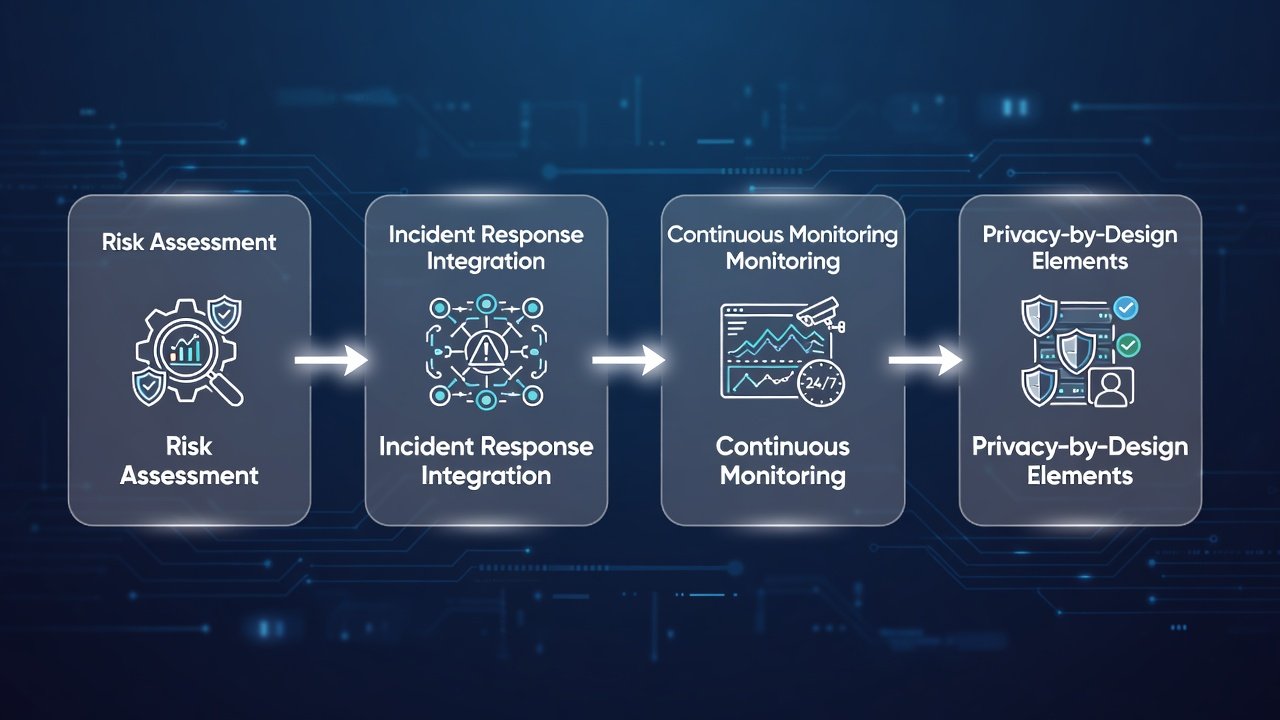
Building a strong framework starts with several interconnected elements. Risk assessment forms the foundation, involving thorough identification of assets, threats, and vulnerabilities. Modern assessments incorporate privacy impact analyses to evaluate how data flows might expose personal information during a cyber event. Incident response integration ensures that privacy considerations are embedded in every phase of handling breaches, from initial detection to post-incident notification and recovery. Continuous monitoring provides real-time visibility into systems, allowing for immediate detection of anomalies that could compromise data privacy.
Additional components include governance structures that define roles across security and legal teams, as well as recovery planning that prioritizes restoration of privacy-critical functions. These elements work together to create a holistic defense. For example, when combined with zero-trust architectures, they limit lateral movement by attackers while enforcing data access controls aligned with privacy regulations.
Step-by-Step Guide to Developing Your Framework
- Conduct an initial gap analysis comparing current practices against 2026 standards from sources like NIST Cybersecurity Framework updates.
- Map all data processing activities to identify privacy touchpoints and classify sensitive information.
- Design integrated policies that align security controls with privacy-by-design principles, including data minimization rules.
- Implement tools for automated monitoring and response, such as SIEM platforms integrated with privacy dashboards.
- Test the framework through tabletop exercises and simulations that include privacy breach scenarios.
- Establish metrics for ongoing evaluation and improvement, focusing on recovery time objectives and compliance audit scores.
- Train staff regularly and update the framework based on threat intelligence feeds.
Following these steps helps organizations create adaptable frameworks tailored to their industry needs. Each phase should involve cross-functional collaboration between IT, legal, and compliance departments to avoid siloed decisions.
Comparing Traditional Security Approaches with Resilience-Focused Models
Traditional cybersecurity often emphasizes perimeter defense and reactive measures, which can leave gaps in privacy protection during incidents. These models focus on preventing intrusions but struggle with rapid recovery or regulatory reporting after a breach. In contrast, resilience-focused models prioritize adaptability, recovery speed, and privacy integration from the outset. They incorporate concepts like redundancy, automated failover, and privacy-preserving technologies such as homomorphic encryption.
This shift reduces regulatory risks and builds stakeholder trust by treating data protection as a core resilience pillar rather than an add-on. Organizations adopting resilience models report faster incident resolution and lower long-term costs associated with fines and reputational damage. Key differences appear in areas like threat modeling, where resilience approaches include privacy threat vectors such as unauthorized data exfiltration.
Real-World Examples from Key Industries
In the healthcare sector, hospitals have adopted integrated frameworks to safeguard patient records against ransomware while meeting privacy mandates. For instance, facilities using continuous monitoring detected anomalies early, enabling swift isolation of affected systems without widespread data exposure. Financial institutions use continuous monitoring to detect insider threats that could violate data regulations, often combining behavioral analytics with encryption protocols. Retail companies facing supply chain hacks have demonstrated how privacy-by-design reduces breach impacts, turning potential disasters into manageable events through pre-planned data segmentation strategies.
Manufacturing firms have also benefited by embedding resilience into IoT networks, ensuring that production data remains private even during distributed denial-of-service attacks. These examples highlight the value of proactive integration across sectors facing evolving hacks.
Actionable Tips for Implementing Privacy-by-Design Tools
Privacy-by-design requires embedding protections into systems from the start. Use encryption tools for data at rest and in transit, adopt anonymization techniques during analytics, and leverage consent management platforms. Regular audits with automated software help maintain compliance. Organizations should train teams on these tools to ensure consistent application across departments. Consider integrating open-source privacy libraries with existing security stacks and conducting quarterly privacy impact assessments. Avoid common pitfalls like over-collecting data by enforcing strict access policies and logging all data processing activities for audit trails.
Emerging Threats and Forward-Looking Strategies for 2026
Threats in 2026 include advanced AI-generated phishing and quantum computing risks to encryption standards. Forward-looking strategies involve adopting post-quantum cryptography and using machine learning for anomaly detection that respects privacy through federated learning approaches. Organizations should monitor updates from authoritative sources and participate in information-sharing networks to stay ahead of attackers. Implementing these strategies involves phased rollouts, starting with pilot programs in high-risk areas.
Metrics for Success and Continuous Improvement
Measure framework effectiveness through key performance indicators such as mean time to detect, mean time to recover, and percentage of incidents involving privacy data. Regular reviews against frameworks from NIST and ISO ensure alignment with best practices. Feedback loops from incident post-mortems drive iterative improvements, creating a living framework that evolves with the threat landscape.
FAQs on Compliance Challenges
How do frameworks address evolving regulations like GDPR updates?
They incorporate flexible modules that adapt to new requirements through regular policy reviews and integration with official guidance from bodies such as the National Institute of Standards and Technology.
What common mistakes occur during implementation?
Overlooking privacy in incident response planning often leads to extended downtime and fines. Ensure cross-functional teams collaborate early to map all data flows before deployment.
How can small businesses start without overwhelming resources?
Begin with scalable cloud-based monitoring solutions and prioritize high-risk areas identified in initial assessments, scaling gradually as maturity increases.
What role does AI play in these integrated frameworks?
AI enhances detection while privacy-preserving techniques like differential privacy prevent misuse of personal data during analysis.
Conclusion
Adopting 2026 cyber resilience frameworks that integrate security and privacy positions organizations to thrive amid threats. By focusing on practical development, comparisons, examples, and tools, businesses can proactively defend against breaches and regulatory challenges for long-term success. Explore resources from CISA and ENISA to begin your journey today and build a resilient future.

No comments yet. Be the first!