 NeoBit Daily
Introduction to AI-Powered Time Series Forecasting
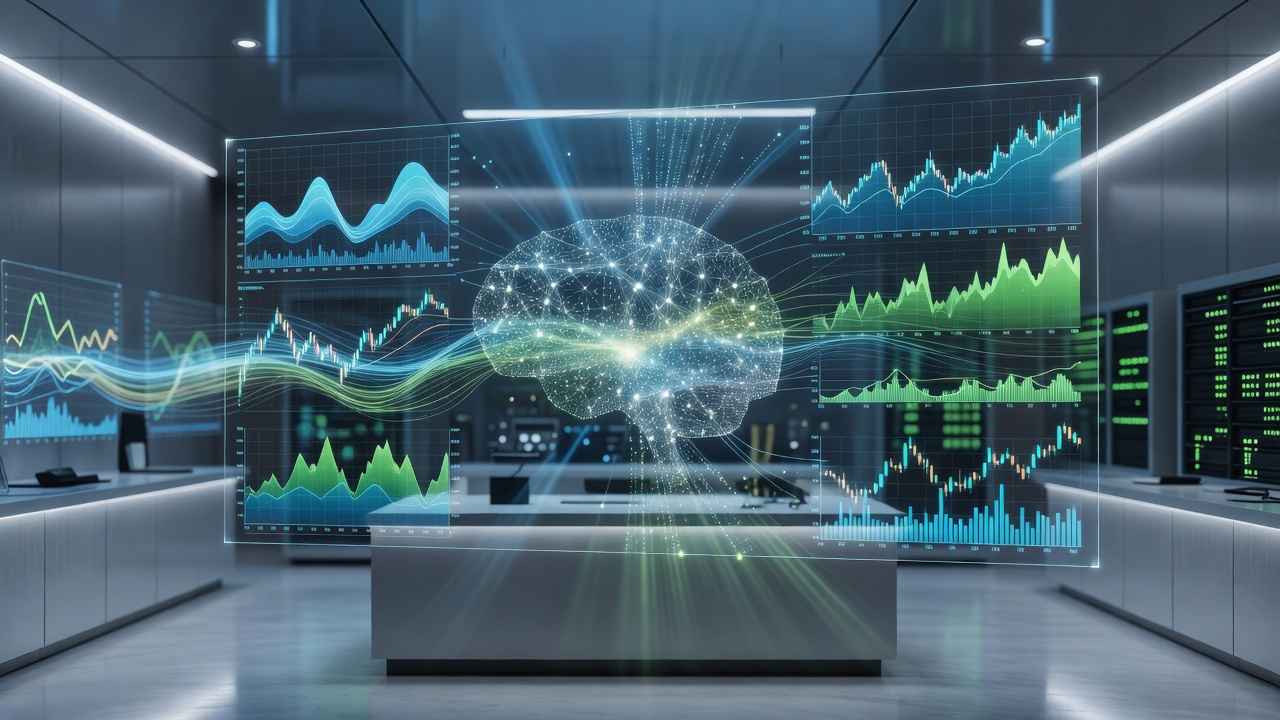
Time series forecasting remains a critical capability in machine learning, especially for industries that rely on accurate predictions of future trends based on historical data. In 2026, AI tools have evolved to handle complex patterns, seasonality, and external factors more effectively than ever before. This guide provides intermediate practitioners with actionable steps to integrate these tools into their workflows, drawing on emerging algorithms and datasets. Whether you work in finance predicting stock movements or supply chain optimizing inventory, mastering these techniques can significantly boost precision and efficiency. The rapid advancement of transformer architectures and automated machine learning platforms means practitioners must stay updated to maintain competitive edges in dynamic markets.
Data Ingestion Strategies for Modern Forecasting Pipelines
Effective forecasting begins with robust data ingestion. Start by connecting to APIs or databases that provide real-time and historical time series data. Tools like Apache Kafka or AWS Kinesis integrate seamlessly with AI frameworks to stream data continuously. For practitioners, consider using libraries such as Pandas in Python combined with AI-assisted validation to detect anomalies during ingestion. Emerging datasets in 2026 include enhanced climate and economic indicators from sources like the World Bank. Always validate data quality early by checking for missing values, outliers, and consistency across timestamps. In large-scale environments, implement incremental loading to handle petabyte-scale repositories without overwhelming memory resources. This foundational step prevents downstream errors that could derail even the most sophisticated models.
Feature Engineering with AI Assistance
AI now automates much of the feature engineering process. Use tools like Featuretools or AutoGluon to generate lag features, rolling statistics, and Fourier transforms automatically. This step is vital for capturing temporal dependencies. In practice, apply these to finance datasets where external variables like interest rates influence outcomes. AI assistance reduces manual effort while improving model robustness. Consider creating interaction features between multiple series or incorporating calendar events for better seasonality handling. Advanced practitioners often combine automated feature generation with domain-specific knowledge to refine outputs further. For instance, in supply chain scenarios, engineering features around lead times and supplier reliability can dramatically improve forecast accuracy over baseline approaches.
Model Training Pipelines and Emerging Algorithms
Build training pipelines using frameworks such as TensorFlow or PyTorch. Incorporate recent advancements like transformer-based models for time series, which outperform traditional ARIMA in many scenarios. Compare side-by-side: Prophet for quick baselines versus N-BEATS or DeepAR for complex multivariate data. Train on GPU clusters for scalability, monitoring with MLflow to track experiments. Start by splitting your dataset using time-based splits to preserve chronological order. Experiment with hyperparameter tuning via Optuna or Ray Tune to optimize learning rates and network depths. Emerging 2026 algorithms emphasize probabilistic forecasting to quantify uncertainty, allowing better risk management in applications like portfolio optimization. Document every pipeline step for reproducibility and auditability in regulated industries.
Performance Benchmarking Techniques
Benchmark models using metrics like MAE, RMSE, and MAPE. Include cross-validation tailored for time series, such as walk-forward validation, to avoid data leakage. Real-world examples show finance models achieving lower error rates with hybrid AI approaches compared to classical methods. Create dashboards that visualize residual plots and error distributions over time to identify systematic biases. Test models across multiple horizons to ensure stability from short-term daily forecasts to long-term quarterly projections. Incorporate statistical tests like Diebold-Mariano to compare competing models rigorously. This benchmarking phase reveals whether added complexity from deep learning justifies the computational cost.
Deployment Strategies for Production Environments
Deploy models via containerization with Docker and orchestration using Kubernetes. Integrate with cloud services for real-time inference, ensuring low latency in supply chain applications. Monitor drift with tools like Evidently AI and retrain periodically based on new data patterns. Set up automated alerting for performance degradation and implement A/B testing frameworks to evaluate model updates safely. Consider edge deployment for scenarios requiring immediate predictions without cloud round-trips. Scalability planning should account for traffic spikes during market events or holiday seasons in retail supply chains.
Practical Examples from Finance and Supply Chain
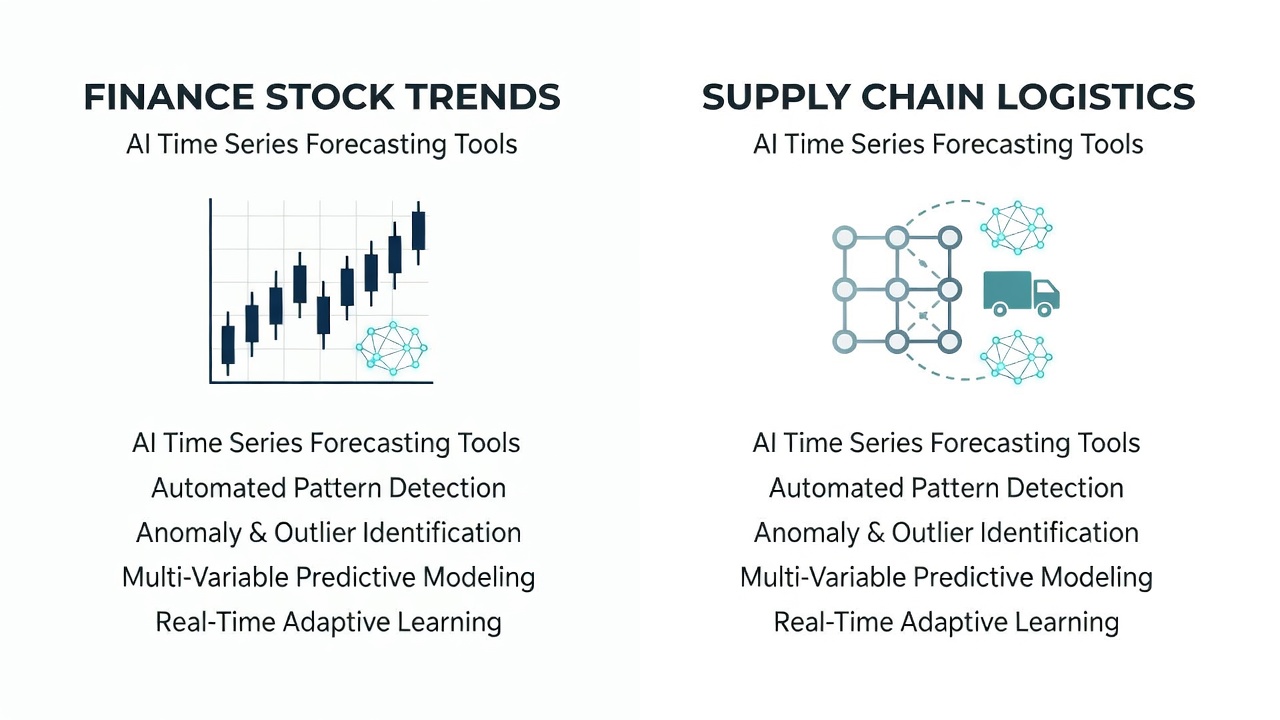
In finance, forecasting cryptocurrency prices using LSTM variants with sentiment data from social platforms can yield actionable trading signals. Practitioners preprocess price and volume series, then enrich them with NLP-derived features before feeding into ensemble models. In supply chain contexts, predicting demand fluctuations with probabilistic forecasting minimizes stockouts while reducing excess inventory costs. A concrete example involves using DeepAR on weekly sales data combined with promotional calendars and weather variables to generate 95% prediction intervals. These intervals help logistics teams plan buffer stock more intelligently. Both sectors benefit from continuous feedback loops where actual outcomes retrain models weekly.
Side-by-Side Tool Comparisons
Key tools include Amazon Forecast for seamless AWS integration with built-in algorithms suited for quick enterprise adoption. Google Vertex AI excels with BigQuery connectivity for handling massive datasets and offers strong AutoML capabilities. Azure ML provides robust enterprise features including governance tools and hybrid cloud support. Open-source options like GluonTS from TensorFlow and the PyTorch Forecasting library offer flexibility for custom research. Evaluate each based on data volume, team expertise, and integration needs. For teams already invested in a specific cloud provider, native services often reduce operational overhead substantially.
Common Mistakes to Avoid
Many practitioners overlook the importance of proper temporal cross-validation, leading to overly optimistic performance estimates. Another frequent error involves ignoring concept drift when external conditions change rapidly. Always version datasets and models together to trace issues back to root causes. Avoid over-engineering features without validating their predictive power through ablation studies.
FAQ: Addressing Accuracy Pitfalls and Scalability Issues
How to improve accuracy when data is noisy? Apply denoising techniques such as wavelet transforms and ensemble methods that average multiple model outputs. What about scalability for large datasets? Leverage distributed training frameworks and efficient data formats like Parquet stored in data lakes. Common pitfalls? Overfitting to historical trends without accounting for regime shifts caused by economic events or policy changes. How do emerging algorithms handle multivariate inputs? Modern transformers process multiple related series jointly to capture cross-correlations effectively. What deployment challenges arise in real-time settings? Latency, model size, and update frequency require careful balancing through quantization and caching strategies.
Conclusion
By following these steps, practitioners can leverage 2026 AI tools to create reliable forecasting systems that deliver measurable business value in dynamic environments. Continuous learning and experimentation remain essential as the field evolves rapidly.
No comments yet. Be the first!