 NeoBit Daily
Introduction
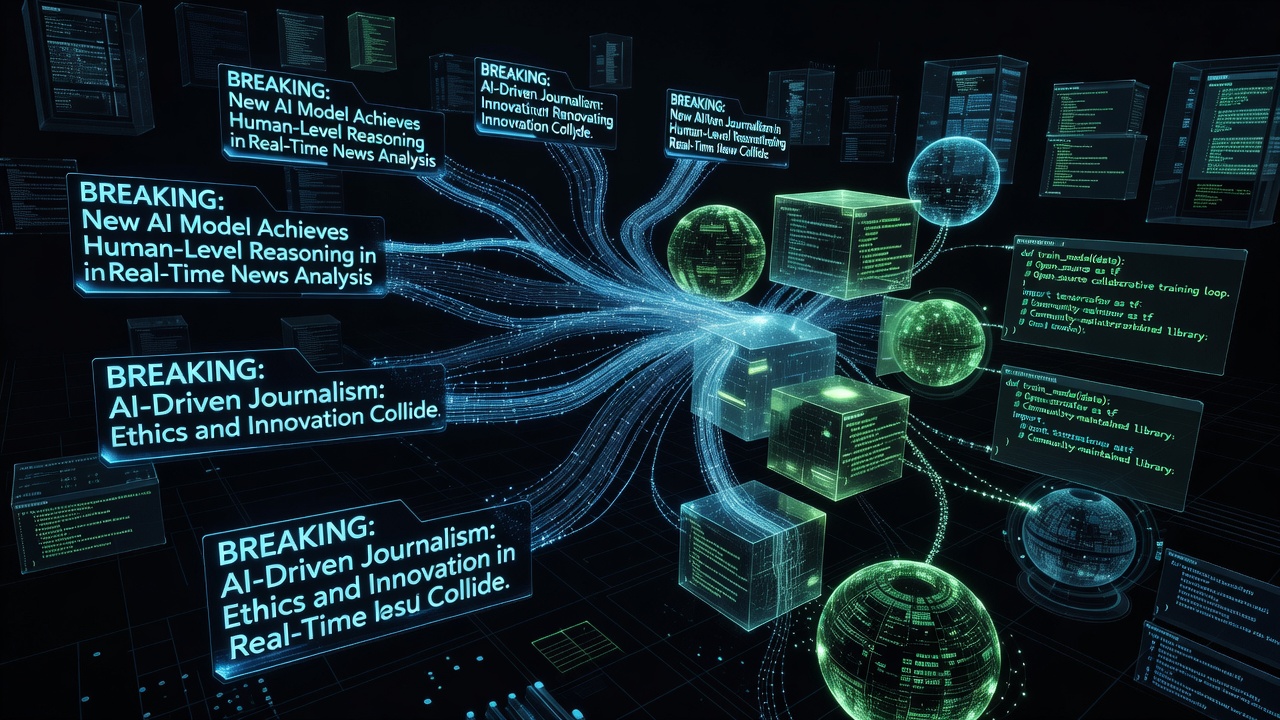
In 2026, the rapid pace of artificial intelligence developments continues to reshape how machine learning practitioners collaborate. Timely AI news acts as a catalyst, sparking interest in open-source projects and encouraging global contributions that advance scalable solutions. This article examines the mechanisms behind this influence, drawing on recent trends to provide actionable insights for staying ahead while building robust machine learning tools. The interplay between breaking research announcements and community-driven repositories creates opportunities for innovation that individual developers could not achieve alone.
The Role of AI News in Driving Collaborations
AI news outlets and research announcements often highlight breakthroughs that inspire developers to fork repositories or initiate new integrations. For instance, reports on advanced model architectures prompt immediate community responses on platforms like GitHub. This dynamic fosters innovation by aligning individual efforts with emerging needs, creating feedback loops that accelerate tool development. News coverage of efficiency gains in large language models has repeatedly led to coordinated efforts to optimize training pipelines across multiple frameworks.
Practitioners who monitor sources such as arXiv can identify gaps in existing libraries and propose enhancements. The result is a vibrant ecosystem where news directly translates into collaborative code contributions. Beyond simple awareness, AI news provides context on real-world deployment challenges, motivating contributors to address issues like bias mitigation or energy consumption that might otherwise remain overlooked in isolated projects.
Case Studies of Successful Open-Source AI Tools
One notable example from early 2026 involves a news story about efficient transformer optimizations that led to the rapid growth of a community-driven library integrating these techniques with popular frameworks. Contributors worldwide added support for new hardware accelerators, resulting in widespread adoption across research and industry teams. The project saw hundreds of pull requests within weeks, demonstrating how targeted news can mobilize expertise.
Another case highlights how coverage of multimodal AI advancements prompted integrations between vision and language models on Hugging Face. Teams collaborated on datasets and evaluation benchmarks, producing tools that addressed real-world scalability challenges. A third example emerged from reports on federated learning breakthroughs, inspiring a new repository focused on privacy-preserving training methods that now includes contributions from over 50 organizations.

Step-by-Step Guide for Contributing to ML Repositories
Beginners can leverage AI news effectively by following these steps in detail. First, identify relevant news on emerging techniques and locate associated open-source repositories by searching for keywords from the announcement on major hosting sites. Second, fork the project and set up a local development environment matching the project's requirements, including installing dependencies and configuring testing frameworks to ensure reproducibility. Third, review issues tagged for newcomers and propose solutions tied to the news insights, starting with small documentation updates before moving to code changes. Fourth, submit pull requests with clear documentation explaining the news-driven improvements, including benchmarks that demonstrate performance gains. Fifth, engage in discussions to refine contributions based on community feedback, iterating on code until it meets project standards.
This structured approach ensures contributions are both timely and impactful. Additional tips include maintaining a changelog that references the original news source and participating in related community calls to build relationships with maintainers.
Comparisons of Emerging Platforms for Collaboration
Key platforms differ in their support for news-inspired ML work. GitHub excels in version control and issue tracking, while specialized hubs offer built-in model hosting and automated evaluation tools. TensorFlow's ecosystem at TensorFlow.org provides robust tutorials for integration, contrasting with more flexible but less structured alternatives like PyTorch hubs. Practitioners should evaluate based on project scale and community activity levels, considering factors such as ease of model sharing, built-in CI/CD support, and integration with popular cloud providers. Emerging platforms in 2026 also emphasize real-time collaboration features that align well with fast-moving news cycles.
Strategies for ML Practitioners to Leverage News
To maximize opportunities, set up alerts for AI developments and maintain a personal backlog of potential contributions. Join discussion forums tied to breaking stories and participate in hackathons focused on recent announcements. These tactics help transform passive consumption into active innovation. Additional strategies include forming small working groups around specific news topics, documenting lessons learned in public wikis, and using version control best practices to track how news insights evolve into production-ready features.
Common Mistakes to Avoid
When acting on AI news, practitioners often rush implementations without sufficient testing, leading to unstable code. Another frequent error is ignoring existing community guidelines, which can result in rejected contributions. Overlooking licensing implications or failing to credit original news sources also undermines collaborative efforts. By reviewing these pitfalls in advance, contributors can maintain high standards and foster sustainable project growth.
FAQ
How can beginners overcome barriers to contributing?
Start with documentation reviews and small bug fixes inspired by news summaries before tackling complex features, and seek mentorship through project discussion threads.
What tools help track relevant AI news?
Use curated newsletters and academic feeds to filter high-impact stories efficiently, combined with RSS readers focused on key research domains.
Are there risks in rapid news-driven development?
Yes, hasty integrations can introduce instability; always prioritize testing and peer review to ensure reliability.
How do news cycles affect long-term project maintenance?
Projects tied to specific announcements may see initial surges followed by maintenance needs, requiring dedicated contributors to sustain momentum.
Conclusion
By connecting AI news with open-source efforts, ML communities in 2026 are building more robust and innovative solutions. Applying the strategies outlined here positions practitioners to contribute meaningfully and advance the field collectively while navigating the fast-evolving landscape of machine learning advancements.


No comments yet. Be the first!