 NeoBit Daily
Breaking Announcements: Humanoid Robots Enter Manufacturing
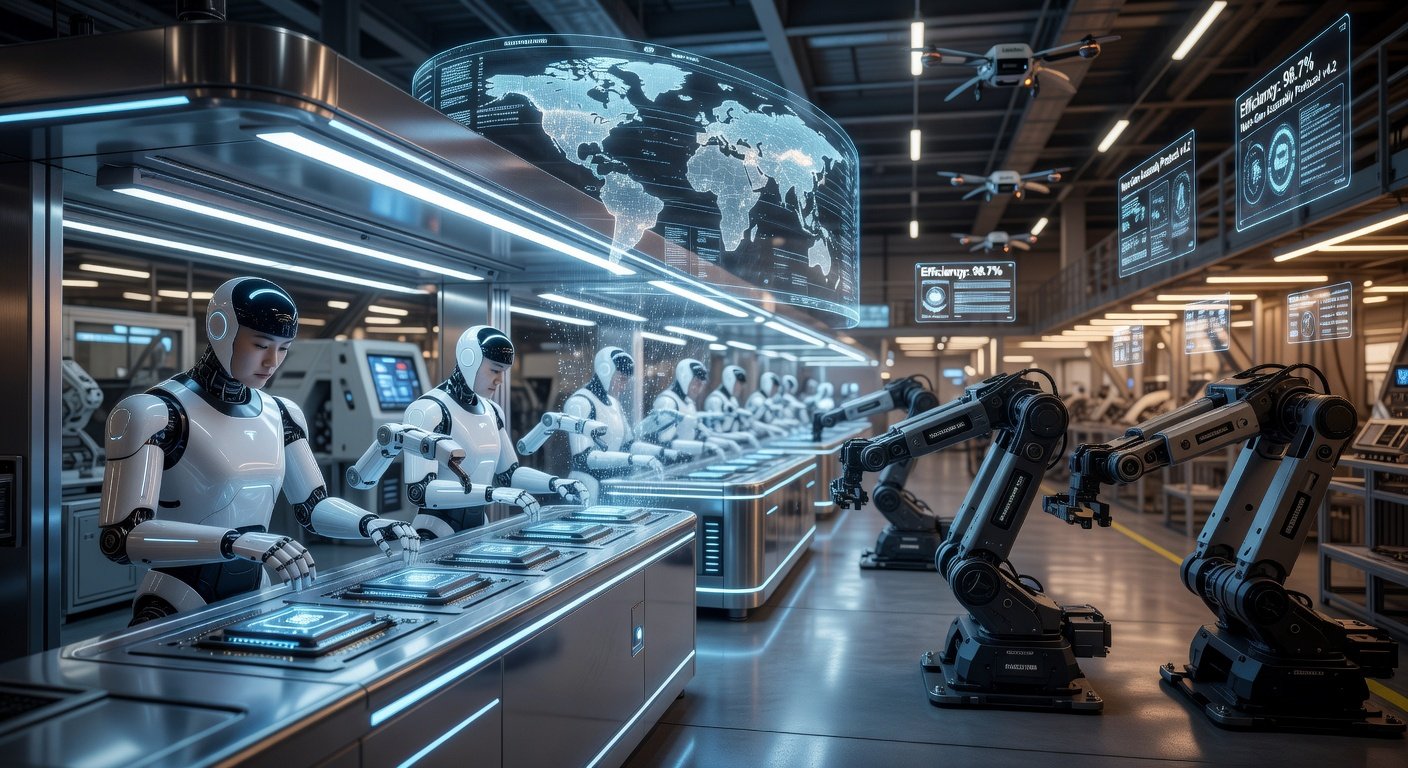
Exciting developments are reshaping the industrial landscape as Tesla and Boston Dynamics unveil plans to deploy their humanoid robots—Optimus and Atlas—in manufacturing plants across Asia and Europe. These announcements signal a pivotal shift toward automation, promising unprecedented efficiency and productivity boosts. Tesla's Optimus, designed for versatile tasks, and Boston Dynamics' agile Atlas are set to tackle repetitive, labor-intensive jobs in automotive, electronics, and consumer goods sectors.
The rollout begins in key hubs like Shanghai, Tokyo, and German industrial zones, with initial deployments targeting high-volume assembly lines. Industry watchers predict this could accelerate global adoption, challenging traditional workforce models.
AI and Hardware Advancements Driving 50% Efficiency Gains
At the core of these deployments are cutting-edge AI and hardware innovations. Tesla's Optimus leverages the company's Full Self-Driving (FSD) neural networks, enabling real-time learning and adaptation to complex environments. Equipped with advanced sensors, dexterous hands, and a robust battery system, Optimus can handle precise manipulations like welding, picking, and packing at speeds surpassing human capabilities.
Boston Dynamics' Atlas, meanwhile, boasts dynamic balance and strength derived from years of DARPA-funded research. Its latest iteration features reinforcement learning algorithms that allow it to navigate cluttered factory floors and perform acrobatic maneuvers for maintenance tasks.
- AI Enhancements: End-to-end neural networks for vision, planning, and control, reducing latency by 70%.
- Hardware Upgrades: Lighter actuators, higher torque motors, and modular designs for easy repairs.
- Efficiency Metrics: Pilot tests report 50% faster cycle times and 40% less downtime compared to legacy automation.
These advancements aren't just incremental; they're transformative. For instance, Optimus can autonomously optimize workflows using fleet learning from thousands of deployed units, continuously improving performance across sites.
Industry Leader Reactions
Reactions from manufacturing giants have been overwhelmingly positive, tempered with strategic caution. Foxconn, a major Apple supplier in Asia, hailed the move as a "game-changer for scalability." Volkswagen's CEO praised the potential for "reshoring production without workforce inflation."
However, not all voices are unanimous. Labor unions in Europe express concerns over job displacement, while competitors like ABB and Fanuc are accelerating their own humanoid prototypes. Elon Musk tweeted, "Optimus will do anything you want—safely," underscoring Tesla's ambitious vision. Boston Dynamics' leadership emphasized ethical AI deployment in partnership with Boston Dynamics.
Projections for Global Workforce Shifts by 2030
Analysts forecast seismic changes by 2030. McKinsey Global Institute projects that humanoid robots could automate 30% of manufacturing tasks worldwide, displacing 20 million jobs but creating 15 million in robot maintenance, programming, and oversight roles. Asia, with its dense factory ecosystems, stands to gain the most, potentially boosting GDP by 2-3% through hyper-efficient production.
Europe faces a dual challenge: leveraging robots to combat labor shortages while navigating strict labor laws. The World Economic Forum predicts a net positive, with reskilling programs mitigating transitions. By 2030, experts envision mixed human-robot teams as the norm, enhancing safety in hazardous environments.
Check out projections from the World Economic Forum for deeper insights into the future of work.
Real-World Case Studies from Early Adopters
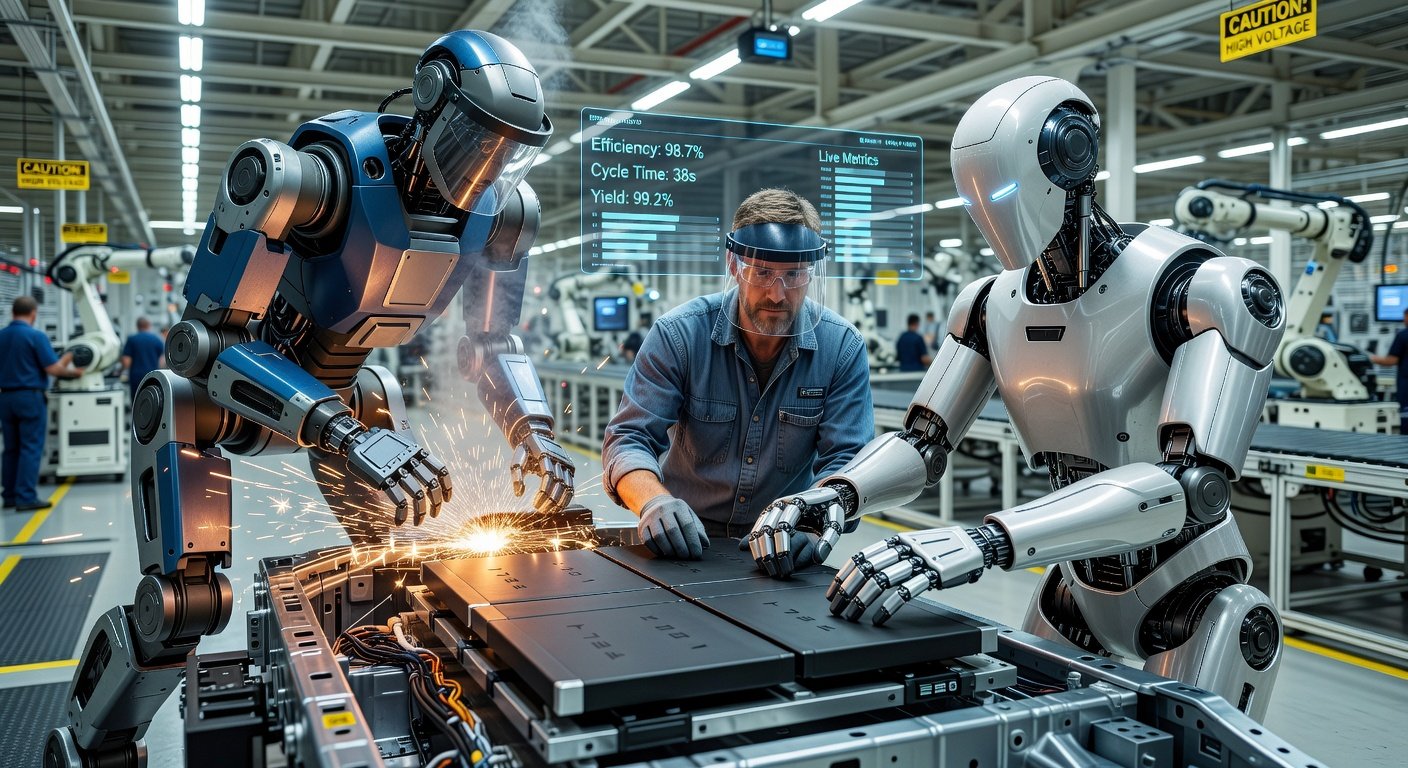
Early pilots provide compelling evidence. In Shanghai, Tesla partnered with a BYD facility where Optimus robots assembled battery packs, achieving 55% efficiency gains in the first month. Error rates dropped from 2% to 0.3%, with robots self-correcting via AI feedback loops.
In Germany, BMW tested Atlas robots for body-in-white assembly. The bots handled heavy lifting and precision spotting, reducing injury claims by 60% and speeding lines by 45%. Toyota's Tokyo plant reported similar wins, integrating Optimus for just-in-time inventory tasks.
These cases highlight scalability: initial CAPEX of $150K per unit offsets in under a year through labor savings and uptime.
Potential Regulatory Hurdles
Despite the hype, regulatory roadblocks loom. Europe's AI Act classifies high-risk systems like humanoids, mandating transparency and human oversight. Asia's varying standards—from China's supportive policies to Japan's safety certifications—could fragment adoption.
Key challenges include:
- Safety Standards: Ensuring robots don't pose risks in shared spaces, per ISO 10218 guidelines.
- Data Privacy: AI training on factory data raises GDPR concerns in Europe.
- Labor Laws: Union demands for "robot taxes" or retraining mandates.
Tesla advocates for global harmonization, drawing parallels to automotive regulations. For official updates, visit Tesla.
The Road Ahead: A Robotic Manufacturing Renaissance
As Tesla Optimus and Boston Dynamics' Atlas roll out, manufacturing enters a new era. The promised 50% efficiency gains, powered by AI wizardry and robust hardware, position these humanoids as indispensable. While workforce shifts and regulations present hurdles, early adopters' successes pave the way.
By 2030, factories could hum with human-robot symbiosis, driving innovation and economic growth. Stakeholders must collaborate on ethical frameworks to ensure benefits are widespread. Stay tuned—this is just the beginning of the humanoid revolution.
No comments yet. Be the first!