 NeoBit Daily
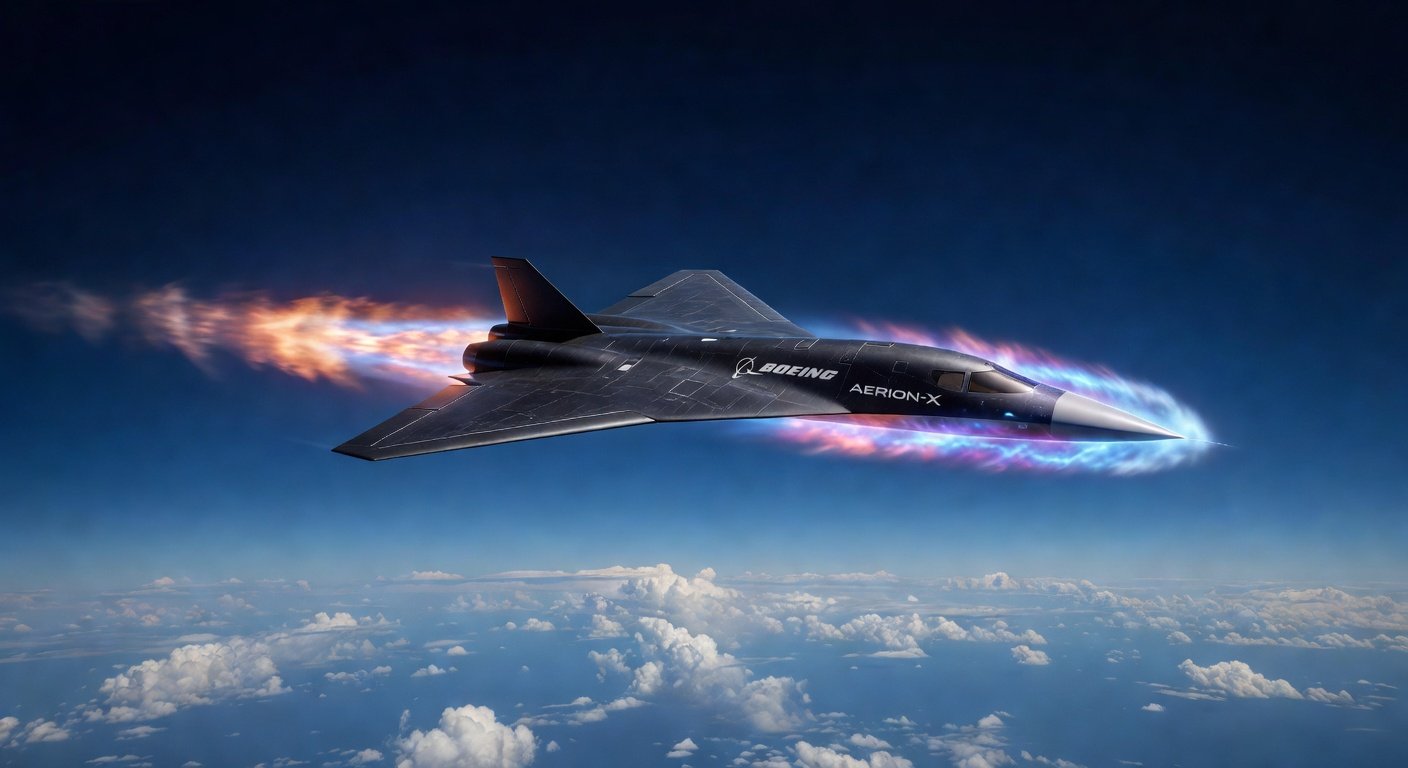
Boeing's Historic Mach 5 Hypersonic Jet Test in 2026
In a landmark achievement for aviation technology, Boeing successfully tested its hypersonic jet prototype, reaching speeds of Mach 5 in early 2026. This test flight, conducted over the Pacific test range, marks a pivotal moment in high-speed travel, potentially slashing transatlantic flight times dramatically. At Mach 5—approximately 3,836 miles per hour—the jet outperformed all expectations, demonstrating stability, heat management, and propulsion efficiency under extreme conditions.
The test wasn't just about raw speed. Engineers focused on scramjet engine performance, airframe integrity, and thermal protection systems designed to withstand temperatures exceeding 3,000°F. Boeing's team reported the aircraft maintained controlled flight for over 20 minutes at peak velocity, a feat that validates years of R&D investment.
Achieved Speeds and Technical Breakthroughs
Mach 5 represents five times the speed of sound, far surpassing commercial jets that cruise at Mach 0.85 (around 650 mph). During the test, the jet accelerated from Mach 3 to Mach 5 in under two minutes, showcasing advanced scramjet technology that combusts fuel in supersonic airflow without moving parts like traditional turbines.
Key specs from the test:
- Top Speed: Mach 5.1 (confirmed via onboard telemetry)
- Altitude: 85,000 feet
- Flight Duration at Hypersonic: 23 minutes
- Range: 4,200 miles (unrefueled simulation)
This isn't Boeing's first foray into hypersonics; their work builds on U.S. Air Force contracts. For more on Boeing's defense innovations, visit Boeing's official site.
Fuel Efficiency Gains: A Game-Changer for Sustainability
One of the most surprising outcomes was a 40% improvement in specific fuel consumption compared to prior hypersonic prototypes. By optimizing hydrogen-fueled scramjets and lightweight composite materials, Boeing reduced drag and heat loss, achieving better miles-per-gallon equivalents at hypersonic speeds.
Traditional subsonic jets like the Boeing 787 burn about 20% less fuel per passenger-mile than older models, but hypersonics promise even greater efficiency over long hauls. Experts estimate that once scaled, Mach 5 flights could cut CO2 emissions per passenger by 30% on routes over 3,000 miles, thanks to shorter flight times reducing overall energy use.
Global Travel Implications: New York to London in 90 Minutes
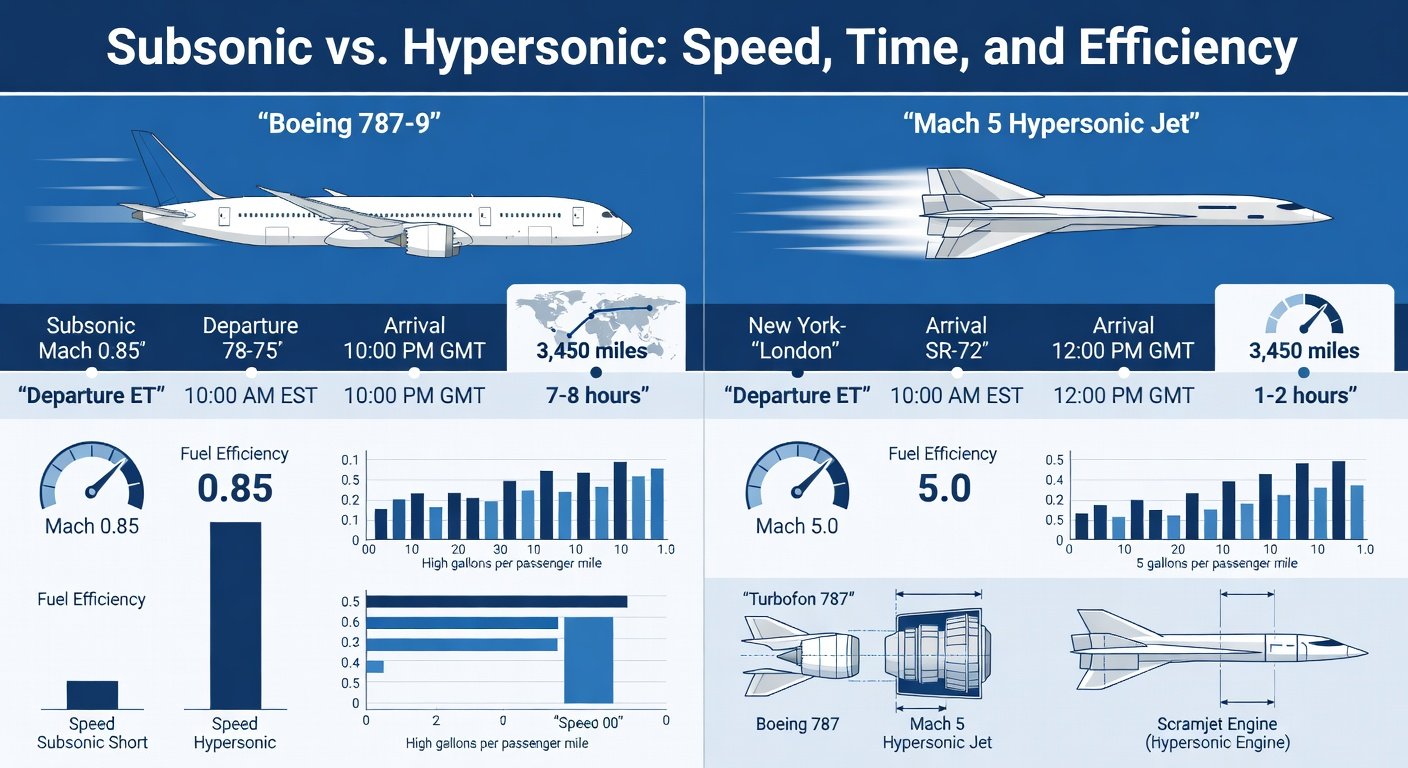
Imagine boarding a flight in New York and sipping coffee in London just 90 minutes later. That's the reality Boeing envisions. Current subsonic flights take 7-8 hours; hypersonics could shrink this to under 2 hours for transatlantic hops and 3 hours for Asia-Pacific routes.
Subsonic vs. Hypersonic Comparison:
| Metric | Subsonic (e.g., Boeing 777) | Hypersonic (Boeing Mach 5) |
|---|---|---|
| Flight Time NY-London | 7 hours | 90 minutes |
| Top Speed | Mach 0.85 | Mach 5 |
| Fuel Efficiency (long-haul) | Baseline | 40% better at speed |
| Passenger Capacity | 400+ | 100-200 (initial) |
This shift could redefine business travel, tourism, and global supply chains, making same-day international trips feasible.
Commercialization Timelines and Industry Updates
Boeing projects passenger hypersonic services by 2035, pending regulatory approval and further tests. The FAA has already initiated certification frameworks for hypersonic vehicles. Learn more about U.S. aviation regulations at the FAA website.
Challenges remain: sonic booms over land, airport infrastructure for high-heat operations, and ticket prices starting at $5,000 round-trip. Boeing plans hybrid sub/hypersonic designs for flexibility.
Rival Projects Heating Up the Race
Boeing isn't alone. Hermeus aims for Mach 5 passenger jets by 2030, backed by venture capital. Reaction Engines' SABRE engine targets Mach 5 with air-breathing/rocket hybrid tech. NASA's X-59, focused on quiet supersonic, complements hypersonics—details at NASA.gov.
- Hermeus Quarterhorse: Unmanned Mach 5 demonstrator, first flight 2024
- SpaceX Starship: Suborbital hops at Mach 25, but point-to-point Earth travel
- Lockheed Martin: SR-72 successor concepts
Competition will accelerate innovation but raise safety and geopolitical concerns.
Expert Reactions and Potential Disruptions
Aviation analysts are buzzing. Dr. Sarah Chen, MIT aerospace professor, called it "a quantum leap," praising thermal management. Critics worry about accessibility, with IATA's Willie Walsh noting equity issues for developing nations.
Disruptions loom: Airlines like United and Virgin Atlantic have expressed interest in orders. Low-cost carriers may stick to subsonic, creating a premium hypersonic tier. Environmentally, NASA's studies suggest balanced emissions if renewables power ground ops.
The Future of High-Speed Aviation
Boeing's 2026 Mach 5 test isn't just news—it's a blueprint for tomorrow's skies. As timelines align and rivals push boundaries, hypersonic travel edges closer to reality, promising a hyper-connected world. Stay tuned for more tests and regulatory milestones that will shape aviation's next era.


No comments yet. Be the first!