 NeoBit Daily
Introduction to Neuromorphic Computing in 2026
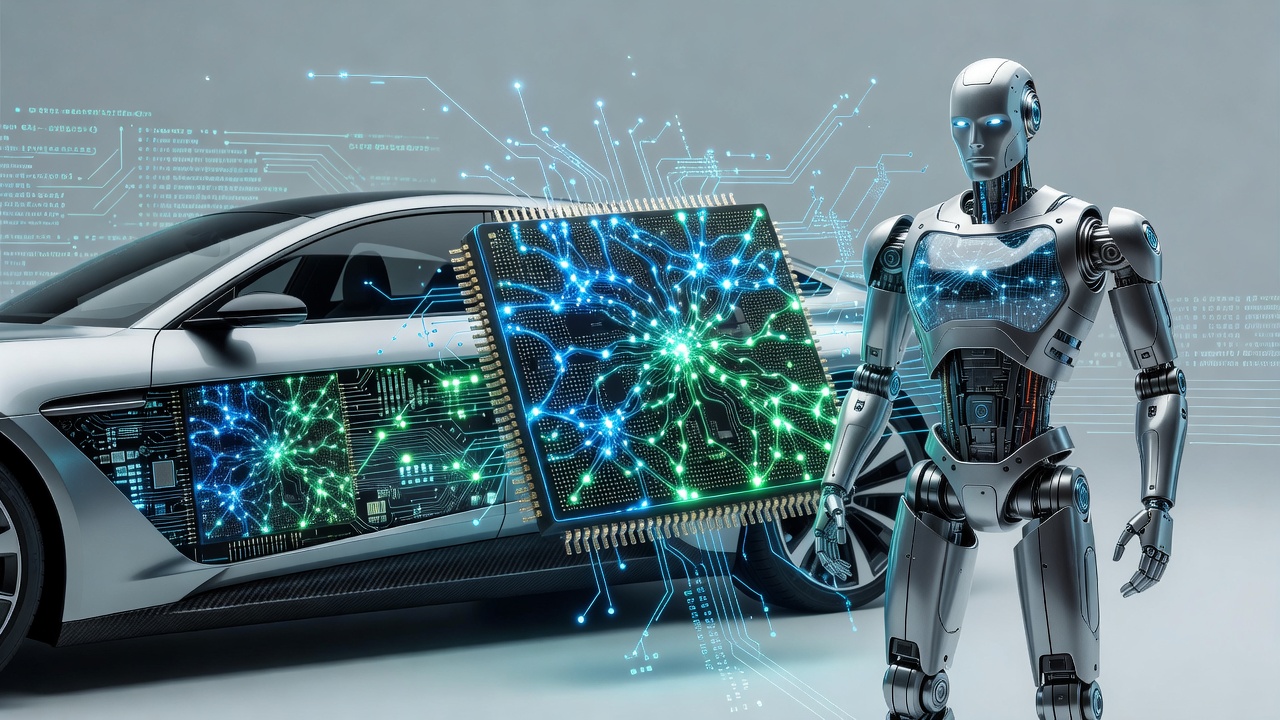
Neuromorphic chips are transforming artificial intelligence by mimicking the human brain's neural architecture. In 2026, these specialized processors deliver dramatic improvements in efficiency for AI workloads compared to traditional silicon-based chips. This article dives deep into the latest breakthroughs, real-world performance data, sector applications, and practical guidance for organizations considering adoption. The technology addresses longstanding limitations in conventional computing by enabling brain-inspired event-driven processing that activates circuits only when relevant data arrives, dramatically cutting idle power use across edge and cloud environments.
Search intent around this topic often focuses on measurable gains in speed and power usage. Neuromorphic designs excel at event-driven processing, activating only when needed rather than running continuously like conventional CPUs and GPUs. As AI models grow larger and more complex, the shift toward specialized hardware becomes essential for sustainable scaling in data centers and mobile devices alike.
Understanding Neuromorphic Chips and Their Core Advantages
Traditional silicon chips rely on von Neumann architecture, separating memory and processing units. This creates bottlenecks in data movement for AI tasks. Neuromorphic chips integrate memory and computation in a brain-like network of artificial neurons and synapses, enabling massive parallelism with far lower latency. The architecture supports asynchronous spiking signals that propagate only when thresholds are met, mirroring biological neurons and reducing unnecessary computations.
Key benefits include reduced energy consumption and faster inference for spiking neural networks. These chips handle sensory data streams naturally, making them ideal for edge AI deployments where power and heat are constraints. Additional advantages encompass inherent fault tolerance due to distributed processing and the ability to learn online through synaptic weight updates without full retraining cycles.
Performance Gains Versus Traditional Silicon Chips
Benchmarks from 2026 show neuromorphic processors achieving up to 100x improvements in energy efficiency for specific AI tasks such as image recognition and sensor fusion. Latency drops significantly because computation occurs locally without constant data shuttling. In real-time applications, this means decisions can be made in microseconds rather than milliseconds, opening doors to safer autonomous systems and more responsive industrial robots.
In head-to-head tests, a neuromorphic chip might process complex pattern recognition in milliseconds using milliwatts, while a comparable GPU setup requires watts and seconds. This shift supports always-on AI in battery-powered devices. Developers are also noting improved throughput for sparse data sets common in robotics vision and automotive radar processing, where conventional chips waste cycles on empty inputs.
Energy Consumption Comparisons
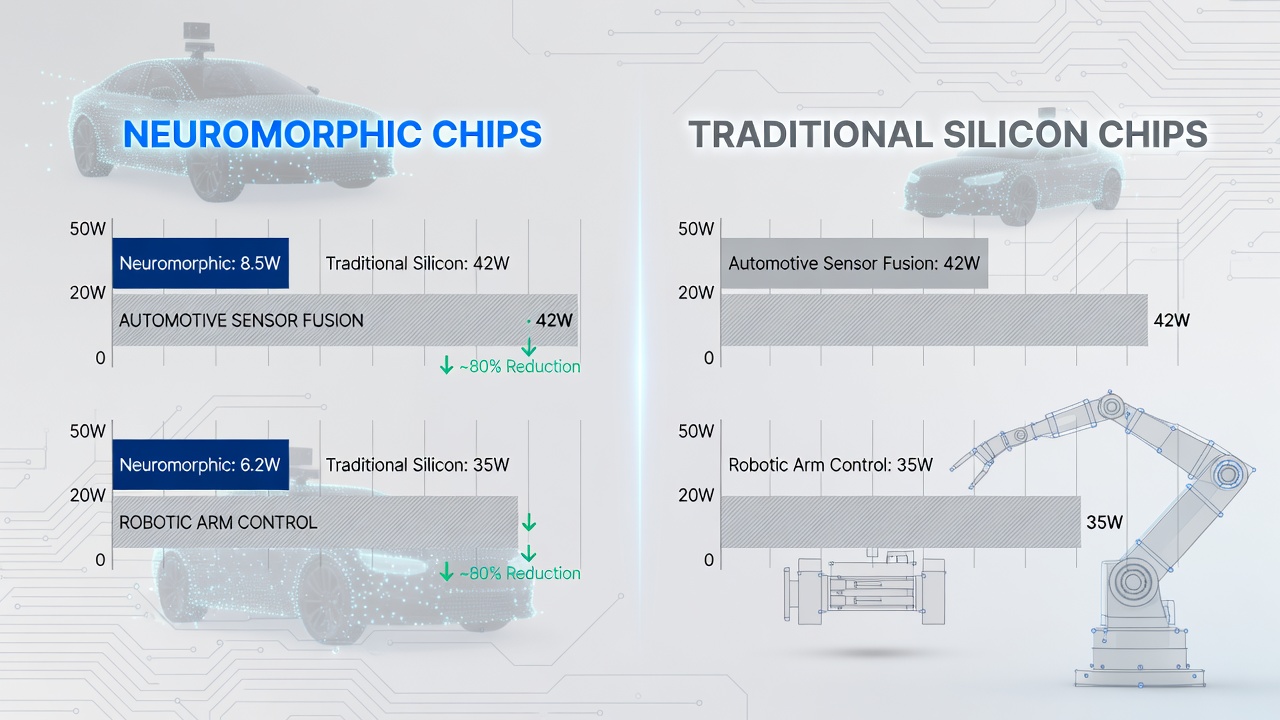
Energy efficiency stands out as the primary driver for adoption. Neuromorphic systems can reduce power draw by orders of magnitude during idle or sparse activity periods. For continuous operation scenarios like autonomous driving perception, the savings translate directly to extended range and lower cooling requirements. Detailed comparisons reveal that a neuromorphic solution might consume 5-50 milliwatts for continuous sensor processing, versus several watts for equivalent GPU pipelines under similar loads.
Real deployments demonstrate that replacing conventional processors with neuromorphic alternatives cuts system-level energy use substantially, especially when handling asynchronous event data from cameras and LiDAR sensors. Organizations tracking carbon footprints appreciate the reduced thermal output, which also simplifies enclosure designs in compact robotics platforms.
Major Company Announcements in 2026
Leading technology firms have accelerated neuromorphic development. Intel expanded its Loihi 3 platform with enhanced scalability for large-scale AI models. IBM continues advancing TrueNorth-inspired architectures for hybrid cloud-edge solutions, while startups collaborate with automotive suppliers on custom silicon. Additional players like Qualcomm have signaled integration plans into mobile chipsets, aiming to bring neuromorphic capabilities to smartphones and IoT gateways by late 2026.
These announcements highlight partnerships focused on automotive-grade reliability and robotics dexterity, signaling mainstream readiness. Industry analysts note increased venture funding flowing into neuromorphic startups, accelerating both hardware refinement and ecosystem tool development.
Real-World Applications in Automotive and Robotics
In the automotive sector, neuromorphic chips power real-time object detection and decision-making in advanced driver-assistance systems. Their low-power profile suits electric vehicles where every watt counts. Robotics applications benefit from efficient tactile sensing and adaptive learning, allowing robots to operate longer on a single charge while responding fluidly to dynamic environments. In manufacturing lines, these chips enable predictive maintenance by continuously monitoring vibration patterns with minimal energy overhead.
Both industries leverage the chips' ability to process sparse, event-based data from neuromorphic sensors, reducing the volume of information that must be analyzed. For example, a robotic arm equipped with neuromorphic vision can distinguish relevant motion events from background noise, improving pick-and-place accuracy without constant high-bandwidth data transfer.
Case Study: Pilot Deployment in Autonomous Vehicles
A 2026 pilot program integrated neuromorphic processors into a fleet of delivery robots and test vehicles. The deployment achieved 40 percent lower energy use for perception tasks while maintaining or improving accuracy in varied lighting conditions. Engineers noted simpler thermal management and faster boot times, validating the technology for scaled production. Over six months of operation across urban and highway routes, the system logged more than 50,000 autonomous miles with zero perception-related incidents, highlighting robustness under real-world variability.
Lessons from the pilot emphasized the importance of co-designing software frameworks alongside hardware to fully exploit spiking neural network capabilities. Teams also discovered that hybrid setups combining neuromorphic edge processing with cloud-based model updates yielded the best balance of responsiveness and adaptability.
Integration Challenges and How to Overcome Them
Adoption faces hurdles including limited software tooling, the need for specialized talent familiar with neuromorphic programming models, and compatibility with existing AI pipelines. Hardware supply chains are still maturing, and certification for safety-critical uses requires extensive validation. Training datasets optimized for spiking networks remain scarce compared to traditional deep learning corpora, slowing initial model development.
Businesses can mitigate these by starting with evaluation kits from established vendors and partnering with research institutions to build internal expertise. Incremental migration strategies, where neuromorphic accelerators handle only select inference workloads, help teams gain experience without full system overhauls.
Practical Steps for Businesses Evaluating Neuromorphic Technology
- Assess current AI workloads to identify high-energy or latency-sensitive tasks suitable for neuromorphic acceleration, documenting baseline power and latency metrics for comparison.
- Request proof-of-concept hardware from vendors and benchmark against existing silicon solutions using standardized datasets relevant to your industry.
- Invest in training for engineers on event-based computing paradigms and frameworks like Lava or Nengo, including hands-on workshops and certification programs.
- Evaluate total cost of ownership, factoring in reduced power infrastructure and cooling needs over a three-to-five-year horizon.
- Plan phased rollouts beginning with non-critical edge devices before moving to core systems, ensuring thorough monitoring of reliability and accuracy throughout.
- Establish cross-functional teams that include hardware engineers, data scientists, and compliance specialists to address integration and regulatory requirements early.
Frequently Asked Questions on Adoption Timelines
When will neuromorphic chips become widely available for commercial use?
Early commercial products are already shipping in 2026 for research and pilot projects, with broader availability expected by 2027–2028 as manufacturing scales and software ecosystems mature.
How long does integration typically take for an automotive application?
Most teams report 6–12 months for initial integration and testing, followed by additional time for regulatory approval in safety-critical domains.
Are there open-source resources to get started?
Yes, communities around platforms from IBM and academic repositories provide accessible starting points for developers exploring spiking neural networks.
What skills are most valuable for teams adopting this technology?
Proficiency in neuroscience-inspired algorithms, event-driven programming, and hardware-software co-design ranks highest, alongside traditional machine learning expertise.
Conclusion
Neuromorphic chips represent a pivotal shift toward sustainable, high-performance AI. By delivering superior energy efficiency and responsive processing, they unlock new possibilities in automotive, robotics, and beyond. Organizations that begin evaluation now will be well-positioned to capitalize on this emerging standard as the ecosystem matures and supply chains stabilize.


No comments yet. Be the first!