 NeoBit Daily
Introduction: The Data Explosion Meets a Biological Solution
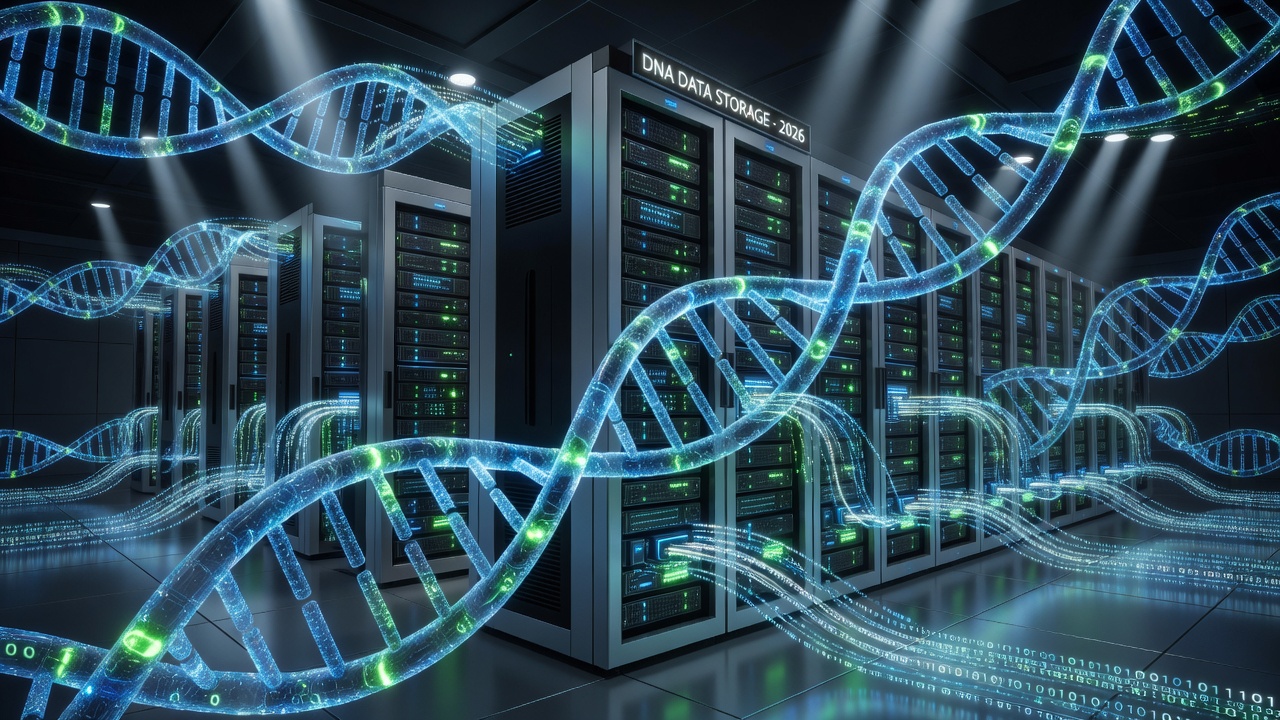
In 2026, global data generation continues its exponential growth, driven by AI training datasets, IoT sensors, video streaming, and enterprise archives. Traditional silicon-based storage struggles with physical limits on density and energy consumption. DNA data storage emerges as a breakthrough, encoding binary information into synthetic DNA strands. This approach promises orders-of-magnitude improvements in capacity while offering exceptional longevity. Researchers and companies are moving from lab proofs to pilot deployments, positioning DNA storage as a viable complement to HDDs and SSDs for cold and archival data.
The technology draws on nature’s efficient information carrier. DNA’s four bases—A, C, G, and T—map naturally to binary or quaternary encoding schemes. Early experiments demonstrated reliable storage of text, images, and even entire operating systems within microscopic volumes. As 2026 unfolds, advances in synthesis and sequencing costs, combined with automation, accelerate commercialization timelines.
How DNA Data Storage Works: Encoding Binary into Biology
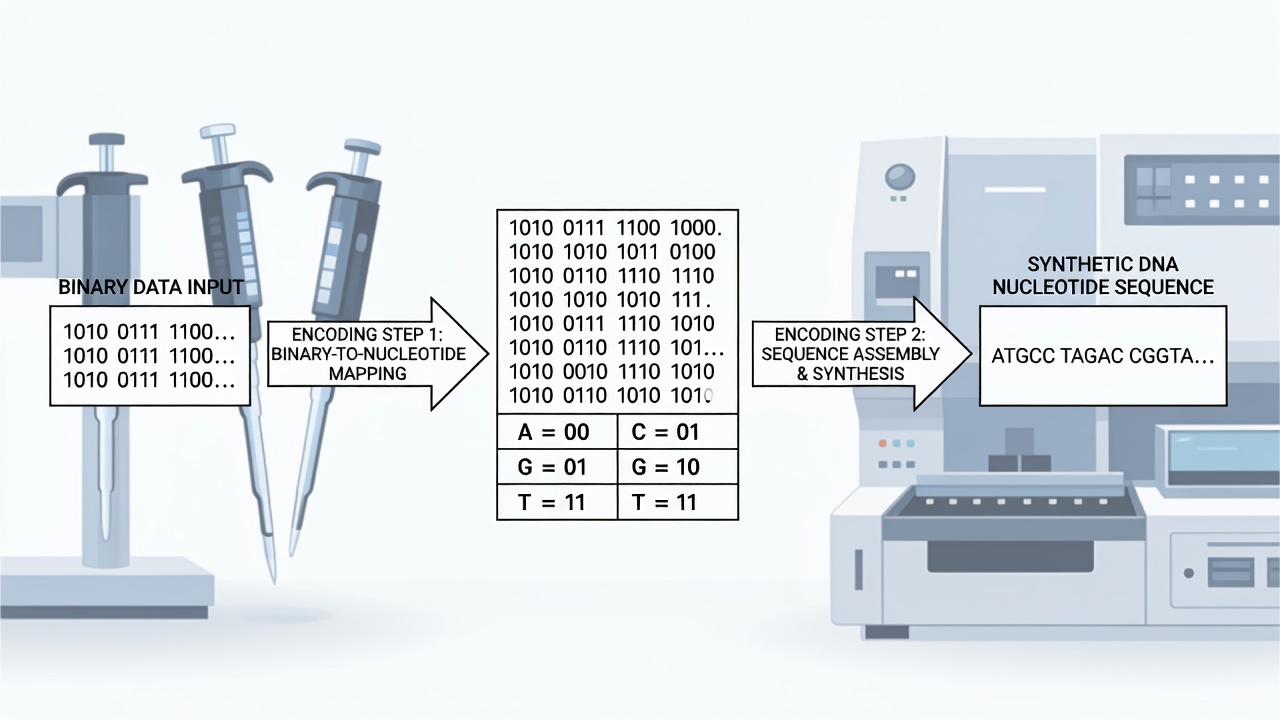
At its core, DNA storage converts digital bits into nucleotide sequences. Binary data is first mapped to DNA bases using error-correcting codes to handle synthesis and sequencing inaccuracies. Specialized enzymes and chemical processes then assemble short strands of synthetic DNA. These strands are stored in stable, dehydrated form inside sealed containers that require no power for preservation.
Reading the data involves rehydrating the sample and using next-generation sequencing machines to decode the nucleotide order back into binary. Recent protocols incorporate random-access capabilities, allowing retrieval of specific files without sequencing the entire archive. Companies refine enzymatic synthesis methods that promise faster write speeds compared with older phosphoramidite chemistry.
Density and Durability Advantages Over Silicon
DNA offers theoretical storage densities exceeding 215 petabytes per gram—far beyond the limits of current magnetic or flash media. A single gram could theoretically hold all the data currently generated worldwide in a year. Durability stands out as another strength: properly stored DNA can remain intact for thousands of years without degradation, unlike HDDs that fail within a decade or SSDs limited by charge leakage.
Energy efficiency also favors DNA for long-term archives. Once written, the medium consumes zero electricity for retention, contrasting with always-on data centers. These attributes make DNA storage particularly attractive for regulatory compliance archives, scientific datasets, and national libraries seeking multi-century preservation.
Leading Research from Tech Firms and Labs
Major technology companies and academic institutions drive progress. Microsoft has demonstrated end-to-end systems that write and read megabytes of data using automated microfluidic platforms. Academic groups at institutions such as the University of Washington and ETH Zurich continue to publish improved encoding algorithms that reduce error rates below one in ten billion.
Twist Bioscience and other DNA synthesis specialists scale production capacity, while sequencing leaders like Illumina refine high-throughput readers tailored for storage applications. Collaborative consortia now share standardized file formats and error-correction libraries to accelerate interoperability.
Cost Reductions, Read/Write Speeds, and Practical Timelines
Although early DNA storage remained expensive, synthesis costs have declined steadily. Automation and enzymatic approaches are expected to bring per-gigabyte write economics closer to archival tape within the next five years. Read speeds still lag behind SSDs because sequencing remains a batch process; however, targeted random-access techniques now retrieve individual files in hours rather than days.
Enterprise pilots target 2027–2028 for initial commercial offerings focused on write-once, read-rarely workloads. Hybrid systems that combine DNA for cold storage with flash for hot data are already in design stages at several hyperscale providers.
Real-World Pilot Projects and Enterprise Adoption
Cloud providers have begun limited trials storing infrequently accessed customer backups in DNA format. National archives in Europe and Asia are evaluating the technology for cultural heritage preservation. One financial services firm completed a successful proof-of-concept that encoded regulatory records spanning decades, confirming both integrity and retrieval accuracy after 18 months of storage.
Implementation roadmaps typically start with offline “DNA libraries” managed by specialized service providers. Organizations integrate these libraries through APIs that abstract the underlying biology, allowing existing data-management software to treat DNA storage as another tier in the storage hierarchy.
Comparisons to Current HDD and SSD Technology
- Density: DNA exceeds HDDs by six orders of magnitude and SSDs by even more.
- Longevity: DNA lasts millennia; HDDs and SSDs require periodic migration every 5–10 years.
- Energy: DNA needs none for retention; silicon media demand continuous cooling and power.
- Speed: SSDs win on latency; DNA suits archival use cases where hours-long retrieval is acceptable.
- Cost trajectory: Silicon enjoys mature economies of scale today, while DNA costs continue to fall rapidly.
Scalability Challenges: Short FAQ
How scalable is DNA synthesis for petabyte workloads? Current synthesis throughput supports gigabyte-scale archives; enzymatic methods under development aim for terabyte daily output by 2028.
What error rates affect reliability? Modern coding schemes achieve bit error rates below 10^-10, comparable to enterprise tape systems.
Can DNA storage integrate with existing cloud infrastructure? Yes, through middleware layers that handle encoding, physical handling, and sequencing as background services.
Are there regulatory or biosafety concerns? Synthetic DNA used for storage is non-replicating and chemically stabilized, posing minimal biosafety risk according to current guidelines.
Conclusion: Preparing for the DNA Storage Era
DNA data storage stands at the threshold of practical deployment in 2026. Its unmatched density and durability address the fundamental constraints of silicon media, while ongoing research steadily improves speed and cost. Enterprises evaluating long-term archival strategies should monitor pilot results and begin planning integration roadmaps. As synthesis and sequencing technologies mature, DNA storage will transition from experimental curiosity to essential component of the global data infrastructure.

No comments yet. Be the first!