 NeoBit Daily
Introduction to 2026 AI in Precision Agriculture
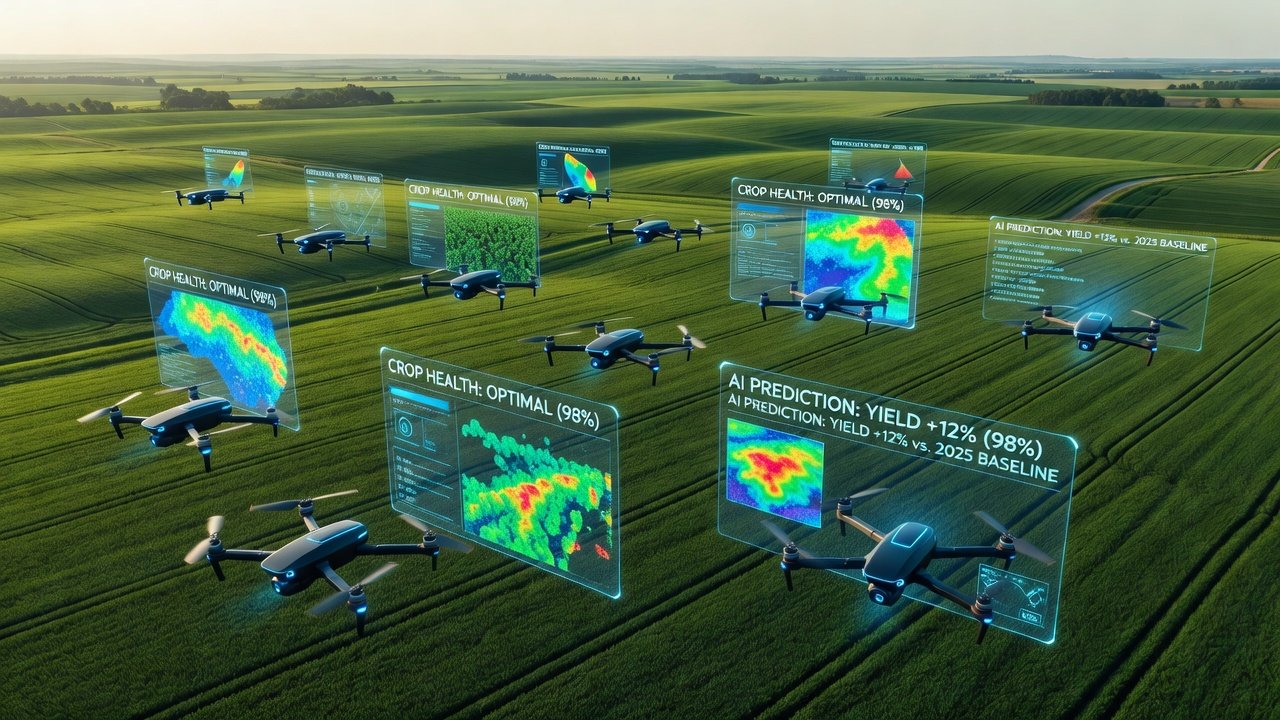
The agricultural sector is undergoing a profound transformation in 2026, driven by artificial intelligence, drone technology, and machine learning. These tools enable real-time crop monitoring that was unimaginable just a decade ago. Farmers now leverage data from aerial drones and ground sensors to make precise decisions on irrigation, pest control, and harvesting, resulting in higher yields and reduced waste compared to traditional methods. Precision agriculture integrates AI platforms that analyze vast datasets from multiple sources, including weather patterns, soil composition, and historical yield records. This approach minimizes resource use while maximizing output, addressing global food security challenges amid climate variability. As populations grow and arable land becomes scarcer, these technologies offer scalable solutions that traditional farming cannot match in efficiency or adaptability.
Beyond basic monitoring, AI systems now incorporate predictive analytics to forecast potential issues weeks in advance. This proactive stance helps mitigate risks from extreme weather events and supply chain disruptions. The integration of these technologies is not limited to large operations; smaller farms are also adopting modular solutions that scale with their needs.
How Drones and Machine Learning Enable Real-Time Crop Monitoring
Drones equipped with multispectral cameras capture high-resolution imagery across large fields in minutes. Machine learning algorithms process this data to detect early signs of stress in plants, such as nutrient deficiencies or disease onset. In 2026, integrations with edge computing allow on-site analysis without constant cloud connectivity, reducing latency and improving response times. Drones can fly autonomously along pre-programmed routes, collecting data on plant height, chlorophyll levels, and canopy density. Machine learning models, trained on extensive agricultural datasets, classify these images to highlight problem areas with color-coded maps that farmers can interpret quickly.
Leading platforms combine drone feeds with satellite data for comprehensive monitoring. This real-time capability helps farmers respond within hours rather than days, preventing crop losses that traditional scouting methods often miss. For instance, thermal imaging from drones can reveal irrigation leaks or areas of water stress invisible to the naked eye. The combination of visual and spectral data creates a detailed digital twin of the field, updated daily or even hourly during critical growth periods.
Comparing Leading AI Platforms for Irrigation Optimization
Several AI solutions stand out for irrigation management. They use soil moisture sensors, weather forecasts, and crop evapotranspiration models to optimize water delivery. Compared to traditional flood or timer-based irrigation, these systems can reduce water usage significantly while maintaining soil health. Platforms differ in their user interfaces, integration capabilities, and accuracy of predictions. Some emphasize mobile accessibility for on-the-go adjustments, while others focus on enterprise-level reporting for large cooperatives.
Platforms like those from major agtech providers offer dashboards that predict optimal watering schedules. Case studies show measurable efficiency gains, with commercial farms reporting improved crop uniformity and lower operational costs through targeted application. One platform excels in variable-rate irrigation by dividing fields into micro-zones, while another prioritizes integration with legacy equipment. Farmers evaluating options should consider factors such as data export options, alert customization, and compatibility with local weather stations.
Pest Detection and Yield Improvements Versus Traditional Methods
AI-driven pest detection uses computer vision to identify insects or fungal infections from drone imagery. Machine learning models trained on millions of images achieve high accuracy rates, enabling targeted pesticide application instead of blanket treatments. This precision reduces chemical runoff into waterways and protects beneficial insects like pollinators. Yield improvements are notable. Farms adopting these technologies often see increases of 15-25% over conventional practices, according to industry reports. Traditional methods rely on manual inspection, which is labor-intensive and prone to oversight in large-scale operations where pests can spread rapidly across acres.
The contrast becomes clear in side-by-side comparisons: manual scouting might cover only a fraction of a field per day, whereas drones survey hundreds of acres in a single flight. ML algorithms also learn from past seasons to improve detection thresholds, adapting to new pest variants as they emerge.
Food and Agriculture Organization of the United Nations highlights how digital tools enhance sustainability in global farming systems.
Case Studies from Commercial Farms
A large Midwest corn operation implemented drone-based ML monitoring in 2025, achieving a 20% yield boost by optimizing nitrogen application. Another vineyard in California used sensor networks integrated with AI to cut irrigation by 30%, preserving grape quality during drought conditions. In the Midwest example, weekly drone flights identified nitrogen deficiencies early, allowing precise fertilizer placement that boosted kernel development without excess runoff. The vineyard case involved mapping soil variability across slopes, leading to customized watering zones that improved berry consistency for premium wine production.
Additional examples include a Midwest soybean farm that combined drone imagery with weather APIs to avoid disease outbreaks during humid periods, resulting in fewer fungicide applications. A wheat producer in the Great Plains region utilized ML for harvest timing predictions, aligning equipment use with peak ripeness windows and minimizing losses from weather delays. These examples demonstrate scalable results. Data analytics workflows tracked variables like humidity and temperature, feeding into predictive models that guided daily decisions and long-term planning.
Energy-Efficient Sensor Networks and Data Analytics Workflows
Modern sensor networks prioritize low-power designs, often using solar charging and LoRaWAN protocols for long-range communication. These networks collect soil, weather, and plant data continuously with minimal energy draw. Sensors placed at varying depths monitor moisture gradients, while above-ground units track microclimate conditions. The energy efficiency stems from duty-cycling techniques that activate sensors only during key measurement windows.
Data analytics workflows typically involve ingestion into cloud platforms, followed by ML processing for insights. Farmers access visualizations via mobile apps, enabling quick adjustments. The workflow begins with raw data collection, moves through cleaning and normalization steps, then applies models for anomaly detection and recommendation generation. 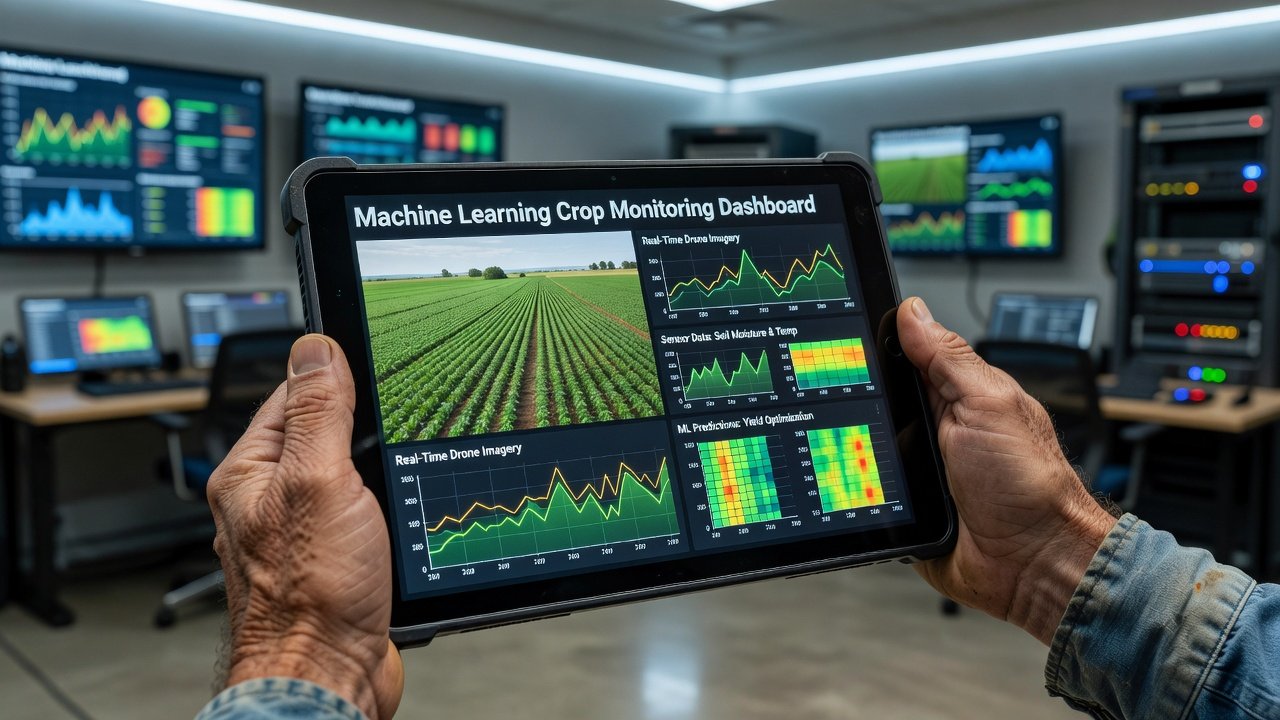
Practical Steps for Adoption
- Assess farm size and current infrastructure to select compatible drone and sensor systems, starting with a needs analysis that reviews existing equipment and connectivity options.
- Pilot the technology on a small section before full rollout to test accuracy and train staff without disrupting entire operations.
- Train staff on data interpretation and platform interfaces through hands-on workshops and vendor-provided tutorials.
- Integrate with existing equipment like irrigation controllers using standard APIs and protocols to ensure seamless data flow.
- Monitor performance metrics and refine models seasonally by comparing AI predictions against actual field outcomes and adjusting parameters accordingly.
Common Implementation Challenges and Expert Tips
Challenges include high initial setup costs, data privacy concerns, and connectivity issues in rural areas. Expert tips recommend starting with open-source ML tools for cost efficiency and partnering with local cooperatives for shared drone resources. Addressing these through phased adoption and robust cybersecurity measures ensures smoother integration. Additional hurdles involve regulatory compliance for drone flights and the need for reliable power sources in remote fields. Experts advise conducting site surveys for signal strength and investing in redundant data storage to prevent loss during outages.
United States Department of Agriculture provides resources on precision agriculture adoption strategies.
FAQ: Scaling AI Farming Tools for Global Impact
How do drones integrate with existing farm equipment?
Most modern systems use APIs to connect with tractors and irrigation setups, allowing automated responses based on AI recommendations.
What are the main barriers to scaling in developing regions?
Infrastructure gaps and training needs are key hurdles, but mobile-first solutions and government subsidies are helping overcome them.
Can small farms benefit from these technologies?
Yes, modular platforms and drone-as-a-service models make adoption accessible without large capital investments.
How does data security factor into AI farming platforms?
Reputable providers employ encryption and compliance with agricultural data standards to protect sensitive farm information from unauthorized access.
What role does satellite imagery play alongside drones?
Satellites provide broad overview data that drones refine with higher resolution, creating layered insights for comprehensive field analysis.
World Bank supports initiatives that promote technology transfer for sustainable agriculture worldwide.
Conclusion
2026 marks a pivotal year for AI in farming, where drones and machine learning deliver tangible boosts to crop yields. By embracing these innovations, farmers worldwide can achieve sustainable growth while navigating implementation hurdles effectively. Continued advancements promise even greater precision and accessibility in the years ahead.

No comments yet. Be the first!