 NeoBit Daily

Introduction
In 2026, operating system and software updates continue to introduce critical privacy enhancements that directly impact compliance obligations for organizations worldwide. IT teams must systematically audit patch notes to identify changes in encryption standards, consent mechanisms, and data handling practices. This comprehensive guide provides actionable steps for reviewing releases from Windows, macOS, and Linux distributions, helping organizations stay ahead of regulatory requirements while strengthening user trust. By dedicating time to thorough reviews, teams can prevent potential violations and capitalize on new tools that improve overall data protection strategies.
Why Patch Note Audits Matter for Privacy in 2026
Software updates often embed privacy improvements that can either simplify or complicate compliance efforts. Failing to review release notes thoroughly may lead to overlooked features that affect data minimization, user consent flows, or encryption protocols. Regular audits ensure teams leverage new tools effectively and avoid gaps that could expose organizations to fines or reputational damage. In an era of increasing regulatory scrutiny, these audits serve as a proactive measure that aligns technical updates with broader business objectives, reducing long-term risks associated with data breaches or non-compliance.
Platform Comparisons: Windows, macOS, and Linux
Windows Updates in 2026
Windows updates frequently emphasize enterprise controls through Microsoft Defender and Azure integrations. IT professionals should examine changes to BitLocker encryption options and new telemetry settings that allow finer control over data collection. Release notes often detail updates to privacy dashboards in Windows Settings, which can require policy adjustments in Active Directory environments. Comparing these to previous versions reveals incremental improvements in user consent interfaces that support enterprise-scale deployments.
macOS Updates in 2026
macOS releases highlight on-device processing and enhanced App Tracking Transparency features. Teams auditing these notes need to focus on updates to FileVault encryption and new permission prompts for app access to sensitive data. The platform's emphasis on transparency reports makes it essential to verify how updates affect cross-device synchronization and iCloud data handling, ensuring alignment with organizational security baselines.
Linux Distributions in 2026
Linux distributions vary by vendor but often focus on kernel-level encryption upgrades and open-source auditability. Distributions like Ubuntu and Fedora include detailed changelogs covering SELinux policy enhancements and new tools for monitoring data flows. Auditors must account for community-driven transparency reports that differ from proprietary platforms, often requiring custom scripts to validate compliance features across multiple distributions in heterogeneous environments.
Key differences include Windows’ centralized update management versus macOS’ emphasis on user-facing privacy dashboards and Linux’s community-driven transparency reports. Teams should map these variations against their existing infrastructure to prioritize review efforts effectively.
Key Areas to Audit: Encryption, Consent, and Data Handling
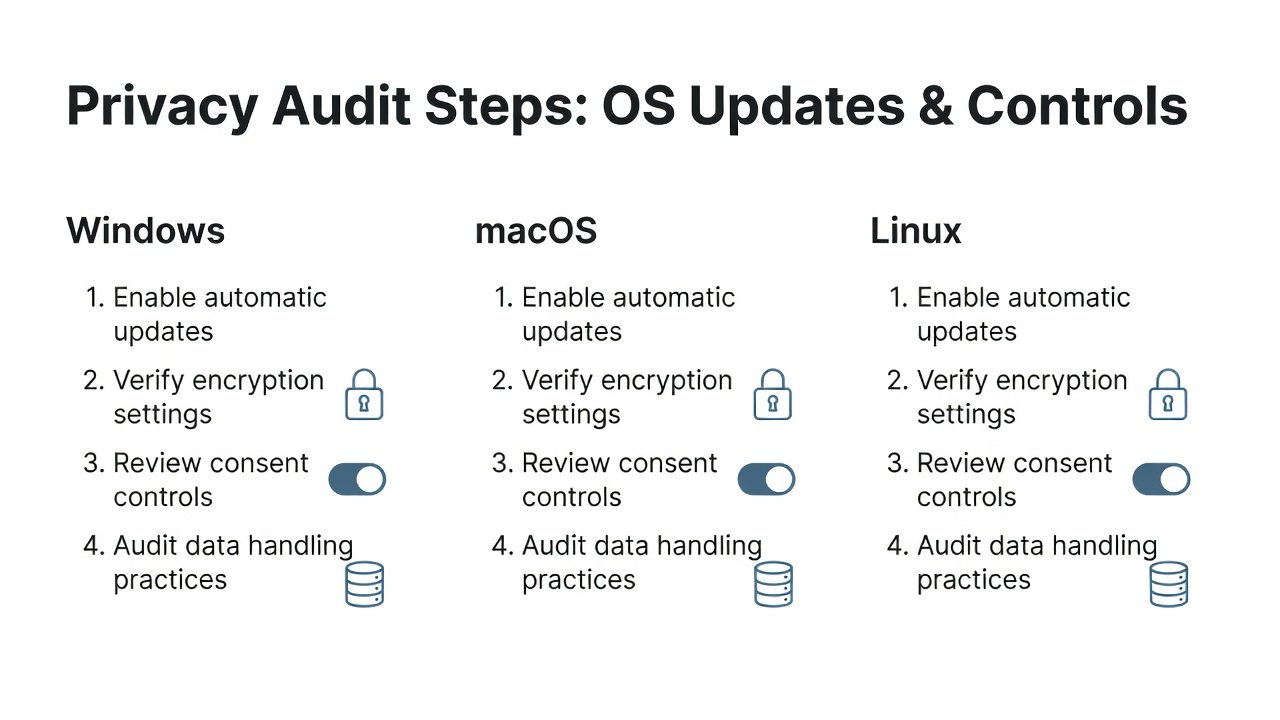
Focus audit attention on three primary domains. First, verify encryption upgrades such as new algorithm support or key rotation policies, which may include references to post-quantum cryptography standards emerging in 2026. Second, examine consent control changes that may require UI updates or policy revisions, such as expanded granular options for location and sensor data access. Third, review data handling modifications including logging behaviors and third-party sharing defaults, often documented with specific configuration parameters in the notes.
Cross-reference each item against frameworks like NIST Privacy Framework or ISO 27701 to confirm alignment. Practical steps include creating a spreadsheet to track each change, testing in isolated environments, and documenting version-specific impacts on existing systems.
Integration with Existing Compliance Frameworks
Map discovered privacy features to GDPR, CCPA, and HIPAA requirements. For example, new consent toggles in an OS update can support Article 7 GDPR obligations, while enhanced encryption may satisfy data protection by design principles. Document mappings in a compliance matrix and schedule follow-up testing after deployment. Additional frameworks such as SOC 2 and PCI DSS benefit from these audits by providing evidence of continuous monitoring. Integration involves updating risk assessments and training materials to reflect new capabilities, ensuring seamless incorporation into annual compliance reviews.
Real-World Examples from Finance and Healthcare
A major bank used 2026 Windows update notes to enable improved device encryption, reducing audit preparation time by streamlining evidence collection for internal and external reviewers. This involved deploying updated BitLocker settings across 5,000 endpoints, resulting in measurable improvements in data-at-rest protection metrics. In healthcare, a hospital system leveraged macOS consent enhancements to meet stricter patient data access rules, resulting in faster regulatory approvals during a recent inspection cycle. Another finance example includes a credit union that adapted Linux kernel updates for enhanced logging controls, which helped demonstrate compliance during a third-party penetration test. These cases illustrate how proactive audits translate directly into operational efficiencies and reduced regulatory friction.
Practical Checklist for IT Teams
Follow this expanded checklist to conduct thorough audits:
- Download official release notes from vendor portals within 48 hours of publication to capture all details before widespread deployment.
- Search for keywords including encryption, consent, telemetry, data minimization, and privacy settings, then categorize findings by impact level.
- Test new features in a staging environment for compatibility with legacy applications and document any required configuration changes.
- Update internal policies and user training materials accordingly, including creating quick-reference guides for end users.
- Log findings in a centralized audit repository with timestamps and responsible team members assigned for follow-up actions.
- Schedule quarterly re-audits to capture cumulative changes across multiple update cycles and maintain an ongoing compliance posture.
- Engage cross-functional teams such as legal and security to review high-impact changes before production rollout.
Common Pitfalls to Avoid
Teams often skip minor patch notes, missing incremental privacy tweaks that accumulate over time. Another frequent error is failing to communicate changes to legal and compliance stakeholders promptly, leading to misaligned policies. Overlooking Linux distribution-specific variances can also create blind spots in mixed environments. Additional pitfalls include neglecting to verify encryption key management updates or assuming all consent features activate by default without explicit configuration. To mitigate these, establish a standardized review protocol that includes peer reviews of audit findings.
Turning Privacy Wins into Trust-Building Opportunities
Publicize verified privacy improvements through transparency reports or customer communications. Highlighting proactive use of new OS features demonstrates commitment to data protection, differentiating your organization in competitive markets. Consider creating internal case studies to guide future audits and share success stories at industry conferences. This approach not only builds customer loyalty but also positions the IT team as a strategic partner in business growth initiatives focused on ethical data practices. For further reference, consult resources from Microsoft and Apple on privacy best practices.
Conclusion
Systematic auditing of 2026 patch notes equips IT teams to maximize privacy advancements across platforms. By following the structured approach outlined above, organizations can maintain compliance, reduce risk, and convert technical updates into meaningful trust signals for users and regulators alike. Implementing these practices consistently will yield long-term benefits in operational resilience and stakeholder confidence.


No comments yet. Be the first!