 NeoBit Daily

Introduction
As distributed work becomes the norm in 2026, operating system updates are evolving beyond minor patches to deliver tangible productivity improvements for remote teams. These releases focus on optimizing collaboration tools, strengthening remote access security, and deepening cloud service integrations. Teams relying on platforms like Slack and Zoom can now experience faster performance, fewer interruptions, and better cross-device consistency. This article examines the practical impacts of major 2026 OS updates on Windows and macOS environments, providing detailed checklists, real-world examples, comparisons, and optimization strategies to help hybrid teams maximize efficiency and reduce friction in daily workflows.
Performance Tweaks in Major 2026 Releases
Windows 12 and macOS 16 introduce refined multitasking features tailored specifically for remote setups. Windows 12 emphasizes intelligent resource management that prioritizes video calls and shared documents over background processes, resulting in lower CPU usage during extended meetings. macOS 16 enhances Apple Silicon efficiency by dynamically allocating memory to collaboration apps, which minimizes lag when switching between multiple Slack channels and Zoom breakout rooms. Additional tweaks include improved touchpad gestures for quick window resizing and smarter power management that extends laptop battery life during long remote sessions. These changes directly address common pain points reported by distributed teams, such as dropped connections and slow app loading times.
Security Enhancements Affecting Remote Access
Security remains a top priority, with built-in zero-trust protocols and improved VPN integrations across both operating systems. Windows 12 now offers faster biometric authentication combined with hardware-based encryption for secure logins from home networks, while macOS 16 introduces automatic threat detection that flags suspicious activity in real time during file sharing. These enhancements reduce breach risks without adding layers of complexity for end users. Remote teams benefit from seamless single-sign-on experiences that maintain compliance standards. Learn more about enterprise security standards at Microsoft and explore complementary macOS security guidance at Apple.
Integration with Cloud Services
2026 updates strengthen native connections to platforms like Microsoft 365 and Google Workspace. Automatic syncing of files, real-time notifications, and background data reconciliation now occur with minimal user intervention. For example, changes made in a shared Slack workspace can instantly reflect across devices without manual refreshes. This integration minimizes downtime for hybrid teams and supports offline-first capabilities that sync once connectivity returns. Teams using cloud-based project management tools report smoother handoffs between time zones as a result.
Step-by-Step Adoption Checklists
Follow these comprehensive steps for a smooth rollout across your remote workforce:
- Review official system requirements and create full data backups for all team devices.
- Identify pilot users representing different roles and network conditions.
- Install updates during low-activity windows and document any initial issues.
- Configure new security settings through centralized admin portals.
- Update team training materials to cover revised collaboration features.
- Monitor key performance metrics such as app load times and connection stability for two weeks post-deployment.
- Collect feedback via short surveys and adjust policies accordingly.
Real-World Examples from Slack and Zoom Environments
In Slack-heavy teams, macOS 16's improved notification grouping reduces alert fatigue, allowing members to focus on high-priority threads without constant interruptions. One marketing agency reported that their distributed staff completed daily stand-ups 25 percent faster after adopting the update. Zoom users on Windows 12 benefit from optimized GPU allocation that delivers smoother screen sharing during large all-hands meetings, even on mid-range laptops. A software development company with teams across three continents noted fewer frozen screens and quicker reconnection times after network drops. These examples highlight how targeted OS improvements translate into measurable time savings when integrated with popular collaboration tools. 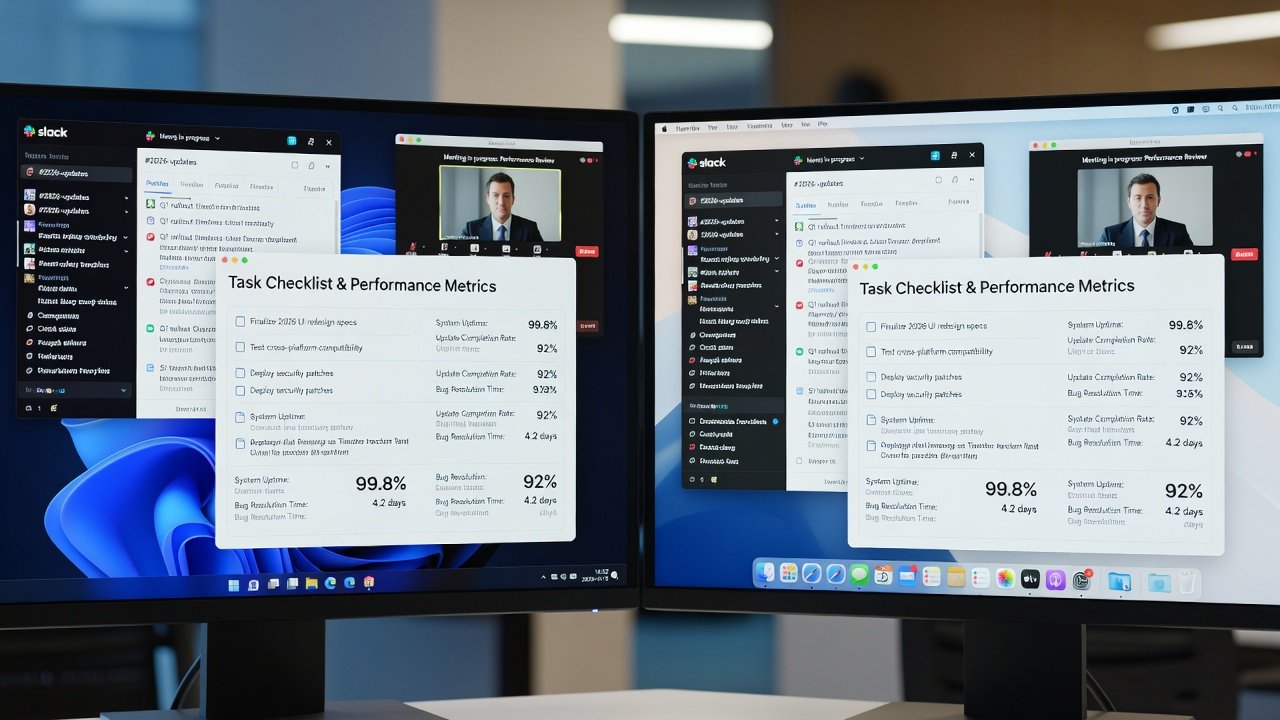
Windows Versus macOS Impacts Comparison
Windows offers broader hardware compatibility and stronger enterprise management tools, making it ideal for mixed-device teams with varying laptop models. Its update process includes detailed rollback options that minimize risk during phased deployments. In contrast, macOS excels in seamless ecosystem integration for Apple-centric groups, delivering superior battery life during extended remote sessions and more intuitive gesture controls. Windows tends to provide deeper customization for IT administrators, while macOS prioritizes user-friendly defaults. Decision-makers should evaluate their existing device fleet, primary collaboration stack, and support resources before choosing a primary platform.
Practical Optimization Strategies and Mistakes to Avoid
To fully leverage these updates, teams should enable automatic background syncing where possible and schedule regular performance audits. Avoid common mistakes such as skipping pilot testing, which can lead to widespread compatibility issues, or neglecting user training, resulting in underutilized features. Another frequent error is overlooking network variability in home offices; test updates over both Wi-Fi and mobile hotspots. By addressing these areas proactively, organizations can prevent productivity dips during transition periods.
FAQ
How long does a typical rollout take for a mid-sized team?
Most teams complete phased deployments within two to three weeks, depending on size and geographic spread.
Are there compatibility issues with older collaboration tools?
2026 updates maintain strong backward compatibility, though testing legacy apps in pilot environments is strongly recommended before full rollout.
What support exists for hybrid work setups with variable connectivity?
Both operating systems include enhanced offline modes and automatic reconnection features that preserve work progress during outages.
Can these updates improve meeting efficiency in large groups?
Yes, particularly through better resource allocation and notification management that reduce distractions during extended sessions.
Conclusion
By focusing on these targeted 2026 software updates, remote teams can achieve measurable productivity lifts through faster performance, stronger security, and tighter cloud integrations. Start with thorough pilot testing to tailor the rollout to your specific needs, then iterate based on real feedback. Staying current with OS advancements positions distributed teams for greater success in an increasingly hybrid work landscape.


No comments yet. Be the first!