 NeoBit Daily
Introduction
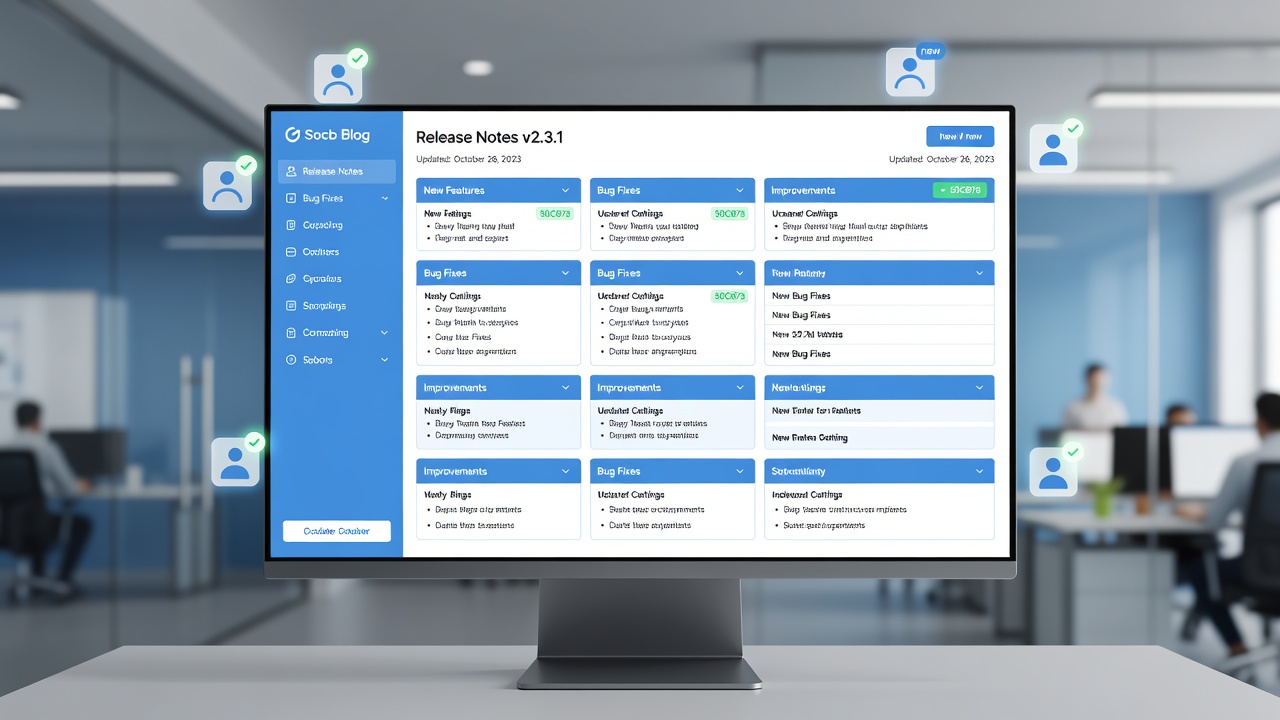
In 2026, the pace of software and operating system updates has accelerated dramatically, with organizations releasing patches, feature enhancements, and security fixes on a near-weekly basis. Despite this frequency, user adoption rates often lag behind expectations, leading to fragmented user bases, increased security vulnerabilities, and higher support costs. Well-crafted release notes have emerged as a pivotal tool for bridging the gap between technical development teams and end users. By communicating changes in a clear, engaging, and user-centric manner, these notes can transform passive recipients into active adopters who eagerly install updates.
This comprehensive guide delves into the strategies that drive higher adoption through optimized release notes. It covers proven writing frameworks, real-world examples from leading vendors, rigorous A/B testing methodologies, essential metrics for impact measurement, comparisons of effective versus ineffective approaches, and actionable steps for implementation. Teams operating in 2026 environments will find practical insights tailored to evolving user expectations and technological landscapes.
Proven Writing Frameworks for Release Notes
Successful release notes rely on structured writing frameworks that prioritize readability and relevance. The "What, Why, How" model remains foundational: begin by describing what has changed in precise terms, explain why the change benefits the user, and conclude with how to access or leverage the new functionality. This approach reduces cognitive load and fosters immediate understanding.
Another robust framework is SCQA, which stands for Situation, Complication, Question, and Answer. Teams start by outlining the existing situation users face, introduce complications such as performance issues or missing features, pose the implicit question of resolution, and deliver the answer via the update details. Extending this, the Pyramid Principle encourages leading with the most critical information at the top, followed by supporting details in descending order of importance.
In 2026, incorporating user personas into these frameworks has proven effective. For instance, notes targeted at enterprise users might emphasize compliance and scalability, while consumer-focused notes highlight personalization and ease of use. Combining these models with plain language principles ensures accessibility across diverse audiences.
Real-World Examples from Major Vendors
Leading technology companies provide excellent benchmarks for effective release notes. Apple consistently employs concise, benefit-oriented language in its iOS and macOS updates, focusing on tangible improvements such as battery life extensions and privacy enhancements rather than listing obscure code changes. This method encourages quick scanning and higher installation rates among everyday users.
Microsoft applies a modular structure in Windows release notes, dividing content into clear categories like new features, resolved issues, and known limitations. Each section includes direct links to deeper documentation, empowering power users while keeping general readers informed. Microsoft also integrates user feedback highlights to demonstrate responsiveness.
Google's approach for Android updates often incorporates visual storytelling, using icons and short animations within the notes to illustrate changes like improved notification systems. These examples underscore the value of tailoring tone and format to the product ecosystem while maintaining consistency across releases.
A/B Testing Methods for Note Formats
Optimizing release notes requires empirical validation through A/B testing. Start by defining clear hypotheses, such as whether bullet-point summaries outperform paragraph formats in driving clicks to installation prompts. Deploy variations to segmented user groups via email campaigns or in-app notifications, ensuring sample sizes are statistically significant.
Key variables to test include length, use of visuals, tone (formal versus conversational), and placement of calls to action. Track performance over multiple release cycles, analyzing data from tools that integrate with analytics platforms. In 2026, machine learning algorithms can automate variant generation and predict outcomes based on historical engagement patterns. Iterate rapidly, discarding underperforming formats and scaling winners to future notes.
Metrics for Measuring Adoption Impact
Quantifying the success of release notes involves tracking a suite of interconnected metrics. Primary indicators include the update adoption rate, calculated as the percentage of eligible users who install within defined timeframes such as seven or thirty days. Secondary metrics encompass time-to-adoption averages, reductions in related support tickets, and post-update Net Promoter Scores.
Advanced teams correlate note engagement data—such as scroll depth and link clicks—with actual installation logs. Dashboards that visualize these relationships help identify bottlenecks. For example, low adoption despite high note views may signal unclear instructions, prompting revisions. Regular reviews of these metrics, benchmarked against industry standards, enable continuous improvement.
Effective vs. Ineffective Approaches: A Comparison
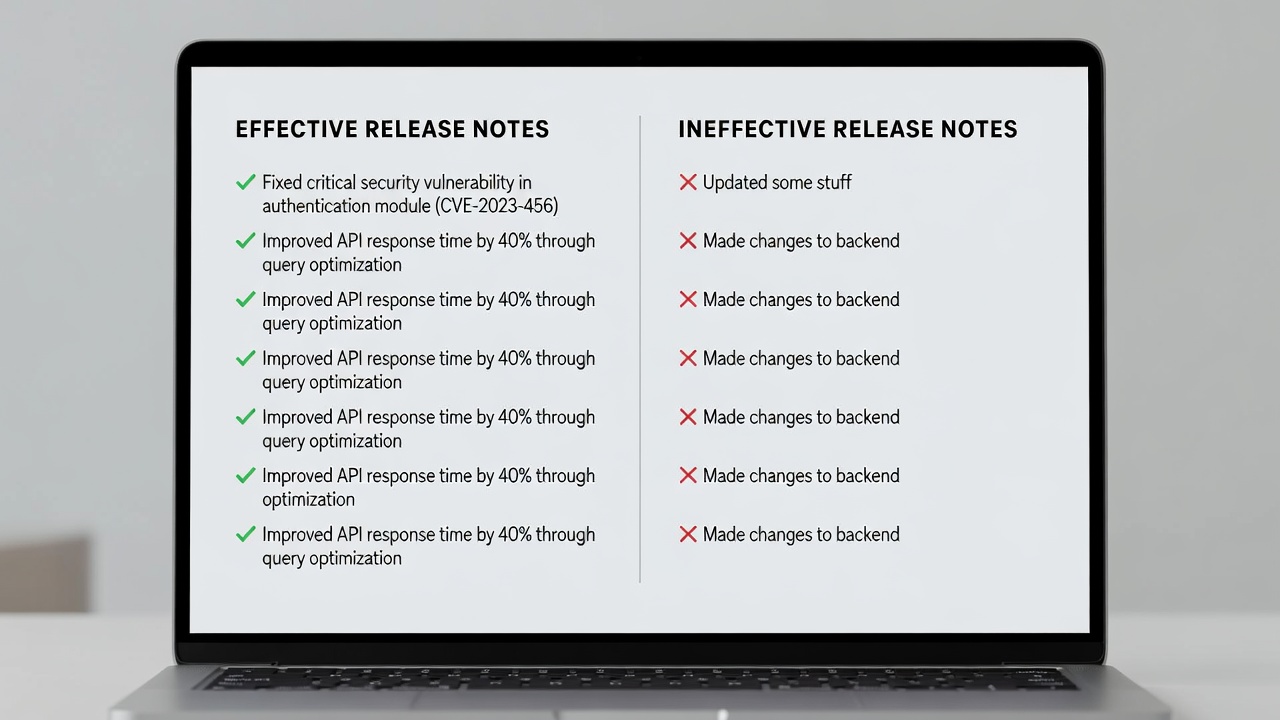
Comparing approaches reveals stark differences in outcomes. Effective notes use scannable formatting, prioritize user benefits, incorporate visuals where helpful, and provide context for every change. They avoid jargon and include actionable next steps.
- Effective practices: User-first language that answers "What's in it for me?"; prioritized lists starting with high-impact items; embedded screenshots or short videos; explicit security or performance gains highlighted upfront.
- Ineffective practices: Walls of dense technical text; exhaustive unprioritized bullet lists; absence of benefit explanations; missing guidance on rollback procedures or compatibility concerns.
Common mistakes to avoid include burying critical fixes at the end or failing to address frequently asked questions proactively. Teams that audit past notes against these criteria often uncover immediate opportunities for enhancement.
Practical Steps for Teams
- Establish cross-functional collaboration early by involving product managers, engineers, designers, and support representatives in drafting sessions.
- Select and customize a writing framework that aligns with audience needs and brand voice.
- Apply readability tools to maintain an accessible level, targeting broad comprehension.
- Publish notes across multiple channels including in-app popups, email newsletters, dedicated web pages, and social media summaries.
- Conduct post-release analysis using the defined metrics and incorporate learnings into the next cycle.
- Leverage emerging 2026 technologies such as AI-assisted editing for consistency and localization support for global audiences.
FAQ
How long should 2026 release notes be? Optimal length ranges from 400 to 800 words depending on update complexity, balancing thoroughness with user attention spans.
What if users consistently ignore the notes? Supplement with contextual in-app guidance, interactive changelogs, and concise video overviews to reinforce key messages.
Can release notes influence security update adoption? Clear highlighting of vulnerability fixes has been shown to increase compliance, particularly when paired with risk explanations.
Which tools are best suited for 2026 release note creation? Integrated platforms combining version control, AI drafting, and analytics provide the most seamless workflows.
How do release notes differ for mobile versus desktop updates? Mobile notes often emphasize touch-friendly visuals and battery impacts, while desktop versions focus on enterprise integration and customization options.
Conclusion
Optimizing release notes for 2026 environments demands a strategic blend of structured frameworks, real-world inspiration, testing rigor, and data-driven refinement. By implementing the approaches outlined above, teams can elevate user adoption, strengthen trust, and maximize the value delivered by each update. The investment in thoughtful communication yields compounding returns across product lifecycles.


No comments yet. Be the first!