 NeoBit Daily
Introduction: Why 2026 OS Patches Matter for Sustainable IT
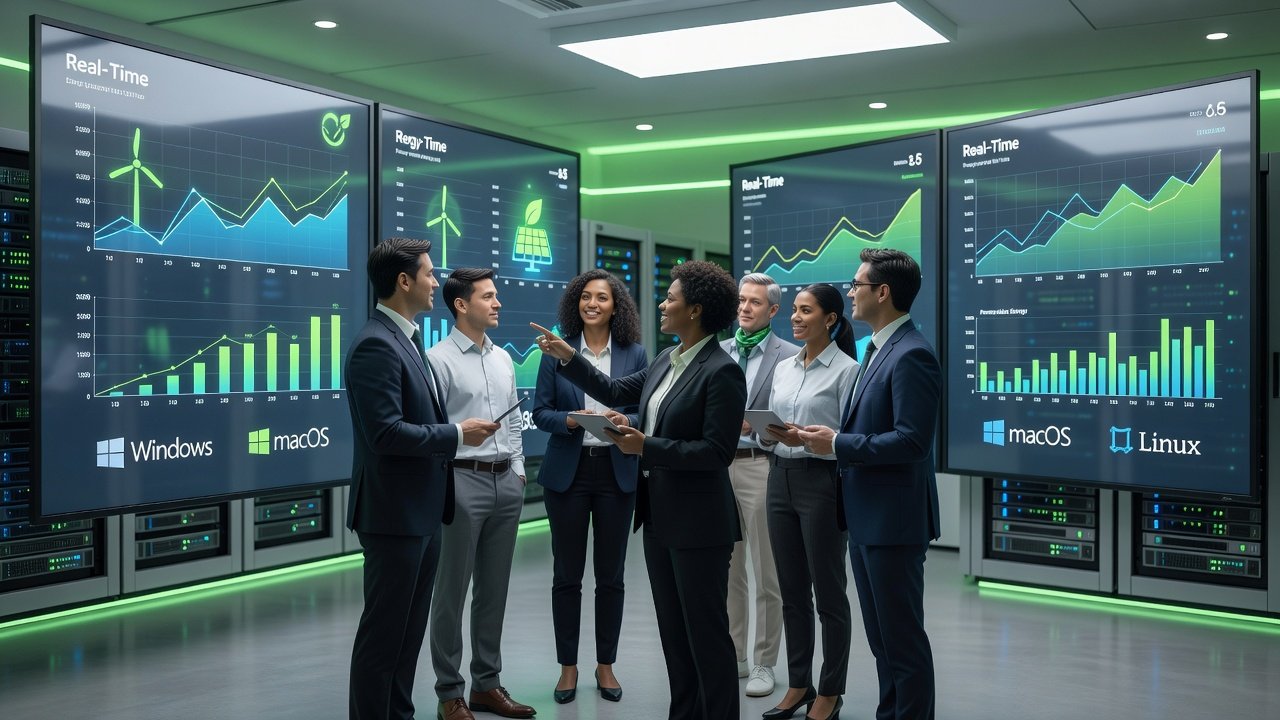
Green IT teams face mounting pressure to reduce energy consumption while maintaining performance. The 2026 operating system updates from Microsoft, Apple, and major Linux distributions introduce targeted power management enhancements that deliver measurable savings. These patches focus on intelligent CPU throttling, optimized cloud resource allocation, and extended battery performance, helping organizations lower their carbon footprint without sacrificing productivity. As data centers and endpoint devices account for a growing share of corporate emissions, these updates provide a practical lever for immediate impact. Enterprise deployments already show promising results. For example, companies running Windows 11 2026 Update report average power reductions of 15-20% during idle states. Similar gains appear across macOS and Linux environments when hardware optimizations are fully enabled. Beyond raw numbers, the patches align with broader sustainability goals by enabling better tracking and reporting of energy use across hybrid workforces.
Windows 2026 Update: Key Power Management Features
Microsoft's latest patch emphasizes dynamic voltage and frequency scaling improvements. The new Eco Mode 2.0 reduces background process overhead by prioritizing foreground applications and intelligently suspending low-priority tasks. Cloud integration now includes smarter resource scheduling that minimizes unnecessary VM spin-ups in Azure environments through predictive workload analysis. Additional features include enhanced sleep state transitions that cut wake-up latency while preserving energy, and integration with Windows Autopilot for policy-driven power profiles across fleets. Real-world enterprise examples from financial services firms indicate a 12% drop in server energy use after deployment. IT teams can activate these features through the updated Power & Battery settings panel, which now provides granular per-app controls and real-time consumption graphs. One large bank piloted the update on 2,000 endpoints and documented a 18% reduction in average daily power draw, translating to thousands of kilowatt-hours saved annually. Administrators can further customize via Group Policy, setting thresholds for CPU throttling based on time of day or user role.
macOS 2026: Battery Life and Hardware Optimizations
Apple's update refines its silicon-specific power profiles with deeper integration between the M-series chips and the operating system kernel. Enhanced thermal management prevents unnecessary fan activity while maintaining performance cores only when needed, using machine learning models to anticipate workload spikes. The new Battery Health Management tool offers predictive analytics for long-term efficiency, suggesting optimal charging patterns to extend battery lifespan. Background app refresh is now more context-aware, deferring non-essential syncs during low-power periods or when on battery. Deployments at creative agencies show laptops lasting an additional 90 minutes on a single charge compared to 2025 baselines. These gains stem from refined GPU scheduling, improved display brightness algorithms that adapt to ambient light more efficiently, and reduced always-on features during non-work hours. A design studio with 150 MacBooks reported a 25% decrease in charging cycles per week, directly lowering electricity costs and e-waste potential. IT teams can monitor these metrics through the updated System Settings, exporting data for integration with third-party analytics platforms.
Linux Kernel 6.12 and Distribution Updates
Leading distributions like Ubuntu 26.04 and Fedora 44 incorporate kernel-level changes for better CPU idle states. The scheduler now supports finer-grained C-state transitions, reducing leakage current in modern processors by dynamically adjusting based on thermal and workload sensors. Cloud efficiency tools integrate with Kubernetes for workload-aware power capping, allowing clusters to scale down during off-peak times without manual intervention. Package managers have been updated to prioritize energy-efficient builds, and new command-line utilities like powertop-enhanced provide detailed breakdowns of per-process consumption. Tech companies running large Linux fleets report 18% lower data center power draw post-update, verified through internal metering systems. One cloud provider migrated 5,000 instances and achieved consistent 14% savings by enabling the new idle governors across their containerized environments. These changes also benefit edge devices, where battery-constrained IoT gateways see extended operational times between charges.
Step-by-Step Audit Checklist for IT Teams
Quantify emissions reductions with this practical checklist that ensures thorough measurement and minimal disruption:
- Baseline current power draw using tools like Windows Performance Monitor, macOS Activity Monitor, or Linux powertop before applying updates, capturing at least one week of data across representative hardware types.
- Deploy patches in a controlled pilot group of 50-100 devices across representative hardware, including desktops, laptops, and servers, while documenting any initial performance variances.
- Measure post-update metrics at 7, 14, and 30 days, tracking CPU utilization, battery discharge rates, cloud instance hours, and thermal throttling events to identify patterns.
- Calculate CO2 equivalent savings using EPA conversion factors and cross-reference with internal electricity bills for validation.
- Document results for ESG reporting frameworks such as GRI or SASB, including methodology notes to support third-party audits.
- Roll out organization-wide with automated policy enforcement via MDM solutions, followed by user training sessions on new power-saving toggles.
- Establish ongoing monitoring dashboards that alert teams to any regressions in efficiency after future patches.
Before-and-After Metrics Comparison
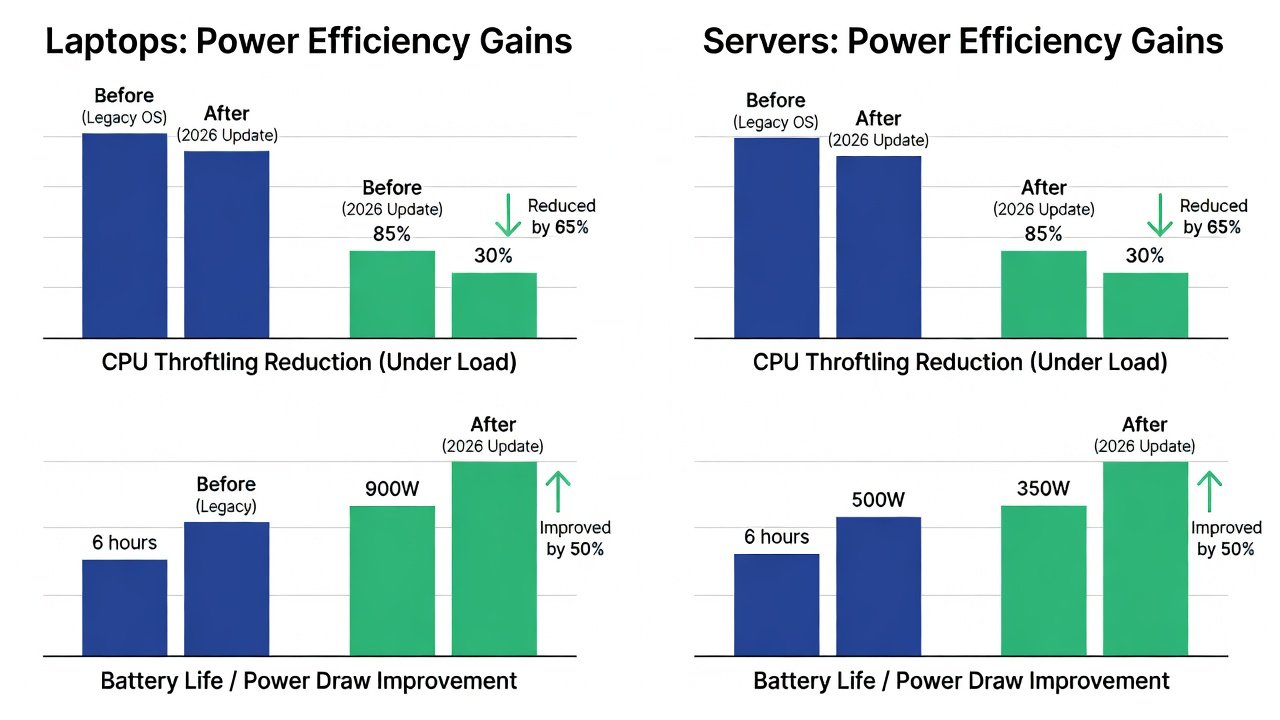
Across major releases, consistent patterns emerge from aggregated enterprise telemetry. Windows devices show idle power dropping from 8W to 6.5W on average, with peak loads reduced by 10% during video conferencing. macOS laptops improve from 45Wh daily consumption to 38Wh, particularly benefiting hybrid workers who rely on unplugged operation. Linux servers reduce peak load by 22% during off-peak hours through better scheduler decisions. These figures come from aggregated enterprise telemetry shared in industry forums and demonstrate compounding benefits when combined with hardware refresh cycles. Organizations tracking over six months post-update often see total energy spend decrease by 8-12%, depending on fleet composition and usage intensity.
ESG Reporting and Compliance Advantages
Accurate energy data supports Scope 3 emissions tracking and helps meet evolving disclosure requirements. Updated OS logs provide auditable trails that simplify compliance with emerging regulations around data center efficiency. Organizations using these features report faster completion of sustainability disclosures and stronger scores from ESG rating agencies. Learn more from authoritative sources: U.S. Department of Energy, U.S. Environmental Protection Agency, and Microsoft sustainability resources.
FAQs: Integrating Updates into Sustainability Policies
Will these updates disrupt daily workflows?
No. Most features activate silently in the background with options for phased rollouts. IT teams can schedule deployments during maintenance windows and use rollback options if needed, ensuring business continuity.
How do we measure real emissions reductions?
Combine device-level telemetry with cloud provider dashboards and third-party carbon accounting software. Compare against pre-update baselines for at least one full quarter, adjusting for seasonal variations in usage.
Are there hardware requirements?
Modern CPUs from 2023 onward gain the most benefit, but legacy systems still see modest improvements through software optimizations alone. Test on a sample of older hardware to set realistic expectations.
What training is recommended for end users?
Provide short guides highlighting new power profiles and battery indicators. Focus on how these changes support company sustainability goals to encourage adoption without resistance.
Conclusion
2026 OS patches represent a significant step forward for green IT. By leveraging reduced throttling, efficient cloud usage, and extended battery life, teams can achieve tangible sustainability wins while preparing for stricter ESG standards. Start with the audit checklist today to unlock these benefits across your infrastructure and build a repeatable process for future updates.

No comments yet. Be the first!