 NeoBit Daily

Introduction to 2026 OS Updates in IoT Ecosystems
As IoT deployments expand across industries, managing operating system updates in 2026 requires specialized approaches that prioritize security, scalability, and minimal operational disruption. This article provides IT professionals with actionable tactics drawn from patch notes and release notes, focusing on real-world implementation for connected devices. Organizations must navigate complex environments where devices range from simple sensors to sophisticated gateways, each with unique constraints on power, connectivity, and processing capabilities. The 2026 cycle introduces enhancements that address emerging threats while supporting massive scale, making proactive planning essential for maintaining uptime and compliance.
Understanding Key Security Enhancements in 2026 IoT OS Updates
Security remains the cornerstone of 2026 updates. Many platforms now incorporate enhanced encryption protocols and zero-trust architectures directly into the kernel. For instance, updates often address vulnerabilities in device authentication, reducing risks from unauthorized access in large-scale networks. Patch notes frequently detail improvements in secure boot processes, runtime attestation, and automated vulnerability scanning that integrate with existing security information and event management systems. These changes help organizations meet regulatory requirements in sectors such as healthcare and critical infrastructure.
Scalability Considerations for Growing IoT Networks
Scalability involves designing updates that handle thousands of devices without overwhelming bandwidth. Techniques such as delta updates and edge-based processing allow efficient rollout across distributed ecosystems while maintaining performance. In practice, this means leveraging hierarchical update servers that push changes only to affected nodes, minimizing data transfer costs and latency. IT teams can also implement policy-driven orchestration that prioritizes critical devices first, ensuring business continuity during large-scale migrations.
Platform Comparisons: Linux-Based vs. RTOS Solutions
Comparing platforms reveals trade-offs. Linux-based systems offer robust community support and flexibility for complex IoT applications, whereas real-time operating systems (RTOS) excel in low-latency environments like industrial sensors. Release notes from major vendors highlight improved containerization features in 2026 versions. Linux distributions benefit from extensive driver ecosystems and easier integration with cloud platforms, while RTOS options provide deterministic behavior crucial for automotive and aerospace use cases. Decision factors include update frequency, compatibility with legacy hardware, and integration with cloud services. IT teams should evaluate based on specific use cases such as smart manufacturing or healthcare monitoring.
Preparing Your IoT Infrastructure for Updates
Before initiating any rollout, conduct a comprehensive audit of all connected devices. Inventory firmware versions, hardware specifications, and network topologies to identify potential bottlenecks. Establish isolated test environments that mirror production conditions, including simulated network loads and edge computing scenarios. This preparation phase reduces the likelihood of unexpected failures and allows teams to validate compatibility with third-party sensors and actuators.
Real-World Deployment Steps for IoT OS Updates
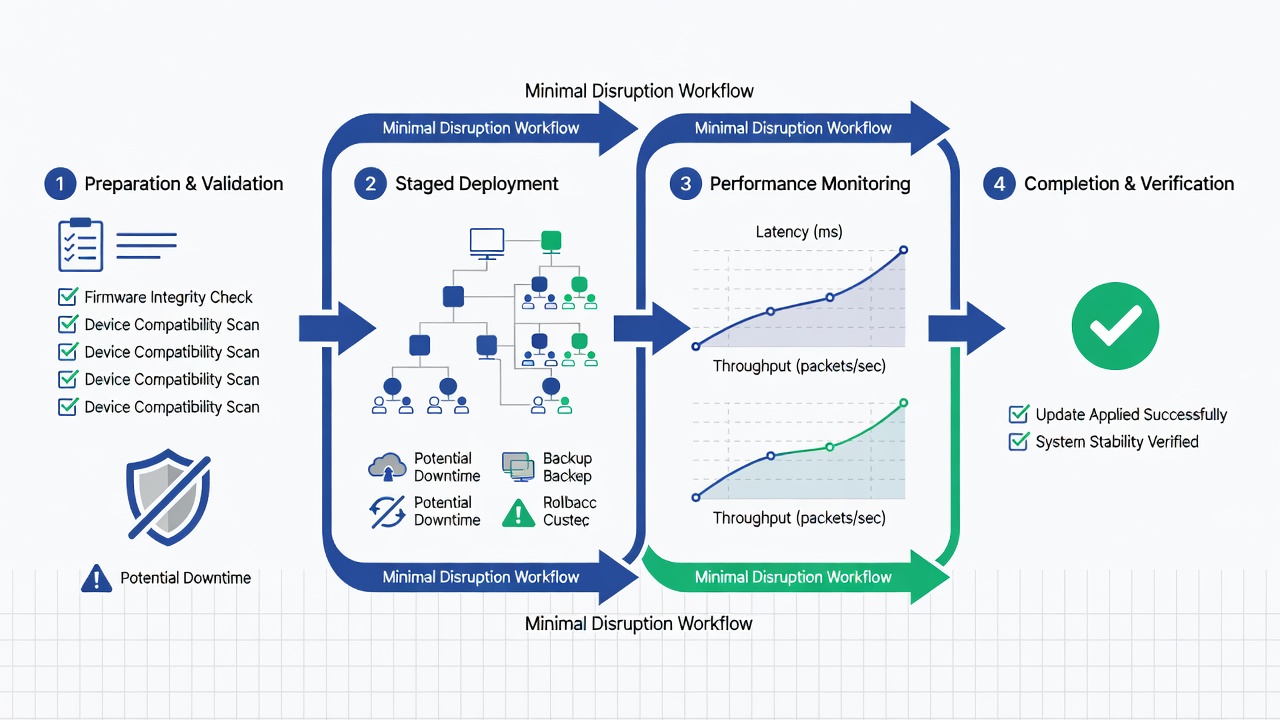
Successful deployments follow structured phases to ensure reliability. Begin with thorough testing in isolated environments, followed by staged rollouts. First, segment devices into logical groups based on criticality and location. Next, deploy updates during maintenance windows using automated orchestration tools that support conditional logic. Monitor each stage closely, pausing if error rates exceed predefined thresholds. Finally, perform post-update validation to confirm functionality across all interfaces. Real-world examples include a manufacturing plant that reduced downtime by 40 percent through phased deployment across 5,000 sensors.
- Assess current firmware versions and identify conflicts early through automated scanning tools.
- Utilize signed and encrypted update packages to prevent tampering during transit.
- Implement rollback mechanisms for quick recovery in case of partial failures.
- Monitor device health post-update using centralized dashboards that aggregate telemetry data.
- Document all steps for compliance audits and future reference.
Performance Metrics and Monitoring Best Practices
Tracking metrics such as update success rates, latency impacts, and energy consumption provides insights into effectiveness. Tools integrated into 2026 OS releases enable real-time analytics, helping teams optimize future cycles. Establish baseline measurements before updates and compare them against post-deployment data to quantify improvements in throughput and reliability. Regular reporting also supports executive decision-making by highlighting return on investment from security and efficiency gains.
Risk Mitigation Examples and Strategies
Common risks include firmware conflicts and network overload. Mitigation involves pre-update simulations and phased deployments. For example, segmenting device groups by criticality allows targeted testing, minimizing widespread issues. Another strategy is maintaining parallel update channels so that mission-critical devices receive verified patches while non-essential units undergo broader validation. Organizations that adopt these layered approaches report fewer incidents and faster recovery times.
Common Mistakes to Avoid
Many teams overlook dependency mapping, leading to cascading failures when one device update affects others. Another frequent error is neglecting bandwidth planning, which causes congestion in constrained networks. Always test rollback procedures in advance rather than assuming they will work under pressure. Finally, skipping documentation creates knowledge gaps that complicate future maintenance cycles.
FAQ on Common Pitfalls Like Firmware Conflicts
How can firmware conflicts be avoided during updates?
Conduct compatibility audits using vendor-provided tools before rollout. Always maintain version inventories and cross-reference against known issue databases supplied in release notes.
What steps reduce disruption in live IoT environments?
Schedule updates during low-traffic periods and leverage over-the-air capabilities with bandwidth throttling. Use canary deployments to validate changes on a small subset first.
Are there specific tools recommended for 2026 updates?
Platforms from established providers emphasize secure boot and signed updates to prevent tampering. Integration with existing DevOps pipelines further streamlines the process.
How should teams handle legacy devices that cannot support new OS versions?
Implement gateway-based translation layers or plan phased hardware refresh cycles aligned with update timelines.
What metrics indicate a successful update rollout?
Key indicators include greater than 98 percent success rate, minimal latency increase, and no degradation in battery life for wireless nodes.
Conclusion
Effective management of 2026 OS updates in IoT ecosystems demands proactive planning. By focusing on security enhancements, scalable methods, and rigorous testing, IT professionals can achieve reliable outcomes. Resources from NIST and Cisco offer further guidance on best practices, while additional insights are available from Microsoft and AWS.


No comments yet. Be the first!