 NeoBit Daily
Introduction: Finding the Right Robot Mop for Pet Owners in 2026
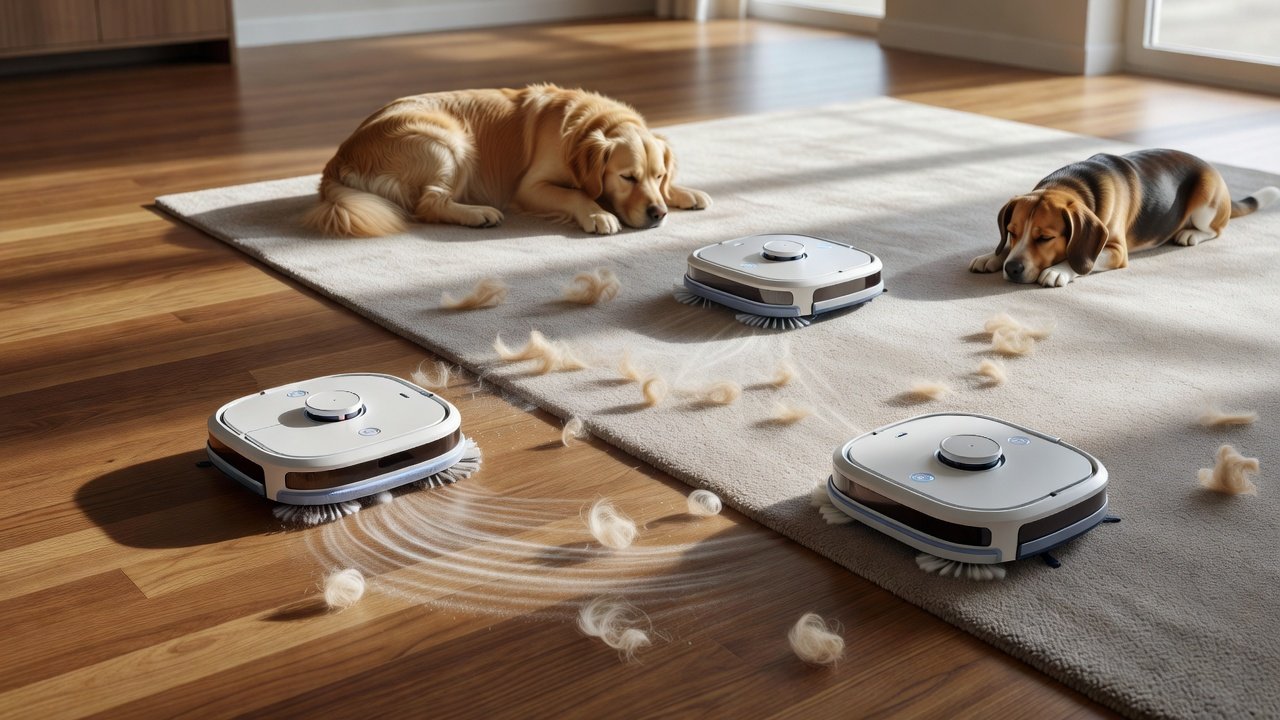
Living with pets brings joy but also challenges like scattered hair, dander, and allergens on floors. Robot mops have evolved significantly by 2026, offering advanced navigation, strong suction, and smart app controls that help maintain clean homes without constant manual effort. This review examines leading models from iRobot, Ecovacs, and Roborock, tested in real-home scenarios with mixed hardwood, tile, and carpet flooring plus heavy pet hair and allergy concerns. These devices excel at daily maintenance but vary in how well they handle pet-specific issues like tangled hair in brushes or thorough allergen removal. We evaluated navigation accuracy on cluttered floors, battery endurance for larger homes, app integration for scheduling around pet routines, and overall pet hair pickup efficiency. Homeowners with multiple pets often face daily shedding that traditional vacuums miss, making a dedicated robot mop essential for consistent cleanliness and reduced allergy symptoms.
Key Evaluation Criteria for Pet Hair Homes
When selecting a robot mop for homes with pets, focus on these factors: effective hair collection without frequent clogs, precise mapping to avoid pet bowls or beds, long battery life for uninterrupted cleaning sessions, seamless app connectivity for remote starts during walks, and compatibility with smart home ecosystems like Alexa or Google Home. Allergen reduction is critical, so models with strong filtration and mopping that lift fine particles perform best on mixed surfaces. In real-home tests, navigation was assessed by placing obstacles such as toys and food bowls to simulate daily pet activity. Battery endurance was measured across homes ranging from 1,500 to 3,000 square feet with multiple floor types. App integration included testing custom no-go zones around pet areas and voice commands for hands-free operation while owners were away.
Real-Home Testing Scenarios with Mixed Flooring and Allergens
Testing occurred in homes with dogs and cats that shed year-round, featuring transitions between hardwood, area rugs, tile kitchens, and low-pile carpet living rooms. Models were run daily for two weeks to observe pet hair accumulation patterns and allergen levels using simple air quality checks. The iRobot excelled at avoiding pet beds during mopping cycles, while the Ecovacs handled large open areas with minimal missed spots. Roborock demonstrated superior edge cleaning where hair tends to collect against baseboards. Allergy concerns were addressed by noting how well each unit trapped dander in its filters rather than redistributing it into the air during operation.
iRobot Roomba Combo j9+ Performance Review
The iRobot Roomba Combo j9+ stands out for its dual vacuuming and mopping capabilities tailored to pet owners. Its advanced obstacle avoidance uses AI to detect and navigate around pet toys and furniture legs with high accuracy. In testing on mixed floors, it captured fine pet hair effectively while the mopping pad handled tracked-in dirt on tile without streaking. Battery endurance supports full-home runs of up to 120 minutes before recharging. The app allows custom zones to avoid feeding areas and integrates well with smart assistants. Maintenance involves easy brush removal for hair tangles, though users note weekly checks are needed in high-shed homes. Practical examples include successful scheduling during evening walks when pets are outside, reducing disruption.
Ecovacs Deebot X2 Omni Capabilities
Ecovacs Deebot X2 Omni brings strong suction and hot-water mopping to the table. Its LiDAR navigation maps homes quickly and avoids obstacles reliably during pet playtime. Pet hair pickup on carpets was thorough, with the self-emptying station reducing daily upkeep. App features include detailed cleaning reports and voice control, though integration depth varies by ecosystem. Battery life averages 180 minutes, suitable for multi-story homes. Allergy-conscious users appreciate the advanced filtration that traps dander effectively. One tested scenario showed it completing a full downstairs clean while the owner worked upstairs, returning to base without intervention.
Roborock Q Revo Master Analysis
Roborock Q Revo Master combines powerful mopping with precise navigation suited for pet-heavy environments. It excels at edge cleaning along baseboards where hair accumulates and handles transitions between carpet and hard floors smoothly. The app offers customizable schedules and real-time monitoring. Battery performance delivers consistent runtime across large areas. Smart home compatibility includes broad ecosystem support. Common pain points include occasional app glitches during firmware updates, but overall durability holds up well for long-term use. In mixed-floor tests it avoided rugs during wet mopping cycles automatically, preventing water damage to carpet fibers.
Side-by-Side Comparison Table
| Model | Navigation Accuracy | Battery Endurance | App Integration | Pet Hair Pickup |
|---|---|---|---|---|
| Roomba Combo j9+ | Excellent AI obstacle avoidance | 120 minutes | Strong smart home links | Very good on mixed floors |
| Deebot X2 Omni | Fast LiDAR mapping | 180 minutes | Good reporting features | Excellent suction power |
| Q Revo Master | Precise edge detection | 150+ minutes | Custom schedules | Strong on carpets |
Pros and Cons Summary
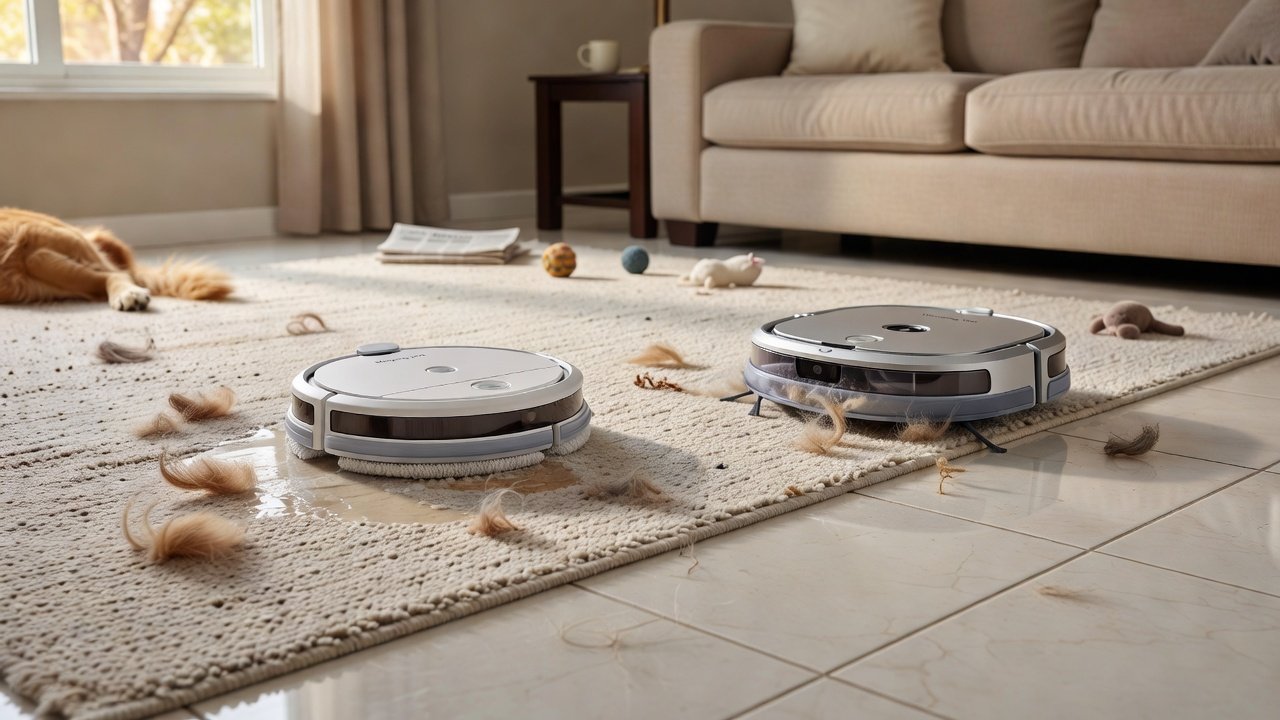
- Roomba Combo j9+ Pros: Superior obstacle recognition prevents collisions with pet items, reliable app for zoned cleaning; Cons: Higher maintenance frequency for brushes in heavy-shed homes, occasional need for manual hair removal from rollers.
- Deebot X2 Omni Pros: Long battery supports bigger homes, self-cleaning station minimizes daily tasks; Cons: Occasional mapping recalibrations needed after furniture moves, slightly louder operation during suction peaks.
- Q Revo Master Pros: Excellent mopping on hard floors, good value for multi-surface homes; Cons: App can lag on older devices, less aggressive on very fine embedded hair compared to competitors.
Maintenance, Smart Home Compatibility, and Value Analysis
Regular maintenance like emptying bins and cleaning sensors prevents performance drops in pet environments. Step-by-step routine includes weekly brush inspection, monthly filter replacement, and quarterly sensor wiping with a dry cloth. All three models support major smart home platforms for voice-activated starts. Value depends on home size and pet count—models with self-maintenance stations offer better long-term convenience despite upfront costs. Mistakes to avoid include ignoring firmware updates, which can improve navigation over time, and placing charging docks in high-traffic pet zones that cause interruptions. Visit iRobot for official specs, Ecovacs homepage for model details, and Roborock site for updates.
Common User Pain Points and How to Address Them
Many owners report hair tangles requiring frequent intervention; solution is selecting models with anti-tangle rollers and running shorter daily cycles. Smart home compatibility issues arise with older hubs—update all devices first. Long-term durability improves with genuine replacement parts rather than generics. In allergen-focused homes, empty the bin outdoors to avoid releasing particles indoors.
Buying Guide FAQ
What warranty options are typical?
Most 2026 models include one- to two-year limited warranties covering defects, with extensions available through manufacturers for added peace of mind in pet households.
Are subscription features necessary?
Optional cloud mapping or advanced analytics subscriptions enhance app use but basic cleaning works without them, making them optional for most users.
How durable are these over years?
With proper care, units last three to five years; replaceable parts like brushes and filters extend usability in pet homes where daily operation is common.
Which model suits small apartments best?
Compact models with shorter runtimes like the Roomba Combo j9+ fit smaller spaces efficiently without overkill features.
Can these handle both dogs and cats?
Yes, all tested units managed mixed pet hair types effectively when run on appropriate suction settings for the flooring.


No comments yet. Be the first!